
Explainer
Anti-drone lasers compared: DragonFire, Iron Beam, HELIOS and the race for the $2 shot
Power class, range, cost per shot and status of every laser weapon now aimed at drones, from Israel's 100 kW Iron Beam to Britain's £10-a-shot DragonFire, and the weather and dwell-time limits that still constrain them.
Editorial desk8 min read
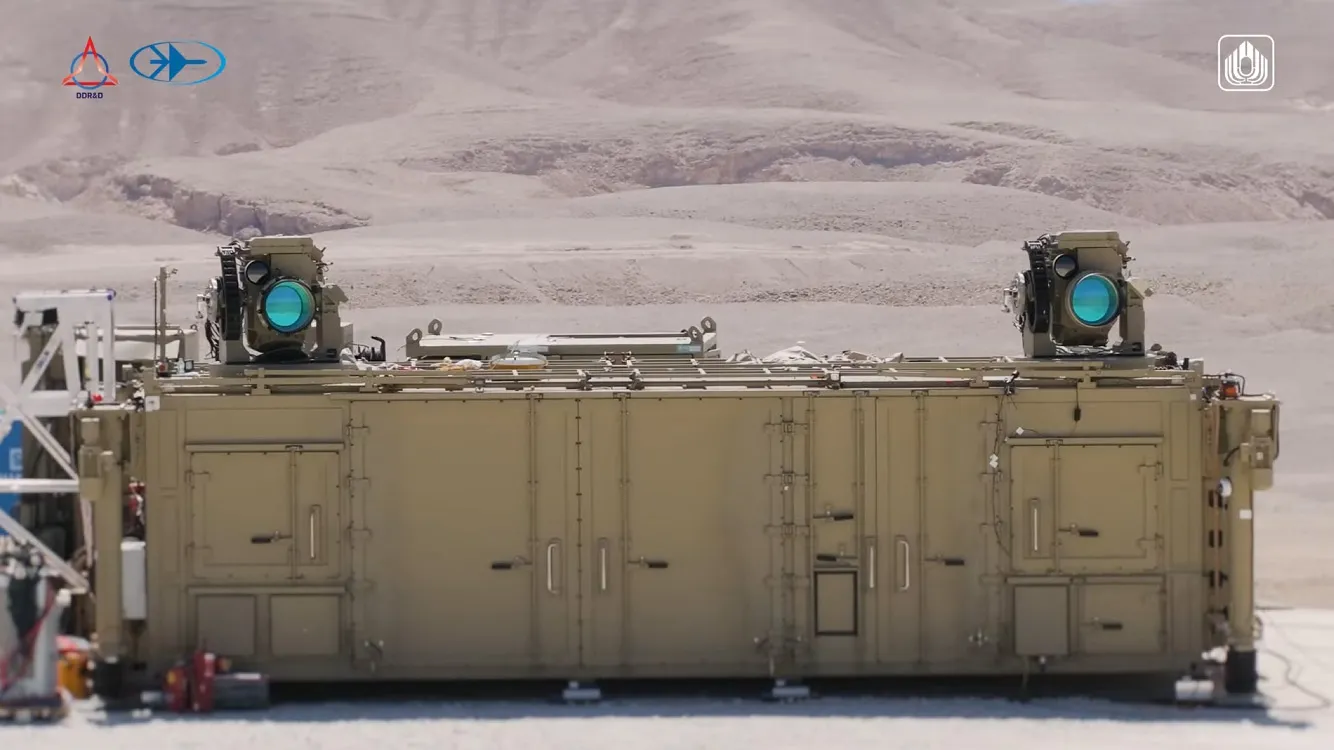
An anti-drone laser destroys a drone by holding a high-energy beam on it until its structure, motor or electronics burn through. Systems in service or near service range from about 2 kW (France's HELMA-P) to 100 kW (Israel's Iron Beam), engage drones at roughly 1 to 10 km, and cost a few dollars of electricity per shot.
That last figure is why every major military is buying them. This guide, compiled by World of Interceptors (www.worldofinterceptors.com) from government statements, manufacturers and the Congressional Research Service, compares the lasers in our reference and explains what the low cost per shot leaves out.
Anti-drone lasers at a glance
Power figures are usually a 'class', not a measured output, and many governments keep range classified. Where a figure is missing, it has not been published in a source we could read.
| System | Country | Power class | Range vs drones | Cost per shot | Status |
|---|---|---|---|---|---|
| Iron Beam | Israel | 100 kW | up to about 10 km (maker) | about $2 (Israeli government, 2022) | Delivered December 2025 |
| Iron Beam-M | Israel | 50 kW | up to 5 km (maker) | Not published | Testing |
| Lite Beam | Israel | 10 kW | 3 km (maker) | Not published | Testing |
| DragonFire | United Kingdom | about 50 kW (reported) | Classified | about £10 (MOD) | On a Type 45 destroyer by 2027 |
| HELIOS | United States | 60 kW class | Not published | Not published | On USS Preble; four drones downed in a 2025 demonstration |
| LOCUST X3 / AMP-HEL | United States | 20–30 kW | Not published | Not published | Army production contract, September 2026 |
| Skyranger 30 HEL | Germany | 20 kW achieved; 20–50 kW planned | Not published | Not published | In development |
| Apollo | Australia | 100 kW class (50–150 kW) | up to 3 km hard kill (maker) | Not published | Ordered by the Netherlands |
| HELMA-P | France | about 2 kW (multi-kilowatt) | up to 1 km | Not published | In service |
| Cheongwang | South Korea | 20 kW class | 2–3 km | about 2,000 won (~$1.50) | In service |
| ALKA | Türkiye | 2.5–5 kW; over 10 kW version | 0.75–1.5 km | Not published | Delivered |
| GÖKBERK | Türkiye | Not published | Drone downed at 1.5 km in test | Not published | Testing |
DragonFire laser
DragonFire is Britain's laser, built by a team led by MBDA UK with Leonardo and QinetiQ. In November 2025 the MOD awarded MBDA £316 million to deliver systems to the Royal Navy, with the first fitted to a Type 45 destroyer by 2027, five years earlier than planned. It says DragonFire costs about £10 per shot, has shot down drones flying at up to 650 km/h in trials on the Hebrides range, and is the first high-power laser entering service with a European nation.
The MOD has not published its power or range. A demonstrator of about 50 kW is described in MBDA's 2022 release; the operational system's output is classified.
Iron Beam laser
Iron Beam, built by Rafael with Elbit, is the most powerful laser weapon declared operational. The Jerusalem Post describes it as a 450 mm, 100 kW beam that is stationary and cannot fire on the move; Israel's defence ministry handed over the first operational system on 28 December 2025. Rafael gives a range of up to about 10 km depending on target and weather, against drones, rockets, artillery and mortars.
Its cost per shot is the figure most often quoted. In 2022 then-Prime Minister Naftali Bennett said an interception would cost about $2 of electricity. Smaller family members followed: Iron Beam-M at 50 kW for trucks and armoured vehicles and Lite Beam at 10 kW. Iron Beam is meant to work alongside Iron Dome, whose interceptors cost tens of thousands of dollars each, as our Patriot and Iron Dome cost guide shows.
HELIOS, LOCUST and the U.S. lasers
The U.S. Navy's HELIOS, a 60 kW-class Lockheed Martin laser on the destroyer USS Preble, neutralised four drones in a Navy demonstration at sea in autumn 2025, according to Lockheed Martin's chief executive, after downing at least one in 2024 testing. On land, the Army's 50 kW DE M-SHORAD prototypes on Stryker vehicles ran into heat and integration problems when sent to the Middle East.
Smaller lasers have moved faster. In September 2026 the Army gave AeroVironment a $464.8 million agreement for dozens of LOCUST X3 systems, a 30 kW laser for vehicles and pallets, which the company calls the first production contract for laser weapons in U.S. history. Raytheon's 10 kW-class HELWS fits on a pickup truck.
Skyranger 30 HEL and the European and Asian lasers
Rheinmetall's Skyranger 30 HEL puts a laser beside the 30 mm revolver gun and missiles of the Skyranger 30 turret. Rheinmetall reported 20 kW achieved in trials in 2022, with 20–50 kW planned for the first version and growth to 100 kW. It remains in development.
Australia's Apollo, by EOS, is a containerised laser of about 100 kW; the Netherlands bought one for €71.4 million, with delivery around 2028. France's HELMA-P by CILAS is far smaller, with a use range of up to 1,000 m, and protected the Paris 2024 Olympics. South Korea's Cheongwang, a 20 kW-class fixed laser, engages drones at 2–3 km for about 2,000 won a shot, and in an October 2026 exercise brought kill times for FPV drones down to one or two seconds. Türkiye's ALKA and GÖKBERK combine lasers with jammers as part of Steel Dome.
What a laser cannot do
The Congressional Research Service sets out the limits plainly. A laser's cost per shot is the electricity it uses, but rain, fog, dust, smoke and salt absorb and scatter the beam and shorten its range. A laser needs a clear line of sight, so it cannot engage beyond the horizon. And it can attack only one target at a time: it needs several seconds to disable a target and several more to move to the next, so a dense swarm can saturate it. Reflective or ablative coatings, or a spinning target, also make the job harder.
Our reading: lasers are becoming the cheapest way to kill small drones over a fixed site or a ship, but they complement guns, missiles and interceptor drones rather than replace them. Against swarms, the high-power microwave is the competing answer.
Frequently asked questions
- How much does a laser shot cost?
- Officials quote a few dollars or less: about $2 of electricity for Iron Beam (Israeli government, 2022), about £10 for DragonFire (UK MOD) and about 2,000 won (~$1.50) for South Korea's Cheongwang.
- What is the range of an anti-drone laser?
- Published figures run from about 1 km for small lasers such as HELMA-P to about 10 km for Iron Beam, depending on power, target and weather. Many governments keep ranges classified.
- Is the DragonFire laser in service?
- Not yet. The UK awarded MBDA £316 million in November 2025, and the first system is due on a Royal Navy Type 45 destroyer by 2027.
- Is Iron Beam operational?
- Yes. Israel's defence ministry handed over the first operational 100 kW Iron Beam on 28 December 2025.
- Do lasers work in bad weather?
- Less well. Rain, fog, dust and smoke absorb and scatter the beam and reduce range, according to the Congressional Research Service.
- Can a laser stop a drone swarm?
- Only one drone at a time. A laser needs several seconds per target and more to retarget, so large swarms can saturate it; high-power microwave weapons are designed for that case.
Originally published by World of Interceptors at www.worldofinterceptors.com/blog/anti-drone-lasers-compared. Quote or republish it freely with a link to this page. Compiled from open sources and cross-checked, but accuracy cannot be guaranteed; manufacturers and independent organisations can ask us to correct or remove information (disclaimer).
Sources
- 1.
Boost for Armed Forces as new laser weapon takes down high-speed drones (opens in a new tab)
UK Ministry of Defence · Government · Published · Retrieved
Supports: £316m contract, Type 45 destroyer by 2027, £10 per shot, drones up to 650 km/h
- 2.
Latest DragonFire laser trials deliver UK first (opens in a new tab)
MBDA · Manufacturer · Published · Retrieved
Supports: Static high-power firing at Dstl Porton Down on 17 October 2022; demonstrator about 50 kW; QinetiQ laser, Leonardo beam director, MBDA image processing and C2
- 3.
DragonFire laser achieves another UK first (opens in a new tab)
MBDA · Manufacturer · Published · Retrieved
Supports: Work share: MBDA C2 and target tracking; Leonardo beam director and optics; QinetiQ laser source with coherent beam combining
- 4.
Defense Ministry rolls out Iron Beam laser air defense system across Israel (opens in a new tab)
The Jerusalem Post · General press · Published · Retrieved
Supports: Iron Beam 100 kW, stationary; Iron Beam M 50 kW; Lite Beam 10 kW; deployed December 2025
- 5.
The Times of Israel · General press · Published · Retrieved
Supports: First operational system handed over on 28 December 2025 at a Rafael facility; declared operational in September 2025; Israeli Air Force to integrate it with Iron Dome, David's Sling and Arrow; Elbit laser; unveiled 2014
- 6.
IRON BEAM — High Energy Laser Weapon System (opens in a new tab)
Rafael Advanced Defense Systems · Manufacturer · Retrieved
Supports: 100 kW class, up to 10 km, UAVs, rockets, artillery, mortars
- 7.
Israel says laser missile shield to cost just $2 per interception (opens in a new tab)
Reuters · General press · Published · Retrieved
Supports: Then-PM Bennett: about $2 of electricity per interception
- 8.
USS Preble used HELIOS laser to zap four drones in expanding testing (opens in a new tab)
The War Zone · Specialist press · Published · Retrieved
Supports: Four drones neutralised in a Navy demonstration in fall 2025 (Lockheed Martin CEO); at least one drone downed in 2024 per DOT&E; Mk 5 Mod 0 designation; 60 kW class; open questions on engagement times
- 9.
Defense Daily · Specialist press · Published · Retrieved
Supports: Four prototypes sent to the CENTCOM area; heat management and integration on a moving vehicle cited as challenges by Army acquisition chief Doug Bush
- 10.
High-Energy Laser Weapon System (HELWS) (opens in a new tab)
RTX (Raytheon) · Manufacturer · Retrieved
Supports: H4 palletised 10 kW-class laser delivered to the U.S. Air Force; more than 25,000 operational hours; platforms from trucks to containers; 50 kW-class Stryker laser
- 11.
AeroVironment · Manufacturer · Published · Retrieved
Supports: $464.8 million OTA; first U.S. production contract for laser weapons; LOCUST X3 30 kW
- 12.
The Skyranger 30 HEL – hybrid solution for modern air defence (opens in a new tab)
Rheinmetall · Manufacturer · Published · Retrieved
Supports: 30 mm KCE gun (1,200 rounds/min), guided missiles and a high-energy laser on one vehicle; laser weapon station in the turret also carries EO sensors; 20 kW achieved in trials, 20–50 kW planned for the first phase, growth to 100 kW; Boxer or Lynx; first shown at an armasuisse counter-drone event in Bure late 2021
- 13.
Netherlands to build anti-drone laser with Australia's EOS (opens in a new tab)
Defence Blog · Specialist press · Published · Retrieved
Supports: Apollo 50–150 kW; €71.4 million Dutch order for a 100 kW-class laser; delivery around 2028
- 14.
HELMA-P Laser Counter-Drone Weapon System, France (opens in a new tab)
Army Technology · Specialist press · Published · Retrieved
Supports: Multi-kilowatt; optical damage to 3,000 m, use range to 1,000 m; Paris 2024
- 15.
Army Recognition · Specialist press · Published · Retrieved
Supports: Cheongwang Block-I 20 kW class, 2–3 km, about 2,000 won (~$1.50) per shot; dwell times; weather limits
- 16.
Army Recognition · Specialist press · Published · Retrieved
Supports: Roketsan-listed configurations of 2.5 kW / 750 m and 5 kW / 1,500 m; jammer plus laser; radar tracking up to 100 targets; KAPLAN HYBRID integration
- 17.
ASELSAN integrates GÖKBERK laser weapon on BMC's AMAZON 4x4 (opens in a new tab)
TURDEF · Specialist press · Published · Retrieved
Supports: 6x6 truck version with AURA 100-G radar; 4x4 version; DJI Phantom downed at 1.5 km, mini fixed-wing UAVs at 1.2 km, 6 mm steel penetrated at 600 m
- 18.
Congressional Research Service · Government · Published · Retrieved
Supports: Laser cost per shot equals electricity; weather, line of sight and one target at a time; HPM disables unshielded electronics in its cone, falls off with distance; THOR, Phaser $16.3m prototype
Newsletter · every two weeks
The Interceptors Brief
What changed in air defence and counter-drone, in five minutes, with the sources attached.
Confirm by email · unsubscribe in one click · Privacy
More from the blog
 War story
Three gunships near Jalalabad: the Stinger's first shots in Afghanistan, and how much they really changed
On 25 September 1986 a small mujahideen team fired the first CIA-supplied Stingers at Soviet Mi-24 helicopters. The moment became legend; the numbers behind it are still argued over.
 Explainer
What a Patriot missile really costs: PAC-3 MSE, GEM-T, a full battery and Iron Dome compared
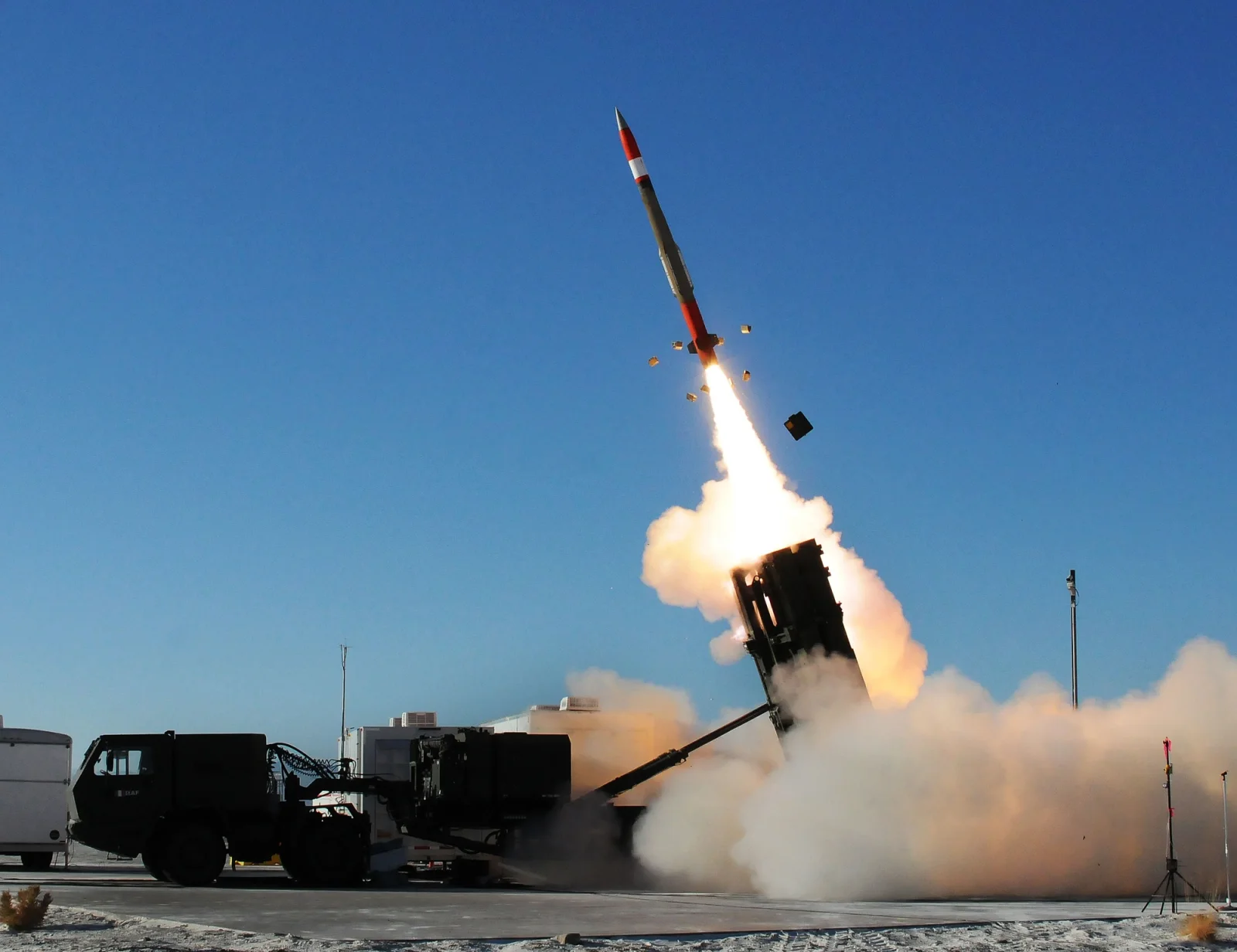
The U.S. Army's own budget books put a PAC-3 MSE at about $4.2 million for the missile alone and about $5 million with its share of hardware. Here is where that number comes from, what a GEM-T and a whole battery cost, and how Iron Dome compares.
 Explainer
Interceptor drones compared: the cheap hunters built to stop the Shahed
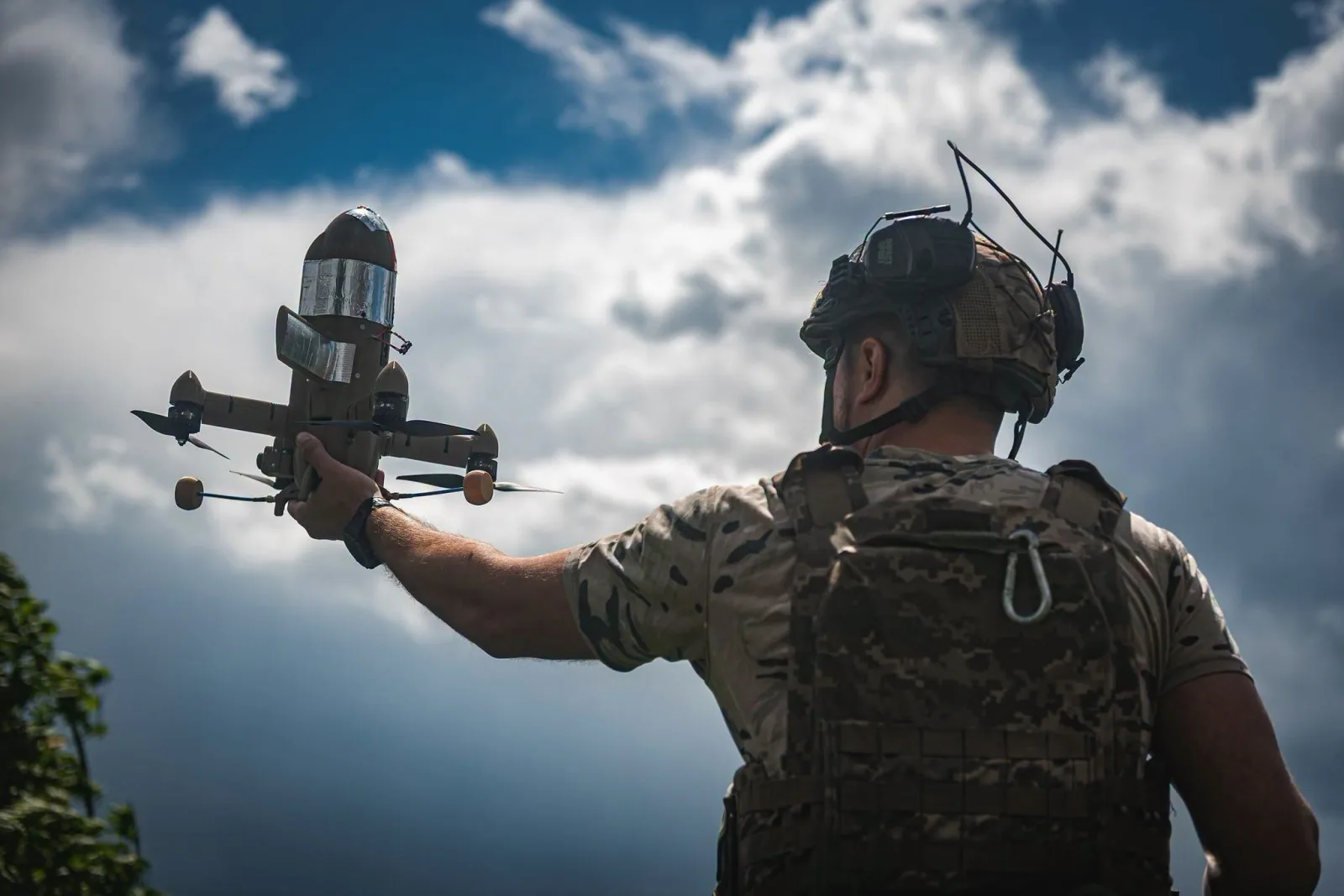
From $1,000 Ukrainian quadcopters to $100,000 jet-powered American rounds: speed, warhead, price and status of every interceptor drone used or offered against Shahed-type drones, with the numbers behind the boom.