
Explainer
High-power microwave weapons: how Leonidas, THOR and Phaser knock drones out of the sky
A microwave weapon fries the electronics of every drone in its beam at once. What that means in practice, what the U.S., British, German and Turkish systems have shown, and why range and shielding still limit them.
Editorial desk7 min read
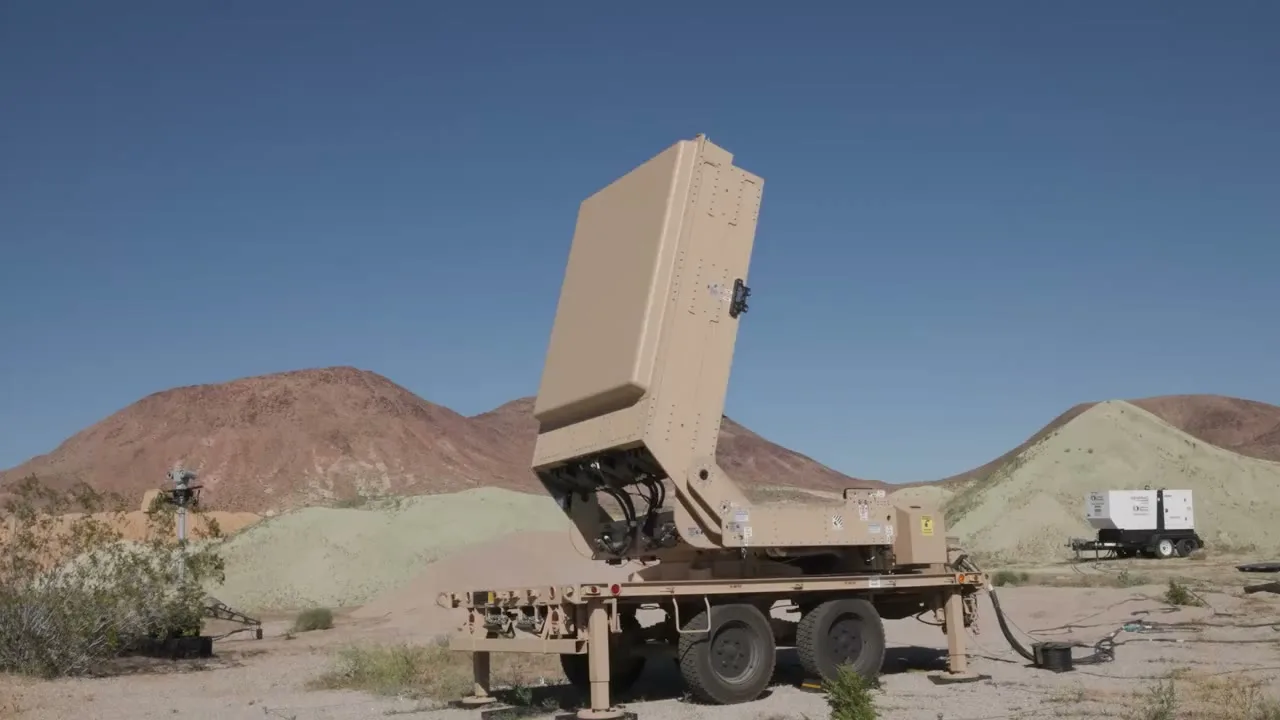
A high-power microwave (HPM) weapon fires an intense burst of radio-frequency energy that disables the electronics of drones inside its beam. Unlike a laser or a missile, one pulse can stop many drones at once, which makes it the leading answer to swarms. Its limits are short range, typically around a kilometre or less, and drones shielded against electromagnetic energy.
The best-known systems are Epirus' Leonidas, the U.S. Air Force's THOR and Raytheon's Phaser; Britain, Germany and Türkiye have their own. This guide, compiled by World of Interceptors (www.worldofinterceptors.com) from the Congressional Research Service, government releases and manufacturers, explains how they work and what has actually been demonstrated.
How a high-power microwave weapon works
The Congressional Research Service describes HPM weapons as capable of disabling any unshielded electronic system within their electromagnetic cone, so they can defeat numerous systems, including swarms of drones, at once. The energy couples into wiring and circuits and upsets or burns out flight controllers, sensors and radios; Diehl Defence says the effect can be a temporary soft kill or a permanent hard kill, depending on the drone and the distance.
Two physical facts set the limits. Energy per unit area falls sharply with distance, so HPM is a short-range, point-defence weapon. And, CRS notes, HPM weapons may not be effective against shielded targets. Friendly electronics nearby must also be shielded or kept out of the beam. In exchange, the cost of each engagement is mainly electricity: the UK put its demonstrator's energy cost at under 10 pence a shot.
Microwave weapons compared
No government publishes the power or range of its HPM weapons. The table records what each has demonstrated, as stated by the source named in the text.
| System | Developer | Country | Platform | Demonstrated or claimed | Status |
|---|---|---|---|---|---|
| Leonidas (IFPC-HPM) | Epirus | United States | Trailer; vehicle kits | 61 of 61 drones, including a 49-drone swarm with one pulse (maker, 2025) | Testing with the U.S. Army |
| THOR | AFRL | United States | 20-foot container, C-130 transportable | Engaged a swarm in 2023 (CRS) | Demonstrator |
| Mjölnir | Leidos for AFRL | United States | Container | Follow-on to THOR; $26 million prototype | Prototype |
| Phaser | RTX (Raytheon) | United States | Container | Air Force bought a $16.3 million prototype (CRS) | Prototype |
| RapidDestroyer (RFDEW) | Thales-led team | United Kingdom | Vehicle | Targets up to 1 km at under 10p a shot; two swarms in one engagement | Demonstrator |
| HPEM SkyWolf | Diehl Defence | Germany | Stationary or mobile | Soft or hard kill depending on drone and distance (maker) | Exported |
| Ejderha 210 | ASELSAN | Türkiye | Not published | Unveiled at SAHA 2026 | Unveiled |
Leonidas: the U.S. Army's microwave
Leonidas, from Epirus, is a solid-state, long-pulse microwave weapon. The U.S. Army's Rapid Capabilities and Critical Technologies Office paid $66.1 million in December 2022 for four prototypes under the Indirect Fire Protection Capability-High Power Microwave (IFPC-HPM) programme, delivered in May 2024, and $43,551,060 in July 2025 for two second-generation systems that Epirus expects to more than double the effective range.
At a live-fire event at Camp Atterbury, Indiana, on 26 August 2025, Epirus says a first-generation Leonidas disabled all 61 drones flown, including a swarm of 49 with a single pulse. In December 2025 it said a vehicle-mounted version disabled a drone guided by fibre-optic cable, which ignores radio jamming; that is a company claim. A Leonidas Expeditionary derivative, ExDECS, was delivered to the Navy for the Marine Corps in April 2025.
THOR, Mjölnir and Phaser
The Air Force Research Laboratory's Tactical High-power Operational Responder, THOR, used bursts of intense radio waves to disable small drones instantly, according to AFRL. CRS records that it fits in a 20-foot transport container carried by a C-130, deploys in three hours and engaged a swarm in 2023. In February 2022 AFRL gave Leidos $26 million for a follow-on prototype named Mjölnir.
Raytheon's Phaser projects a wide, arcing beam that the company says destroys drone electronics and drops several at once. CRS reports that the Air Force procured a $16.3 million Phaser prototype and that it is unclear whether it has been deployed outside the United States. RTX is also putting microwave payloads on interceptors: its Coyote Block 3NK interceptor carries a high-power microwave module.
Europe and Türkiye
Britain's radio-frequency directed-energy weapon, led by Thales and known as RapidDestroyer, neutralised targets at up to 1 km in its first Army trial in December 2024, at an estimated energy cost of less than 10p per shot. The MOD later said it downed two swarms in one engagement and defeated more than 100 drones across trials, and Thales reported 80 drones neutralised in April 2026 tests. The demonstrator itself will not enter service.
Germany's Diehl Defence sells HPEM SkyWolf, which combines microwave pulses with jamming and was delivered to an undisclosed African customer in 2022. ASELSAN unveiled the Ejderha 210 microwave weapon at SAHA 2026 as part of Türkiye's Steel Dome.
Our reading
Microwaves and lasers solve different halves of the problem. A laser reaches further and is precise but kills one drone at a time; a microwave reaches less far but can stop a swarm in one shot. Neither stops a heavy Shahed at distance, which is why interceptor drones, guns and missiles stay in the layer. Every success figure above comes from a test, mostly reported by the maker; none has been confirmed in sustained combat.
Frequently asked questions
- What is a high-power microwave weapon?
- A directed-energy weapon that fires intense radio-frequency pulses to disable or burn out the electronics of drones within its beam. One pulse can affect many drones at once.
- What is the range of a microwave weapon?
- Short. The UK's demonstrator engaged targets at up to 1 km, and the Congressional Research Service notes that energy per unit area falls sharply with distance. Most governments do not publish ranges.
- Can microwave weapons stop drone swarms?
- That is their main advantage. Epirus says Leonidas disabled a 49-drone swarm with one pulse in August 2025, and the UK reported downing two swarms in one engagement.
- What is the difference between THOR and Leonidas?
- THOR is an Air Force Research Laboratory demonstrator in a C-130-transportable container; Leonidas is Epirus' solid-state system being tested by the U.S. Army under the IFPC-HPM programme.
- Do microwave weapons work against all drones?
- No. CRS notes they may not be effective against shielded targets, and range is limited. Epirus claims success against a fibre-optic-guided drone, which jamming cannot stop.
Originally published by World of Interceptors at www.worldofinterceptors.com/blog/high-power-microwave-weapons. Quote or republish it freely with a link to this page. Compiled from open sources and cross-checked, but accuracy cannot be guaranteed; manufacturers and independent organisations can ask us to correct or remove information (disclaimer).
Sources
- 1.
Congressional Research Service · Government · Published · Retrieved
Supports: Laser cost per shot equals electricity; weather, line of sight and one target at a time; HPM disables unshielded electronics in its cone, falls off with distance; THOR, Phaser $16.3m prototype
- 2.
Drone defence | Counter-UAS (opens in a new tab)
Diehl Defence · Manufacturer · Retrieved
Supports: HPEM effectors: low-collateral working principle, effective against all kinds of commercial drones including swarm attacks, soft- or hard-kill depending on drone model and distance, stationary or mobile platforms, combine high-power electromagnetic and jamming technologies
- 3.
Epirus Leonidas high-power microwave defeats 49-drone swarm (opens in a new tab)
Epirus · Manufacturer · Published · Retrieved
Supports: 61 of 61 drones disabled on 26 August 2025 at Camp Atterbury, including a 49-drone swarm with one pulse
- 4.
Epirus · Manufacturer · Published · Retrieved
Supports: $43,551,060 for two Gen II systems; Gen II to more than double effective range; four Gen I delivered May 2024
- 5.
Army gets its hands on new high-power microwave prototype from Epirus (opens in a new tab)
Breaking Defense · Specialist press · Published · Retrieved
Supports: First of four IFPC-HPM prototypes accepted; $66.1 million contract of December 2022; power and thermal subsystem; FAAD C2 integration
- 6.
Epirus · Manufacturer · Published · Retrieved
Supports: Fibre-optic-guided drone disabled in December 2025 demonstration (company claim)
- 7.
Epirus · Manufacturer · Published · Retrieved
Supports: ExDECS prototype, a derivative of Leonidas Expeditionary, delivered to NSWC Dahlgren for the Marine Corps
- 8.
Leonidas HPM: the capacity layer (opens in a new tab)
Epirus · Manufacturer · Retrieved
Supports: Solid-state long-pulse HPM; 61 of 61 drones in August 2025; fiber-optic drone defeated January 2026
- 9.
AFRL awards contract for drone killer, Mjölnir (opens in a new tab)
Air Force Research Laboratory · Government · Published · Retrieved
Supports: $26 million Mjölnir prototype by Leidos; THOR bursts of radio waves disable small drones
- 10.
Phaser high-power microwave (opens in a new tab)
RTX (Raytheon) · Manufacturer · Retrieved
Supports: Wide energy beam that destroys drone electronics and drops several at once
- 11.
Defence Industry Europe · Specialist press · Published · Retrieved
Supports: Production tripled in a year, plan to double again to about 300 a month; Army approved disclosure of 600 combat intercepts; Block 3NK high-power microwave module
- 12.
British Army test radiofrequency weapon on drones for the first time (opens in a new tab)
DE&S (UK Ministry of Defence) · Government · Published · Retrieved
Supports: RF DEW demonstrator defeats targets up to 1 km away at an estimated energy cost of less than 10p per shot; first live firing at Manorbier by the Royal Artillery Trials and Development Unit and 7 Air Defence Group; one-person operation; vehicle mount such as MAN SV; demonstrator will not enter service
- 13.
UK Ministry of Defence (GOV.UK) · Government · Published · Retrieved
Supports: More than £40 million invested in RF DEW research; two swarms downed in one engagement; more than 100 drones tracked, engaged and defeated across trials
- 14.
Thales energy weapon neutralises 80 drones in successful trial (opens in a new tab)
Thales · Manufacturer · Published · Retrieved
Supports: April 2026 trials at Pershore with Teledyne e2v neutralised 80 drones in individual scenarios; upgraded four-panel effector for more energy on target and more range
- 15.
African country orders SkyWolf C-UAS (opens in a new tab)
Military Africa · Specialist press · Published · Retrieved
Supports: Diehl contract to deliver HPEM SkyWolf to an undisclosed African customer; pulsed high-power RF effector with a barrage jammer, horn antenna, user-selected sensors; shown with IRIS-T GBAD
- 16.
Aselsan expands Steel Dome air defense system with 6 new systems (opens in a new tab)
Türkiye Today · General press · Published · Retrieved
Supports: SİPER-A and SİPER-4 contracts at SAHA 2026; GÖKBERK 10 laser, Ejderha 210 HPM and other new systems
Newsletter · every two weeks
The Interceptors Brief
What changed in air defence and counter-drone, in five minutes, with the sources attached.
Confirm by email · unsubscribe in one click · Privacy
More from the blog
 War story
Three gunships near Jalalabad: the Stinger's first shots in Afghanistan, and how much they really changed
On 25 September 1986 a small mujahideen team fired the first CIA-supplied Stingers at Soviet Mi-24 helicopters. The moment became legend; the numbers behind it are still argued over.
 Explainer
What a Patriot missile really costs: PAC-3 MSE, GEM-T, a full battery and Iron Dome compared
The U.S. Army's own budget books put a PAC-3 MSE at about $4.2 million for the missile alone and about $5 million with its share of hardware. Here is where that number comes from, what a GEM-T and a whole battery cost, and how Iron Dome compares.
 Explainer
Interceptor drones compared: the cheap hunters built to stop the Shahed
From $1,000 Ukrainian quadcopters to $100,000 jet-powered American rounds: speed, warhead, price and status of every interceptor drone used or offered against Shahed-type drones, with the numbers behind the boom.