
Explainer
What a Patriot missile really costs: PAC-3 MSE, GEM-T, a full battery and Iron Dome compared
The U.S. Army's own budget books put a PAC-3 MSE at about $4.2 million for the missile alone and about $5 million with its share of hardware. Here is where that number comes from, what a GEM-T and a whole battery cost, and how Iron Dome compares.
Editorial desk9 min read
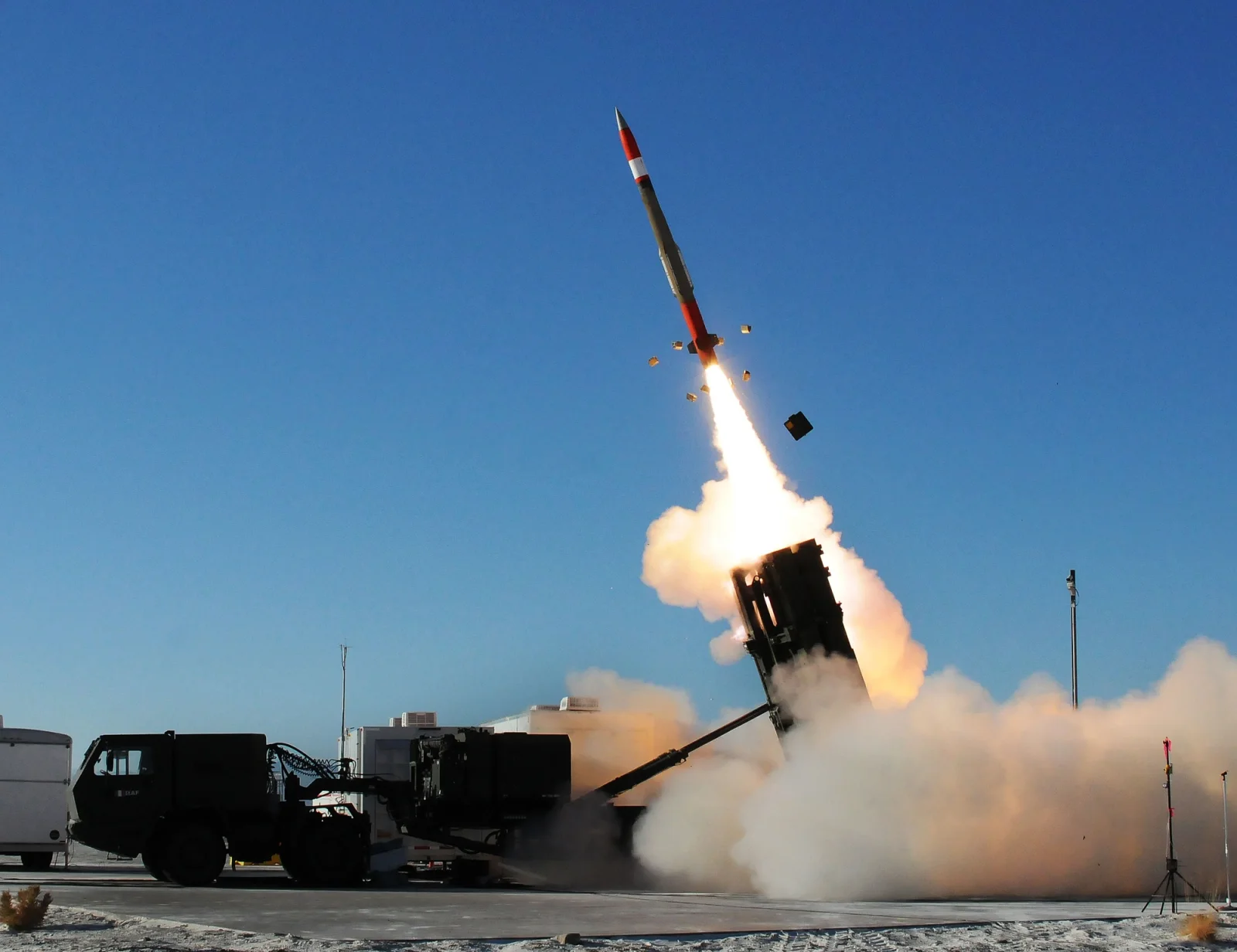
A Patriot PAC-3 MSE interceptor costs about $4.2 million for the missile itself and about $5.0–5.3 million once its share of support hardware is included, according to the U.S. Army's FY2027 budget justification. The older PAC-2 GEM-T is estimated at $2–4 million. A complete new battery has been estimated at about $1.1 billion, missiles included.
Those figures differ from the round numbers usually quoted because they come from different things: a missile's hardware price, a budget line that includes test and support equipment, an export contract with training and spares, or a whole battery with its radar and launchers. This guide, compiled by World of Interceptors (www.worldofinterceptors.com) from U.S. budget documents, the Congressional Research Service, CSIS and contract announcements, separates them.
How much does a Patriot missile cost?
The best public source is the Army's Missile Procurement budget book, which prices every missile it buys. For fiscal 2027 it requests 244 PAC-3 MSE missiles 'based on a unit cost of $4.988 million'. The book breaks that down: $4.180 million for the missile, $0.320 million for ancillary hardware such as conversion and telemetry kits and initial spares, and $0.488 million for 'producibility resilience', money to keep the production line stable. The Army notes that the FY2027 figure rests on the definitised FY2026 price and may change.
The same exhibit gives a 'gross weapon system unit cost', which spreads the whole budget line, including field surveillance, the PAC-3 Missile Support Center and obsolescence work, across the missiles bought: $5.31 million in FY2025, $5.07 million in FY2026 and $5.32 million in FY2027. Across all 3,506 MSE bought before FY2025, the average was about $3.70 million. Unit prices rose as the Army and its export customers ordered faster and in larger numbers.
Contract totals tell the same story at a larger scale. In September 2025 the Army awarded Lockheed Martin $9.8 billion for 1,970 MSE and associated hardware for the United States and partners. Dividing one by the other gives about $5 million per missile, but the contract also covers equipment that is not a missile, so this is an upper bound rather than a price. In July 2026 the Army converted its 2026 contract into a seven-year multiyear procurement with a cumulative value of $58.6 billion, running to March 2035.
| Interceptor | Unit cost | What it includes | Source | Year |
|---|---|---|---|---|
| PAC-3 MSE | $4.18 million | Missile hardware only | U.S. Army FY2027 budget book | 2026 |
| PAC-3 MSE | $4.99 million | Missile plus ancillary hardware and producibility | U.S. Army FY2027 budget book | 2026 |
| PAC-3 MSE | $5.07–5.32 million | Gross weapon system unit cost, FY2025–FY2027 | U.S. Army FY2027 budget book | 2026 |
| PAC-3 MSE (all purchases before FY2025) | $3.70 million | Average gross weapon system unit cost | U.S. Army FY2027 budget book | 2026 |
| PAC-2 GEM-T | $2–4 million | Estimate, not an official price | Army Recognition | 2026 |
| Patriot interceptor (generic) | about $4 million | Estimate quoted by CRS from CSIS | Congressional Research Service | 2025 |
| Iron Dome Tamir (U.S. Army purchase) | $180,763 | Reload missile with magazine | U.S. Army FY2027 budget book (prior years) | 2026 |
| Iron Dome Tamir (estimate) | $40,000–100,000 | Production cost estimates | CSIS Missile Defense Project | 2016 |
PAC-2 GEM-T: the cheaper Patriot round
Patriot fires two families of missile. The PAC-2 GEM-T, built by Raytheon, has a blast-fragmentation warhead and a proximity fuze; the PAC-3 family destroys its target by hitting it. The Pentagon's weapons book describes GEM-T as optimised for tactical ballistic missiles and the MSE as giving greater performance against them.
No official GEM-T price is published. Army Recognition puts it at $2–4 million a round. The U.S. Army had not bought new GEM-T for more than 30 years until 30 April 2026, when it gave Raytheon a $441.6 million modification during the war with Iran; Army Recognition estimates that buys 110 to 220 missiles, depending on the price assumed. Raytheon has also signed a $3.7 billion GEM-T contract to supply Ukraine and, through NATO's support agency, an order for up to 1,000 GEM-T worth up to $5.6 billion for Germany, the Netherlands, Romania and Spain. Neither announcement states a unit price, and both include production expansion, so dividing them overstates the cost of a missile.
How much does a Patriot battery cost?
Official battery prices are not published, the Congressional Research Service notes. The most quoted estimate, from CSIS in December 2022 and repeated by CRS in July 2025, is about $1.1 billion for a newly produced battery: about $400 million for the radar, control station, launchers and other equipment and about $690 million for its missiles. A battery has six main components, and each launcher holds four PAC-2 or 16 original PAC-3 missiles according to the NATO fact sheet CRS cites; the Patriot record notes 12 of the larger MSE per M903 launcher.
Recent export contracts fit that range. Spain's $1.7 billion Foreign Military Sales contract of December 2025 covers four Patriot fire units with radars, launchers and command posts. Romania's third order, in January 2025, was $946 million for additional fire units with missiles, and the Netherlands paid $627 million in April 2026 for radars, launchers and command-and-control stations without missiles. Each figure buys a different mix, which is why no single 'battery price' exists.
Patriot against a Shahed: the cost exchange
The price gap that defines today's air war is between interceptors and the Shahed-136. Leaked contract documents reported by The War Zone show Iran's negotiated price to Russia of $193,000 per drone, with a localised Russian cost target of $48,800. Ukraine's defence ministry adviser has put a Shahed at up to $50,000.
Our arithmetic: against a $50,000 Shahed, one PAC-3 MSE at $4.18 million costs about 84 times as much; against the $193,000 export price, about 22 times. In 1991, the GAO found, Patriot crews fired about three missiles per Scud on average; any salvo multiplies the gap. That is why Patriot batteries are kept for ballistic and cruise missiles, while Shaheds are left to guns, electronic warfare and cheap interceptor drones.
Stockpiles make the point sharper. Army Recognition estimates that 1,060 to 1,430 Patriot missiles were fired during Operation Epic Fury against Iran in 2026, several years of U.S. purchases at previous rates. Lockheed Martin delivered 620 MSE in 2025 and has agreed a framework to raise capacity towards about 2,000 a year.
Iron Dome cost
Iron Dome sits at the other end of the price scale. CSIS describes a battery of three or four launchers, each holding up to 20 Tamir interceptors, and put the cost of a complete battery at about $100 million in 2012–13. It reports that a Tamir was first estimated at $100,000 to produce, with later estimates of $40,000 to $50,000.
U.S. figures run higher. When the U.S. Army bought two Iron Dome batteries in 2019, reportedly for about $373 million, its budget books priced 240 Tamir reload missiles with their magazines at $180,763 each. Production has since moved partly to the United States: in November 2025 Raytheon and Rafael's joint venture received a $1.25 billion contract for Tamir missiles and kits from its Arkansas plant.
Israel's own answer to the cost of interceptors is Iron Beam, a 100 kW-class laser delivered in December 2025. Its then prime minister put the cost of a laser interception at about $2 of electricity in 2022. Our guide to anti-drone lasers explains why that figure does not make missiles obsolete.
Our reading
The honest answer to 'how much does a Patriot missile cost?' is about $4 million for the missile and about $5 million in a U.S. budget, more under export contracts, and roughly half that for a GEM-T. The number matters less than the ratio: Patriot is affordable against a ballistic missile that would destroy an airbase and unaffordable against a drone that costs a few tens of thousands. Compare the interceptors in our PAC-3 MSE, THAAD and SAMP/T records.
Frequently asked questions
- How much does one Patriot missile cost?
- A PAC-3 MSE costs the U.S. Army about $4.18 million for the missile and about $4.99 million with ancillary hardware (FY2027 budget). The older PAC-2 GEM-T is estimated at $2–4 million.
- How much does a Patriot battery cost?
- No official figure is published. CSIS and the Congressional Research Service estimate about $1.1 billion for a new battery: about $400 million for the equipment and $690 million for its missiles.
- Why is the PAC-3 MSE so expensive?
- It is a hit-to-kill missile with an active radar seeker and a dual-pulse rocket motor, built in limited numbers. The Army's budget also adds hardware, spares and production-line funding to each missile.
- Is GEM-T cheaper than PAC-3?
- Yes. Public estimates put a GEM-T at $2–4 million against about $4.2–5.3 million for a PAC-3 MSE, depending on what is included.
- How much does an Iron Dome interceptor cost?
- Estimates for a Tamir range from $40,000 to $100,000 (CSIS). The U.S. Army paid $180,763 per reload missile with magazine for its own batteries.
- Why not use Patriot against Shahed drones?
- A PAC-3 MSE costs roughly 20 to 80 times as much as a Shahed, depending on the drone price assumed, and missile stocks are limited. Cheaper guns, jammers and interceptor drones are used instead.
Originally published by World of Interceptors at www.worldofinterceptors.com/blog/patriot-missile-cost. Quote or republish it freely with a link to this page. Compiled from open sources and cross-checked, but accuracy cannot be guaranteed; manufacturers and independent organisations can ask us to correct or remove information (disclaimer).
Sources
- 1.
FY 2027 Missile Procurement, Army — Budget Estimates (Justification Book) (opens in a new tab)
U.S. Army (ASA FM&C) · Government · Published · Retrieved
Supports: MSE unit cost $4.988 million in FY2027 (missile $4.180m, ancillary hardware $0.320m, producibility $0.488m); gross weapon system unit cost $5.315m (FY2025), $5.071m (FY2026), $5.318m (FY2027); quantities 194/310/244; $10.93bn mandatory for 2,554 MSE; objective raised from 3,376 to 13,773 on 16 April 2025; earlier Tamir reloads at $180,763 each
- 2.
Program Acquisition Cost by Weapon System, FY 2026 Budget Request (opens in a new tab)
U.S. Department of Defense (Comptroller) · Government · Published · Retrieved
Supports: FY2026 request for 245 PAC-3 MSE at $1,358.9 million including support; Patriot force of 15 battalions; fire-unit components; GEM-C, GEM-T and MSE roles
- 3.
PATRIOT Air and Missile Defense System for Ukraine (IF12297) (opens in a new tab)
Congressional Research Service (Andrew Feickert) · Government · Published · Retrieved
Supports: Official Patriot cost figures not public; CSIS estimate of about $1.1 billion per new battery ($400 million system, $690 million missiles); interceptors about $4 million; launcher holds four PAC-2 or 16 PAC-3; 15 battalions
- 4.
Army Recognition · Specialist press · Published · Retrieved
Supports: $441.6 million GEM-T modification of 30 April 2026; GEM-T estimated at $2–4 million per round; estimated 110–220 rounds; 1,060–1,430 Patriots estimated expended in Operation Epic Fury; more than $5 billion of GEM-T bookings
- 5.
US Army awards Lockheed record $9.8 billion missile contract (opens in a new tab)
Defense News · Specialist press · Published · Retrieved
Supports: $9.8bn for 1,970 PAC-3 MSE, FY2024–2026; Grand Prairie signing; about 550 a year, 650 a year targeted by 2027; more than 600 deliveries planned for 2025; 17 nations field PAC-3
- 6.
ClearanceJobs News · Specialist press · Published · Retrieved
Supports: Modification P00002 to W31P4Q-26-C-0013 of 29 July 2026: $53,859,843,289; cumulative $58,620,843,289; seven-year multiyear procurement; completion 31 March 2035
- 7.
Lockheed Martin · Manufacturer · Published · Retrieved
Supports: 620 PAC-3 MSEs delivered in 2025, more than 20% above 2024; seven-year framework to raise capacity from about 600 to 2,000 a year; award expected with final FY2026 appropriations
- 8.
RTX's Raytheon to deliver Patriot interceptors to Ukraine (opens in a new tab)
RTX · Manufacturer · Published · Retrieved
Supports: $3.7 billion GEM-T contract; GEM-T role against all airborne threats incl. tactical ballistic missiles; Patriot in 19 countries; COMLOG plant at Schrobenhausen
- 9.
NSPA awards COMLOG contract for Patriot missiles (opens in a new tab)
RTX (via I-Connect007) · Manufacturer · Published · Retrieved
Supports: Up to 1,000 GEM-T for Germany, the Netherlands, Romania and Spain; up to $5.6 billion; COMLOG to expand European GEM-T production
- 10.
RTX (via I-Connect007) · Manufacturer · Published · Retrieved
Supports: $1.7 billion FMS contract for four Patriot systems for Spain; Sener builds the GEM-T electro-mechanical control system
- 11.
RTX · Manufacturer · Published · Retrieved
Supports: $946 million for Patriot fire units for Romania; third Romanian Patriot order
- 12.
Critical capability: Combat-proven air defense (opens in a new tab)
RTX · Manufacturer · Published · Retrieved
Supports: Netherlands $627 million direct commercial sale for radars, launchers and C2 stations (8 April 2026); nine European Patriot countries
- 13.
MIM-104 Patriot (opens in a new tab)
Wikipedia · Reference work (secondary) · Retrieved
Supports: GEM-T and PAC-3 / PAC-3 MSE estimates, launcher loads, MSE fielding dates, service history, Gulf War and Ukraine use
- 14.
U.S. General Accounting Office · Government · Published · Retrieved
Supports: Review of whether the Army's revised assessment of Patriot engagements was supported by data
- 15.
What Does A Shahed-136 Really Cost? (opens in a new tab)
The War Zone (Howard Altman) · Specialist press · Published · Retrieved
Supports: Leaked contract prices: US$193,000 per drone, US$48,800 localised cost, US$1.75 billion total
- 16.
Ukrainian P1-Sun drones down 3,000-plus Shaheds in 2026 at about $3,000 apiece (opens in a new tab)
Euromaidan Press · General press · Published · Retrieved
Supports: MoD adviser: interceptors average up to $3,000, Shahed up to $50,000, air-defence missile $20,000–30,000; P1-SUN 3,000+ Shaheds in 2026
- 17.
Iron Dome (Israel) (opens in a new tab)
CSIS Missile Defense Project · Specialist press · Published · Retrieved
Supports: Battery of 3–4 launchers with up to 20 Tamir each; about $100 million per battery (2012/13); Tamir first estimated at $100,000, later $40,000–50,000; U.S. funding of almost $1.3 billion FY2011–2015
- 18.
US Army finalizes Iron Dome contract (opens in a new tab)
CSIS Missile Defense Project · Specialist press · Published · Retrieved
Supports: U.S. Army purchase of two Iron Dome batteries, reportedly $373 million, under a FY2019 mandate, as an interim rocket and cruise missile defence
- 19.
RTX (press release, via Finviz) · Manufacturer · Published · Retrieved
Supports: $1.25 billion direct commercial sale to Israel for Tamir missiles, kits and test equipment; Camden plant opened November 2025 with $33 million investment; also SkyHunter for USMC MRIC
- 20.
Israel says laser missile shield to cost just $2 per interception (opens in a new tab)
Reuters · General press · Published · Retrieved
Supports: Then-PM Bennett: about $2 of electricity per interception
Newsletter · every two weeks
The Interceptors Brief
What changed in air defence and counter-drone, in five minutes, with the sources attached.
Confirm by email · unsubscribe in one click · Privacy
More from the blog
 War story
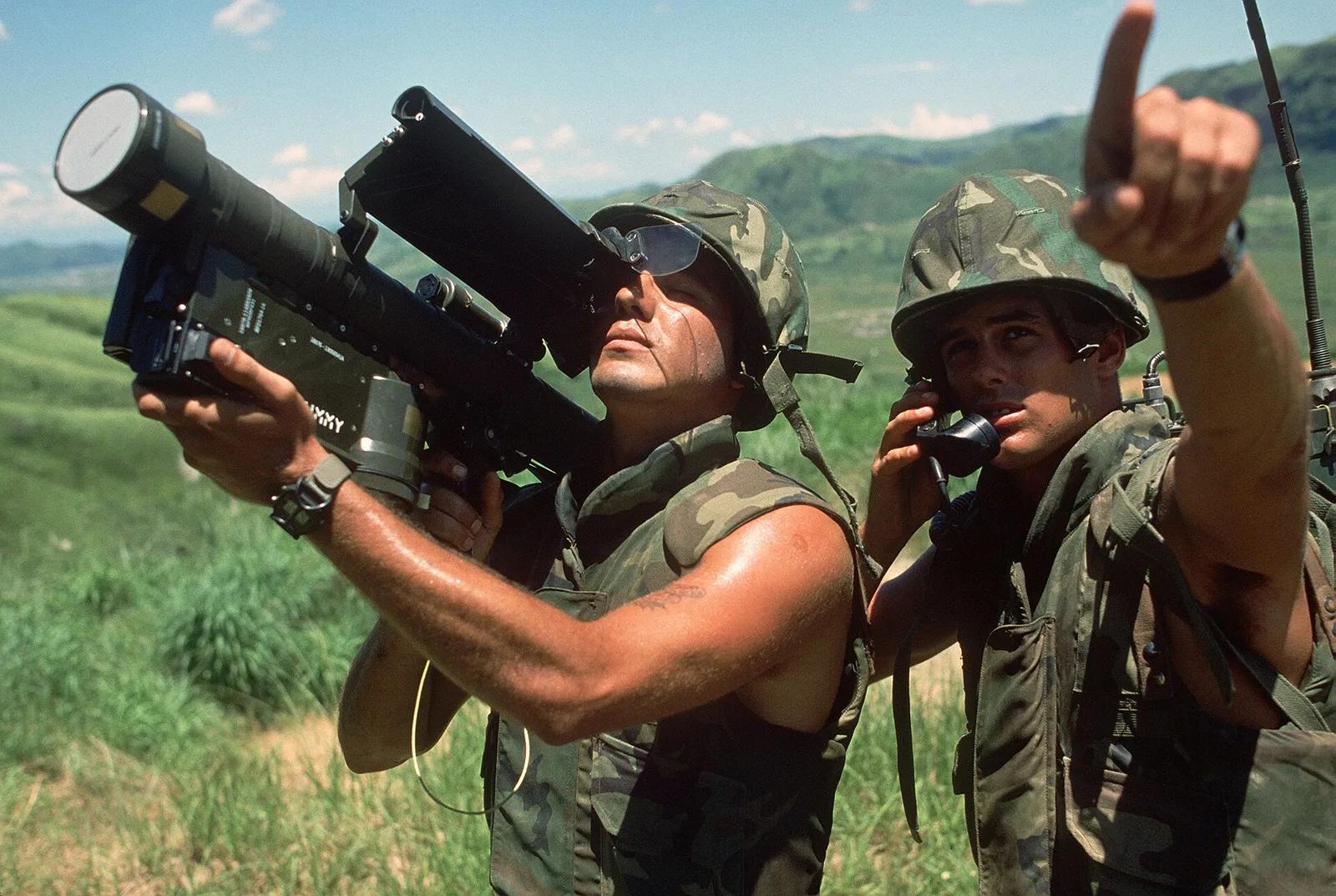
Three gunships near Jalalabad: the Stinger's first shots in Afghanistan, and how much they really changed
On 25 September 1986 a small mujahideen team fired the first CIA-supplied Stingers at Soviet Mi-24 helicopters. The moment became legend; the numbers behind it are still argued over.
 Explainer
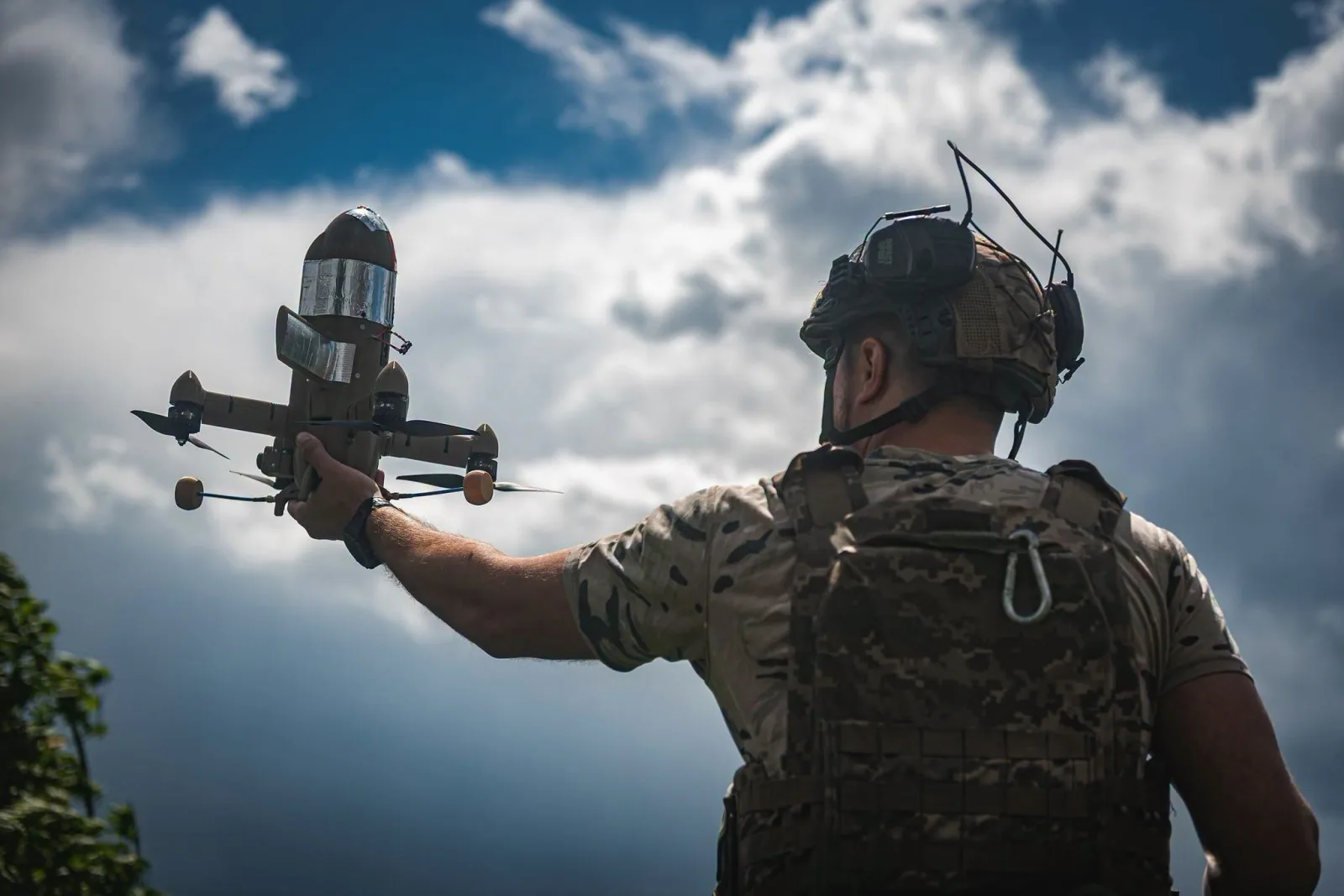
Interceptor drones compared: the cheap hunters built to stop the Shahed
From $1,000 Ukrainian quadcopters to $100,000 jet-powered American rounds: speed, warhead, price and status of every interceptor drone used or offered against Shahed-type drones, with the numbers behind the boom.
 Explainer
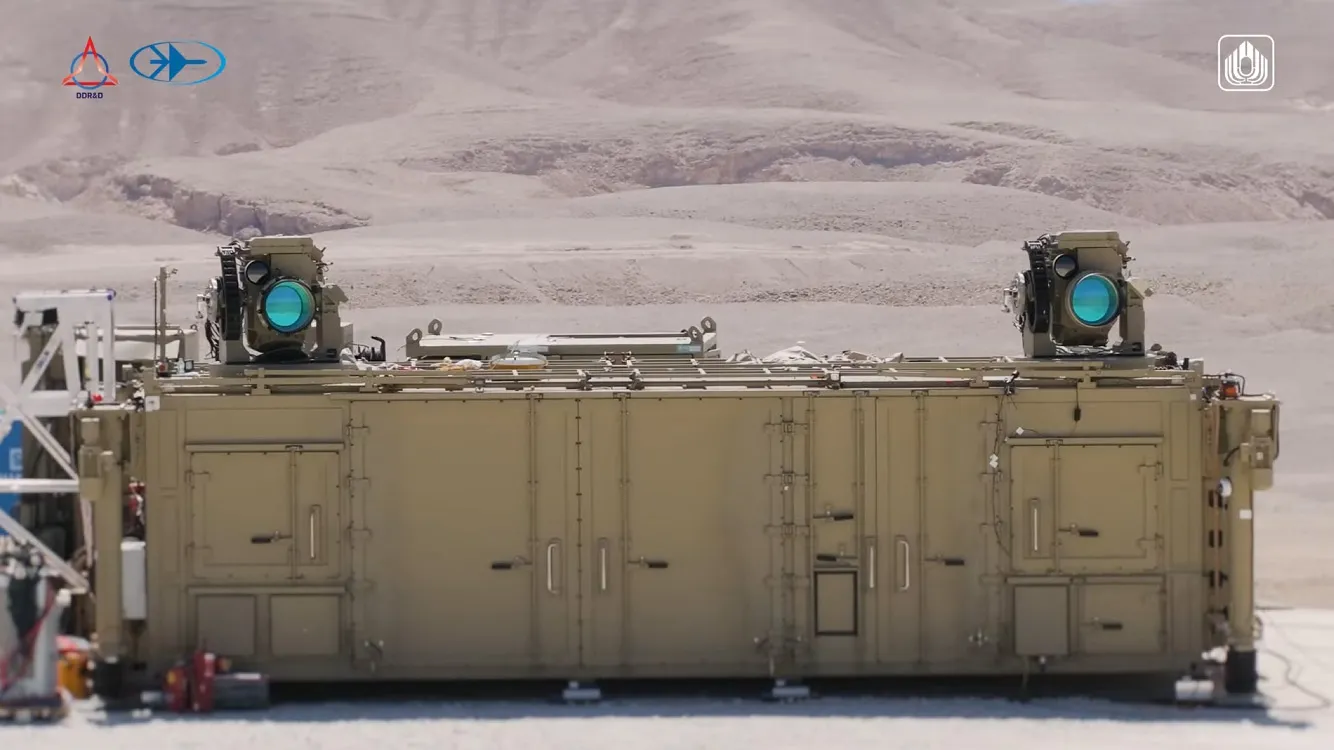
Anti-drone lasers compared: DragonFire, Iron Beam, HELIOS and the race for the $2 shot
Power class, range, cost per shot and status of every laser weapon now aimed at drones, from Israel's 100 kW Iron Beam to Britain's £10-a-shot DragonFire, and the weather and dwell-time limits that still constrain them.