
Laser Weapon Systems · Fixed-site and containerised lasers
Apollo
Also known as EOS Apollo; Apollo High Energy Laser Weapon
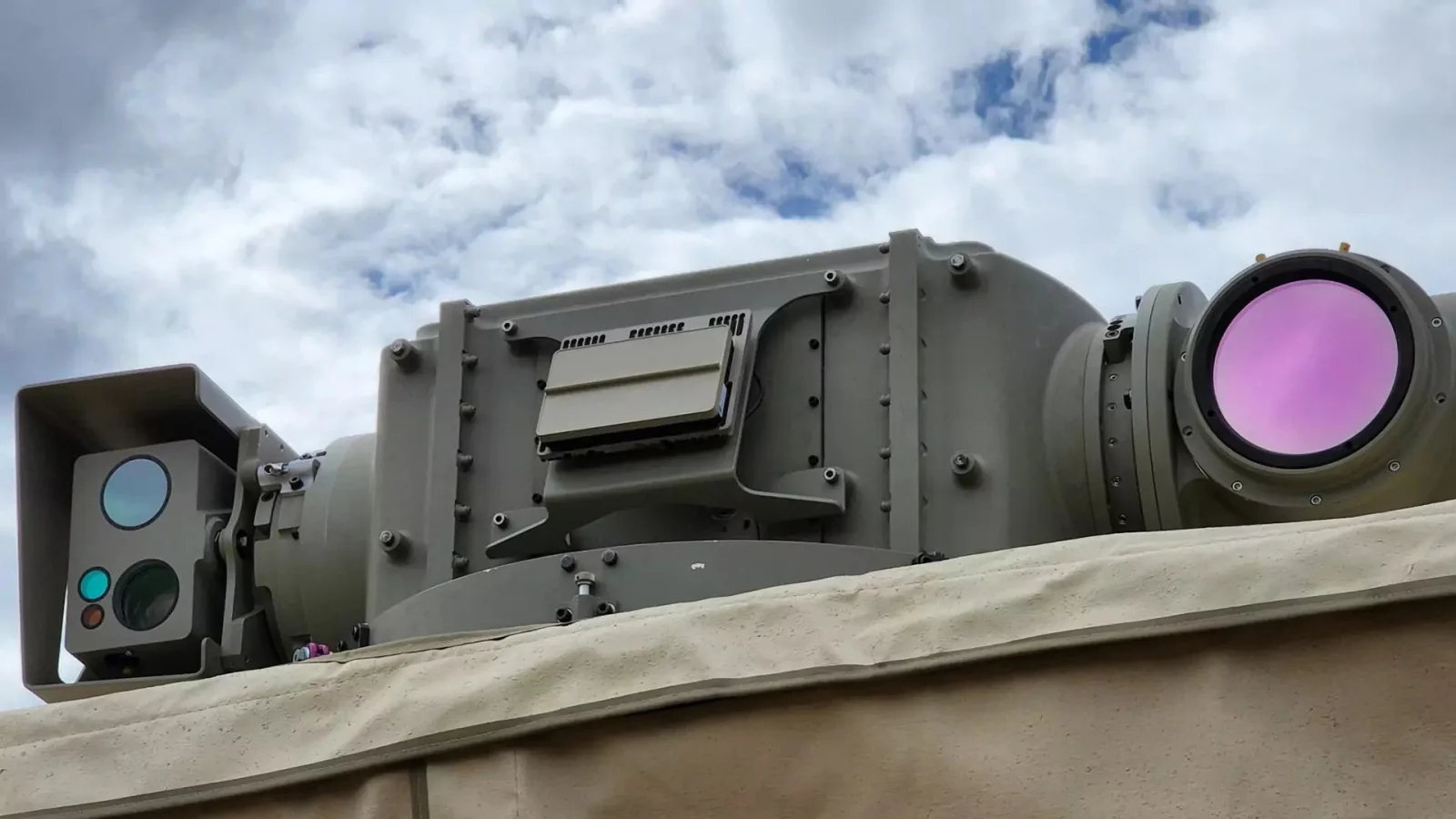
EOS's 100 kW-class containerised laser, bought by the Netherlands in 2025, which the maker says can kill more than 20 small drones a minute.
- Range
- up to 3 km
- Laser power
- about 100 kW
Sourced record, not yet reviewed. Compiled from the public sources listed below. Every figure is attributed to its source; where sources disagree, both values are shown. No editor has reviewed this record yet.
Overview
Apollo is a high-energy laser weapon from Australia's Electro Optic Systems, packed in a 20-foot ISO container. EOS lists a power range of 50–150 kW and says it operates at 100 kW, with hard-kill range of 50 m to 3 km and sensor dazzling out to 15 km.
The Netherlands bought Apollo in 2025 for €71.4 million, EOS's first export order, and in September 2026 signed a letter of intent to develop it into a full operational system and explore production in the Netherlands (specialist press).
Technical profile
Seeker, guidance, warhead, data link and launcher as described in public sources. Each line cites its source.
| Laser type | 50–150 kW range; operates at 100 kW | Manufacturer claim[1][2] |
|---|---|---|
| Beam director | Slews 60° in under 1.5 s to cue and engage | Manufacturer claim[1] |
| Power supply | Internal energy store when isolated; unlimited engagements on external electrical power | Manufacturer claim[1] |
| Magazine depth | More than 200 UAS kills on the internal magazine; more than 20 Group 1 kills per minute | Manufacturer claim[1][2] |
| Thermal management | Fires continuously when connected to external power and cooling | Manufacturer claim[1][2] |
| Fire control / radar | Integrates with NATO-fielded C2 and integrated air defence systems | Manufacturer claim[1][2] |
| Mobility | 20-foot ISO container; operational in under two hours with an experienced crew | Manufacturer claim[1][2] |
Publicly documented characteristics
Each figure shows where it comes from. “Not publicly disclosed” means no source we hold gives a figure; it is never treated as zero.
| Characteristic | Value | Evidence and sources |
|---|---|---|
| Output power class (kW) | ≈ 100 kWOperating level; EOS lists a 50–150 kW range. A class, not a measured output. | Manufacturer claim[1][2] |
| Maximum range (km) | Up to 3 kmBasis: Maximum engagement range as claimed by the developerHard kill; optical sensor denial to 15 km. | Manufacturer claim[1] |
| Minimum range (km) | 0.05 km | Manufacturer claim[1] |
| Ready rounds / magazine | More than 200 kills when isolated; continuous with external power | Manufacturer claim[1] |
| Launch / operating platform | 20-foot ISO container | Manufacturer claim[1] |
Platforms and integration
Launchers, vehicles, ships, aircraft, sensors and command systems the record is integrated with, by status.
Operators
Ordered (1)
- NetherlandsBought in 2025, deliveries scheduled 2025–2028; number of systems not published.[2]
Development and tests
2026-09-24 · Development
Dutch letter of intent
The Dutch MoD and EOS agreed to develop Apollo into an operational weapon; EOS intends in principle to make the Netherlands its European headquarters. [2]
2025 · Production
First export order
The Netherlands ordered Apollo for €71.4 million, with deliveries from 2025 to 2028. [2]
Capabilities and limitations
Stated capabilities
- More than 20 Group 1 drone kills per minute (manufacturer).
- More than 200 kills from stored energy; continuous fire with external power and cooling (manufacturer).
- Ready in under two hours; 60° slew in under 1.5 s (manufacturer).
Limitations and open questions
- Performance figures are the manufacturer's own.
- The Dutch letter of intent does not commit to a purchase of further systems (specialist press).
Relevance to threats
Listed by the strength of the evidence. Inclusion here is not a claim of proven effectiveness.
- One-way attack UAVsManufacturer claim
Group 1–3 UAS are the stated target set.
- Tactical loitering munitionsManufacturer claim
EOS says it can blind loitering UAS sensors beyond 10 km.
Sources
- 1.
Apollo High Energy Laser Weapon (opens in a new tab)
Electro Optic Systems · Manufacturer · Retrieved
Supports: 50–150 kW laser power (100 kW operating level); hard kill 50 m–3 km; sensor denial to 15 km; more than 20 Group 1 kills per minute; more than 200 stowed kills; 20-foot ISO container; under two hours to set up
- 2.
Netherlands, EOS agree to further develop 100-kW Apollo counter-drone laser (opens in a new tab)
The Defense Post · Specialist press · Published · Retrieved
Supports: Dutch letter of intent (announced 24 September 2026); 2025 Dutch purchase for €71.4 million, EOS's first export order, deliveries 2025–2028
This record is compiled and kept up to date by World of Interceptors at www.worldofinterceptors.com/systems/apollo. Cite it with a link to this page. Compiled from open sources and cross-checked, but accuracy cannot be guaranteed; manufacturers and independent organisations can ask us to correct or remove information (disclaimer).
Related systems
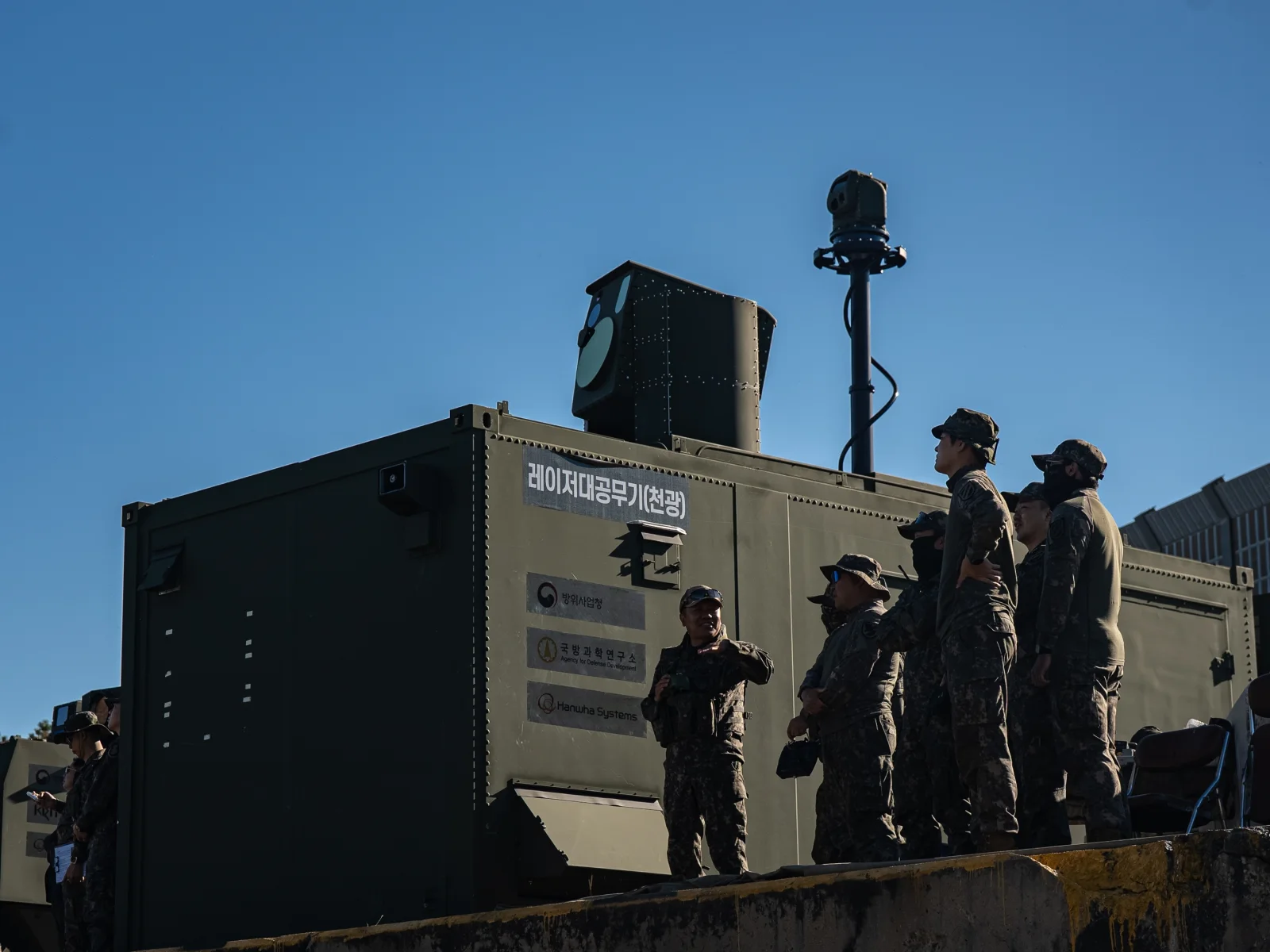 © Defense News (photo: Hanwha)
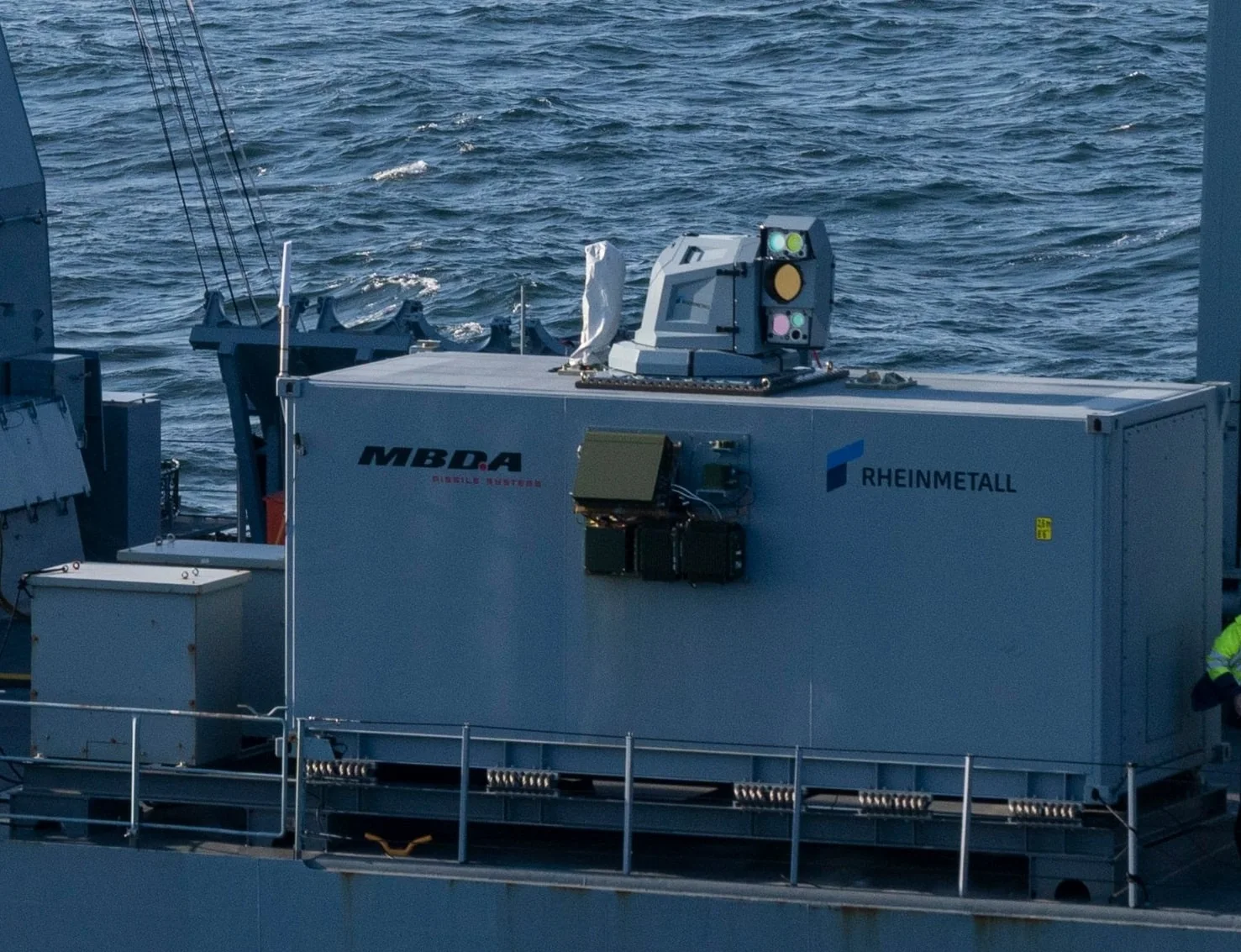 © Naval News (MBDA picture)
Revision history
· Created
Record compiled from public sources found through treg web search.
· Update
Added profile, integration, operator, contracts and milestones from the EOS product page and specialist press.
Newsletter · every two weeks
The Interceptors Brief
What changed in air defence and counter-drone, in five minutes, with the sources attached.
Confirm by email · unsubscribe in one click · Privacy