
Explainer
Hitting a moving target at 5 km a second: why hypersonic gliders are so hard to intercept
Europe's HYDIS project shows what it takes to stop a weapon that steers in the upper atmosphere: a four-stage missile fired as late as possible, a prediction model that never stops updating, and a funding race decided this month.
Editorial desk6 min read
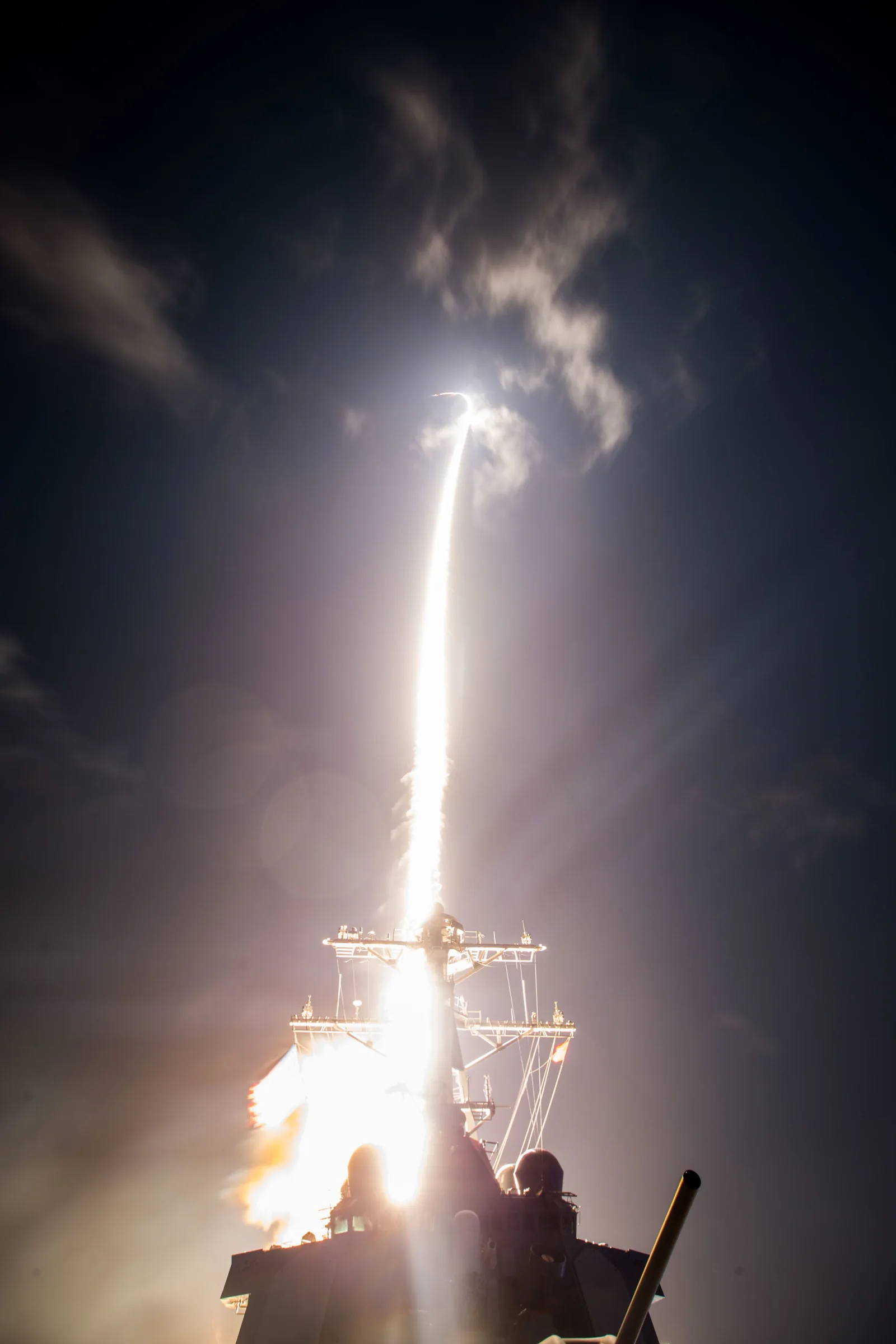
At the Euronaval exhibition near Paris on 4 November 2026, MBDA's Lionel Mazenq briefed reporters on a missile that does not yet exist. His presentation set it beside MBDA's Aster B1 NT air-defence missile: the new interceptor, which the HYDIS consortium wants to build against hypersonic weapons, stood about 30% taller.
Mazenq's claim for it was blunt: today, he said, nothing can intercept the full range of threats it is meant to meet. Why that should be true, and why the answer is a four-stage rocket, explains most of what makes hypersonic defence hard.
“So it's a bit fat, but it's a Formula 1. It's hypersonic, truly hypersonic, not just Mach 5.”
The problem is not speed alone
A ballistic missile follows a curve that, once measured, can be extrapolated. A hypersonic glide vehicle does not. According to Mazenq, the hard part is its manoeuvring at altitudes between 30 and 45 km, where a slight turn can move the predicted interception point by tens or even hundreds of kilometres. Add a closing speed that can reach 5 km per second and there is little time to correct.
MBDA's answer is to predict rather than chase. Artificial-intelligence models are meant to run in real time from the first detection, choosing when and where to intercept and updating that choice throughout the interceptor's climb. Without that capability, Mazenq said, the demands on the missile itself would make it impossible to design.
The same logic explains the missile's shape. It has four stages and very high acceleration because, in Mazenq's words, the aim is to fire it as late as possible while the target's path is still uncertain.
One missile for two kinds of threat
The countries behind HYDIS and the European Commission asked for an interceptor that handles both hypersonic gliders, which arrive more or less horizontally at medium altitude, and ballistic missiles, which dive steeply and must be hit early in the upper atmosphere. MBDA says that requirement costs extra design effort but means a single missile can be stockpiled against several threats.
Mazenq contrasted this with the U.S. Glide Phase Interceptor, awarded to Northrop Grumman, which addresses only gliders and leaves intermediate-range ballistic missiles to exo-atmospheric interceptors such as SM-3. The HYDIS concept is hit-to-kill, is designed to need no more than two interceptors per threat, and is meant to work with European space-based early warning or, if necessary, with a single long-range radar.
Cost is part of the pitch. MBDA wants each interceptor to cost less than a third of an SM-3, without saying which version. Defense News, citing the Missile Defense Advocacy Alliance, puts SM-3 Block IB at $9.7–12.5 million per intercept and Block IIA at $27.9 million.
Who builds it, and who pays
HYDIS is co-funded by the European Defence Fund and by France, Germany, Italy and the Netherlands, with OCCAR as contracting authority. In July 2026 the four states picked one interceptor concept at the Final Concept Review. Avio supplies the solid rocket motors, ArianeGroup and Roxel the final-stage control mechanism and Lynred the terminal infrared sensor; GKN Fokker studied integration into the Mk 41 naval launcher.
The first phase runs to May 2027 with €80 million from the EU and €57 million from the four states. HYDIS is competing with HYDEF, coordinated by Spain's SMS with Germany's Diehl Defence and building on the IRIS-T family, for €100 million of EU money for a second phase from mid-2027 to mid-2029 that would include full-scale flight trials. Only one will be funded, and the decision was due at the end of November. MBDA expects production in the first half of the 2030s.
Our reading
Everything above is a plan, not a result: HYDIS was still raising its technologies to readiness level 3 or 4 in 2026 and has not flown. What the briefing does show is where the difficulty sits. Against a glider, the interceptor's speed matters less than how late it can commit and how well the fire-control system can guess. That is a different problem from the one solved by the ballistic-missile interceptors already in our reference, such as SM-3 Block IIA, Arrow 3 and SAMP/T, which can be compared there with the new HYDIS record.
Originally published by World of Interceptors at www.worldofinterceptors.com/blog/why-hypersonic-gliders-are-hard-to-hit. Quote or republish it freely with a link to this page. Compiled from open sources and cross-checked, but accuracy cannot be guaranteed; manufacturers and independent organisations can ask us to correct or remove information (disclaimer).
Sources
- 1.
MBDA plans to fly 'fat' hypersonic interceptor demonstrator before end-2029 (opens in a new tab)
Defense News (Rudy Ruitenberg) · Specialist press · Published · Retrieved
Supports: Four-stage hit-to-kill interceptor of about 7 m; Mk 41 and future Sylver VLS; phase 1 to May 2027 with €80 million EU and €57 million national funding; phase 2 mid-2027 to mid-2029 with flight trials; competition with HYDEF for €100 million; production in the first half of the 2030s; cost goal under a third of an SM-3; 30–45 km glide altitudes; closing speeds up to 5 km/s
- 2.
EU Signs Grant for MBDA-Led HYDIS Hypersonic Interceptor Project (opens in a new tab)
Naval News (MBDA press release) · Specialist press · Published · Retrieved
Supports: Final Concept Review completed; one concept selected by France, Germany, Italy and the Netherlands; Avio solid rocket motor, ArianeGroup and Roxel final-stage control, Lynred terminal IR sensor; Thales Netherlands sensor data; GKN Fokker Mk 41 integration; OCCAR as contracting authority; Aquila name; rival HYDEF led by SMS with Diehl
Newsletter · every two weeks
The Interceptors Brief
What changed in air defence and counter-drone, in five minutes, with the sources attached.
Confirm by email · unsubscribe in one click · Privacy
More from the blog
 War story
Three gunships near Jalalabad: the Stinger's first shots in Afghanistan, and how much they really changed
On 25 September 1986 a small mujahideen team fired the first CIA-supplied Stingers at Soviet Mi-24 helicopters. The moment became legend; the numbers behind it are still argued over.
 Explainer
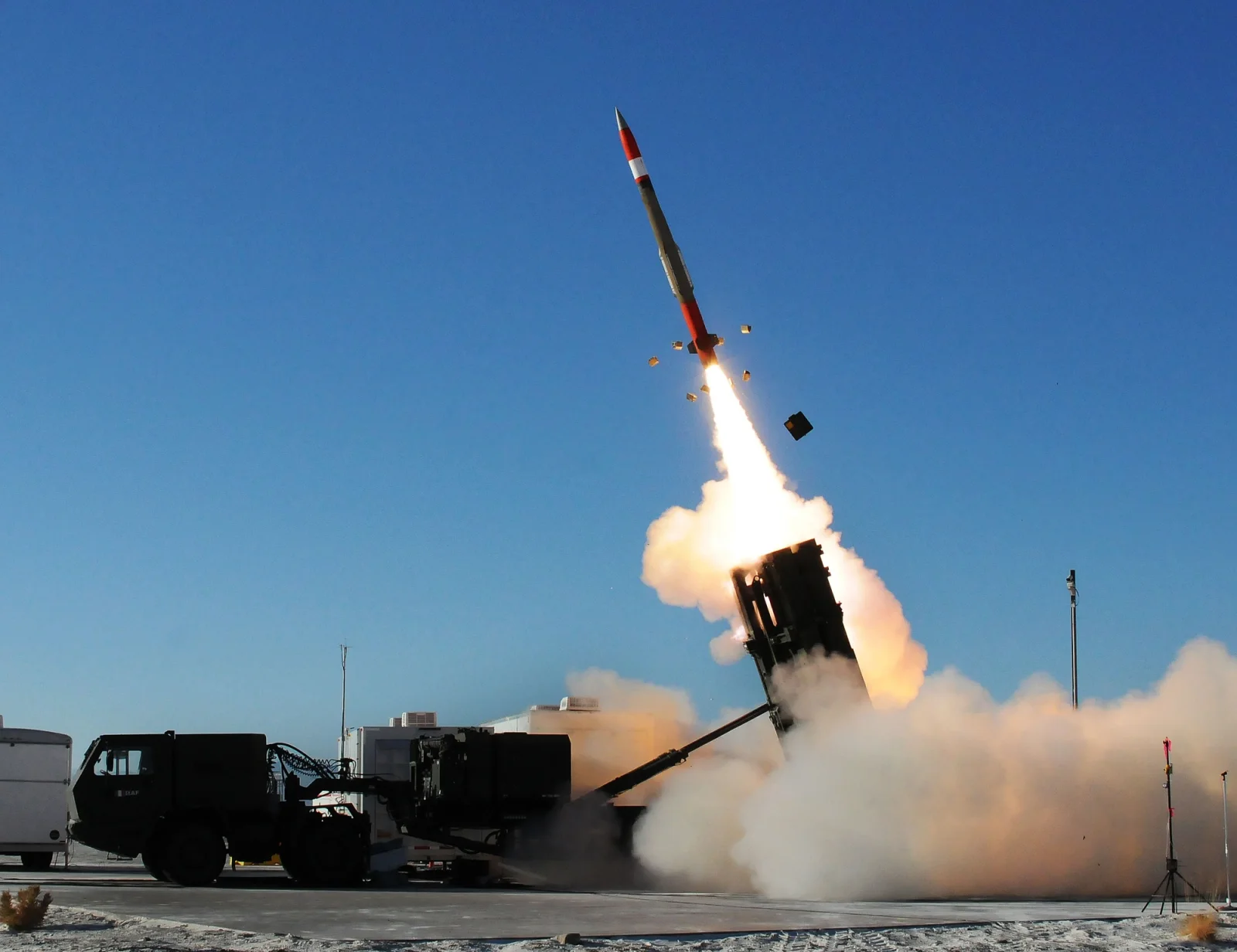
What a Patriot missile really costs: PAC-3 MSE, GEM-T, a full battery and Iron Dome compared
The U.S. Army's own budget books put a PAC-3 MSE at about $4.2 million for the missile alone and about $5 million with its share of hardware. Here is where that number comes from, what a GEM-T and a whole battery cost, and how Iron Dome compares.
 Explainer
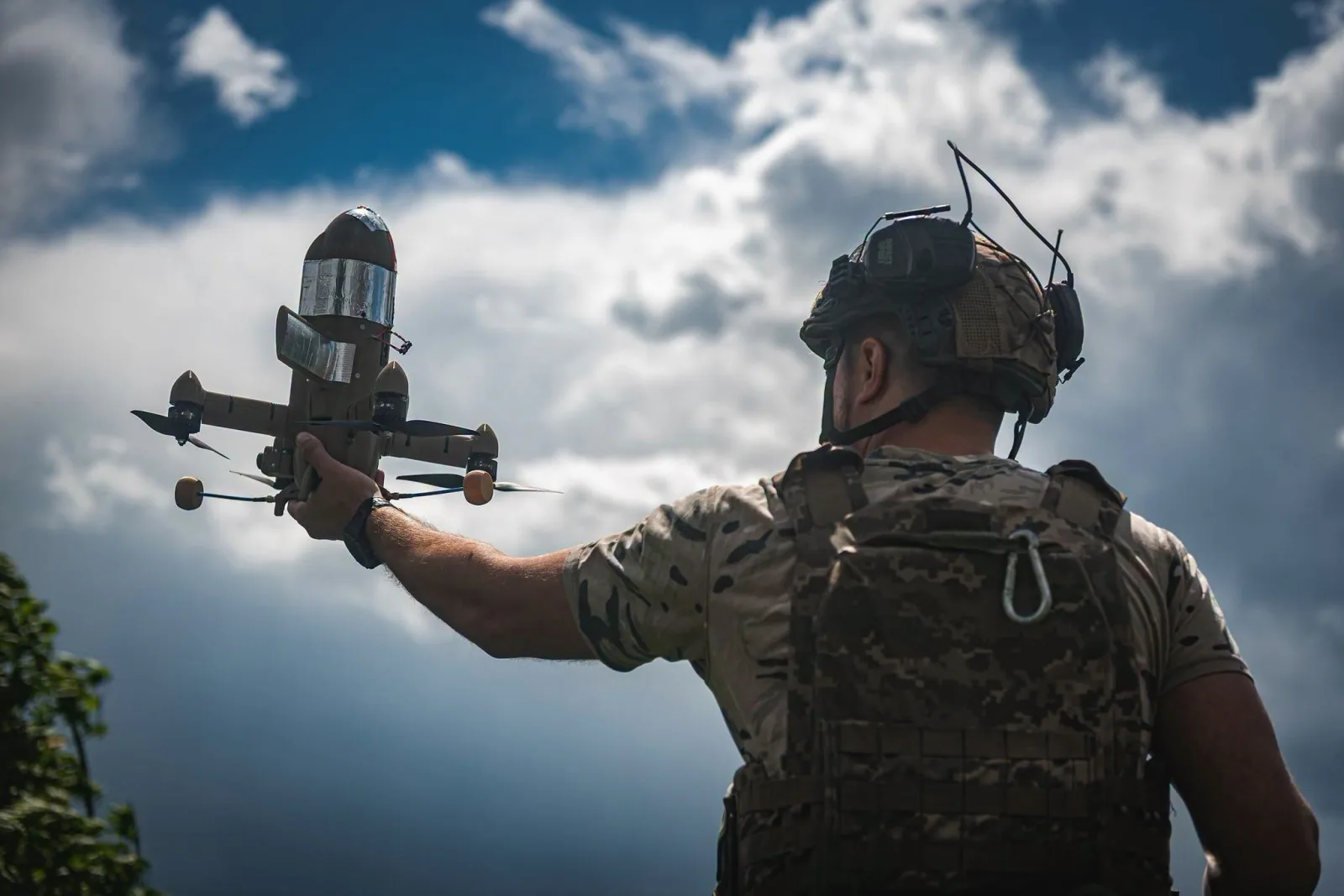
Interceptor drones compared: the cheap hunters built to stop the Shahed
From $1,000 Ukrainian quadcopters to $100,000 jet-powered American rounds: speed, warhead, price and status of every interceptor drone used or offered against Shahed-type drones, with the numbers behind the boom.