
History
The Shahed story: how Iran's cheap delta-wing drone changed air warfare
From a drone programme improvised during the Iran–Iraq war to Russia's Alabuga factory, a U.S. clone and jet-powered successors: the people, ideas, attacks and engineering behind the Shahed family.
Editorial deskUpdated 11 November 202622 min read
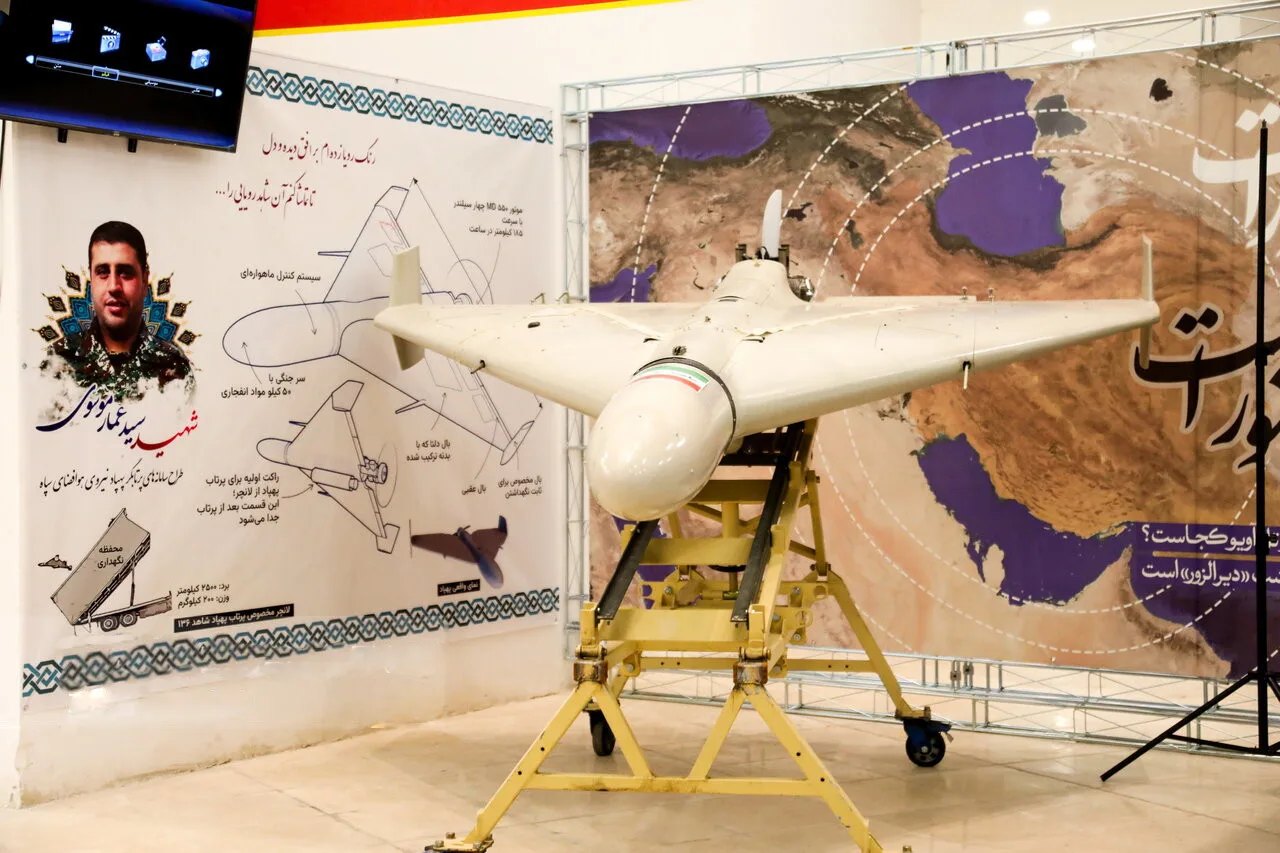
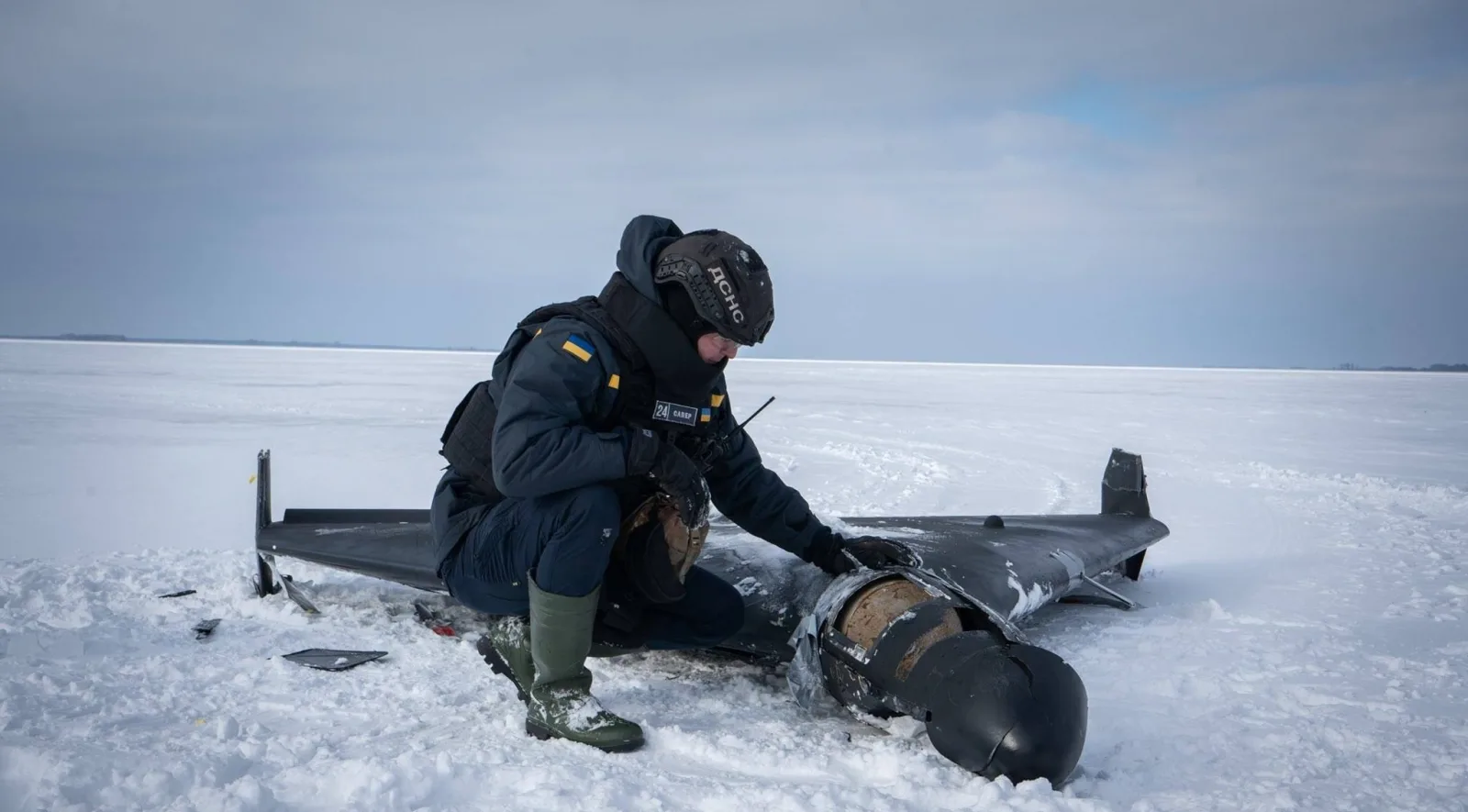
On 13 September 2022 Ukrainian soldiers near Kupiansk recovered the wreck of a delta-wing drone. Stencilled on its side was a Russian word, Герань-2 — Geranium-2 — and the series letter 'M'. It was the first publicly documented Shahed-136 in Ukraine. Within weeks the type was hitting power stations from Odesa to Lviv; within three years Russia was launching several hundred in a single night.
The Shahed is not an advanced weapon, and that is the point. It is a slow, noisy, propeller-driven aircraft built largely from commercial parts. Its significance lies in what it did to the economics of air defence — and in the four decades of Iranian improvisation, copying and doctrine that produced it. This is that history, compiled by World of Interceptors (www.worldofinterceptors.com) from think-tank research, government findings and specialist reporting.
Born of isolation: Iran's drone programme, 1980s–2000s
Iran's drones began in war and embargo. During the Iran–Iraq war of the 1980s, export restrictions on dual-use technology stopped Iran from buying unmanned aircraft abroad, and the Islamic Revolutionary Guard Corps started a reconnaissance-drone programme from scratch, by trial and error. Early prototypes even carried underwing rocket launchers; they were never used operationally, but the idea of a drone that attacks, rather than only watches, took root, according to Farzin Nadimi of the Washington Institute.
In 1989 Iran merged its regular defence ministry with the ministry of the IRGC. Two state firms took shape under the new Ministry of Defence and Armed Forces Logistics: Qods Aviation Industries in west Tehran and HESA at Shahin Shahr near Isfahan — a factory that had started life under the Shah licence-building Bell helicopters. The IRGC Air Force kept its own research and development at Shahed Aviation Industries, at Badr Air Base south of Isfahan. Sharif University developed gyro-navigation units, and Iran studied several Western drones that crashed on its territory.
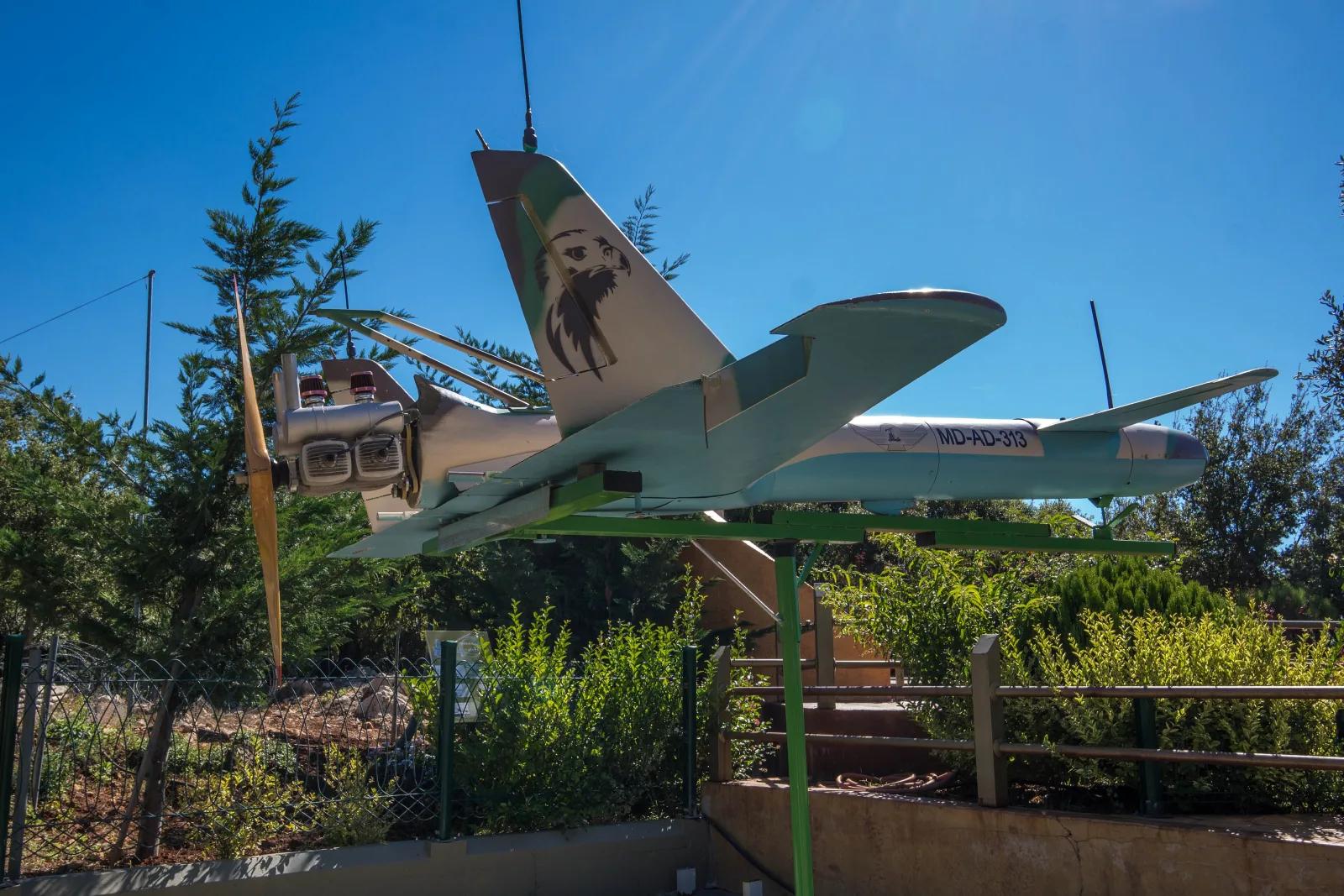
In the early 1990s HESA developed the Ababil. Its export career showed the programme's strategic purpose: in November 2004 Hezbollah flew an identical drone, the Mersad-1, over northern Israel, and the Houthis in Yemen later received a smaller derivative, the Qasef. Drones were becoming a way for Iran to project force through partners.
Copying as a method
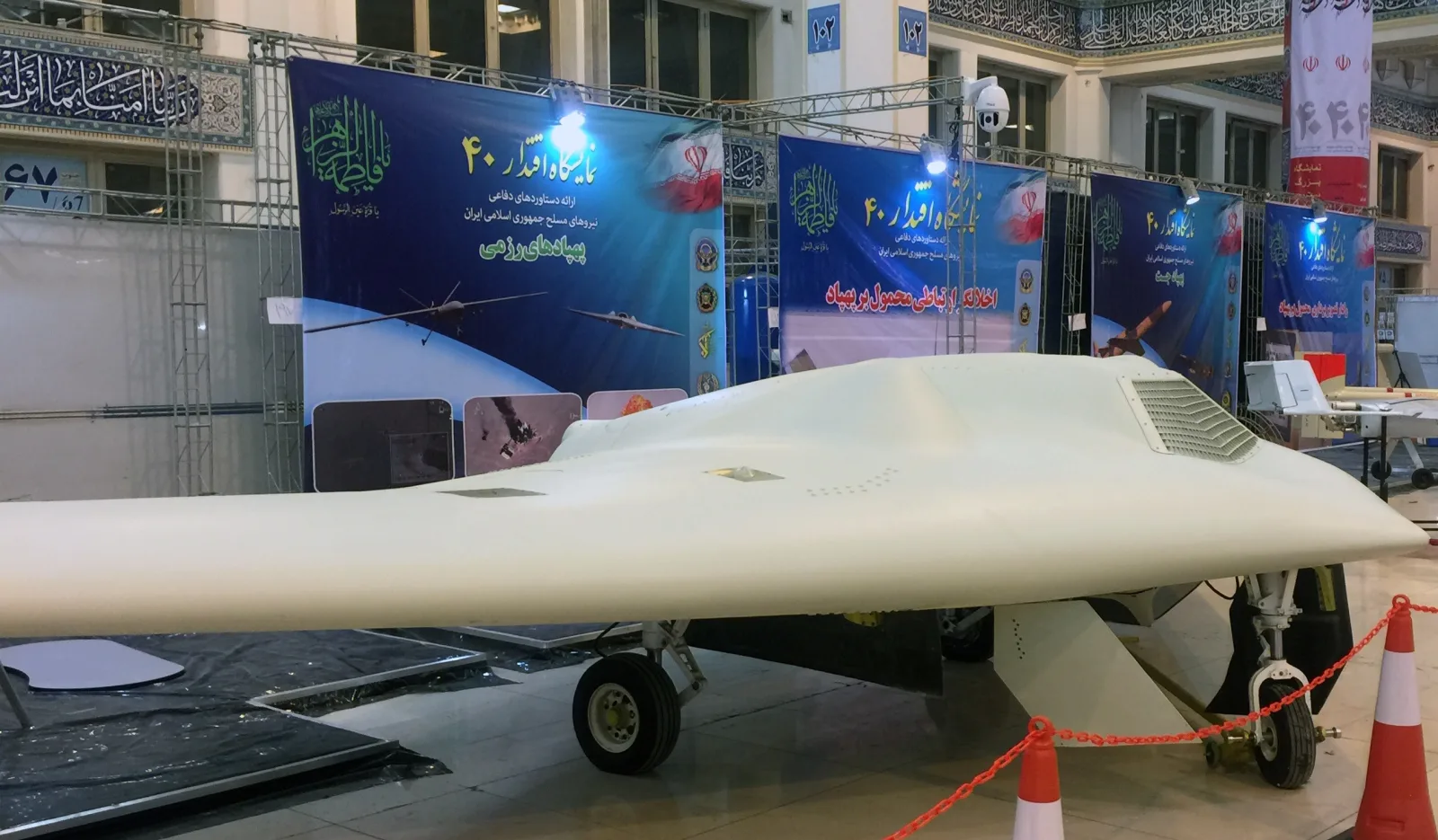
Sanctions made reverse engineering a policy rather than an accident. The U.S. Treasury, designating the Iranian firm Paravar Pars in 2022, said it had been given U.S.- and Israeli-made drones 'to reverse engineer and reproduce'. The most famous case came in December 2011, when a U.S. RQ-170 stealth drone came down inside Iran. Shahed Aviation's flying-wing Shahed-141, -171 and -191 were modelled on it, and the Treasury names the Shahed Aviation Industries Research Center (SAIRC) as lead contractor for the Shahed-171.
Washington had already moved against the network: HESA was designated in September 2008, the IRGC Aerospace Force in June 2010. The designations did not stop the work; they shaped it, pushing Iran towards components it could buy on open commercial markets — a choice that would define the Shahed-136.
A shape with ancestors
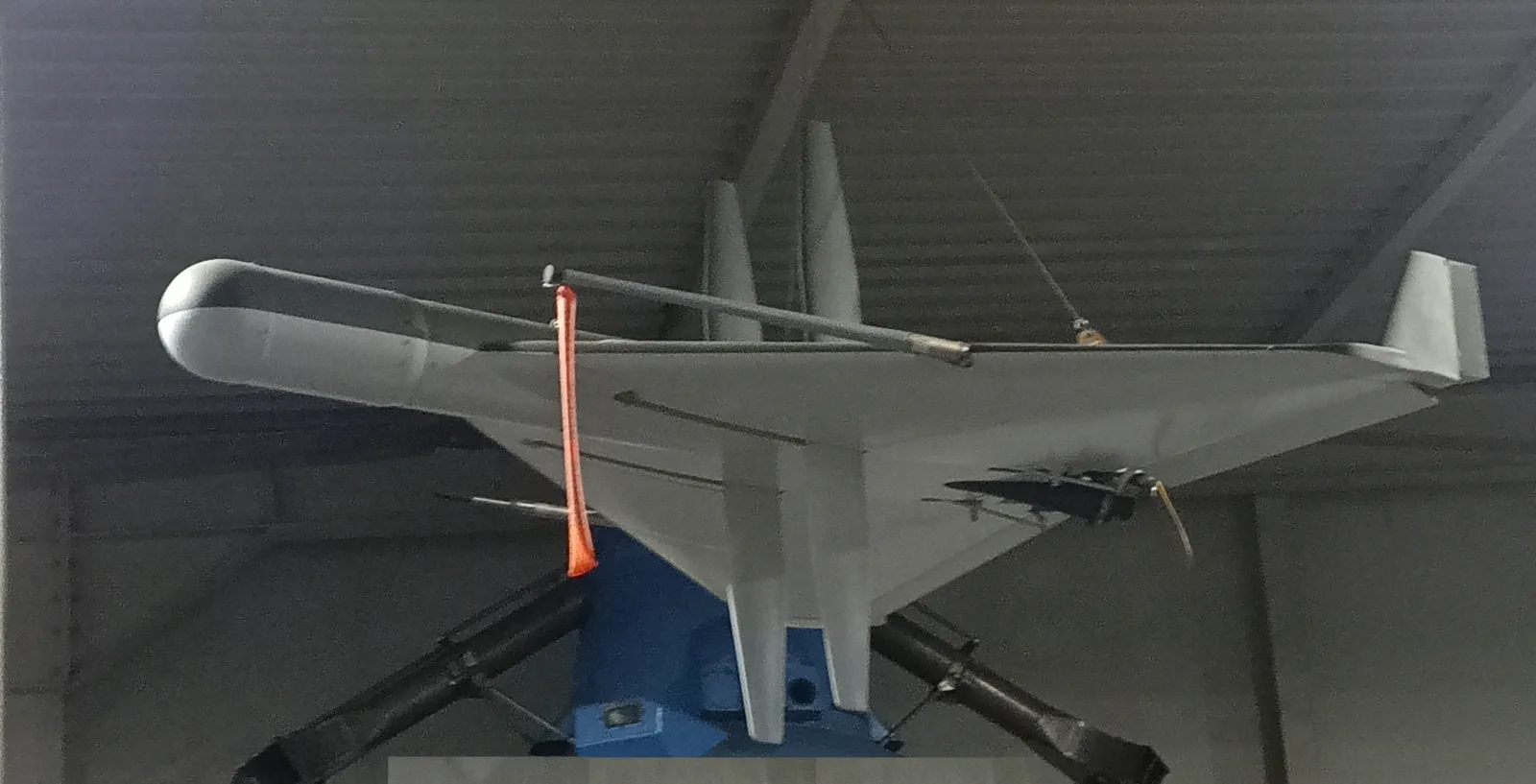
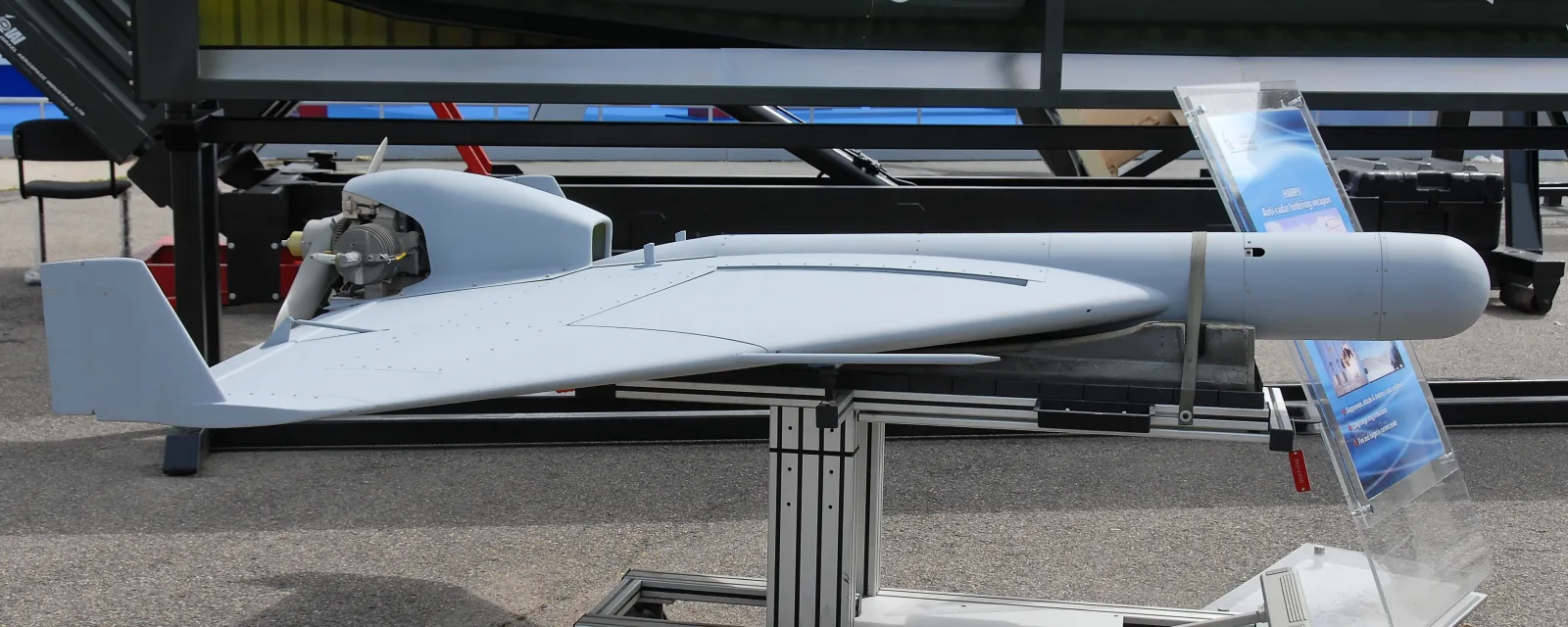
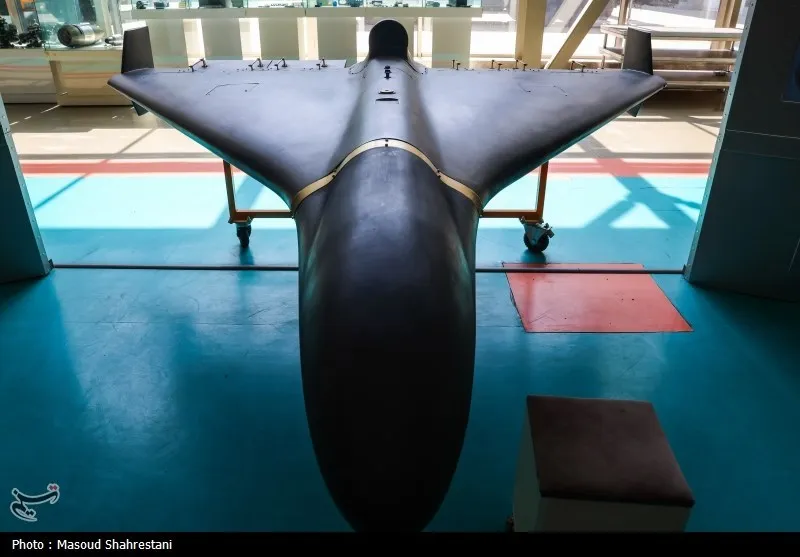
The Shahed's layout — a cropped delta wing, fins at the wingtips, a pusher propeller at the tail — was invented in Europe. In the mid-1980s West Germany's Dornier developed the DAR (Drohne Anti-Radar): a delta-wing drone of about three metres' span with a pusher engine and satellite navigation, designed to fly to enemy radars and destroy them. It was cancelled in 1994. A parallel line, the South African Kentron ARD-10, was licensed to Israel Aerospace Industries and became the Harpy anti-radar loitering munition, exported widely.
Whether Iran copied any of these is not established. David Axe, writing in Combat Aircraft, traces the family resemblance and notes that Kentron 'may have' sold the ARD-10 to Iran — a claim no source confirms. RUSI's Uzi Rubin points instead to a domestic step: a delta-wing 'Touphan' shown by Iran's Mashregh News in December 2014, flying at 250 km/h for an hour, as a possible progenitor.
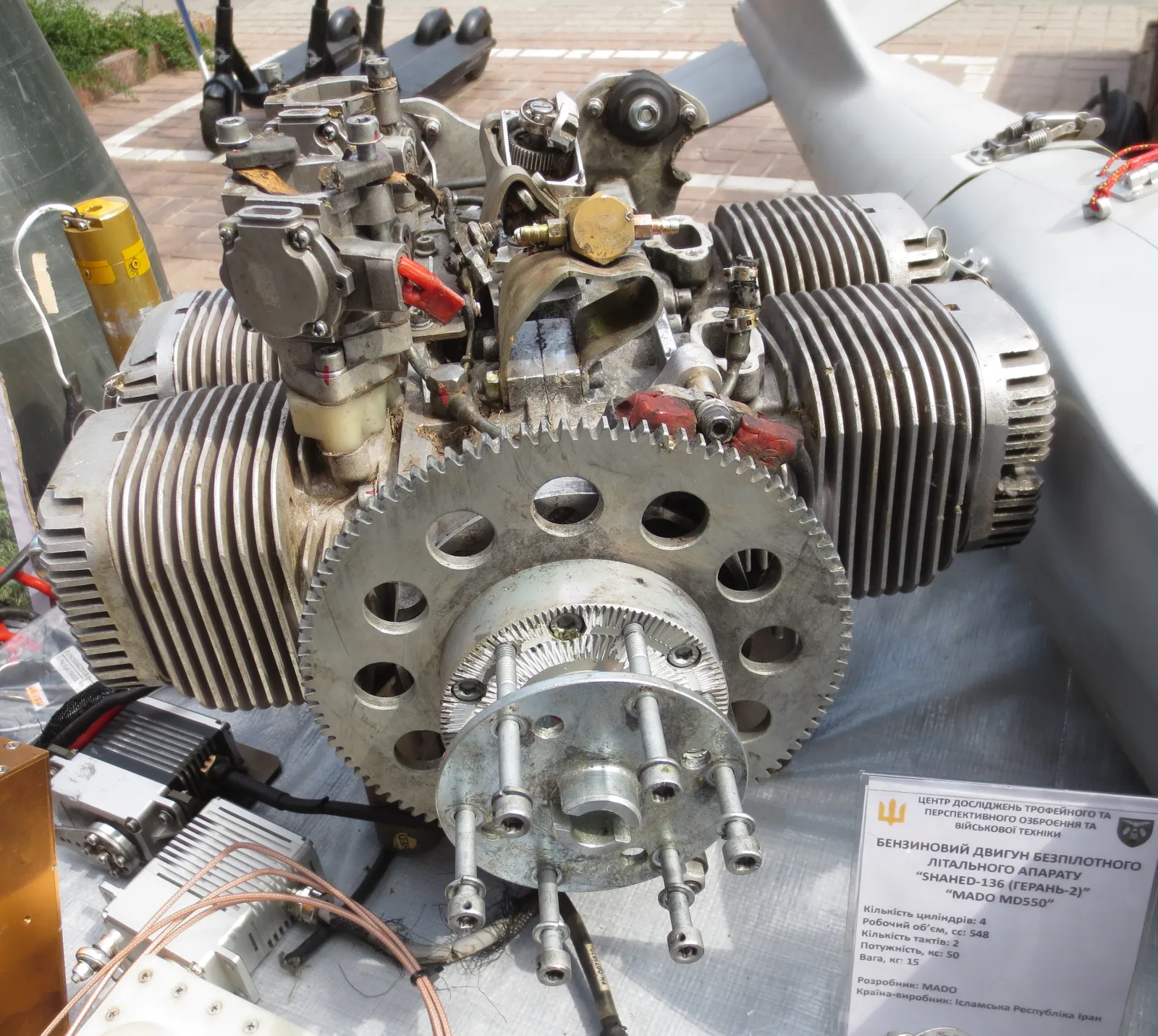
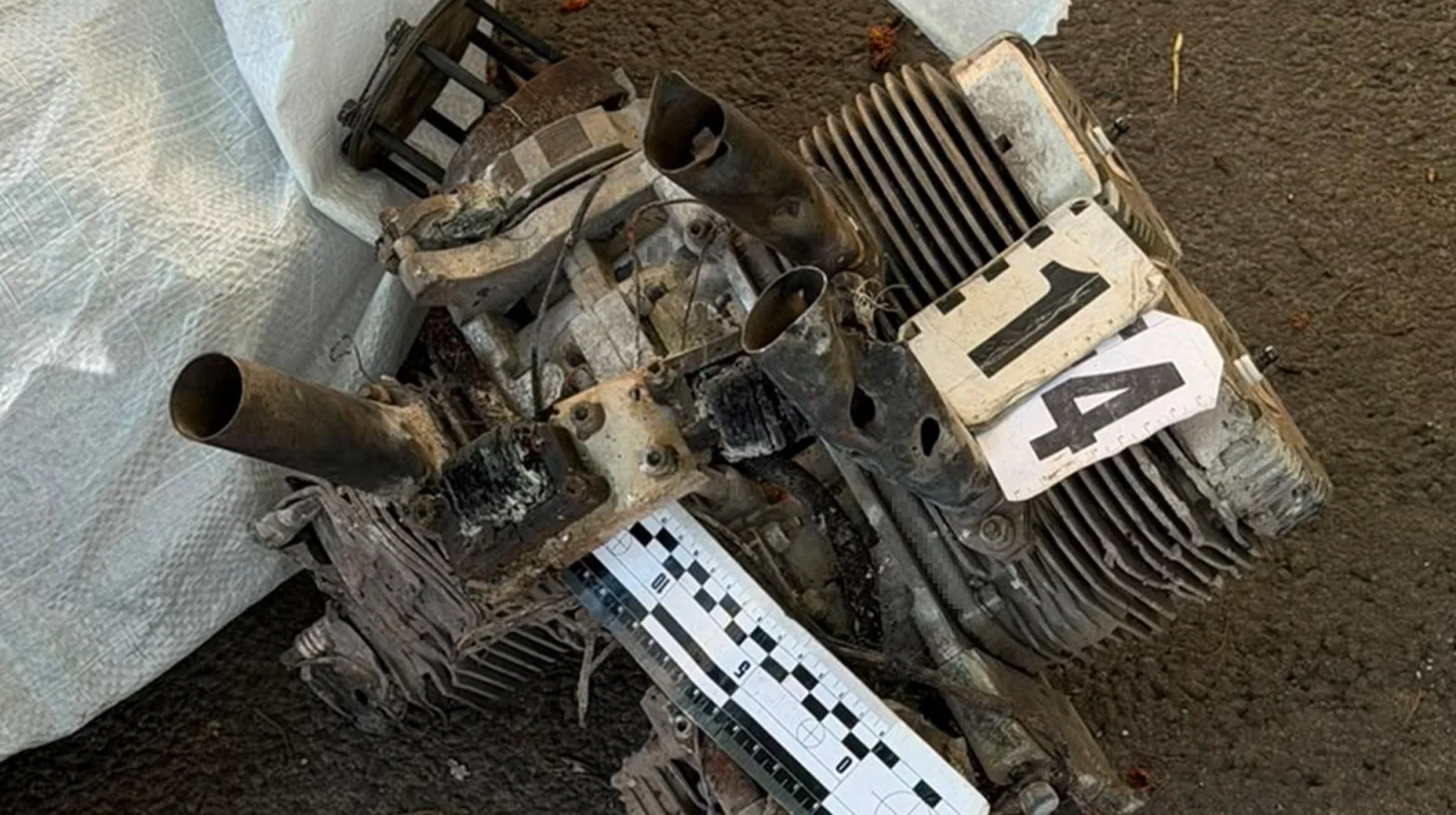
The engines are a different matter: there the copying is documented. The Shahed-136's MD-550, made by Iran's Oje Parvaz Mado Nafar, is a reverse-engineered Limbach L550E, a German four-cylinder two-stroke for light aircraft. The smaller Shahed-131's Serat-1 Wankel engine copies the British AR731.
The idea: a propeller-driven cruise missile
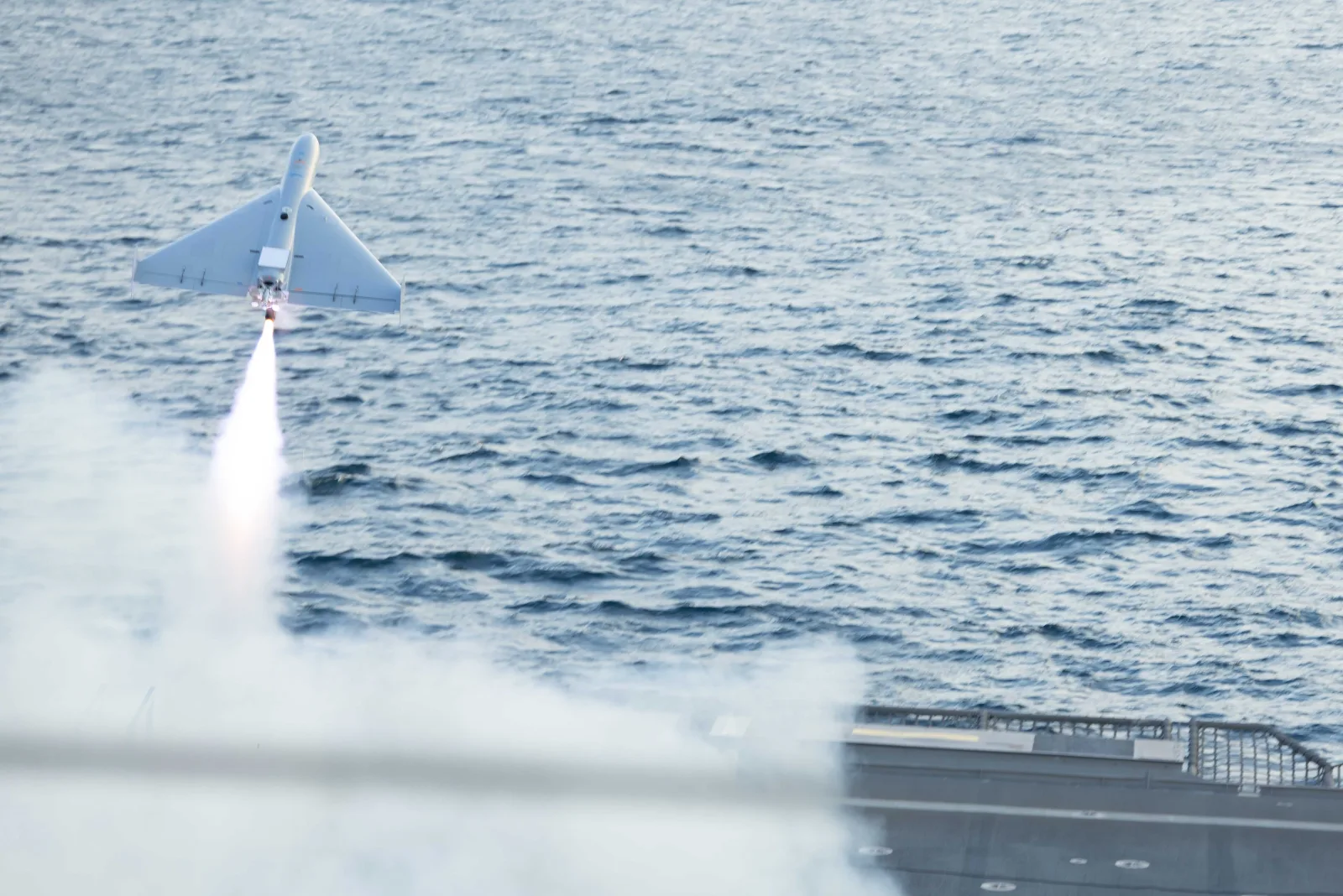
Rubin's technical profile for RUSI remains the clearest statement of what the Shahed is. It is not, he argues, a true loitering munition but a propeller-driven cruise missile. Its airframe of carbon-fibre cloth over honeycomb is something 'any DIY handyman' could build; its engine comes from the hobby and light-aircraft market, outside export controls; it navigates with a commercial-grade inertial unit corrected by GPS and GLONASS. A truck-mounted container fires five drones, each boosted off its rail by a small rocket.
The result is precision at a price no missile can match. Rubin compared a Shahed estimated at US$20,000–30,000 with about US$2 million for a Tomahawk and some US$13 million for a Russian Kh-101. The weaknesses are as plain: it is low, slow and loud — its two-stroke sounds like a lawnmower — and easy to shoot down once detected. Its designers accepted those flaws because the defender pays for every shot.
The doctrine behind it is asymmetric. In Nadimi's account, Iran built drones to complement its ballistic missiles and bring 'the entire Middle East within its range'. CSIS analysts describe the 2026 Gulf campaign in the same terms of cost imposition: forcing opponents to spend expensive interceptors on cheap aircraft.
“The Shahed 136's simplicity, combined with its almost uncanny accuracy, long range and low cost, makes it unique among strategic standoff weapons.”
Who builds it
The Shahed is usually labelled 'HESA Shahed-136', but the U.S. Treasury identifies SAIRC — subordinate to the IRGC Aerospace Force — as the designer and producer of the Shahed series. Rubin describes SAIRC as a design bureau that hands finished designs to HESA for series production, an arrangement that reportedly caused friction between the two.
Around them sits a procurement network that sanctions lists have mapped piece by piece: DAMA, a front buying for HESA; Baharestan Kish, working on Shahed components in 2021, and its managing director Rehmatollah Heidari; Paravar Pars, linked to Imam Hossein University; the engine maker Mado; and Sahara Thunder, described as an IRGC front company. Safiran Airport Services was designated for flights carrying drones to Russia, and two UAE firms, Success Aviation Services and iJet Global, for logistics.
At the top stood Brigadier General Amir Ali Hajizadeh, commander of the IRGC Aerospace Force, sanctioned by the EU in 2022 for overseeing the supply of Shaheds to Russia. He was killed in an Israeli strike on 13 June 2025.
First attacks: Abqaiq, Mercer Street and the unveiling
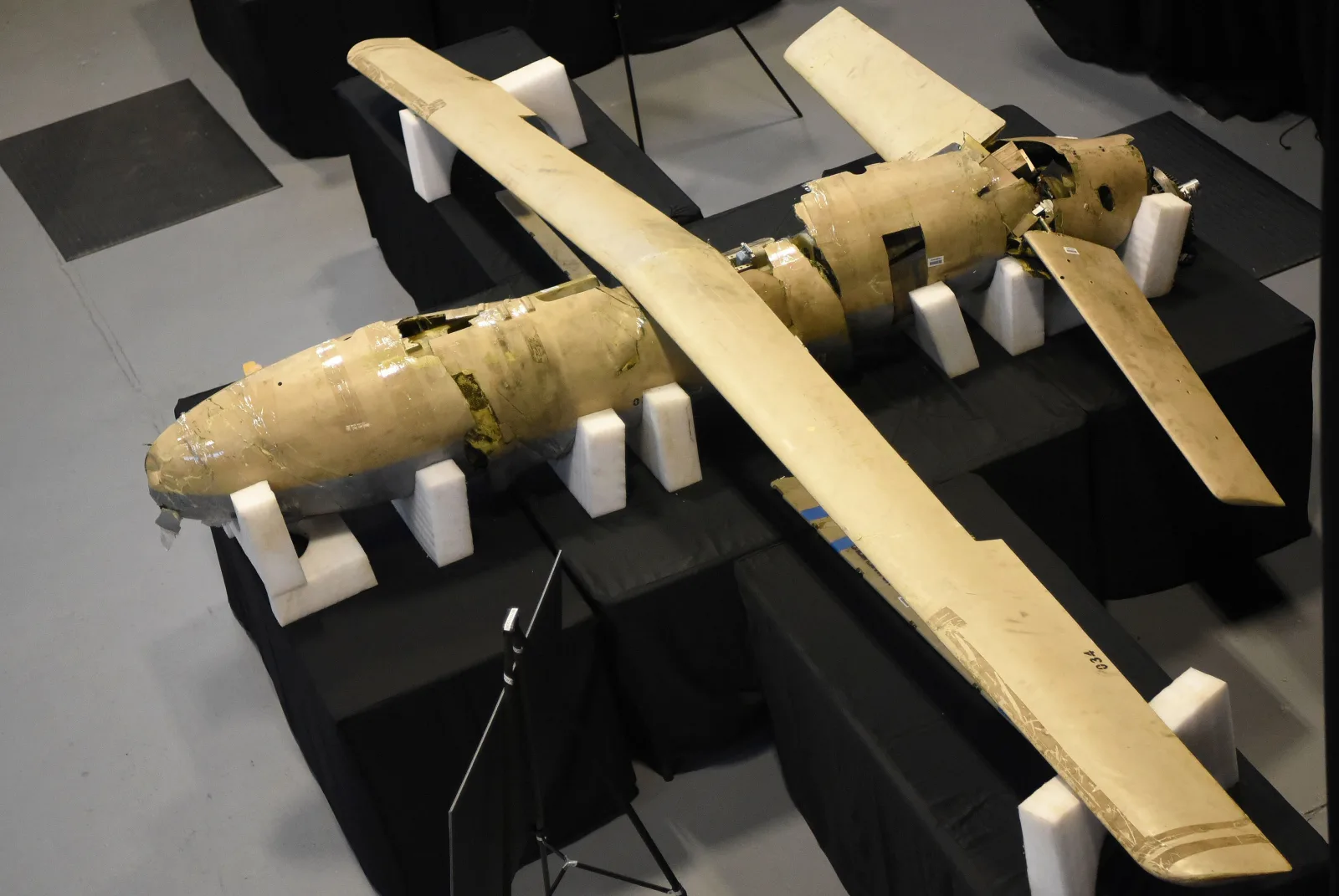
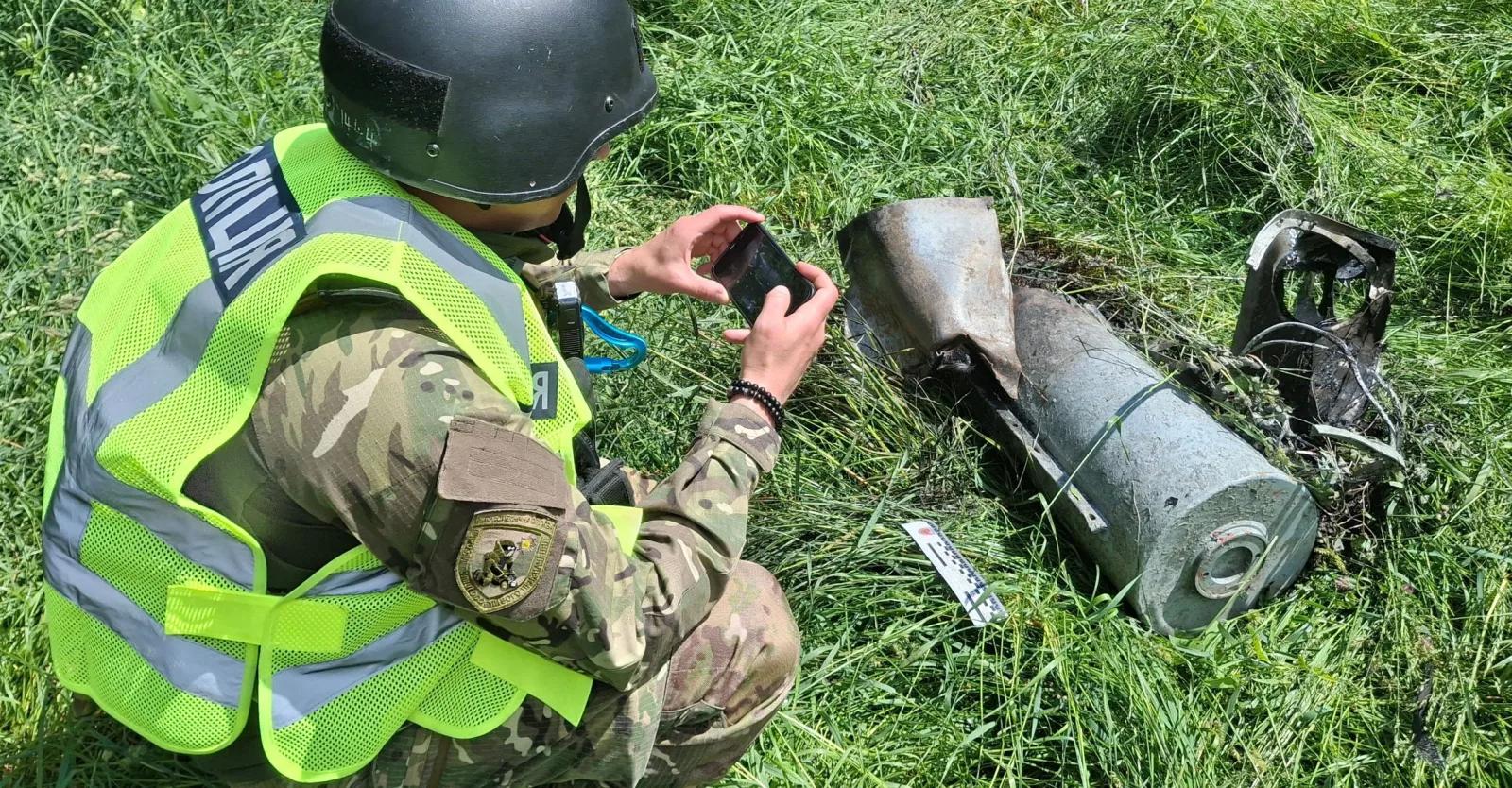
The family's combat record begins before most people knew its name. On 14 September 2019 Saudi Arabia's oil facilities at Abqaiq and Khurais were struck. Among the debris Saudi officials displayed an 'unknown delta-wing UAV' with a Wankel engine, later identified as the Shahed-131. The Houthis claimed the attack; RUSI describes the drones as 'supposedly' launched by them, and the claim remains disputed.
On 29–30 July 2021 two one-way attack drones struck the tanker Mercer Street off Oman; the second killed the ship's master, a Romanian, and a British security officer. U.S. Central Command attributed the attack to Iran on 6 August from forensic evidence, including a vertical fin identical to Iranian designs, without naming the model. In September 2021 Israel's prime minister Naftali Bennett publicly named the 'Shahed 136'. Iran unveiled it in December 2021, firing it from a truck-mounted five-drone container in the Great Prophet 17 exercise. The Houthis field it as the 'Waid'.
Anatomy and variants
The Shahed-136 is about 3.5 m long with a 2.5 m span and weighs around 200 kg. Its engine runs for about 100 hours, with servicing every 25 hours, according to documents analysed by the Institute for Science and International Security. Range and warhead figures vary widely between sources and batches, as the table shows; we give ranges where sources disagree. Each variant also has its own sourced record in the threat reference at www.worldofinterceptors.com.
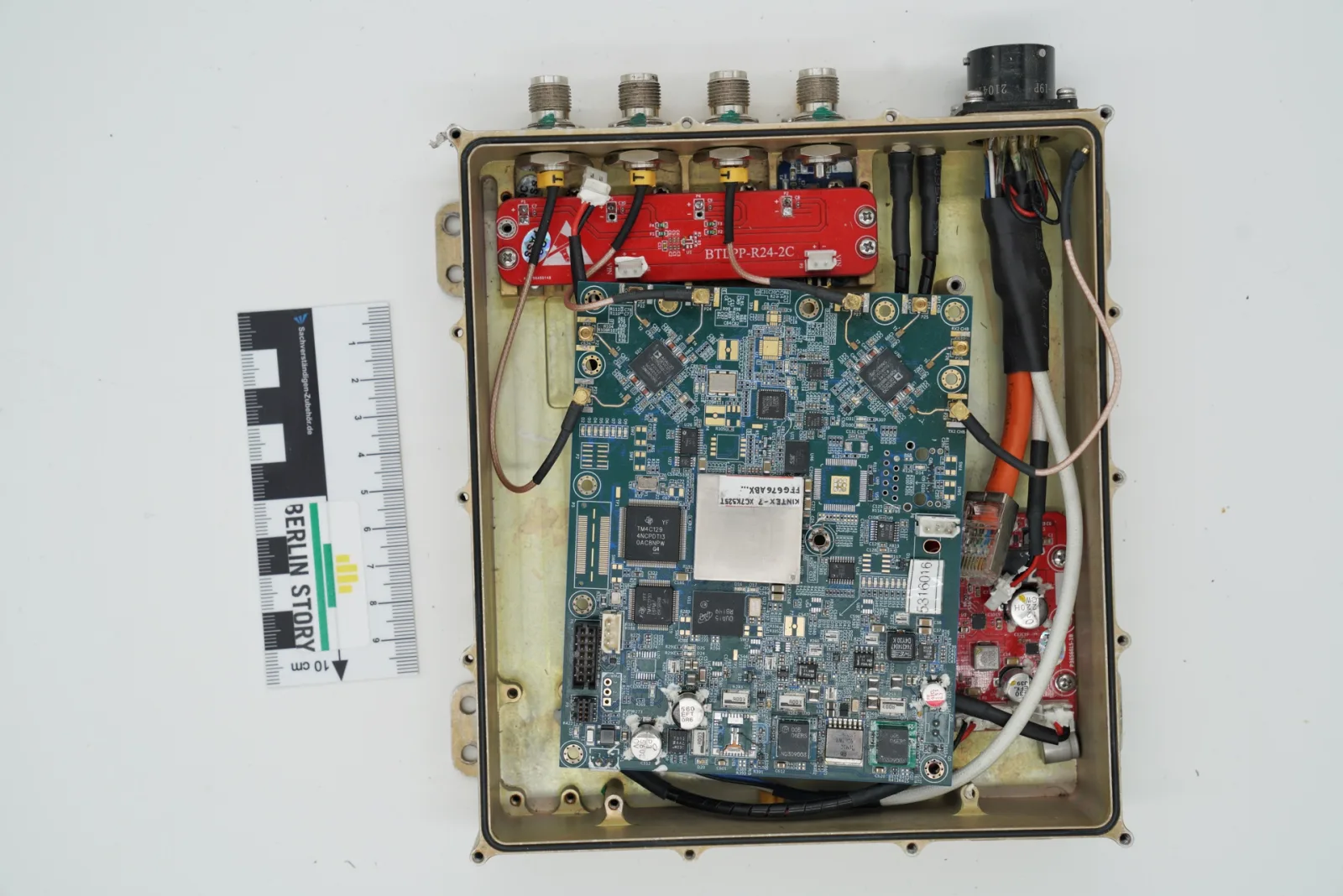
Navigation began with an Iranian Nasir receiver and a four-element anti-jam antenna. In Russian service CSIS documents its replacement by the Kometa-M4 in mid-2023 and later by Kometa-M8, -M12 and -M16 units and Chinese 8- and 16-element arrays, while a Russian B-101 flight controller replaced the original Iranian board.
| Variant | Length / span | Engine | Speed | Range | Warhead | Reported unit cost |
|---|---|---|---|---|---|---|
| Shahed-131 / Geran-1 | 2.6 m / 2.2 m | Serat-1 Wankel, 38 hp (AR731 copy) | — | 700–1,000 km | 10–20 kg (est.) | — |
| Shahed-136 (Iran) | 3.5 m / 2.5 m | MD-550, 50 hp two-stroke (Limbach L550E copy) | ≈180 km/h cruise | 1,000–2,000 km | 20–50 kg (sources differ) | US$20,000–50,000 (est.); US$193,000 to Russia (leak) |
| Geran-2 (Russia) | 3.5 m / 2.5 m | MD-550 type | ≈180 km/h | Shorter with heavy warhead | ≈50 kg to ≈90 kg (KOFZBCh-90) | ≈US$48,800 localised (leak); ≈US$50,000 (Key.Aero) |
| Shahed-238 | 3.5 m / 3 m | TJ150 turbojet | ≈600 km/h | 1,000–2,500 km (disputed) | ≈50 kg (up to 90 kg) | US$0.9–1.4 million (reported) |
| Geran-3 | — | Telefly JT80 turbojet (China) | 300–370 km/h (sources differ) | — | — | — |
| Geran-4 | Reinforced delta | Higher-thrust Telefly turbojet; later Russian-made | up to ≈500 km/h | — | — | — |
| LUCAS (U.S.) | ≈3 m / 2.4 m | Two-cylinder 215 cc | — | ≈800 km (≈500 miles) | ≈18 kg (40 lb) | ≈US$35,000 (CENTCOM) |
Geranium: the Russian chapter
Russia received its first shipment of Shahed-136s and -131s in mid-August 2022, according to CSIS citing the Washington Post. Iran denied supplying drones for the war. After the Kupiansk wreck in September, Gerans launched from Belarus and Crimea struck what Rubin calls 'nodal points in Ukraine's electricity grid'. Ukraine's military reported 46 launched on 6 October, 24 on 10 October and 47 on 17 October 2022, when they hit Kyiv, including the offices of the grid operator Ukrenergo.
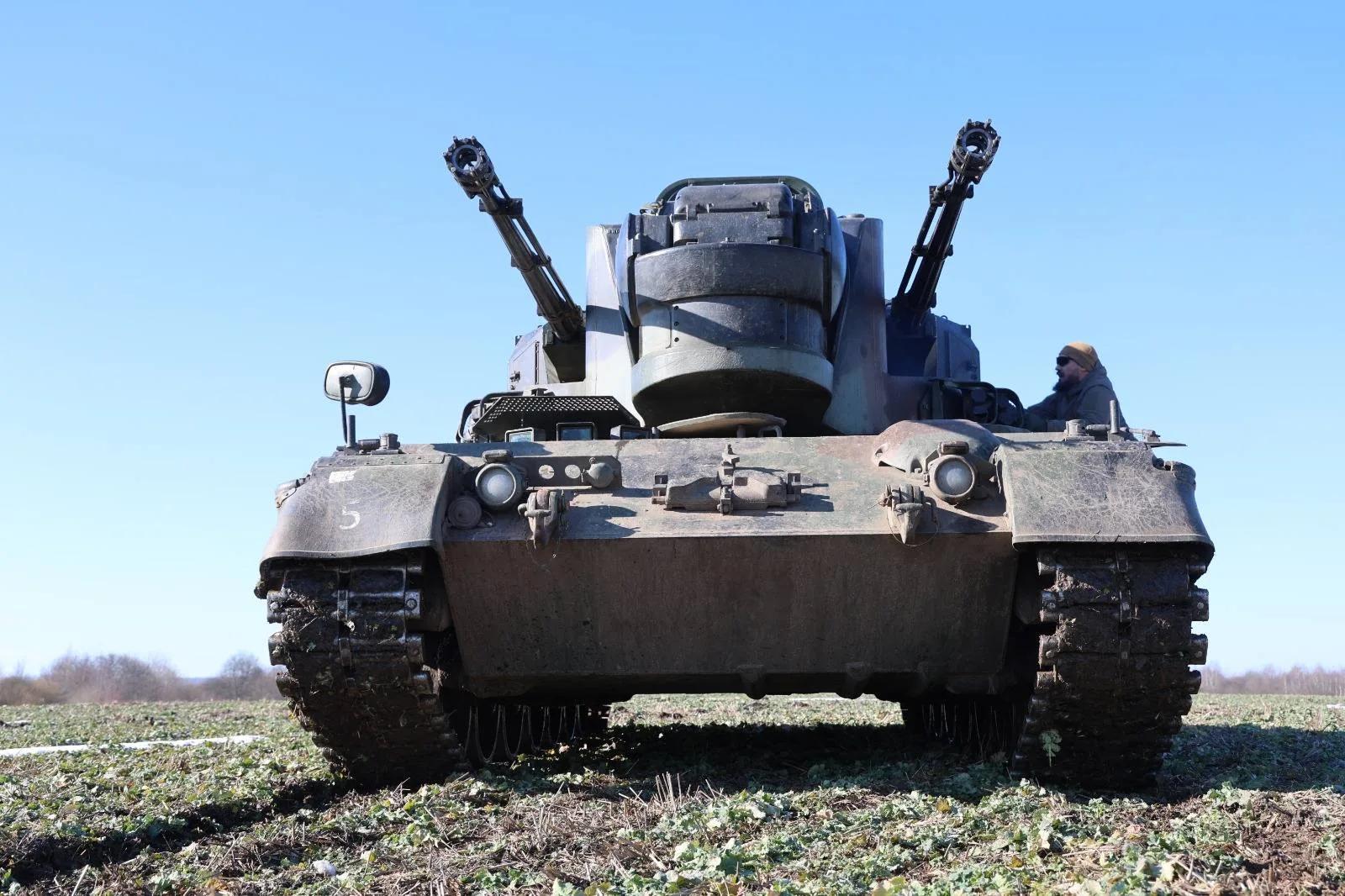
The defence was improvised from whatever could shoot: mobile fire groups with machine guns, Gepard anti-aircraft guns donated by Germany, surface-to-air missiles and fighters. By 30 November Ukraine claimed 340 of 400 Shaheds launched had been shot down — 85%. Then came a three-week pause, from 17 November to 7 December, which analysts linked to stocks running low. Russia's answer was to build its own.
Alabuga: the franchise
In late 2022 and early 2023 Russia's Alabuga Special Economic Zone in Tatarstan agreed a US$1.75 billion franchise with Iran for 6,000 drones, under a defence-ministry contract running from 2 January 2023 to September 2025. Iran supplied about 600 disassembled drones and kits for about 1,350 more while production was localised in stages. Between March and May 2023 at least 100 students and 10 staff from Alabuga trained in Iran; the Institute for Science and International Security, citing the Washington Post, reported the recruitment of students aged 15 to 18 at the Alabuga Polytechnic.
Leaked documents published in February 2024 give the commercial side, though their authenticity has not been independently verified: Iran's opening price of US$375,000 per drone, a negotiated US$193,000 for 6,000, part-payment in gold, and an expected Russian unit cost of about US$48,800 once production was local. In July 2023 Conflict Armament Research documented a Geran-2 built in Russia, with a fuselage of fibreglass over woven carbon fibre instead of honeycomb.
The factory grew fast. By May 2024 the Institute for Science and International Security estimated output at about 20 drones a day; by April 2025 IISS reported Alabuga's footprint had doubled, with a second line at IEMZ Kupol in Izhevsk building a variant called 'Garpiya'. Ukrainian sources said Russia made more than 6,000 in 2024 alone.
The supply chain was global. Of more than 130 electronic components on Alabuga's list, only four were Russian; well over 80% were made by U.S. firms, with others from Switzerland, Japan, Taiwan, China, the Netherlands and France. Later the dependence shifted east, to Chinese anti-jam antennas, Telefly jet engines, ZTE modems and Xingkai mesh radios.
“Without Iran, Alabuga would not be able to produce the drone systems – it would fail.”
An arms race inside one airframe
Every Ukrainian countermeasure produced a modification. CSIS's 2026 study traces it: black paint for night raids from November 2023; a 4G modem taped inside a Geran in the same month; a Starlink-equipped experiment shot down in September 2024; Raspberry Pi computers with two ZTE modems carrying Ukrainian and Russian SIM cards in 2025; and by summer 2025 Chinese mesh radios that, by early 2026, networked Gerans of every series. Long-wave infrared cameras gave operators eyes for the final approach.
The warhead grew from about 50 kg to the KOFZBCh-90, a 92 kg unit with 62 kg of explosive, and to doubled warheads. Gerans have carried R-60 and Verba missiles, anti-tank mines and, from March 2026, FPV drones as a 'mothership'.
“What distinguishes the Geran is not its technical sophistication, but how rapidly Russia has reconfigured the drone's subsystems to adapt to changing battlefield conditions.”
Mass
Numbers became the weapon. Ukraine reported 2,300 one-way attack drones launched in November 2024 and 2,696 in January 2025, IISS noted. On the night of 9 July 2025 its air force reported a record 728 Shahed-type and decoy drones plus 13 missiles. In October 2026 Ukraine's General Staff counted 6,473 genuine Shahed and Geran drones in a single month, of which 4,859 — 75.1% — were destroyed, according to the Institute for Science and International Security's monthly analysis. Decoys such as the Gerbera fly in the same waves and complicate every count.
The jet age
Guns and interceptor drones beat the Shahed because it was slow. The answer was speed. A jet-powered version appeared in an Iranian state-TV trailer in September 2023 and was officially unveiled as the Shahed-238 that November: about 3.5 m long with a 3 m span, a Czech-designed TJ150 turbojet and a speed of about 600 km/h, but at a reported US$0.9–1.4 million a copy. One was deployed in Ukraine in January 2024.
Russia began domestic production of its own jet Geran-3, powered by a Chinese Telefly JT80, in February 2025, and from July 2025 used jets on a large scale, including a salvo of 300 against Kyiv, according to CSIS. In 2026 came the Geran-4, a reinforced delta with a stronger turbojet, and the Geran-5, shaped like a cruise missile; by August Ukrainian intelligence reported Geran-3 production halted in their favour. The effect showed in October 2026: Ukraine's General Staff reported neutralising 89% of piston-engine Shaheds but only 66% of jet-powered ones.
Iran's own wars
Iran used its drones directly for the first time in mass against Israel on 13–14 April 2024: about 170 drones, 30 cruise missiles and 120 ballistic missiles, according to the Institute for the Study of War and Critical Threats. Israel and its allies intercepted every drone and cruise missile. A slow drone launched from Iran gives defenders hours of warning; the attack showed the limits of the Shahed against a prepared, layered defence.
In the 2026 war the pattern reversed in scale. On 28 February the U.S. and Israel struck Iran; a Shahed-238 hit a hotel forecourt in Dubai the same day. On 1 March Iran launched 867 drones and 339 missiles at Gulf states, and the UAE alone detected 1,422 drones between 1 and 8 March, CSIS reported, identifying Shahed-136, -107 and -238 wreckage.
Everyone builds one
The design's influence now runs in every direction. In the United States, SpektreWorks developed LUCAS from its FLM-136 target drone, reverse-engineered from a captured Shahed-136; CENTCOM confirmed its first combat use on 28 February 2026, against Iran, at about US$35,000 a copy. China has shown the Feilong-300D (2024), and the Sunflower-200 has been described as a close copy. Ukraine fields its own long-range one-way drones in the same class.
The defence catches up
The answer that has worked best is the Shahed's own logic turned around: a cheap drone to kill a cheap drone. Defense News put the problem in one ratio — a US$4 million PAC-3 against a US$35,000 drone is 114 to 1 — while CSIS compares interceptor drones costing US$2,000–4,000 with that same Patriot. Ukraine's Sting and its competitors, guns such as the Gepard and Skynex, and low-cost guided rockets such as APKWS and CİRİT C-UAS all belong to this response; their published figures can be compared side by side at www.worldofinterceptors.com.
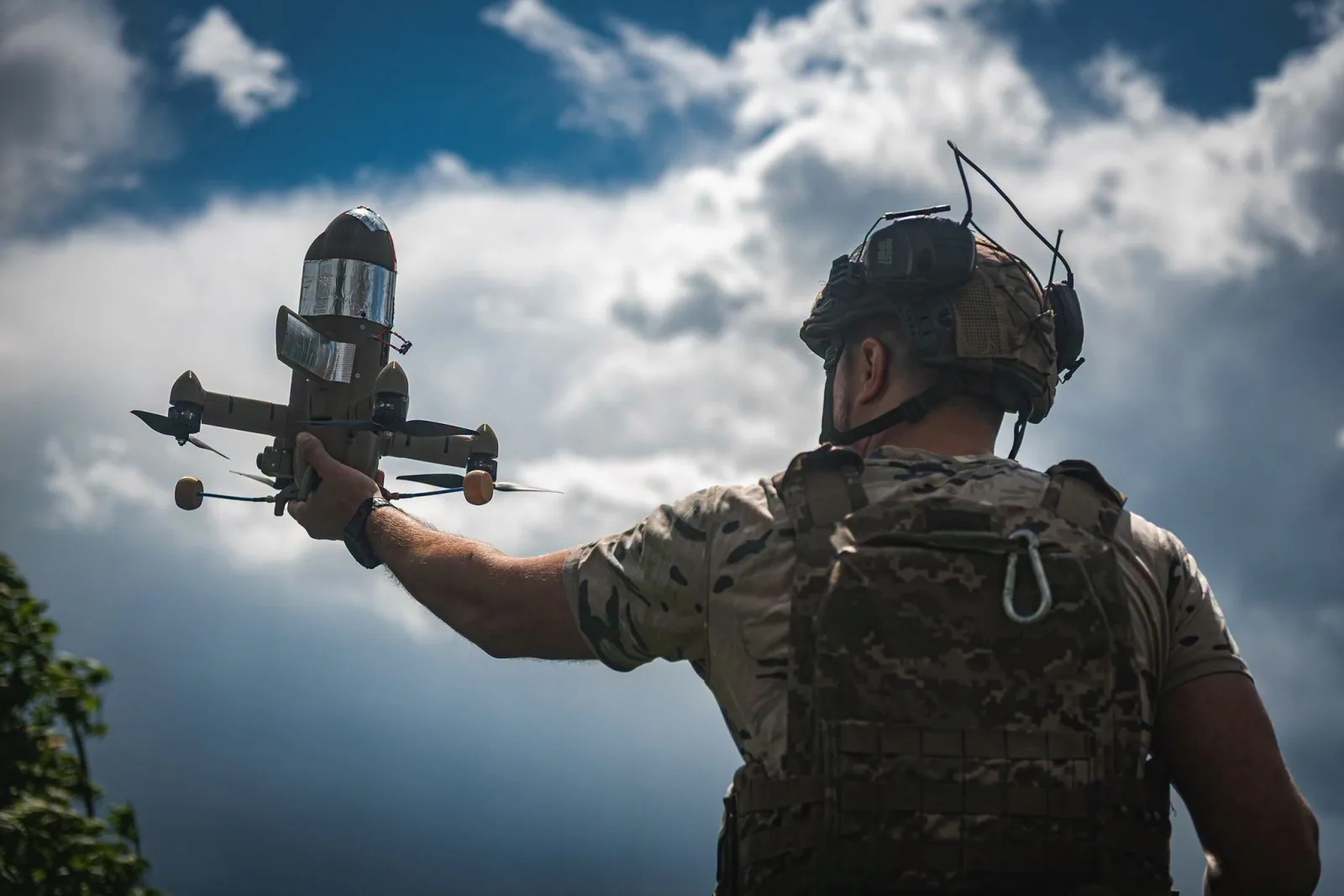
“Drone defense must begin with a cheap, numerous, drone-against-drone layer rather than with a force structure built around million-dollar missiles.”
Timeline
Key dates, from the first Iranian drones to the jet Gerans, as compiled by World of Interceptors (www.worldofinterceptors.com). Each is drawn from the sources listed below.
1980s
IRGC starts a drone programme from scratch
Export restrictions during the Iran–Iraq war force trial-and-error development; rocket-armed prototypes are never used.
Mid-1980s
Dornier's DAR
West Germany develops a delta-wing anti-radar drone with a pusher engine; cancelled in 1994.
1989
Iran reorganises its defence industry
Qods Aviation and HESA under the defence ministry; the IRGC keeps Shahed Aviation Industries near Isfahan.
Nov 2004
Hezbollah flies the Mersad-1 over Israel
An Iranian Ababil in all but name.
Sep 2008
U.S. designates HESA
Dec 2011
U.S. RQ-170 comes down in Iran
Leads to the Shahed-141, -171 and -191 flying wings.
Dec 2014
Delta-wing 'Touphan' shown
A possible domestic progenitor of the Shahed, according to RUSI.
14 Sep 2019
Abqaiq and Khurais
Debris includes a delta-wing drone later identified as the Shahed-131; responsibility disputed.
29–30 Jul 2021
Mercer Street
Two one-way attack drones kill two crew; CENTCOM attributes the attack to Iran.
Dec 2021
Shahed-136 unveiled
Fired from a five-drone truck container in the Great Prophet 17 exercise.
Aug 2022
First drones reach Russia
13 Sep 2022
First Geran-2 documented in Ukraine
Near Kupiansk, marked 'M' series.
Oct 2022
Grid strikes
Gerans join the campaign against Ukraine's power system.
15 Nov 2022
U.S. designates SAIRC
Named as designer and producer of the Shahed series.
2 Jan 2023
Alabuga contract begins
US$1.75 billion franchise for 6,000 drones by September 2025.
Jul 2023
First Russian-built Geran-2 documented
By Conflict Armament Research.
Nov 2023
Shahed-238 unveiled
The jet era begins; black-painted Gerans and 4G modems appear in Ukraine.
Feb 2024
Price leak
US$193,000 per drone to Russia; authenticity unverified.
13–14 Apr 2024
Iran's first mass strike on Israel
About 170 drones; all drones intercepted.
May 2024
About 20 Gerans a day
Institute for Science and International Security estimate of Alabuga output.
Feb 2025
Russian jet Geran-3 in production
13 Jun 2025
Hajizadeh killed
The IRGC Aerospace Force commander who oversaw supplies to Russia.
9 Jul 2025
Record night: 728 drones
Summer 2025
Mesh radios network the Gerans
28 Feb 2026
LUCAS used in combat; Iran war begins
1 Mar 2026
867 drones and 339 missiles at the Gulf states
2026
Geran-4 and Geran-5
Faster, reinforced and missile-shaped successors.
Oct 2026
6,473 genuine Shahed/Geran drones in a month
75.1% destroyed; 66% of jets versus 89% of piston drones neutralised.
Our reading
Three ideas made the Shahed. The first is Iranian: that under sanctions, commercial technology and copied engines can deliver precision at scale, and that a weapon need not survive the defence if it bankrupts it. The second is Russian: that a licensed design can be industrialised, localised and modified faster than the enemy can adapt. The third is universal: that cost per kill, not performance, now decides air defence.
The family's history is a sequence of moves and counter-moves. Guns and missiles answered the first Shaheds; numbers answered the guns; cheap interceptor drones answered the numbers; jets answered the interceptors. Each step made the drone more expensive — the jet Shahed-238 reportedly costs up to fifty times the early estimates for the 136. Whether the defence can stay cheaper than the attack is the open question for the systems in our reference, from interceptor drones to low-cost guided rockets — and the one World of Interceptors will keep tracking at www.worldofinterceptors.com.
Originally published by World of Interceptors at www.worldofinterceptors.com/blog/shahed-family-history. Quote or republish it freely with a link to this page. Compiled from open sources and cross-checked, but accuracy cannot be guaranteed; manufacturers and independent organisations can ask us to correct or remove information (disclaimer).
Sources
- 1.
Iran's Game of Drones (opens in a new tab)
Washington Institute for Near East Policy (Farzin Nadimi) · Specialist press · Published · Retrieved
Supports: Origins in the Iran–Iraq war; Qods Aviation, HESA and Shahed Aviation Industries; Ababil and Mersad; RQ-170 copies; Houthi 'Waid'; McKenzie testimony
- 2.
Russia's Iranian-Made UAVs: A Technical Profile (opens in a new tab)
RUSI (Uzi Rubin) · Specialist press · Published · Retrieved
Supports: Abqaiq 'unknown delta wing UAV'; Touphan; Shahed-131/136 dimensions, engines and costs; SAIRC–HESA division of work; design analysis
- 3.
From Shahed to Geran: How Russia Continues to Reinvent the One-Way Attack Drone (opens in a new tab)
CSIS (Kateryna Bondar, Nicole Errera) · Specialist press · Published · Retrieved
Supports: First Geran-2 near Kupiansk; navigation, CRPA antennas, datalinks, warheads; Geran-3, -4 and -5; Izhevsk line; Chinese components
- 4.
Shahed-238 (opens in a new tab)
CSIS Missile Defense Project · Specialist press · Published · Retrieved
Supports: Shahed-238 and Geran-3 dimensions, engines, speed, cost; Kyiv salvo; Dubai strike
- 5.
Unpacking Iran's Drone Campaign in the Gulf (opens in a new tab)
CSIS (Kateryna Bondar) · Specialist press · Published · Retrieved
Supports: Drone and missile numbers of the 2026 Gulf campaign; variants identified; cost-exchange argument
- 6.
Highlights of Institute Assessment of Alabuga Drone Documents (opens in a new tab)
Institute for Science and International Security (Albright, Burkhard, Faragasso) · Specialist press · Published · Retrieved
Supports: 6,000-drone plan, staged localisation, training in Iran, foreign components
- 7.
Alabuga's Shahed 136 (Geran 2) Warheads: A Dangerous Escalation (opens in a new tab)
Institute for Science and International Security (Albright, Burkhard, Faragasso) · Specialist press · Published · Retrieved
Supports: US$1.75 billion deal; kits; warhead masses; output of about 20 a day
- 8.
Russia doubles down on the Shahed (opens in a new tab)
IISS (Matthew Bint, Fabian Hinz) · Specialist press · Published · Retrieved
Supports: Monthly launch counts; Alabuga expansion; second line at Kupol, Izhevsk
- 9.
Institute for Science and International Security · Specialist press · Published · Retrieved
Supports: October 2026 launch and interception figures; 66% versus 89% neutralisation for jet and piston Shaheds; Geran-4 navigation and engine changes
- 10.
What Does A Shahed-136 Really Cost? (opens in a new tab)
The War Zone (Howard Altman) · Specialist press · Published · Retrieved
Supports: Leaked contract prices: US$193,000 per drone, US$48,800 localised cost, US$1.75 billion total
- 11.
U.S. Department of the Treasury · Government · Published · Retrieved
Supports: Paravar Pars reverse-engineering; DAMA; Baharestan Kish on Shahed components; Safiran flights to Russia
- 12.
U.S. Department of the Treasury · Government · Published · Retrieved
Supports: SAIRC as designer and producer of the Shahed series under the IRGC Aerospace Force; designations
- 13.
Iranian UAV Attack Against Motor Tanker Mercer Street (opens in a new tab)
U.S. Central Command · Government · Published · Retrieved
Supports: Two one-way attack UAVs on 29–30 July 2021; two crew killed; forensic attribution to Iran
- 14.
Critical Threats / ISW (Brian Carter, Frederick W. Kagan) · Specialist press · Published · Retrieved
Supports: About 170 drones, 30 cruise and 120 ballistic missiles on 13–14 April 2024
- 15.
Russia batters Ukraine with more than 700 drones (opens in a new tab)
Associated Press · General press · Published · Retrieved
Supports: Record night of 728 drones on 9 July 2025
- 16.
Kyiv Independent · General press · Published · Retrieved
Supports: Amir Ali Hajizadeh's role, EU sanctions and death
- 17.
From drones to clones (opens in a new tab)
Key.Aero / Combat Aircraft (David Axe) · Specialist press · Published · Retrieved
Supports: Dornier DAR and the delta-wing anti-radar drone lineage; Russian unit cost of about US$50,000
- 18.
US confirms first combat use of LUCAS one-way attack drone in Iran strikes (opens in a new tab)
Defense News (J.D. Simkins) · Specialist press · Published · Retrieved
Supports: LUCAS first combat use, range, payload and cost
- 19.
HESA Shahed 136 (opens in a new tab)
Wikipedia · Reference work (secondary) · Retrieved
Supports: Design, MD-550/Limbach engine, DAR resemblance, electronics, launch method, first Russian use, October 2022 waves, leaked prices, Alabuga production, CAR findings, Shahed-238 reveal, LUCAS and Ukrainian analogs
Newsletter · every two weeks
The Interceptors Brief
What changed in air defence and counter-drone, in five minutes, with the sources attached.
Confirm by email · unsubscribe in one click · Privacy
More from the blog
 War story
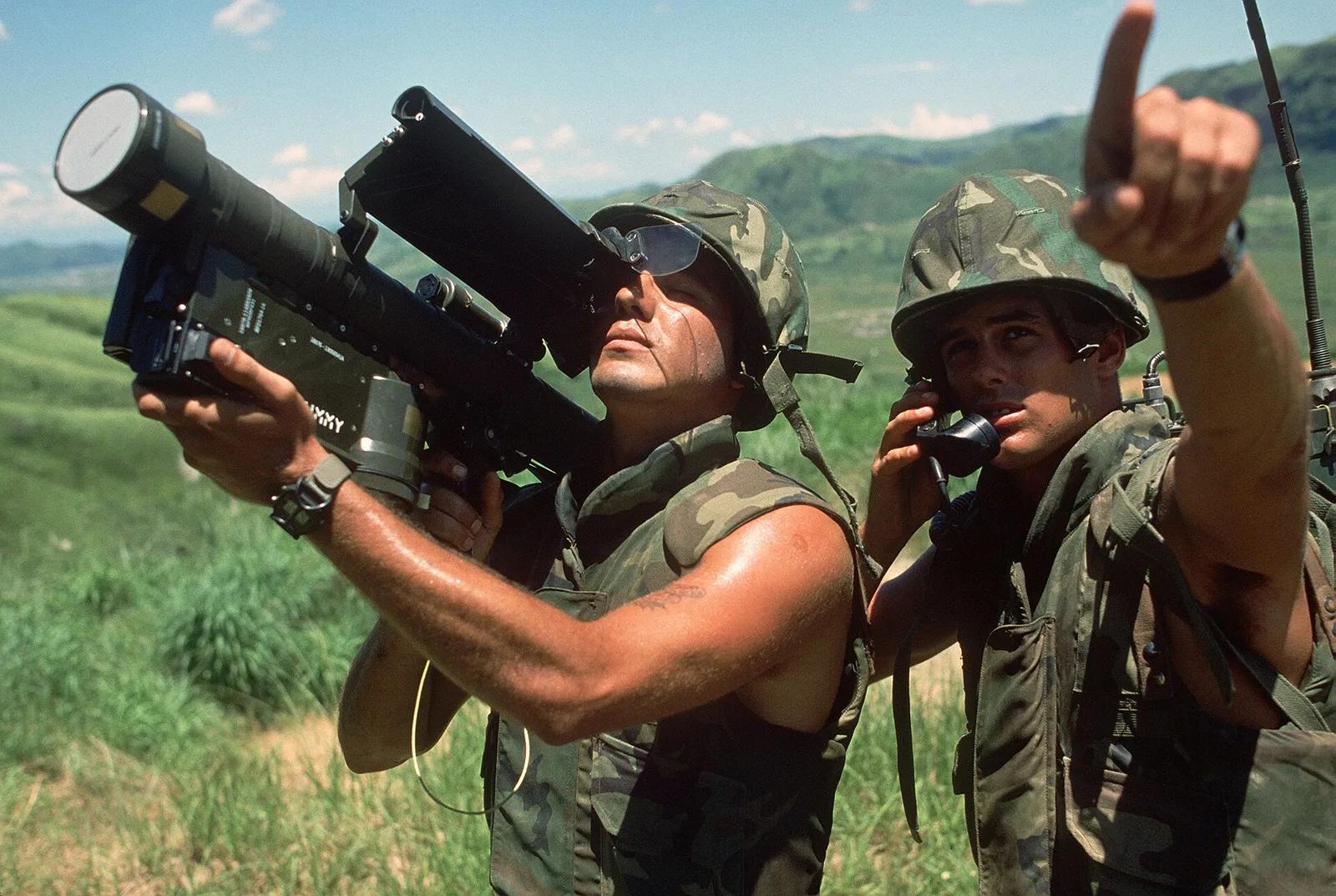
Three gunships near Jalalabad: the Stinger's first shots in Afghanistan, and how much they really changed
On 25 September 1986 a small mujahideen team fired the first CIA-supplied Stingers at Soviet Mi-24 helicopters. The moment became legend; the numbers behind it are still argued over.
 Explainer
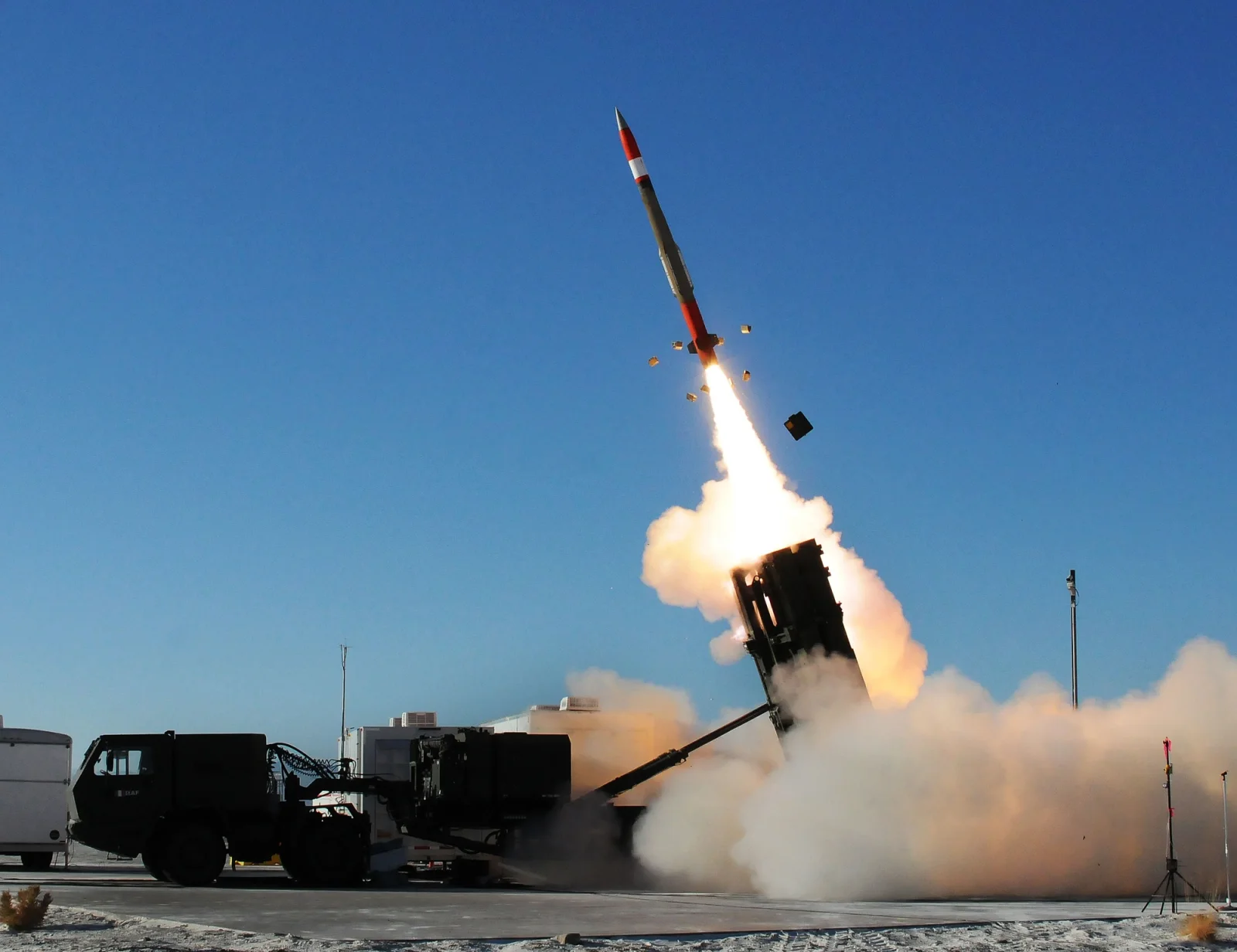
What a Patriot missile really costs: PAC-3 MSE, GEM-T, a full battery and Iron Dome compared
The U.S. Army's own budget books put a PAC-3 MSE at about $4.2 million for the missile alone and about $5 million with its share of hardware. Here is where that number comes from, what a GEM-T and a whole battery cost, and how Iron Dome compares.
 Explainer
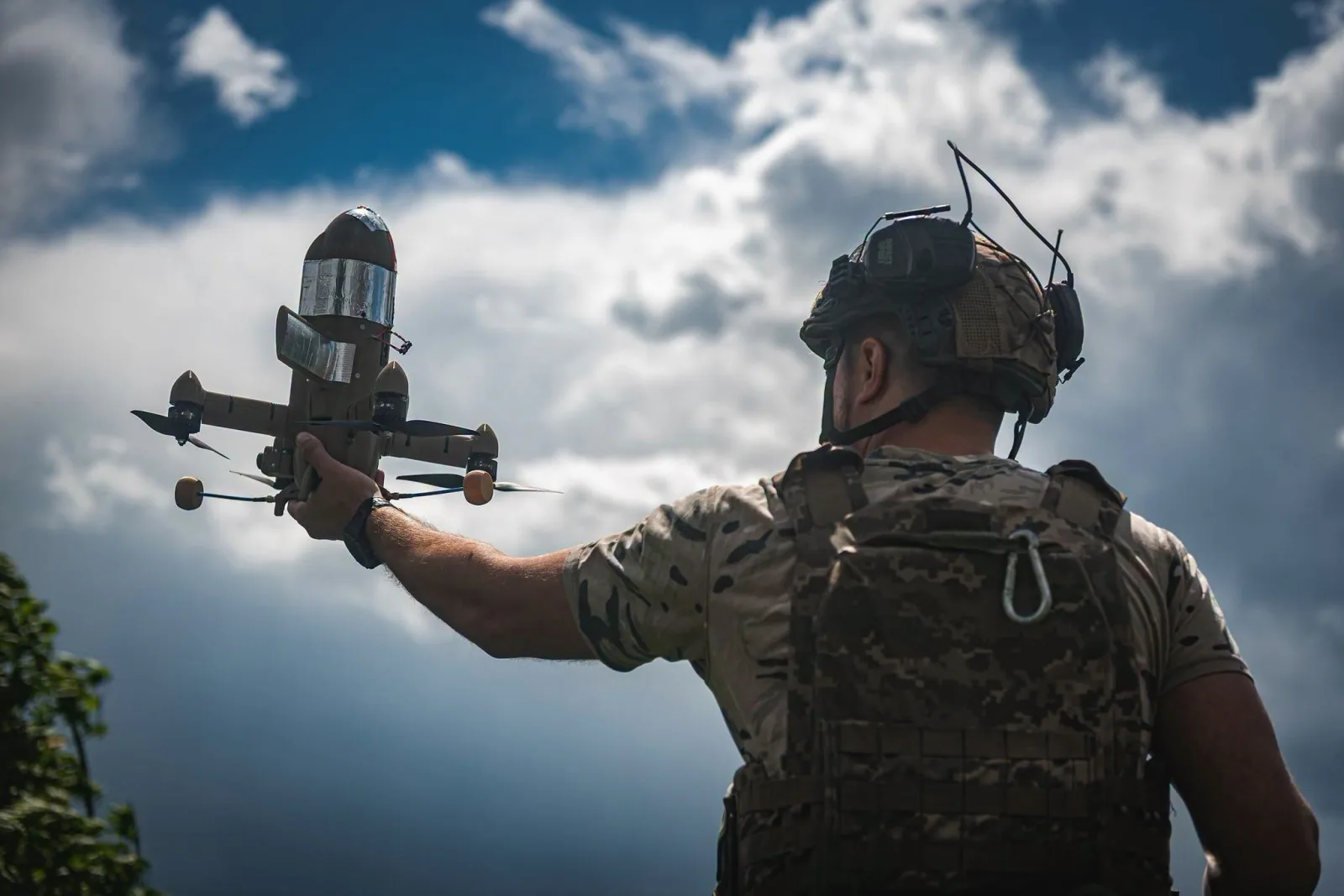
Interceptor drones compared: the cheap hunters built to stop the Shahed
From $1,000 Ukrainian quadcopters to $100,000 jet-powered American rounds: speed, warhead, price and status of every interceptor drone used or offered against Shahed-type drones, with the numbers behind the boom.