
Variant or designation
Geran-4
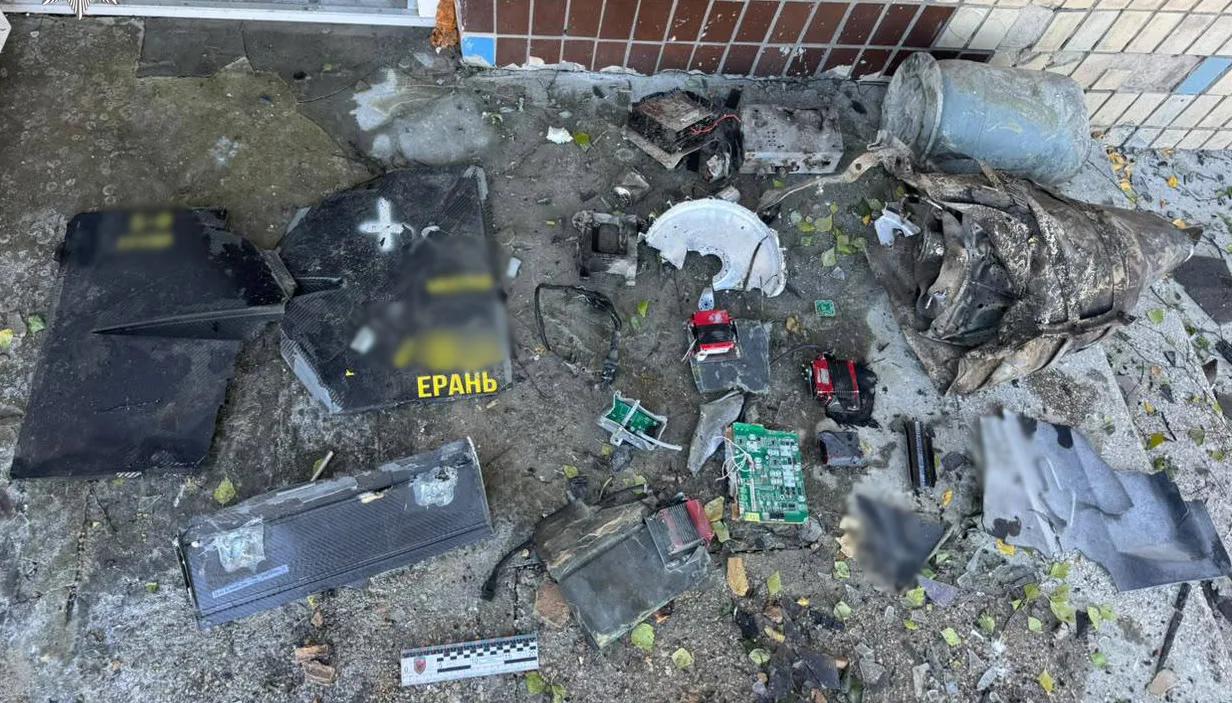
Russian turbojet one-way attack drone developed from the Geran-3 with a stronger, cleaner airframe; in combat since May 2026.
- Speed
- 320–500 km/h
- Range
- 450–770 km
- Warhead
- 50–90 kg
Sourced record, not yet reviewed. Compiled from the public sources listed below. Every figure is attributed to its source; where sources disagree, both values are shown. No editor has reviewed this record yet.
Overview
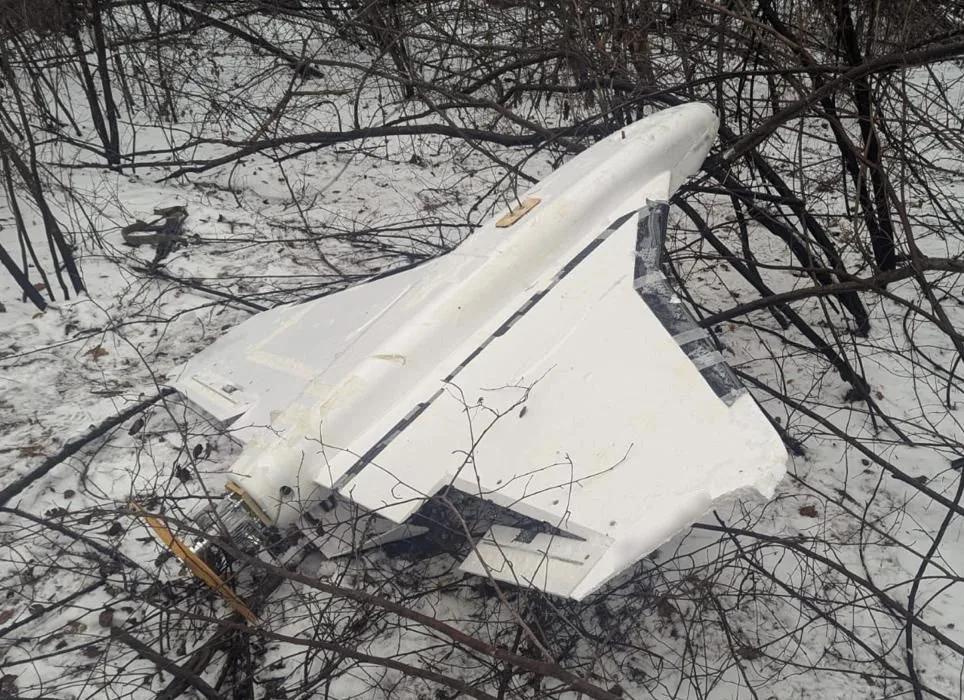
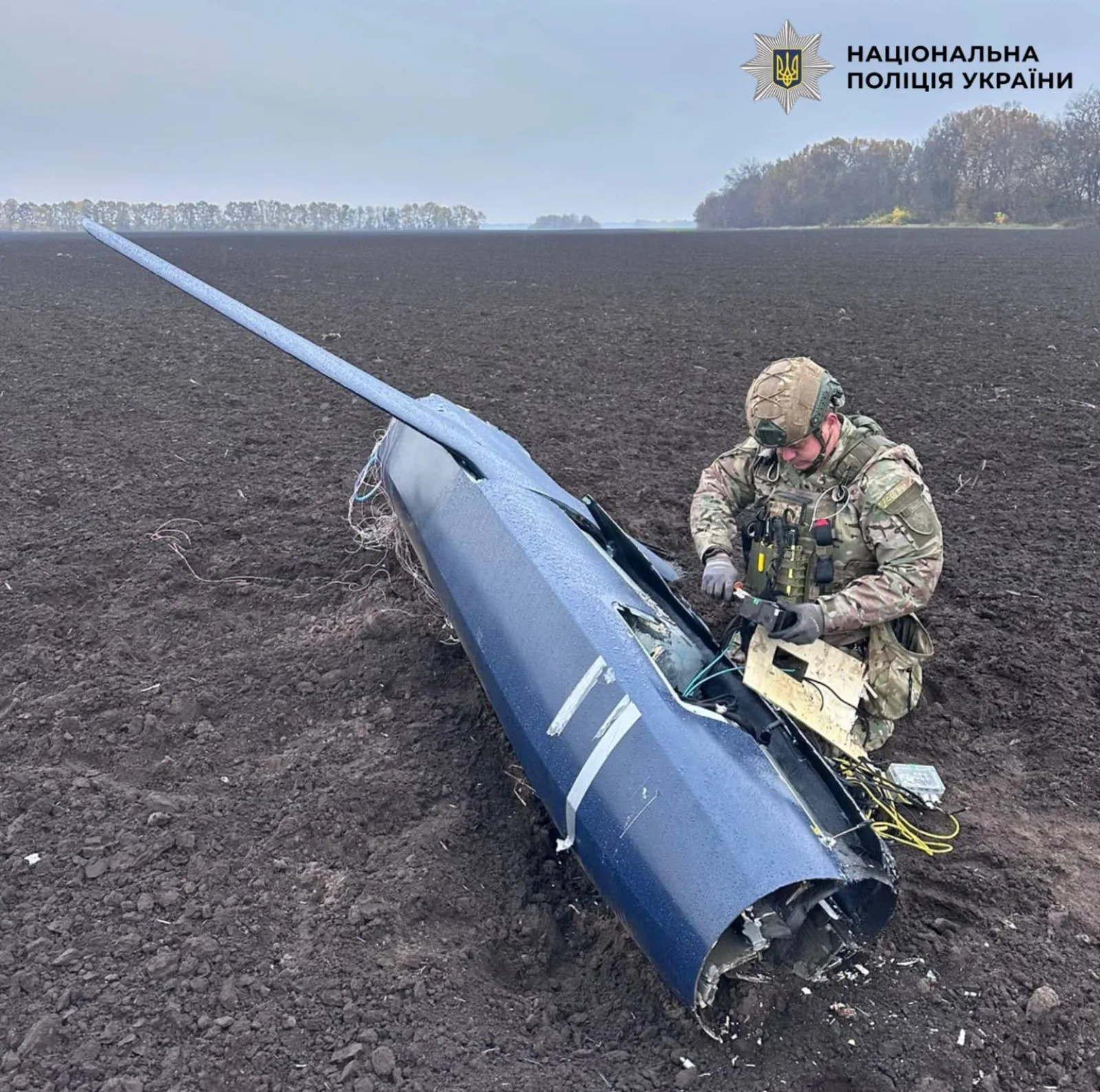
Geran-4 was developed at JSC Alabuga after Ukrainian intelligence found the Geran-3 airframe too weak for high-speed flight. The wings are blended into the fuselage and external hatches removed. It first used Chinese Telefly turbojets; from October 2026 a Russian-built TRD-2000 was reported (reference work).
Ukrainian intelligence (HUR) figures cited in specialist press: 3.6 m long, 3.05 m span, 450 kg take-off weight, a 50 kg warhead, 320 km/h cruise and 350 km/h maximum, and about 770 km range; other estimates reach 500 km/h. A 90 kg thermobaric warhead is also reported (specialist press; reference work).
Combat use began in May 2026, including strikes on Voznesensk airfield. In September 2026 a National Guard interceptor drone downed one for the first time. Romanian F-16s shot down two over the Black Sea in October 2026 with AIM-9X missiles (reference work).
Family, aliases and variants
Each designation keeps its own record. Links show the type of relationship and how well it is supported.
- Shahed-136Iran · Propeller · Canonical
- Geran-2Russia · Propeller
- Alternate designation of Shahed-136 · Widely reported
- Reported derivative of Shahed-136 · Widely reported
- Shahed-238Iran · Jet
- Variant of Shahed-136 · Widely reported
- LUCASUnited States · Propeller
- Reported derivative of Shahed-136 · Documented
- Sunflower-200China · Propeller
- Reported derivative of Shahed-136 · Reported
- Shahed-131Iran · Propeller
- Geran-4 Seeker
- Version with integrated terminal target acquisition, seen from summer 2026
Family members, copies and comparable drones
Each card is a separate record. Copies built outside the original country, and comparable designs that are not copies, are labelled on their own pages.
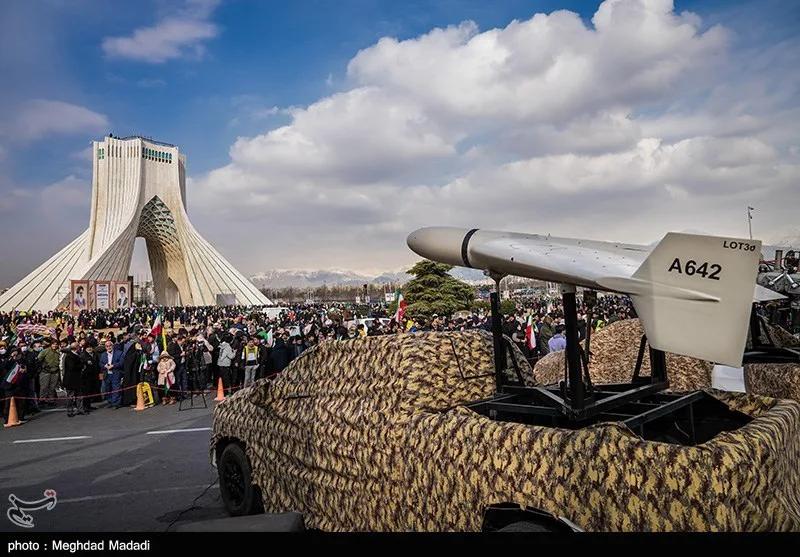
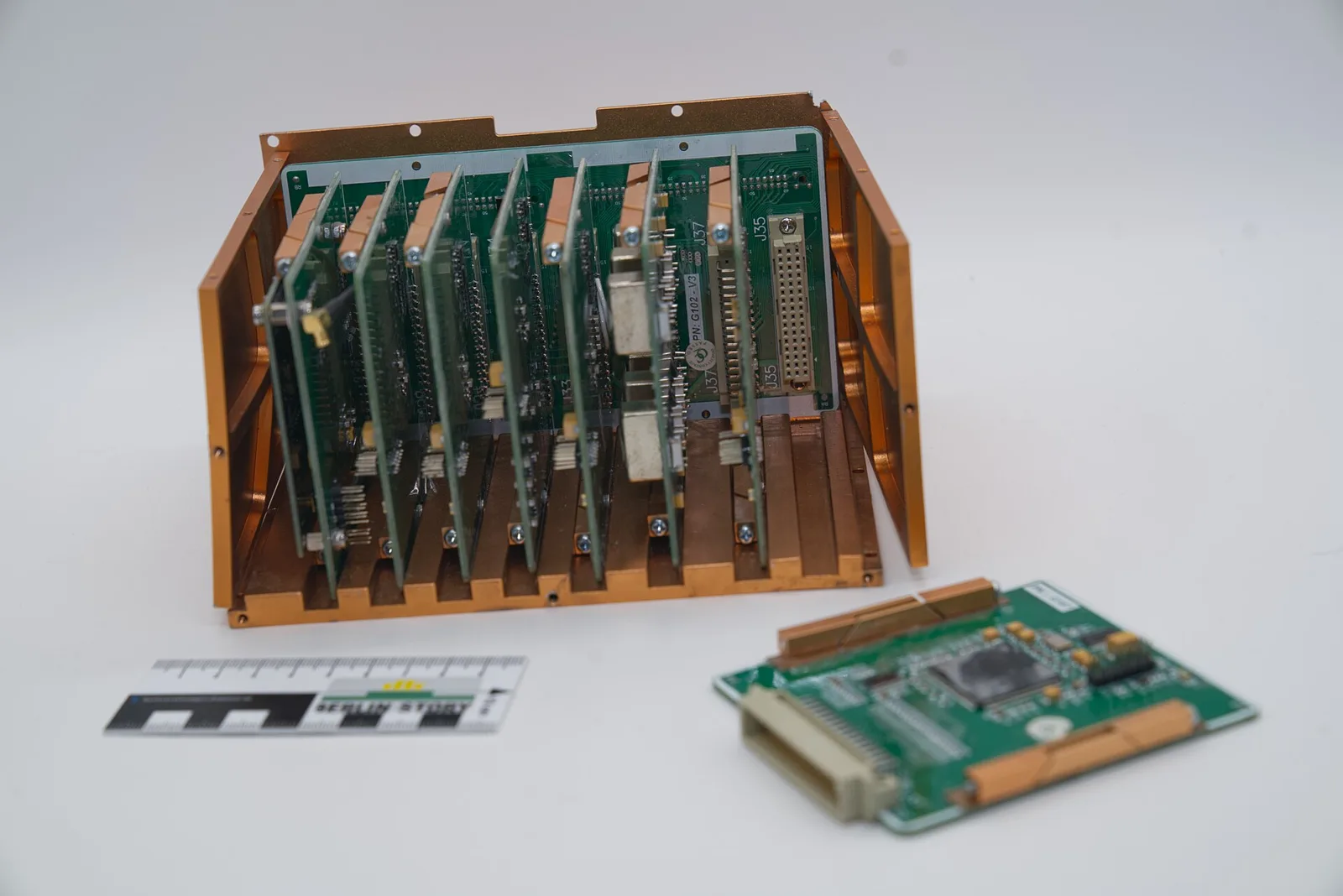
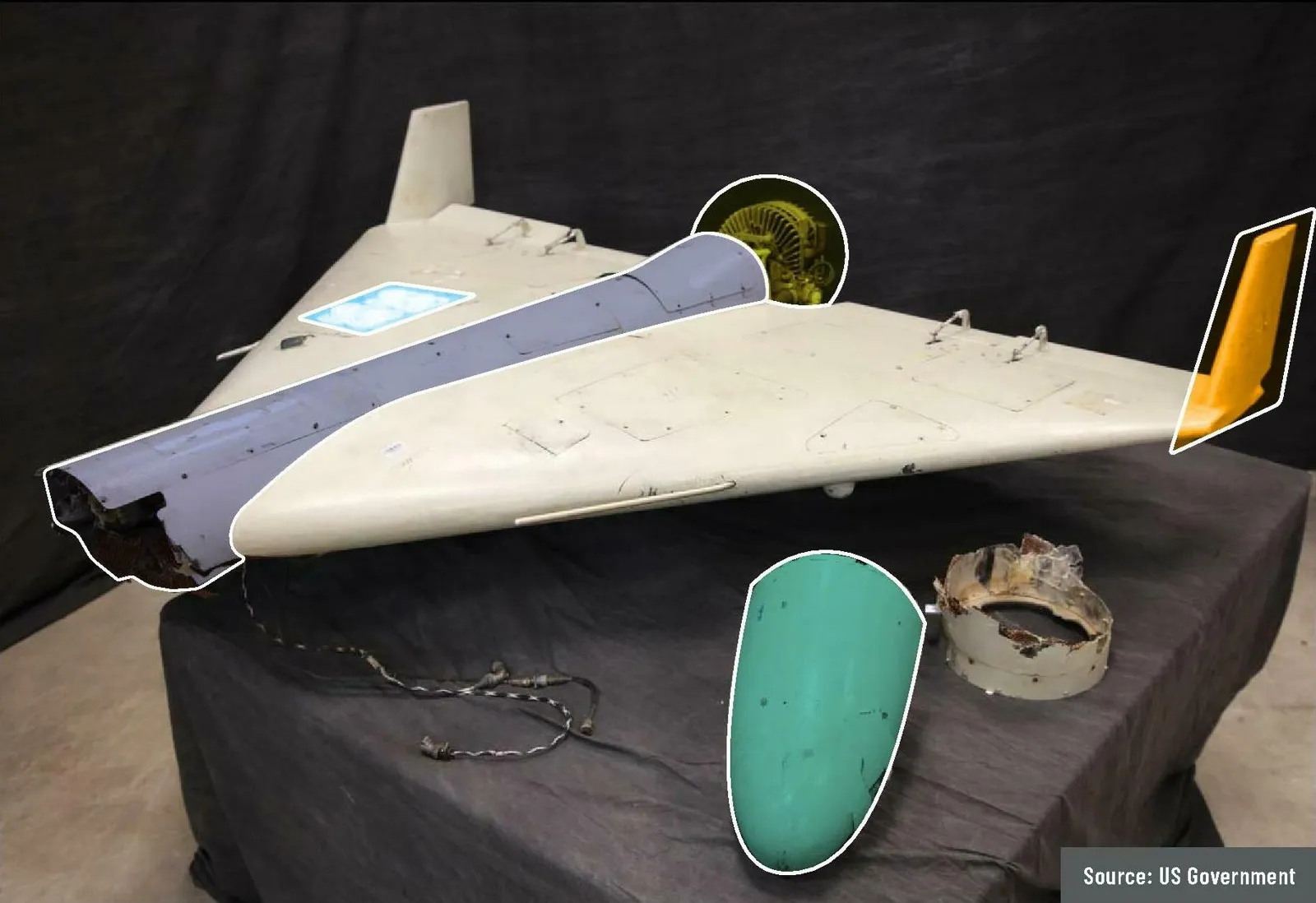
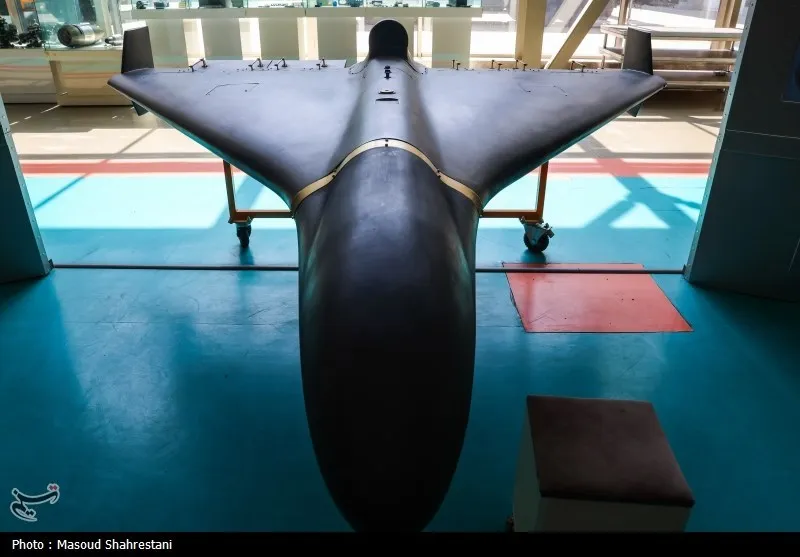
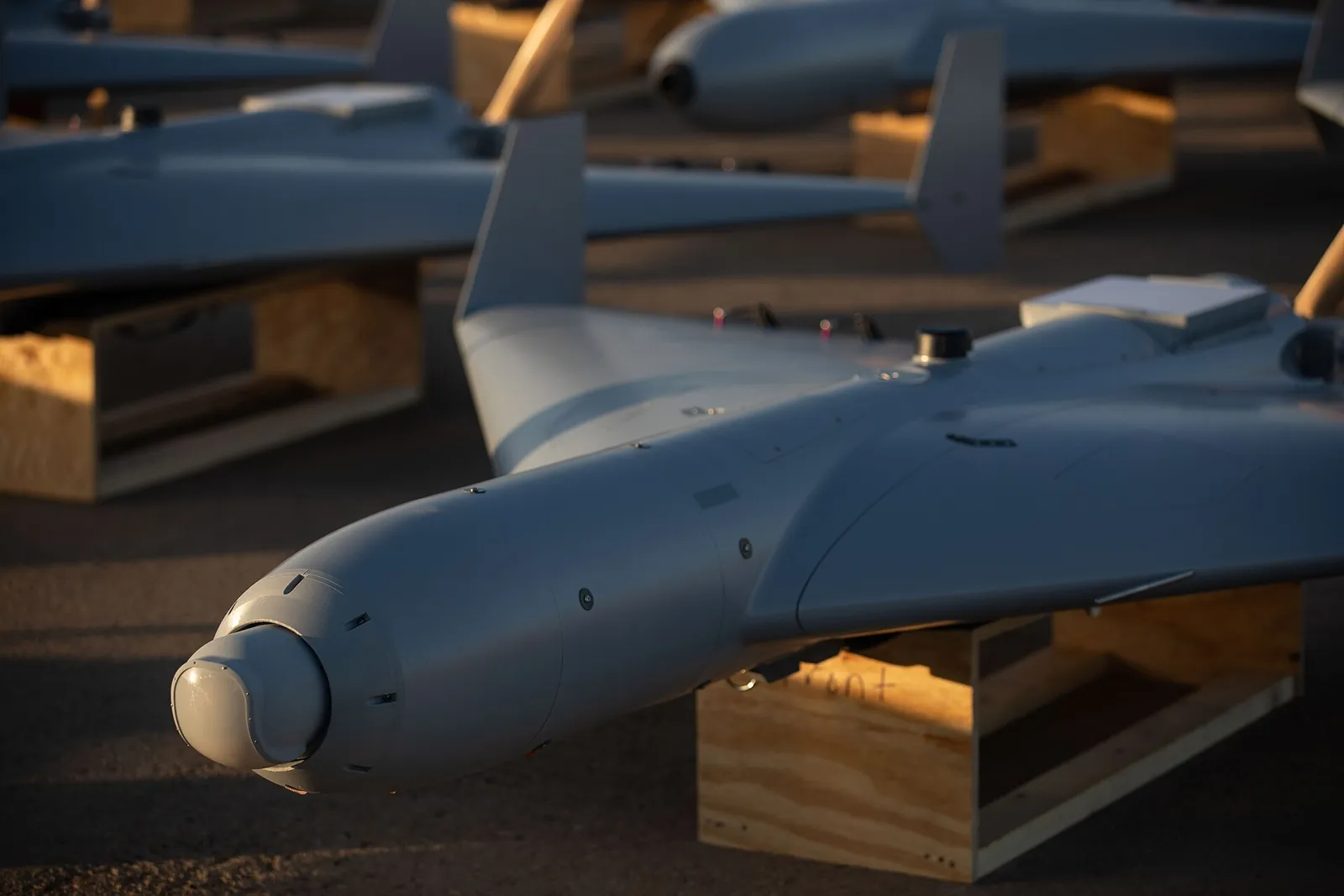
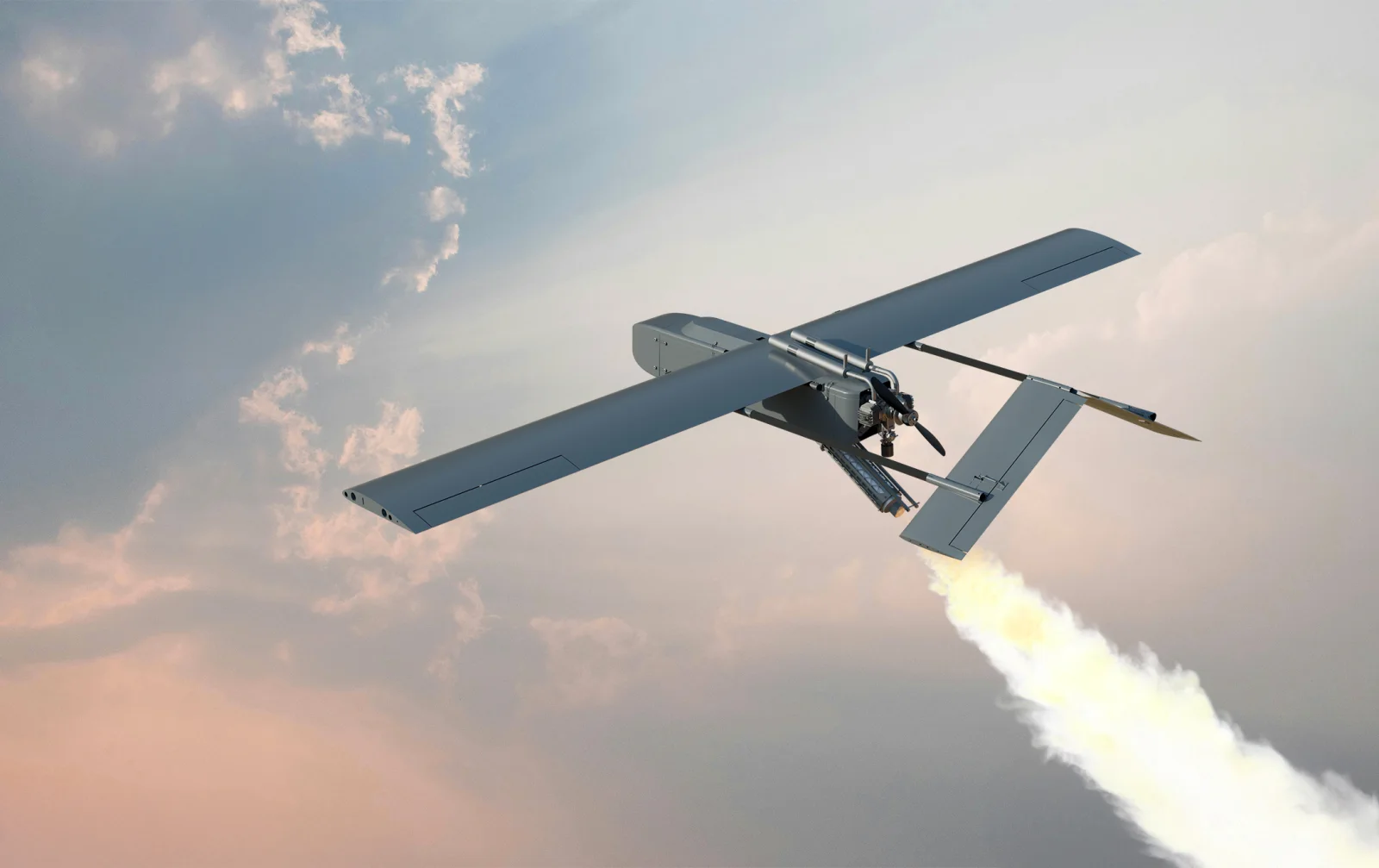 © Fire Point
Primary classification
Aerial Threats › One-way attack UAVs › Jet-powered
One-way attack UAV, jet-powered, in the Shahed/Geran lineage.
Characteristics
- Satellite navigation
- Mass production reported
- Weaponized
Publicly documented characteristics
Figures for this record circulate in public reporting but are withheld until a source is attached and checked.
| Characteristic | Value | Evidence and sources |
|---|---|---|
| Length (m) | 3.6 mHUR figure. | Secondary reference[2] |
| Wingspan (m) | 3.05 mHUR figure. | Secondary reference[2] |
| Mass (kg) | Up to 450 kgMaximum take-off weight, HUR. | Secondary reference[2] |
| Payload / warhead (kg) | 50–90 kg | Secondary reference[1][2] |
| Speed (m/s) | 89–139 m/s320 km/h cruise and 350 km/h maximum (HUR); up to 500 km/h in other estimates. | Secondary reference[2] |
| Maximum range (km) | 450–770 kmBasis: Range reported in secondary sourcesDepends on warhead. | Secondary reference[1][2] |
Relevant interception technology classes
Technology classes discussed in connection with this threat. This is not a statement that any class is proven effective against it.
- Interceptor MissilesAir-to-air missiles from fighters have been used; cost per kill is high.
- Interceptor DronesFirst interceptor-drone kill reported in September 2026; speed limits most current interceptors.
- Electronic CountermeasuresControlled reception pattern antennas, mesh and cellular modems are reported to resist jamming.
Known uncertainties
- Speed estimates range from 350 to 500 km/h depending on engine and source.
- Figures come from Ukrainian intelligence analysis of wreckage and are not independently confirmed.
Related reporting
Contracts and procurement
Gulf states line up for APKWS laser-guided rockets as counter-drone weapons
Contracts and procurement
AeroVironment wins a $405 million Middle East order for LOCUST X3 counter-drone lasers
Deliveries and deployments
LUCAS one-way attack drones: what U.S. Central Command has confirmed
Sources
- 1.
Wikipedia · Reference work (secondary) · Retrieved
Supports: Geran-4 as a turbojet one-way attack drone developed from Geran-3 at Alabuga; first combat use May 2026; Telefly engines then Russian TRD-2000; 50 or 90 kg warhead; 450–770 km range; anti-jam antenna, mesh and cellular modems; Seeker variant; Moldova and Romania incidents.
- 2.
Inside the Geran-4: RFE/RL Tears Down Russia's Jet Shahed (opens in a new tab)
MigFlug · Specialist press · Published · Retrieved
Supports: HUR figures for Geran-4: 3.6 m length, 3.05 m span, 450 kg take-off weight, 50 kg warhead, 350 km/h maximum and 320 km/h cruise (other estimates up to 500 km/h), about 770 km range; about 3,000 jet Gerans a month.
- 3.
Geran-4 Unpacked: What Makes Russia's New Jet-Powered Drone So Dangerous? (opens in a new tab)
Radio Free Europe/Radio Liberty · General press · Published · Retrieved
Supports: Video teardown of a Geran-4: turbojet engine, camera and foreign-made communications and navigation parts.
This record is compiled and kept up to date by World of Interceptors at www.worldofinterceptors.com/threats/geran-4. Cite it with a link to this page. Compiled from open sources and cross-checked, but accuracy cannot be guaranteed; manufacturers and independent organisations can ask us to correct or remove information (disclaimer).
Newsletter · every two weeks
The Interceptors Brief
What changed in air defence and counter-drone, in five minutes, with the sources attached.
Confirm by email · unsubscribe in one click · Privacy