
Platform
Gerbera
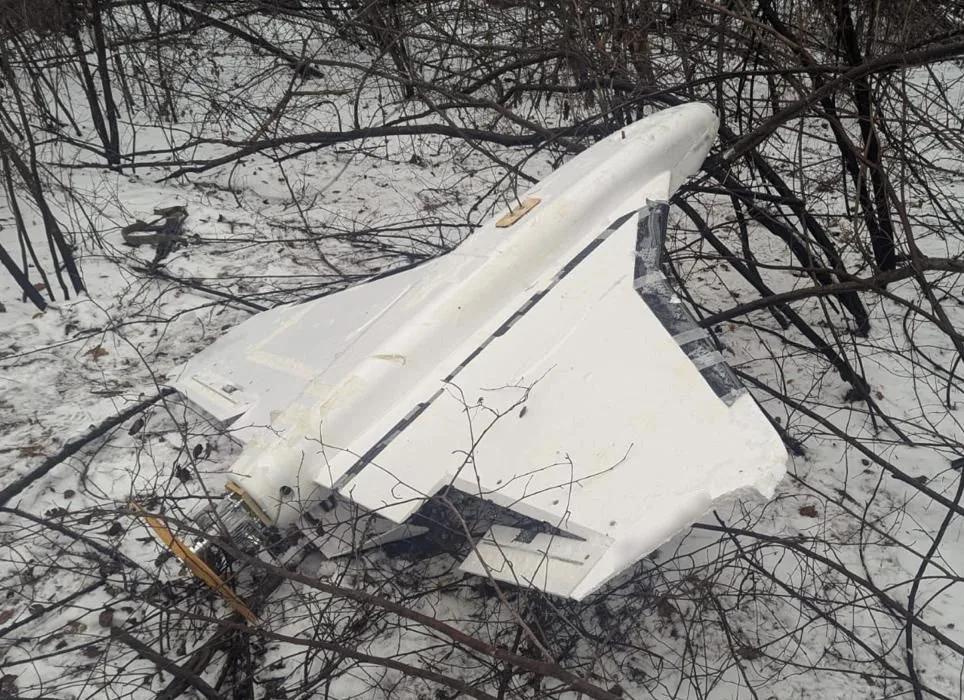
Cheap foam-and-plywood Shahed look-alike built at Alabuga, used since July 2024 as a decoy and later for reconnaissance, relay, strike and as a carrier for FPV drones.
- Range
- 300–600 km
- Warhead
- up to 5 kg
- Estimated unit cost
- about $10,000
Sourced record, not yet reviewed. Compiled from the public sources listed below. Every figure is attributed to its source; where sources disagree, both values are shown. No editor has reviewed this record yet.
Overview
The Gerbera looks like a smaller Shahed-136 but is built from a plywood frame inside a polystyrene-foam body, with a small Chinese DLE60 piston engine. It is produced by JSC Alabuga in Yelabuga; Ukrainian intelligence names the Chinese company Skywalker Technology as the developer of the kits (reference work; specialist press).
It first appeared over Ukraine in late July 2024, launched in large numbers alongside Shaheds to draw fire from air defences. Some carry warheads of up to about 5 kg; others carry cameras or mesh-network radios that relay signals for other drones. Ukrainian officials estimate the cost at about $10,000 (reference work).
In February 2026 crashed Gerberas were photographed with brackets for an FPV quadcopter, one with the FPV still attached: Russia was using them as carriers to release FPV drones far behind the front (general press). Gerbera-type drones entered Lithuanian airspace in July 2025 and Polish airspace in September 2025 (reference work).
Comparable types
- Comparable toShahed-136Built to look like the Shahed-136; a separate, much cheaper design.
Family, aliases and variants
Each designation keeps its own record. Links show the type of relationship and how well it is supported.
- Gerber
- Alternative spelling
Primary classification
Aerial Threats › Other aerial threats › Decoys
Listed under decoys because that is its main documented role; armed and carrier versions are noted in the text.
Characteristics
- Low unit cost (reported)
- Mass production reported
- Satellite navigation
- Mass or swarm employment reported
- Payload-carrying
Publicly documented characteristics
Figures for this record circulate in public reporting but are withheld until a source is attached and checked.
| Characteristic | Value | Evidence and sources |
|---|---|---|
| Payload / warhead (kg) | Up to 5 kgNot all Gerberas carry explosives. | Independent operational report[1] |
| Maximum range (km) | 300–600 kmBasis: Range reported in secondary sourcesAbout 300 km in most sources without a payload; Ukrainian intelligence lists 600 km. | Secondary reference[1] |
| Wingspan (m) | ≈ 2.4 mEight feet. | Secondary reference[3] |
| Mass (kg) | ≈ 18 kgAbout 40 lb. | Secondary reference[3] |
| Reported unit cost (USD) | ≈ $10,000Ukrainian officials' estimate. | Secondary reference[1] |
Relevant interception technology classes
Technology classes discussed in connection with this threat. This is not a statement that any class is proven effective against it.
- Detection, Tracking & CommandTelling decoys from armed Shaheds is the core problem; the decoy works by consuming interceptors.
- Interceptor DronesUkrainian units report many Gerbera kills with FPV-type interceptors such as Sting.
- Guns & Interceptor AmmunitionMobile gun teams are a low-cost option against a slow target.
- Electronic CountermeasuresSatellite navigation and mesh radios make it relevant; effect is not documented.
Known uncertainties
- The developer is disputed: early reporting named Gastello Design Bureau, Ukrainian intelligence names Skywalker Technology.
- Range figures differ by a factor of two between sources.
Sources
- 1.
Gerbera (drone) (opens in a new tab)
Wikipedia · Reference work (secondary) · Retrieved
Supports: Gerbera as a cheaper, simplified Shahed-136 look-alike of foam and plywood; first used July 2024; decoy, reconnaissance, relay and strike roles; DLE60 engine; warheads up to 5 kg; range estimates of 300–600 km; cost estimate about $10,000; incursions into Lithuania and Poland in 2025.
- 2.
Russian Decoy Drones that Depend on Western Parts Pose a Great Challenge (opens in a new tab)
Institute for Science and International Security · Specialist press · Published · Retrieved
Supports: Gerbera and Parodiya decoys mimic the Shahed-136; Gerbera produced by JSC Alabuga in Yelabuga; plywood frame and foam body; some versions with a small warhead or electronic reconnaissance; dependence on Western components.
- 3.
Russia Is Launching FPVs From Drone Motherships (opens in a new tab)
Forbes · General press · Published · Retrieved
Supports: Gerbera drones carrying and releasing FPV quadcopters deep inside Ukraine (February 2026); eight-foot span, about 40 lb mass; early versions satellite-guided decoys, later versions armed or camera-equipped.
This record is compiled and kept up to date by World of Interceptors at www.worldofinterceptors.com/threats/gerbera. Cite it with a link to this page. Compiled from open sources and cross-checked, but accuracy cannot be guaranteed; manufacturers and independent organisations can ask us to correct or remove information (disclaimer).
Newsletter · every two weeks
The Interceptors Brief
What changed in air defence and counter-drone, in five minutes, with the sources attached.
Confirm by email · unsubscribe in one click · Privacy