Interceptor Missiles · Long-range air-defense missiles
S-300 (S-300P/PMU-2 and S-300V/V4)
Also known as S-300; S-300P; S-300PMU-2 Favorit; S-300PMU2; S-300PMU-1; S-300V; S-300V4; S-300VM; Antey-2500; SA-10 Grumble; SA-20 Gargoyle; SA-12 Gladiator/Giant; SA-23 Gladiator/Giant; S300
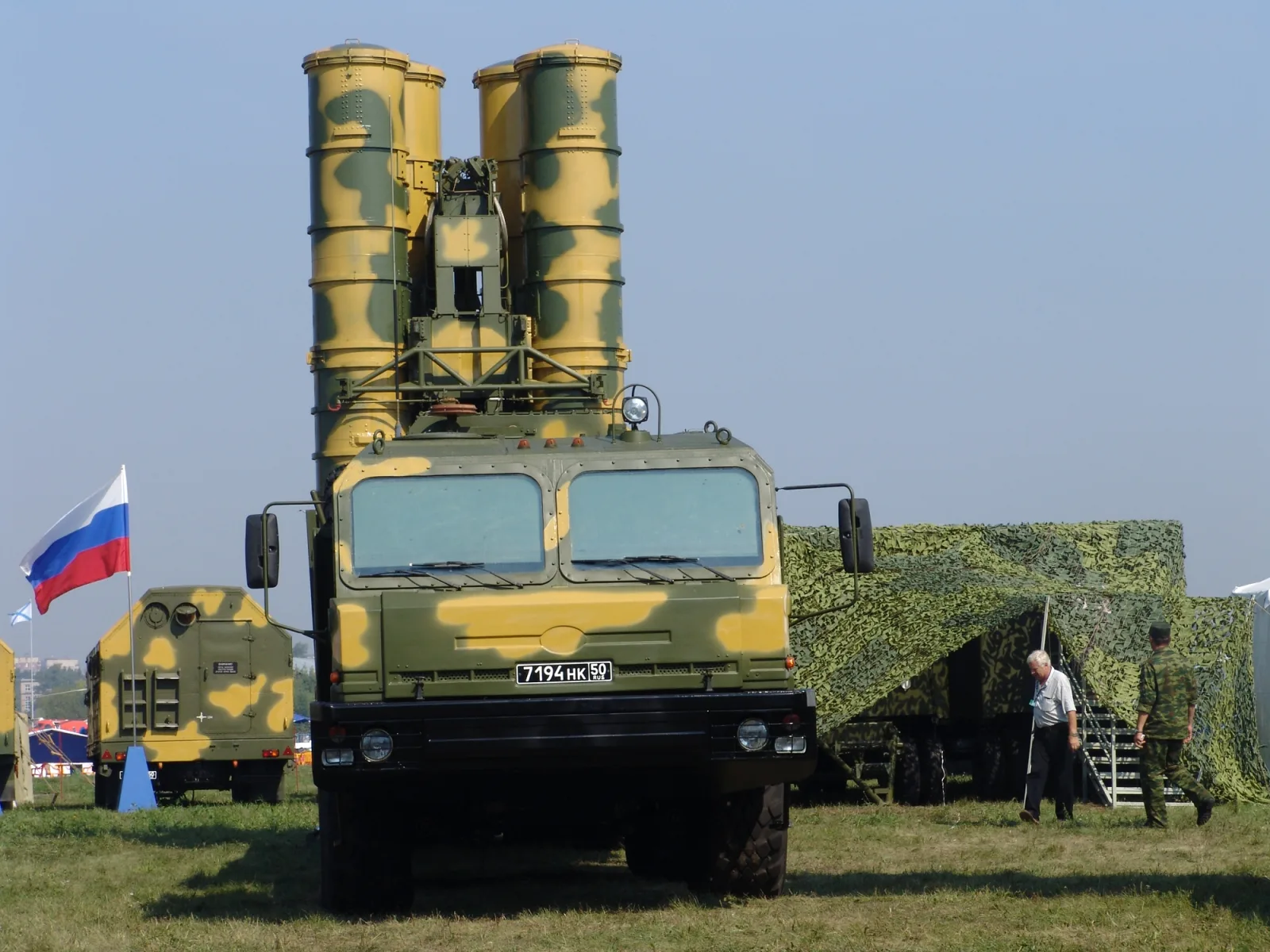
Soviet-designed family of mobile long-range surface-to-air systems in service since 1978. The S-300P line (SA-10/SA-20) reaches about 150 km with the 48N6 missile; the S-300V line (SA-12/SA-23) adds ballistic-missile defence, with about 100 km against aircraft and up to 200 km for the export Antey-2500.
- Range
- 150 km
Sourced record, not yet reviewed. Compiled from the public sources listed below. Every figure is attributed to its source; where sources disagree, both values are shown. No editor has reviewed this record yet.
Overview
The S-300 is a family of Russian surface-to-air missile systems rather than a single weapon. CSIS describes two main branches. The S-300P (NATO SA-10 Grumble) was developed from 1967 by the Almaz Central Design Bureau to replace the S-25 and S-75 and to counter long-range air-launched cruise missiles; it entered service in 1978 and is used for air defence. The S-300V (SA-12, later SA-23 Gladiator/Giant), which CSIS describes as derived from the S-300P, adds an anti-ballistic-missile capability and is compared in several respects with the U.S. Patriot PAC-2.
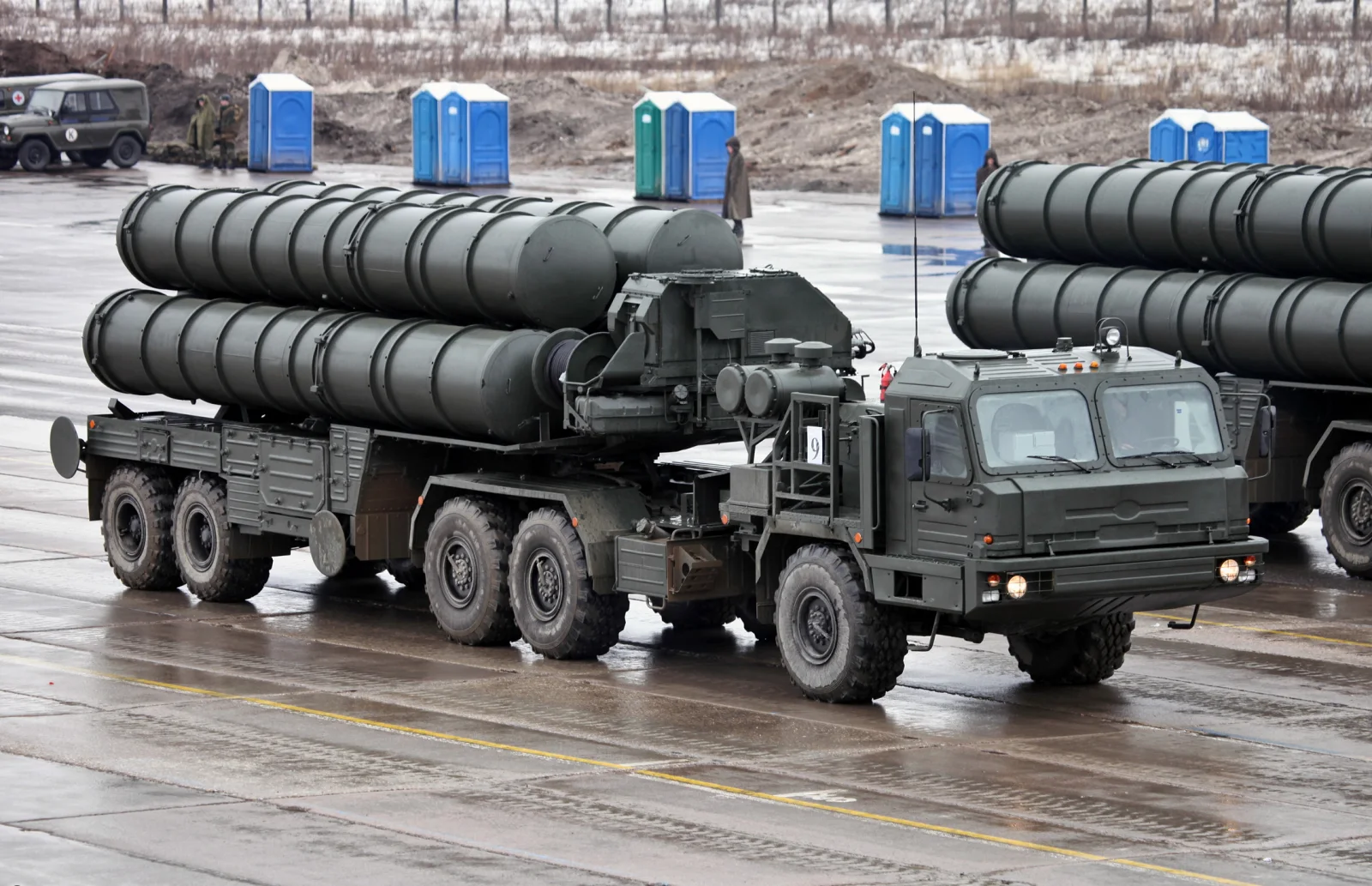
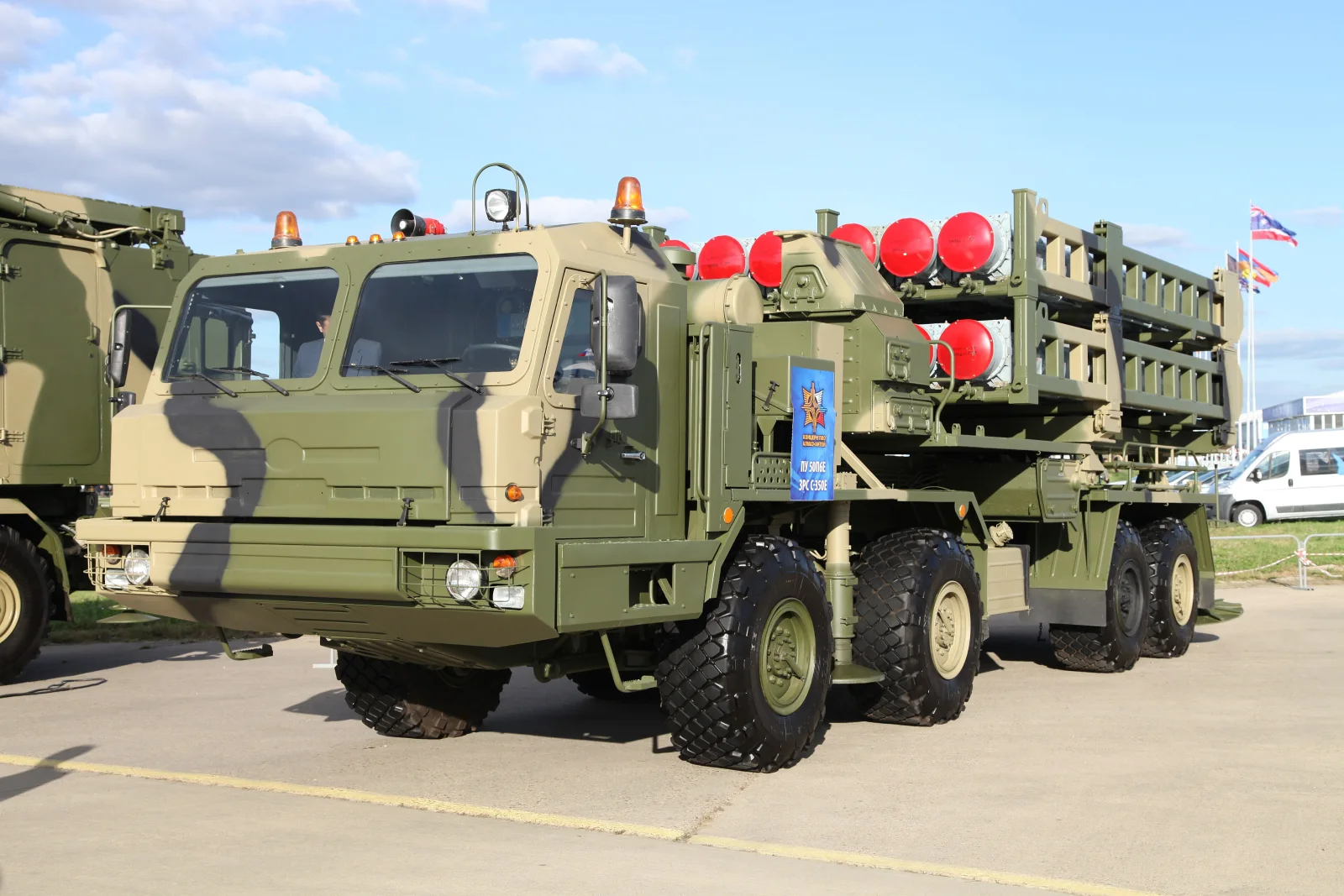
Over its service life the S-300P has used more than 20 missile variants. CSIS lists the 5V55K (47 km), 5V55R (75 km) and 48N6 (150 km) as current; all are 0.51 m in diameter and 7.25–7.5 m long, with high-explosive fragmentation warheads of 133–143 kg set off by proximity and impact fuzes. The 48N6 can engage targets moving at up to 10,000 km/h. Four missiles ride on a 9P85S 8×8 transporter-erector-launcher.
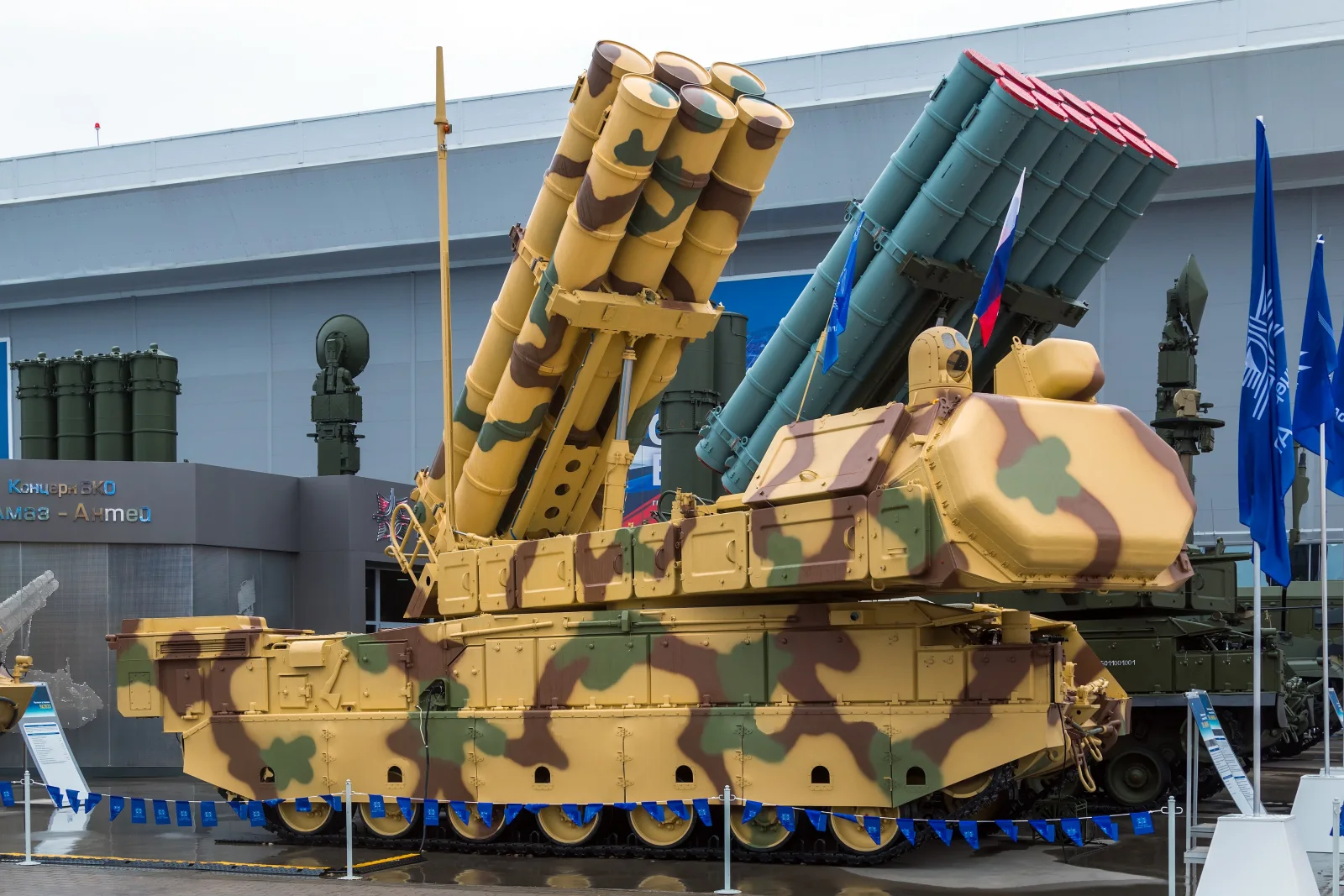
The S-300V entered service in stages from 1983, with full deployment by 1988. Its 9M83 (7.5 m, 75 km against aircraft) and larger 9M82 (10 m, 100 km) engage ballistic warheads within about 40 km; the export Antey-2500 extends anti-aircraft reach to 200 km. The missiles use inertial guidance and semi-active radar homing and carry 150 kg fragmentation warheads. The U.S. Army's Worldwide Equipment Guide describes the modernised S-300VM (Antey-2500), introduced in 2013, as able to counter tactical and theatre ballistic missiles launched from up to about 2,500 km. A battalion combines a 9S457ME command post, 9S15ME and 9S19ME radars, a 9S32ME guidance radar, up to six tracked 9A83ME launchers with four 9M83ME missiles each and up to six 9A84ME loader-launchers with two 9M82ME or 9M82MDE. Russia's Ministry of Defence has reported the S-300V4 entering duty in the Southern Military District.
Russia fielded about 1,900 S-300 launchers at the peak in 2000 and around 800 by 2017 (CSIS). The S-300P was out of production by 2016, and export orders have been met with refurbished systems. Russia deployed S-300s to Crimea after 2014, to Tartus in Syria in October 2016 and to Kaliningrad, and completed deliveries to Iran in October 2016 (CSIS). Egypt and Venezuela operate the S-300VM (Worldwide Equipment Guide).
Technical profile
Seeker, guidance, warhead, data link and launcher as described in public sources. Each line cites its source.
| Warhead | High-explosive fragmentation: 133 kg (5V55), 143 kg (48N6), 150 kg (S-300V missiles) | Secondary reference[1] |
|---|---|---|
| Fuze | Proximity and impact fuzes (S-300P missiles) | Secondary reference[1] |
| Launcher | 9P85S 8×8 TEL (S-300P); 9A83ME four-round TELAR and 9A84ME two-round loader-launcher on GM-830-series tracked chassis (S-300V/VM) | Secondary reference[1][2] |
| Fire control / radar | S-300VM battalion: 9S457ME command post, 9S15ME all-round and 9S19ME sector radars, 9S32ME multi-channel guidance radar | Official document[2] |
Publicly documented characteristics
Each figure shows where it comes from. “Not publicly disclosed” means no source we hold gives a figure; it is never treated as zero.
| Characteristic | Value | Evidence and sources |
|---|---|---|
| Maximum range (km) | 150 kmBasis: Range reported in secondary sourcesS-300P with the 48N6. S-300V: 75 km (9M83) and 100 km (9M82) against aircraft, about 40 km against ballistic missiles; export Antey-2500 up to 200 km. | Secondary reference[1] |
| Length (m) | 7.5 m48N6 (S-300P) and 9M83 (S-300V); 5V55K/R 7.25 m; 9M82 10 m. | Secondary reference[1] |
| Diameter (mm) | 510 mm5V55 and 48N6; 9M82 850 mm. | Secondary reference[1] |
| Payload / warhead (kg) | 143 kg48N6 warhead; 5V55 133 kg; S-300V missiles 150 kg. | Secondary reference[1] |
| Guidance / cueing | Inertial with semi-active radar homing (S-300V family) | Secondary reference[1] |
| Ready rounds / magazine | 4 per 9P85S TEL (S-300P); 4 per 9A83ME and 2 per 9A84ME (S-300V/VM) | Secondary reference[1][2] |
| Launch / operating platform | 9P85S 8×8 truck (S-300P); tracked 9A83ME / 9A84ME launchers (S-300V/VM) | Secondary reference[1][2] |
Platforms and integration
Launchers, vehicles, ships, aircraft, sensors and command systems the record is integrated with, by status.
| Platform or system | Domain | Status | Sources |
|---|---|---|---|
| S-300VM (Antey-2500) battalion set · EgyptDeliveries reported complete by about 2017; 9A83ME TELARs shown publicly in 2026. | Land | In service | [2] |
Operators
Development and tests
2016-10 · First delivery
Deliveries to Iran completed
Russia completed S-300 deliveries to Iran after the 2015 nuclear agreement; the same month it deployed S-300P and S-300V units to Tartus, Syria. [1]
2013 · Upgrade
S-300VM introduced
Deep modernisation of the S-300V with upgraded radars and missiles (export name Antey-2500). [2]
1988 · First delivery
S-300V fully deployed
After phased entry from 1983 and 9M83 production from 1986. [1]
1978 · First delivery
S-300P enters service
The air-defence variant entered operational service eleven years after development began. [1]
1967 · Development
S-300P development begins
Under the Almaz Central Design Bureau, to replace the S-25 and S-75. [1]
Capabilities and limitations
Stated capabilities
- About 150 km against aircraft with the 48N6 missile (S-300P, specialist press).
- Ballistic-missile defence within about 40 km with the S-300V; export Antey-2500 out to 200 km against aircraft (specialist press).
- S-300VM designed against ballistic missiles launched from up to about 2,500 km (U.S. Army reference).
Limitations and open questions
- S-300P out of production since about 2016; exports use refurbished systems (specialist press).
- Large guidance radars such as the 9S32ME are conspicuous, high-value targets for precision strikes (U.S. Army reference).
- Figures differ widely by variant; this record labels each figure with its branch.
Relevance to threats
Listed by the strength of the evidence. Inclusion here is not a claim of proven effectiveness.
- Cruise missilesSecondary reference
Countering air-launched cruise missiles was a design aim of the S-300P (specialist press).
Frequently asked questions
Short answers drawn from the sources below. Where sources disagree, the answer gives the range.
What is the range of the S-300?
It depends on the version. The S-300P reaches about 150 km with the 48N6 missile (47 km and 75 km with the older 5V55K and 5V55R). The S-300V reaches 75–100 km against aircraft and about 40 km against ballistic missiles, and the export Antey-2500 up to 200 km. [1]
What is the difference between the S-300P and the S-300V?
The S-300P (SA-10/SA-20) is an air-defence system on 8×8 trucks. The S-300V (SA-12/SA-23), derived from it, adds an anti-ballistic-missile role with the larger 9M82 and 9M83 missiles on tracked launchers; CSIS compares it with the U.S. Patriot PAC-2. [1][2]
Which countries use the S-300?
CSIS's 2017 profile lists Algeria, Armenia, Azerbaijan, Belarus, Bulgaria, China, Greece, India, Iran, Kazakhstan, Russia, Slovakia, Syria, Ukraine, Venezuela and Vietnam for the S-300P, and Egypt, Iran, Russia and Venezuela for the S-300V. Some of these holdings may have changed since; the U.S. Army guide confirms the S-300VM with Russia, Egypt and Venezuela. [1][2]
Sources
- 1.
CSIS Missile Threat · Specialist press · Retrieved
Supports: S-300P (SA-10) development from 1967 by the Almaz bureau, in service 1978; about 1,900 launchers in 2000 and about 800 in 2017; out of production by 2016; 5V55K (47 km), 5V55R (75 km) and 48N6 (150 km) missiles, 0.51 m diameter, 133–143 kg warheads; four missiles per 9P85S TEL; S-300V (SA-23) with 9M83 (75 km) and 9M82 (100 km) missiles, ballistic targets to 40 km, Antey-2500 export to 200 km; 9A83ME and 9A84ME launchers; operator list; deployments to Crimea, Syria and Kaliningrad; deliveries to Iran completed October 2016
- 2.
S-300VM (SA-23 Gladiator/Giant) Russian Long-Range Air Defense Missile System (opens in a new tab)
U.S. Army ODIN (Worldwide Equipment Guide) · Government · Retrieved
Supports: S-300VM (Antey-2500) introduced 2013 by Almaz-Antey; tracked GM-830 series chassis; against ballistic missiles launched from up to about 2,500 km; battalion of 9S457ME command post, 9S15ME and 9S19ME radars, 9S32ME guidance radar, up to six 9A83ME TELARs (four 9M83ME) and six 9A84ME loader-launchers (two 9M82ME/9M82MDE); operators Russia, Egypt, Venezuela
- 3.
New S-300V4 and Buk-M3 systems assume duty in Southern Military District (opens in a new tab)
Ministry of Defence of the Russian Federation · Government · Retrieved
Supports: Buk-M3 in Russian Ground Forces service
This record is compiled and kept up to date by World of Interceptors at www.worldofinterceptors.com/systems/s-300. Cite it with a link to this page. Compiled from open sources and cross-checked, but accuracy cannot be guaranteed; manufacturers and independent organisations can ask us to correct or remove information (disclaimer).
Related systems
Revision history
· Created
Record created for the S-300 family (previously mentioned only inside other records) from CSIS Missile Threat, the U.S. Army Worldwide Equipment Guide and the Russian MoD; added a launcher photo.
Newsletter · every two weeks
The Interceptors Brief
What changed in air defence and counter-drone, in five minutes, with the sources attached.
Confirm by email · unsubscribe in one click · Privacy