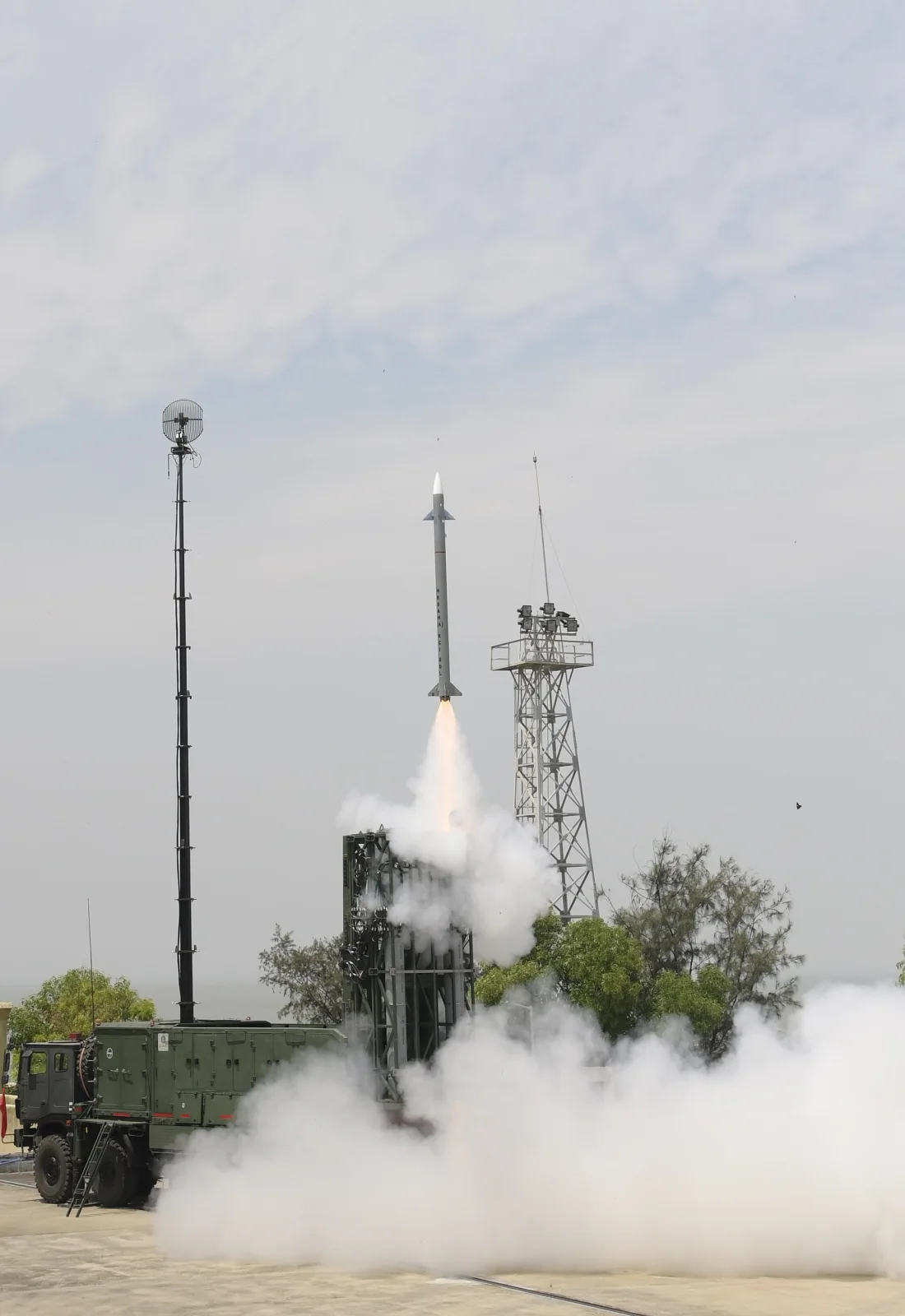
| Role |
|---|
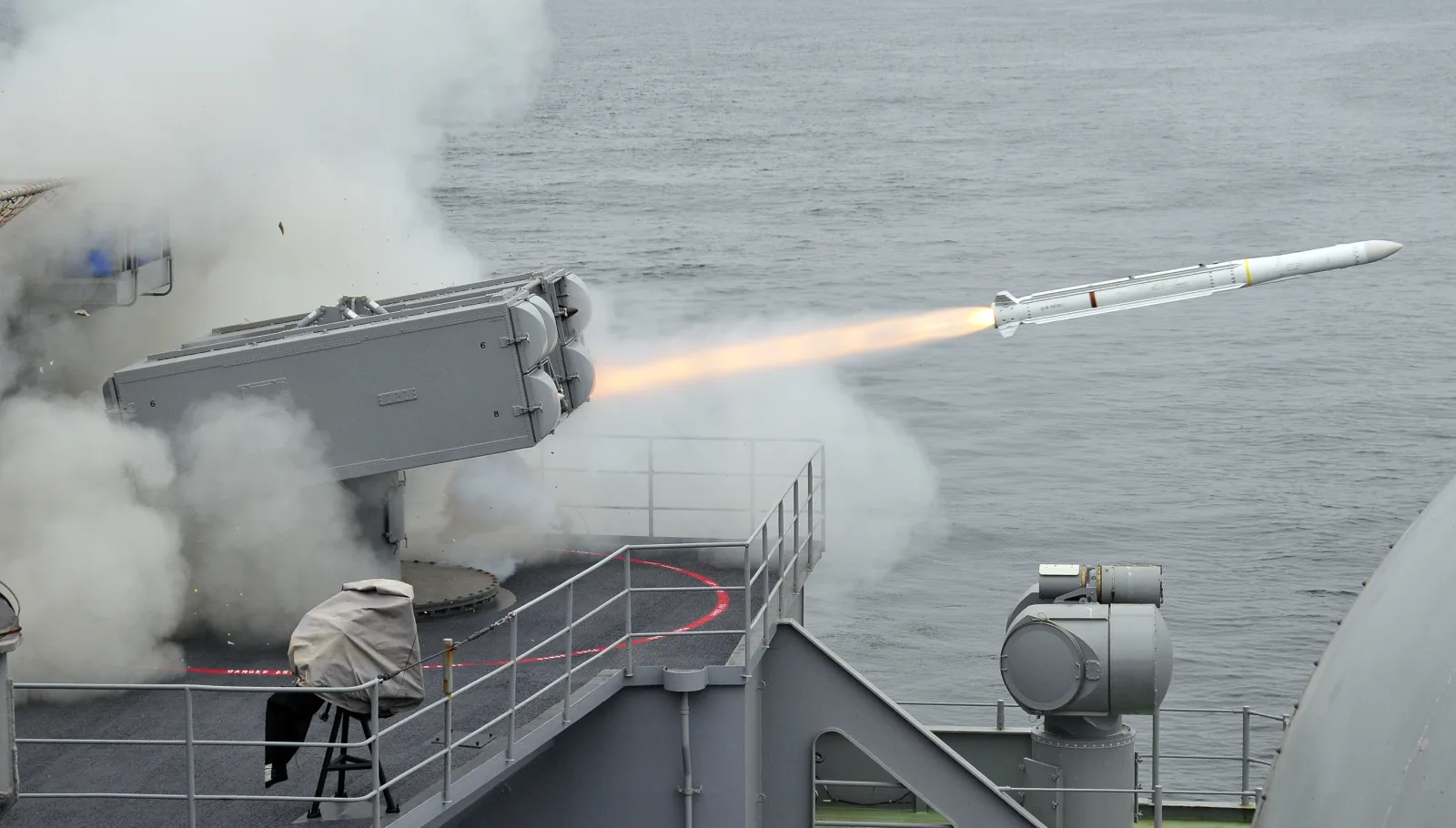
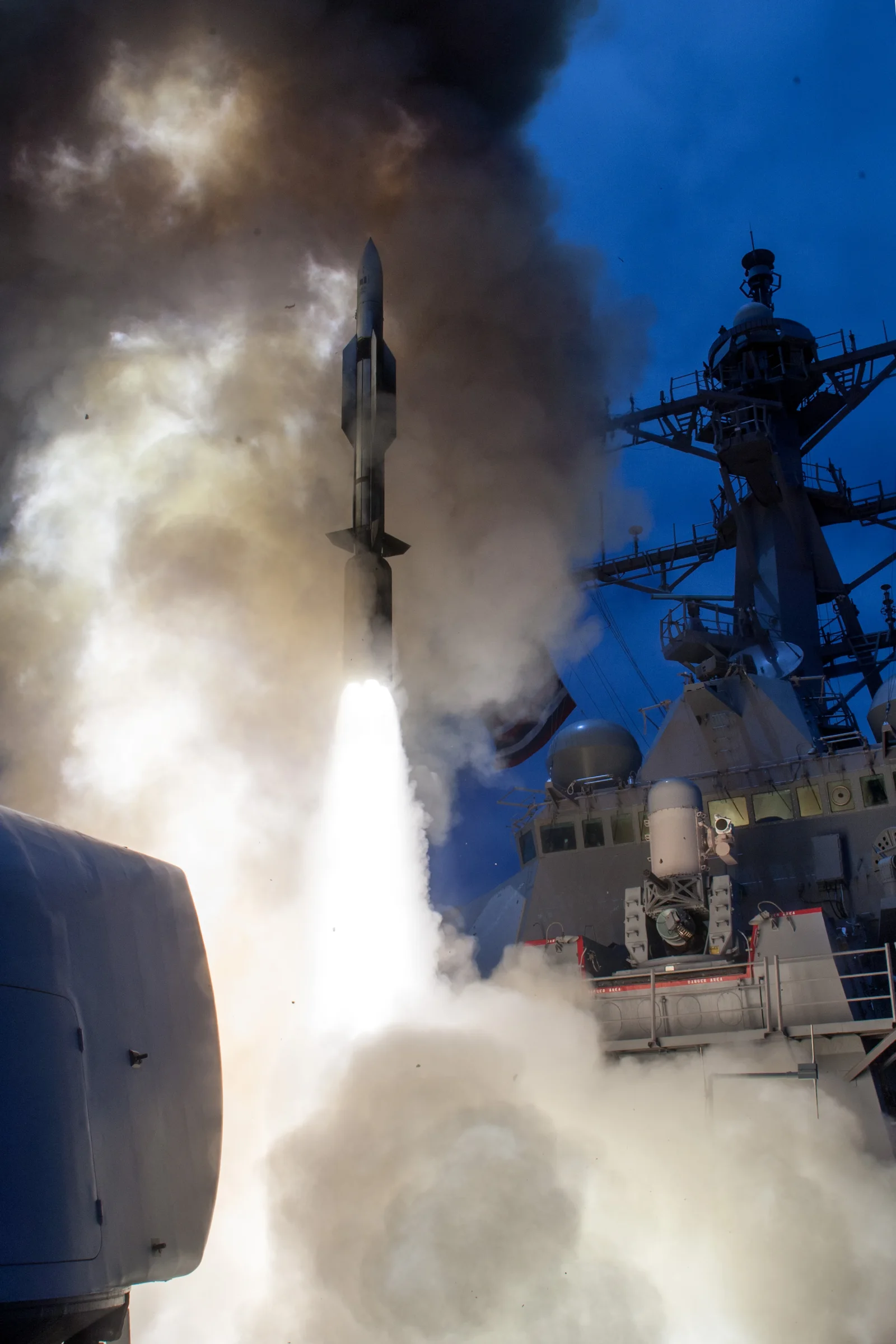
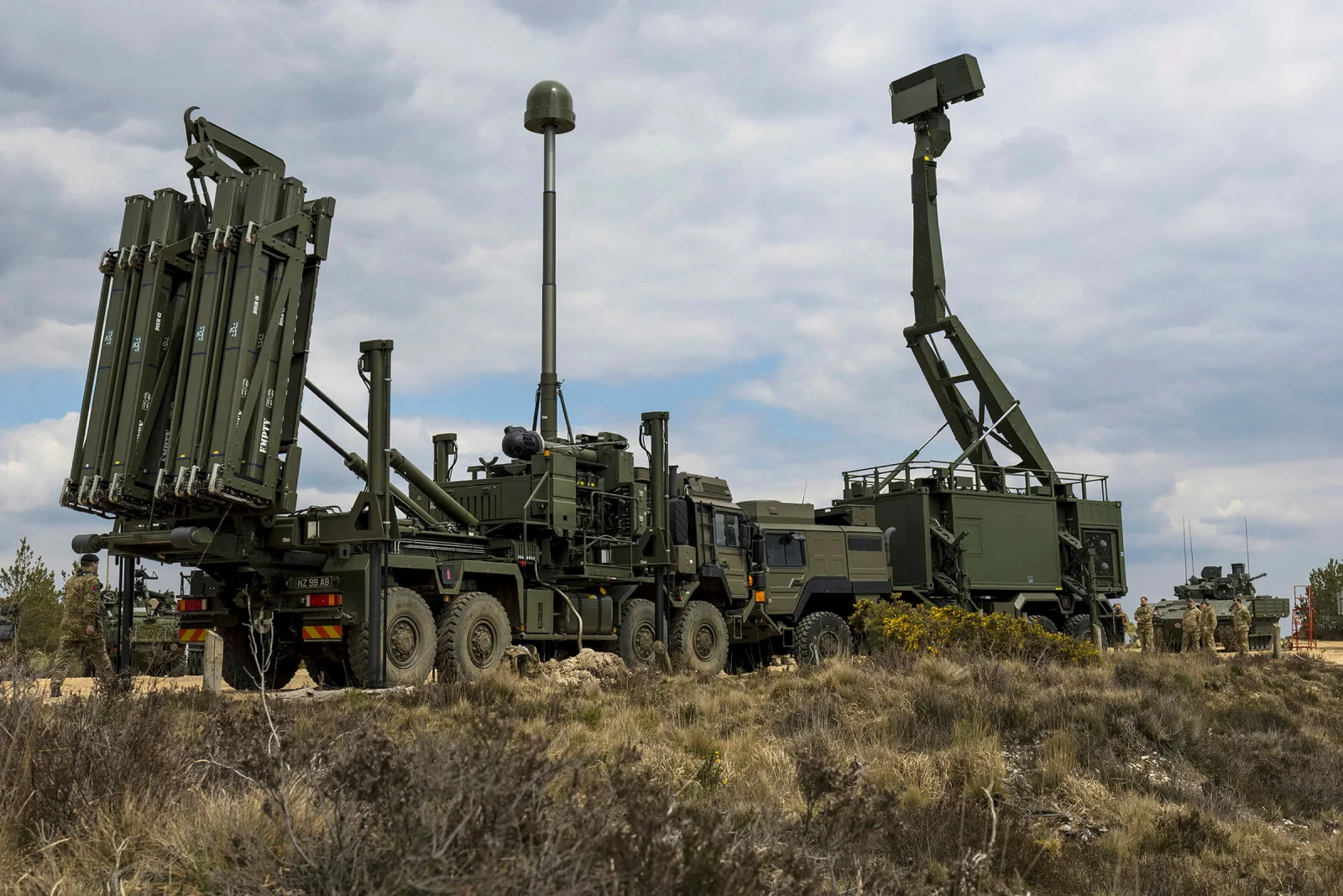
| Primary category | Interceptor Missiles | Interceptor Missiles | Interceptor Missiles | Interceptor Missiles |
|---|
| Subcategory | Medium-range air-defense missiles | Long-range air-defense missiles | Short-range air-defense missiles | Medium-range air-defense missiles |
|---|
| Interception mechanism | Blast-fragmentation | Blast-fragmentation, Proximity fuze | Blast-fragmentation, Proximity fuze | Blast-fragmentation, Proximity fuze |
|---|
| Target types | Cruise missiles, Crewed aircraft, Surface vessels | Crewed aircraft, Cruise missiles, Ballistic missiles, One-way attack UAVs, Surface vessels | Crewed aircraft, Cruise missiles, One-way attack UAVs, Small UAS | Crewed aircraft, Cruise missiles, Ballistic missiles, Small UAS |
|---|
| Platform | Shipborne | Shipborne | Vehicle-mounted, Shipborne | Vehicle-mounted, Shipborne |
|---|
| Status | In service | In service | In service | In service |
|---|
| Developer · Country | RTX (Raytheon) · United States and NATO partners | RTX (Raytheon) · United States | MBDA UK · United Kingdom | Israel Aerospace Industries, Defence Research and Development Organisation (DRDO) · Israel |
|---|
| Propulsion | Solid rocket motor | Solid rocket motor | Solid rocket motor | Solid rocket motor |
|---|
| Reusability | Single-use | Single-use | Single-use | Single-use |
|---|
| Technical profile |
|---|
| Seeker | Semi-active radar (Block 1); active radar added in Block 2[1] | Active radar seeker enlarged from the AIM-120C AMRAAM seeker (13.5 in vs 7 in); semi-active mode retained[2] | Active RF seeker with a GaN solid-state amplifier[3] | Active radar seeker on each interceptor, switched on for the terminal phase[3][4] |
|---|
| Guidance | Home-all-the-way semi-active homing, or inertial midcourse with ship updates and X-band or S-band terminal guidance; uplink from the Aegis SPY-1 radar[1] | Inertial to terminal active homing, semi-active throughout, or over-the-horizon via Cooperative Engagement Capability; GPS added on Block IA[2] | Inertial with mid-course updates; active radar terminal homing[3] | Mid-course updates from the weapon control system over a two-way data link; active radar terminal homing[3] |
|---|
| Warhead | Redesigned warhead section; new blast-fragmentation warhead in Block 2[1] | Blast-fragmentation, 64 kg[2] | 10 kg high-explosive blast-fragmentation[3] | Blast-fragmentation, 60 kg (Barak 8)[3] |
|---|
| Fuze | Not recorded | Radar and contact fuzes[2] | Laser proximity and impact[3] | |
|---|
| Motor / propulsion | Solid rocket motor with laser ignition; thrust-vector tail control[1] | Two-stage solid rocket (booster plus sustainer); Block IB to use a 21-inch motor[2] | Solid motor shared with ASRAAM (CAMM); new Avio motor on CAMM-ER[3] | Dual-pulse solid rocket motor with thrust-vector control; Barak ER adds a booster stage[3][4] |
|---|
| Data link | Not recorded | Not recorded | Two-way data link; on land it is provided through the iLauncher[3] | Two-way data link between missile and weapon control system[3] |
|---|
| Launcher | Mk 29 trainable launcher; Mk 41 (four per cell), Mk 48 and Mk 57 vertical launchers; Mk 56 dual pack[1] | Mk 41 vertical launching system; U.S. Army Typhon ground launcher; F/A-18E/F (AIM-174B)[2][4] | Soft vertical launch by gas generator; iLauncher carries up to 8 CAMM or CAMM-ER on an 8×8 truck; naval cells and ExLS/Mk 41 options[1][3] | Vertical launch from canisters: 8-cell naval VLS modules and 8-round mobile land launchers[3] |
|---|
| Rounds per launcher | Not recorded | Not recorded | | 8 per launcher; an Indian MRSAM firing unit has 3 launchers[3] |
|---|
| Fire control / radar | Not recorded | Aegis combat system; engage-on-remote through Cooperative Engagement Capability[2] | Sky Sabre: Saab Giraffe AMB C-band radar and Rafael command system; Narew: Polish radars and US IBCS[2][3][4] | MRSAM: multi-function radar, command post and mobile launchers; Indian Navy ships: EL/M-2248 MF-STAR[2][3][6] |
|---|
| Reaction / readiness | Not recorded | Not recorded | Land Ceptor ready in under 20 minutes; MoD says Sky Sabre can control 24 missiles simultaneously[2][5] | Not recorded |
|---|
| Characteristics |
|---|
| Maximum range (km) † | ≈ 50 km† Range reported in secondary sourcesSecondary reference[1] | 240 km† Range reported in secondary sourcesSecondary reference[2] | At least 25 km† Range reported in secondary sourcesSecondary reference[3] | Up to 150 km† Maximum engagement range as claimed by the developerManufacturer claim[1] |
|---|
| Maximum altitude (km) | Not recorded | At least 34 kmSecondary reference[2] | 10 kmSecondary reference[3] | Not recorded |
|---|
| Speed (m/s) | Mach 4Secondary reference[1] | ≈ 1,190 m/sSecondary reference[2] | Mach 3Secondary reference[3] | Not recorded |
|---|
| Mass (kg) | Not recorded | 1,500 kgSecondary reference[2] | 99 kgManufacturer claim[1] | 275 kgSecondary reference[3] |
|---|
| Length (m) | 3.64 mSecondary reference[1] | 6.6 mSecondary reference[2] | 3.2 mManufacturer claim[1] | 4.5 mSecondary reference[3] |
|---|
| Ready rounds / magazine | 4 per Mk 41 cell (quad-pack)Secondary reference[1] | Not recorded | Not recorded | Not recorded |
|---|
| Guidance / cueing | Inertial with midcourse uplink and semi-active radar homing (Block 1); active and semi-active seeker (Block 2)Secondary reference[1] | Inertial; terminal active or semi-active radar homingSecondary reference[2] | Inertial with mid-course update; active radar terminal homingSecondary reference[3] | Two-way data link mid-course; active radar seekerSecondary reference[3] |
|---|
| Effect | Not recorded | 64 kg blast-fragmentation warhead; radar and contact fuzesSecondary reference[2] | HE blast-fragmentation; laser proximity and impact fuzeSecondary reference[3] | Not recorded |
|---|
| Launch / operating platform | Warships: Mk 29, Mk 41, Mk 48, Mk 56 and Mk 57 launchersSecondary reference[1] | Aegis warships; U.S. Army Typhon launcherSecondary reference[2][1] | Sky Sabre launcher truck; ship canisters (Sea Ceptor)Official document[2][1] | Mobile land launchers and shipborne vertical launch cellsOfficial document[2][1] |
|---|
| Programme |
|---|
| Operators (in service / ordered) | 13: United States, Australia, Canada, Denmark, Germany, Greece, Japan, Netherlands, Norway, Spain, Thailand, Türkiye +1 more[1] | 5: United States, Japan, Australia, South Korea, Germany[2] | 8: United Kingdom, Poland, New Zealand, Chile, Brazil, Italy, Saudi Arabia, Sweden[3][4][5] | |
|---|
| Platforms and integration | Aegis destroyers and cruisers (Mk 41 VLS) (in service), Aircraft carriers and amphibious assault ships (Mk 29) (in service), Allied frigates and corvettes (Mk 41, Mk 48, Mk 56) (in service)[1] | Aegis destroyers and cruisers (Mk 41 VLS) (in service), Typhon / Strategic Mid-Range Fires (in service), F/A-18E/F Super Hornet (AIM-174B) (in service), F127 frigate (in development)[1][2][4] | Sky Sabre (iLauncher, Giraffe AMB, Rafael C2) (in service), Sea Ceptor on Type 23 frigates (in service), Type 26 and Type 31 frigates (ordered), Narew (CAMM-ER, iLauncher on Jelcz, IBCS) (ordered), Pilica+ (CAMM with PSR-A Pilica) (in service), Anzac-class frigates (20-cell) (in service), Tamandaré-class frigates (12-cell) (ordered), Visby-class corvettes (ordered) +1 more[3][4][5] | Kolkata- and Visakhapatnam-class destroyers (LR-SAM) (in service), Nilgiri-class frigates and INS Vikrant (in service), Sa'ar 5-class corvettes (in service), MRSAM mobile launchers and radar on Tata 8×8 trucks (in service), EL/M-2248 MF-STAR naval radar (in service), Elta MMR radars (Greek Achilles Shield) (ordered)[2][3][9] |
|---|
| Public contracts | 1 recorded. Latest: 2026-07-22 · Naval Sea Systems Command (U.S. Navy, 11 partner governments and Japan) · US$18,977,361[3] | 4 recorded. Latest: 2026-10-01 · U.S. Navy · up to US$24.4 billion[2][3][5][6][7] | 5 recorded. Latest: 2025-08-22 · United Kingdom (MoD) · 6 launchers · £118 million[3][4][5][7][8][9] | 4 recorded. Latest: 2026-08-31 · Greece · approximately €3 billion for the whole package[4][6][7][9][10][11] |
|---|
| Production / deliveries | Not recorded | Programme: about 500 built; 1,800 planned cumulative, 2026 onward: hundreds of rounds a year within several years planned rate[2][4] | 2022–2026: monthly CAMM-family output to triple planned rate[3] | BDL Hyderabad facility: 100 missiles a year planned rate[3] |
|---|
| Latest development | 2018-06-12: First Block 2 guided flight[2] | 2026-10-01: Multi-year contract[3] | 2024-03-09: First combat use[3] | 2025-05: Reported intercept during India–Pakistan fighting[3] |
|---|