Platform
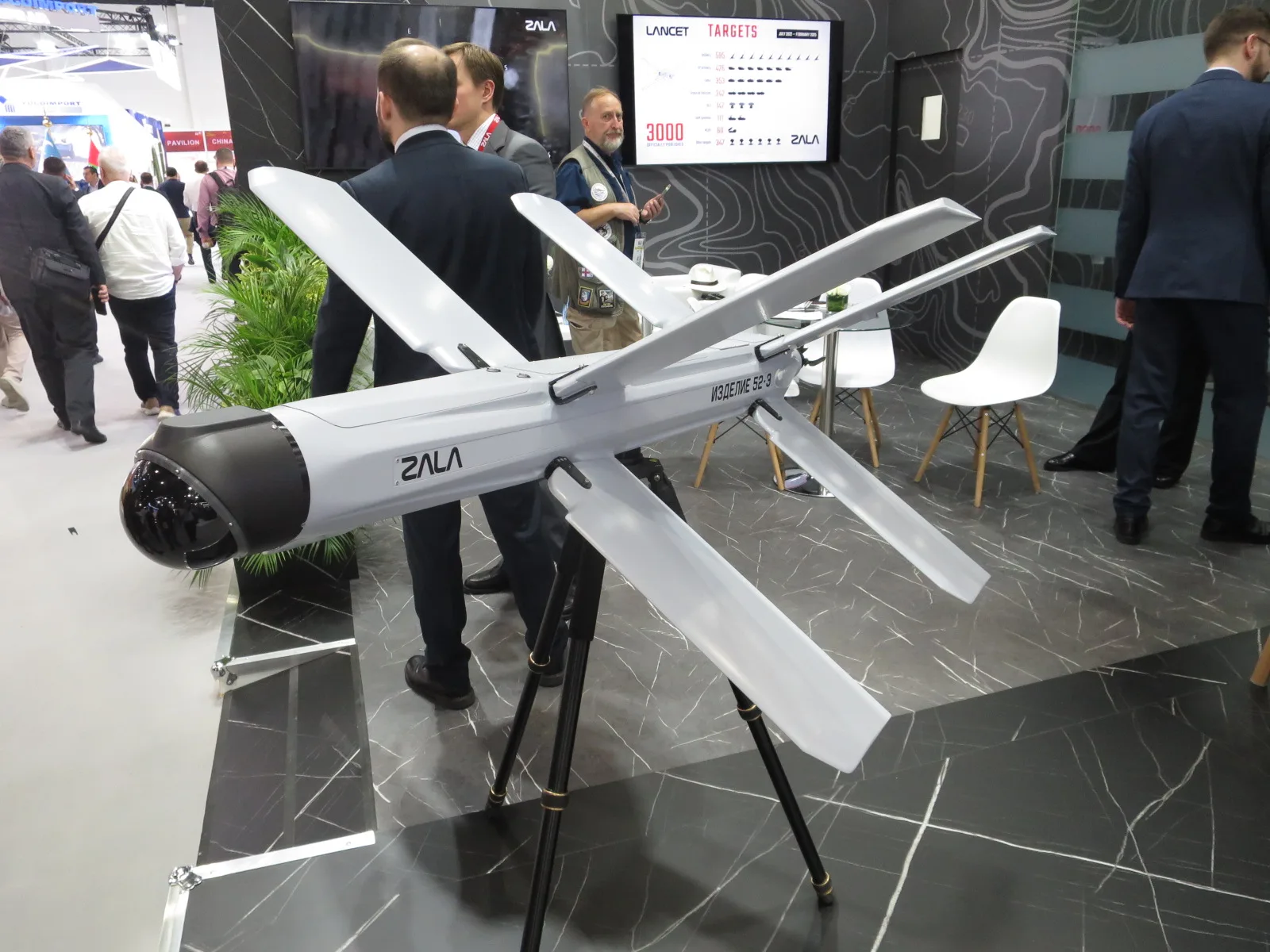
ZALA Lancet
Russian electric loitering munition by ZALA Aero (Kalashnikov), with a double X-wing layout and a TV guidance channel, used widely against artillery and air defences in Ukraine.
- Speed
- about 80–110 km/h
- Range
- 40 km
- Warhead
- 3 kg
- Estimated unit cost
- about $35,000
Sourced record, not yet reviewed. Compiled from the public sources listed below. Every figure is attributed to its source; where sources disagree, both values are shown. No editor has reviewed this record yet.
Overview
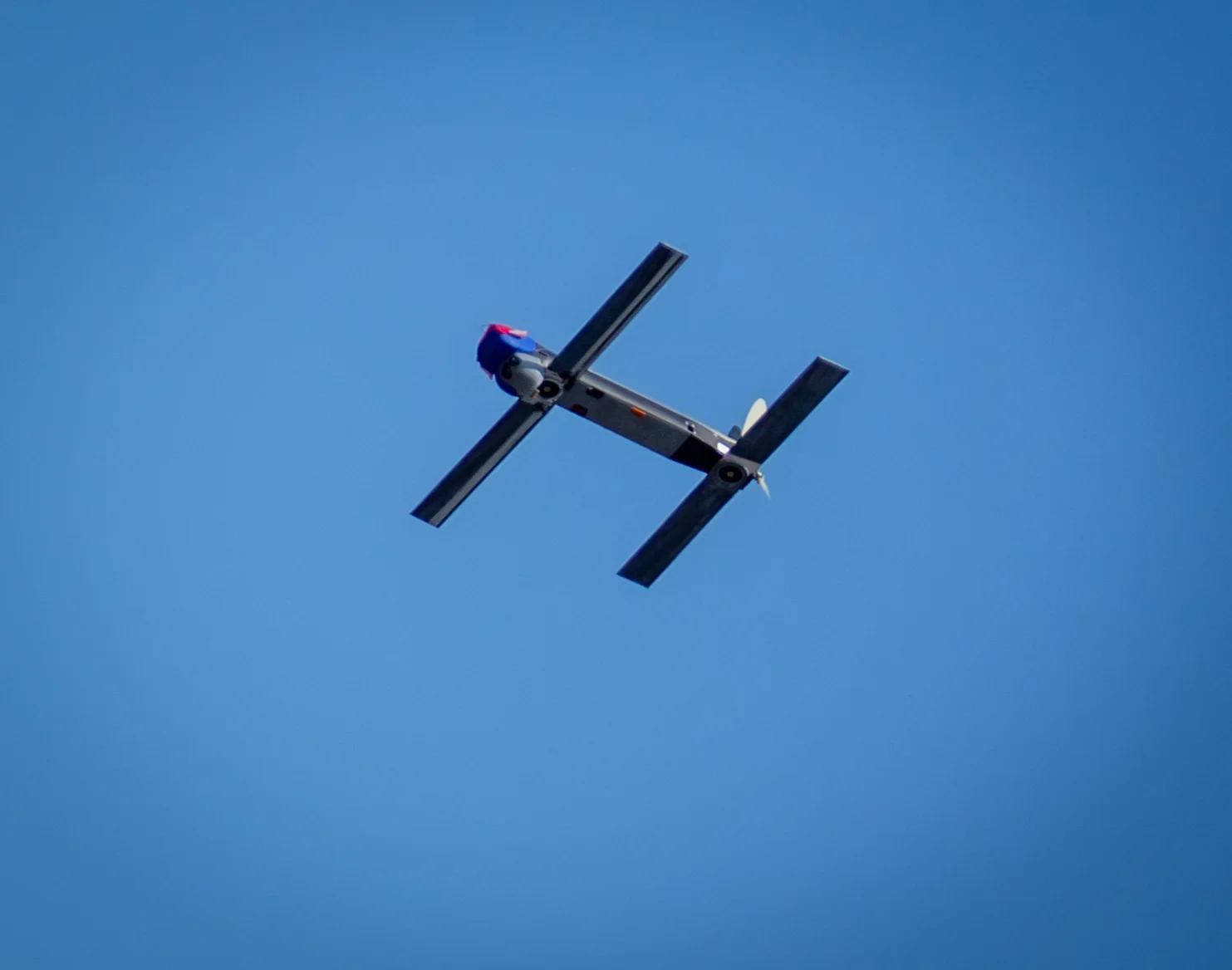
The Lancet was unveiled at Army-2019 by ZALA Aero Group, part of the Kalashnikov Concern, as a development of the KUB-BLA. It is launched from a catapult, flies on an electric motor and uses a double X-shaped wing layout; the manufacturer says an operator watches the target through a television channel until impact (manufacturer; reference work).
Two versions share the airframe: Lancet-3 (Izdeliye 52) with a 40-minute flight and 3 kg payload, and the smaller Lancet-1 (Izdeliye 51) with 1 kg and 30 minutes. The declared range is 40 km; a strike on an airfield about 70 km from the front in September 2023 suggested more (reference work).
Russia used the Lancet in Syria from 2020 and in Ukraine from mid-2022. The open-source project LostArmour counted 1,163 Lancet strikes by February 2024, about half against artillery. Ukrainian crews responded with cages and nets around guns and, from 2024, with FPV interceptor drones (reference work).
Family, aliases and variants
Each designation keeps its own record. Links show the type of relationship and how well it is supported.
- Izdeliye 52 / Izdeliye 51
- Official designations ('Item 52' and 'Item 51') for the larger and smaller versions
- Lancet-3 / Lancet-1
- Manufacturer names for the larger and smaller versions
Related records
Each card is a separate record. Copies built outside the original country, and comparable designs that are not copies, are labelled on their own pages.
Primary classification
Aerial Threats › Loitering munitions › Tactical
Tactical loitering munition: an operator selects the target in flight. It is not a one-way attack drone flown to a preset point.
Characteristics
- Remotely piloted
- Low-altitude flight
- Mass production reported
- Weaponized
Publicly documented characteristics
Figures for this record circulate in public reporting but are withheld until a source is attached and checked.
| Characteristic | Value | Evidence and sources |
|---|---|---|
| Maximum range (km) | 40 kmBasis: Range reported in secondary sourcesDeclared range; a strike about 70 km from the front was reported in 2023. | Secondary reference[1] |
| Mass (kg) | Up to 12 kgMaximum take-off weight of Lancet-3. | Secondary reference[1] |
| Payload / warhead (kg) | 3 kgLancet-3; Lancet-1 carries 1 kg. Later batches reported with more than 5 kg. | Manufacturer claim[2][1] |
| Endurance (min) | 40 minLancet-3; Lancet-1 about 30 minutes. | Manufacturer claim[2] |
| Speed (m/s) | ≈ 22–31 m/s80–110 km/h in cruise; up to about 300 km/h (83 m/s) in the dive. | Secondary reference[1] |
| Reported unit cost (USD) | ≈ $35,000About 3 million roubles, as cited from Russian sources. | Secondary reference[1] |
| Guidance / cueing | Operator control through a TV channel with optical-electronic terminal guidance | Manufacturer claim[2][1] |
Relevant interception technology classes
Technology classes discussed in connection with this threat. This is not a statement that any class is proven effective against it.
- Physical Capture & BarriersCages and nets around artillery are the best-documented countermeasure; their effect is mixed.
- Interceptor DronesUkrainian FPV interceptors have been used against Lancets since 2024.
- Electronic CountermeasuresRelevant to the operator link; Lancet uses two channels with a reserve frequency, and later versions add autonomy.
- Guns & Interceptor AmmunitionSmall, fast diving target; engagement windows are short.
Known uncertainties
- Strike tallies come from open-source projects that count published videos; real totals and kill rates are not known.
- The maximum range of current production is not documented; 40 km is the declared figure.
Sources
- 1.
ZALA Lancet (opens in a new tab)
Wikipedia · Reference work (secondary) · Retrieved
Supports: Lancet designations (Izdeliye 51/52), 40 km declared range, 12 kg MTOW, 300 km/h dive, electric motor, Lancet-1/-3 and Izdeliye-53 variants, cost estimate of about 3 million roubles, combat use in Syria and Ukraine, LostArmour strike tallies, cage countermeasures.
- 2.
ZALA Lancet drone: the spear of the 21st century (opens in a new tab)
ZALA Aero Group · Manufacturer · Retrieved
Supports: Lancet-1 and Lancet-3 share an airframe; Lancet-3 flight time 40 minutes and 3 kg payload; double X-wing layout; electric motor; television guidance channel; same catapult as KUB-BLA.
- 3.
ZALA Z-53 Russian Unmanned Aerial Vehicle (UAV) (opens in a new tab)
U.S. Army TRADOC, OE Data Integration Network (ODIN) · Government · Published · Retrieved
Supports: Izdeliye-53 as third generation of the Lancet family, introduced 2023; 3–5 kg configurable payload; onboard Nvidia Jetson processing for target classification; multi-constellation satellite navigation with anti-jam features.
This record is compiled and kept up to date by World of Interceptors at www.worldofinterceptors.com/threats/zala-lancet. Cite it with a link to this page. Compiled from open sources and cross-checked, but accuracy cannot be guaranteed; manufacturers and independent organisations can ask us to correct or remove information (disclaimer).
Newsletter · every two weeks
The Interceptors Brief
What changed in air defence and counter-drone, in five minutes, with the sources attached.
Confirm by email · unsubscribe in one click · Privacy