
Threat class
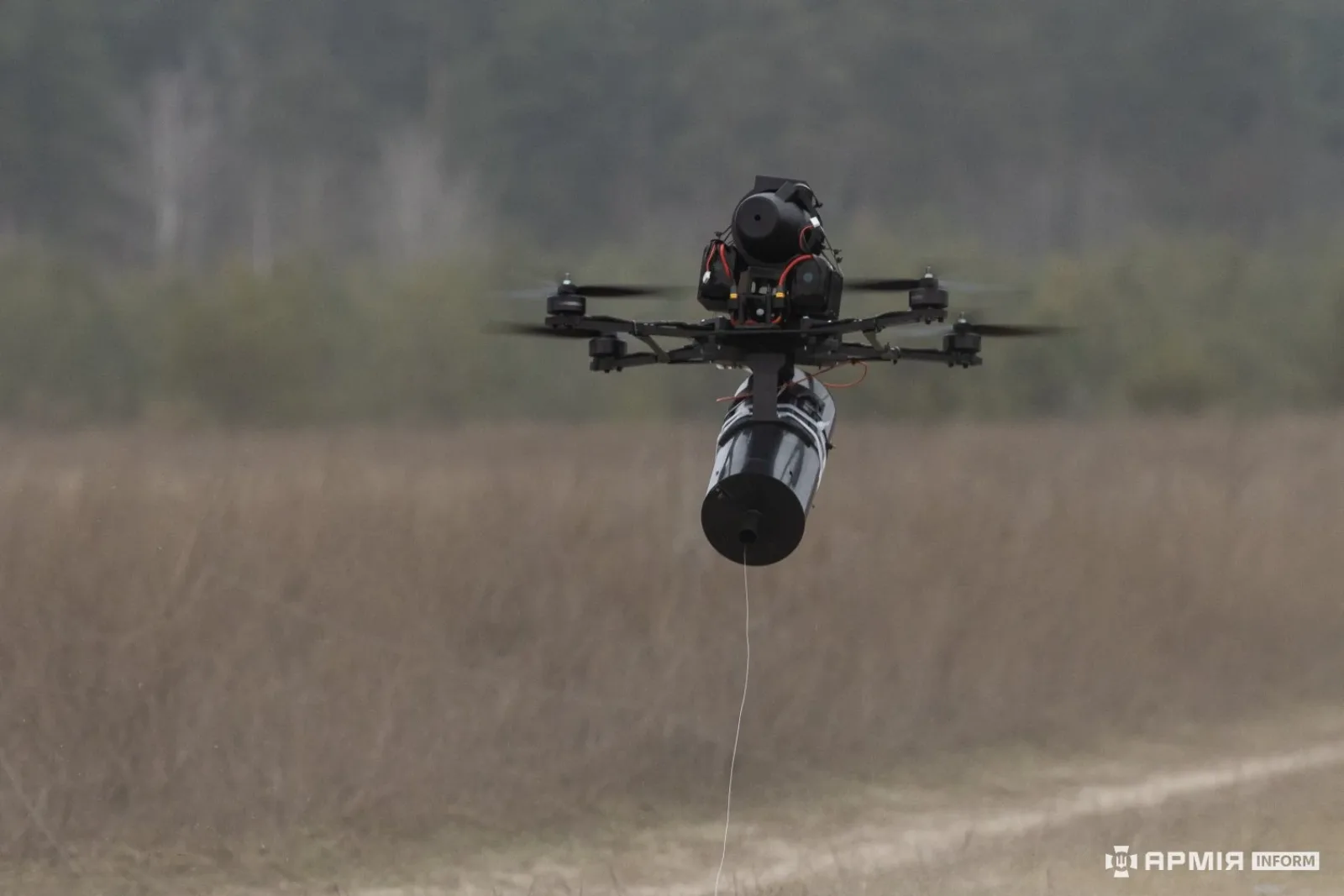
Fibre-optic FPV drones
FPV attack drones that unspool a thin fibre-optic cable to the operator, making the control link immune to radio jamming.
- Range
- 10–50 km
Sourced record, not yet reviewed. Compiled from the public sources listed below. Every figure is attributed to its source; where sources disagree, both values are shown. No editor has reviewed this record yet.
Overview
A fibre-optic FPV drone carries a spool of thin optical fibre that pays out as it flies, linking it to the operator. The link cannot be jammed, which has made these drones a serious threat to logistics and personnel in Ukraine (general press; reference work).
Most models operate at about 10–25 km. In November 2025 Ukraine's Mykhailo Fedorov said Russia was fielding versions with a 50 km reach. The spool adds weight, reduces manoeuvrability and payload, and the cable can snag or break (general press).
Defences are mainly physical: netting over supply roads and positions, shotguns, and interceptor drones (general press).
Family, aliases and variants
Each designation keeps its own record. Links show the type of relationship and how well it is supported.
- Fiber-optic drones
- U.S. spelling
- Wired FPV drones
- Descriptive name
Related records
Each card is a separate record. Copies built outside the original country, and comparable designs that are not copies, are labelled on their own pages.
Families and platforms in this class
- MolniyaPlatform · Small one-way attack drones
- KVN fibre-optic FPVPlatform · FPV attack drones
Primary classification
Aerial Threats › Small attack drones › FPV attack drones
Class page. Individual platforms such as KVN are linked below.
Characteristics
- Remotely piloted
- Low-altitude flight
- Low unit cost (reported)
- Weaponized
Publicly documented characteristics
Figures for this record circulate in public reporting but are withheld until a source is attached and checked.
| Characteristic | Value | Evidence and sources |
|---|---|---|
| Maximum range (km) | 10–50 kmBasis: Range reported in secondary sourcesTypical 10–25 km; 50 km reported for newer Russian versions in late 2025. | Secondary reference[1] |
Relevant interception technology classes
Technology classes discussed in connection with this threat. This is not a statement that any class is proven effective against it.
- Physical Capture & BarriersNetting tunnels over roads and positions.
- Guns & Interceptor AmmunitionShotguns at close range.
- Interceptor DronesHit-to-kill interceptors are being tested.
- Electronic CountermeasuresNot effective against the wired link.
Systems with stated relevance
- MİĞFERManufacturer claimSourced · not yet reviewed — Sourced record: compiled from the public sources listed on the page. Figures are attributed, but no editor has reviewed the record yet.
Presented as an answer to jam-resistant and fibre-optic FPV drones that electronic countermeasures cannot stop.
Known uncertainties
- The share of fibre-optic drones among all FPVs used is not documented.
Sources
- 1.
Business Insider · General press · Published · Retrieved
Supports: Ukrainian minister Mykhailo Fedorov: Russia fielding fibre-optic drones with 50 km range; immune to electronic warfare; shotguns and netting over supply roads as countermeasures.
- 2.
Ushkuynik KVN (opens in a new tab)
Wikipedia · Reference work (secondary) · Retrieved
Supports: KVN (Knyaz Vandal Novgorodsky) as a fibre-optic FPV loitering munition by the Ushkuynik centre; designed around a spooled cable immune to jamming; widely used in the Kursk campaign.
- 3.
TASS · General press · Retrieved
Supports: Developer's claim that millions of KVN drones have been delivered since first use in August 2024; risk of fibre breakage grows with range; performance at 40 km discussed. Russian state news agency: claims are the developer's.
This record is compiled and kept up to date by World of Interceptors at www.worldofinterceptors.com/threats/fibre-optic-fpv-drones. Cite it with a link to this page. Compiled from open sources and cross-checked, but accuracy cannot be guaranteed; manufacturers and independent organisations can ask us to correct or remove information (disclaimer).
Newsletter · every two weeks
The Interceptors Brief
What changed in air defence and counter-drone, in five minutes, with the sources attached.
Confirm by email · unsubscribe in one click · Privacy