
Guns & Interceptor Ammunition · Gun-based interception systems
MANTIS (NBS C-RAM)
Also known as MANTIS; NBS C-RAM; Nächstbereichschutzsystem MANTIS; Skyshield
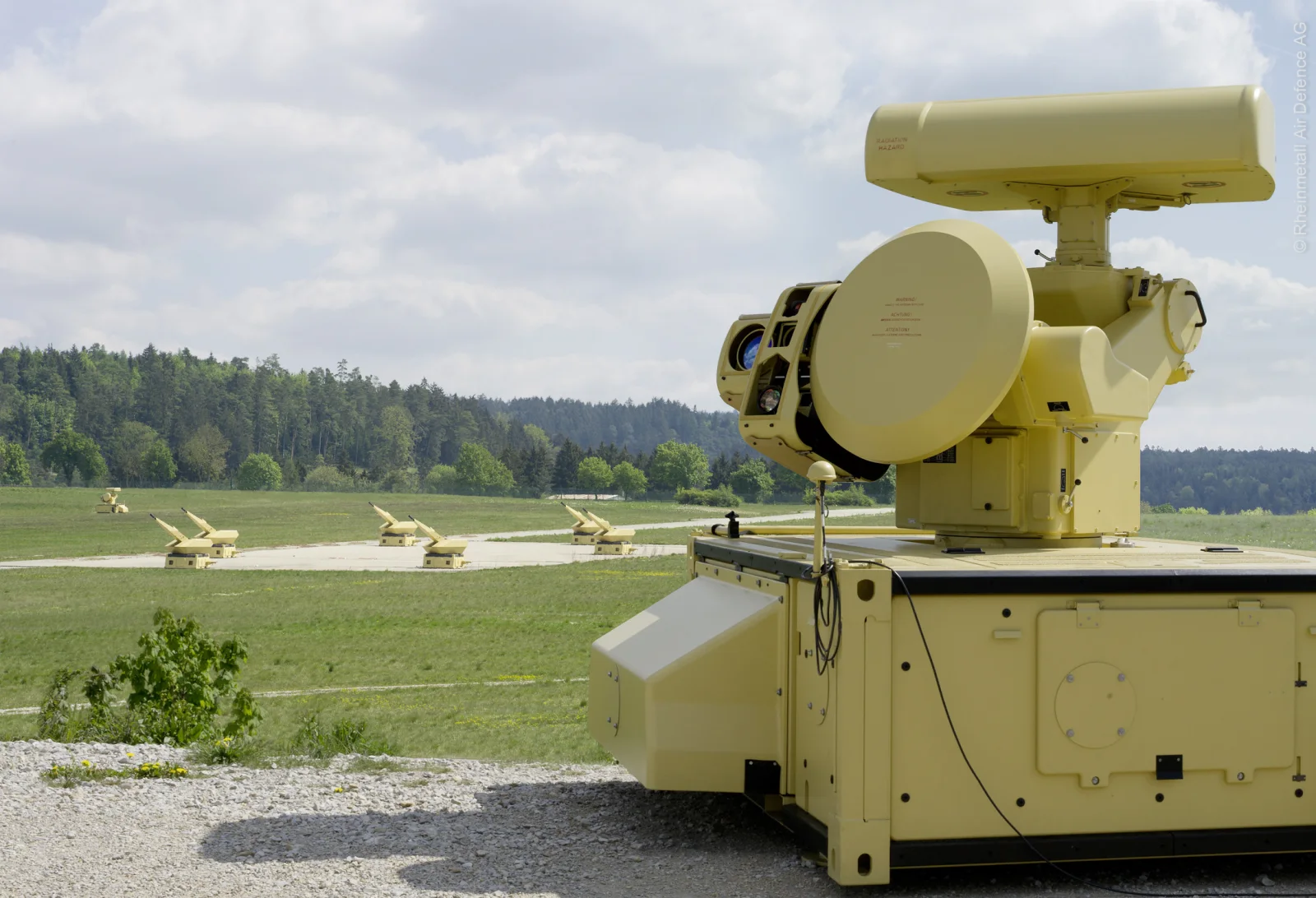
Germany's automated 35 mm close-in defence for field camps against rockets, artillery, mortars and drones; the Bundeswehr's two systems were earmarked for Slovakia in 2023.
- Range
- 3 km
Sourced record, not yet reviewed. Compiled from the public sources listed below. Every figure is attributed to its source; where sources disagree, both values are shown. No editor has reviewed this record yet.
Overview
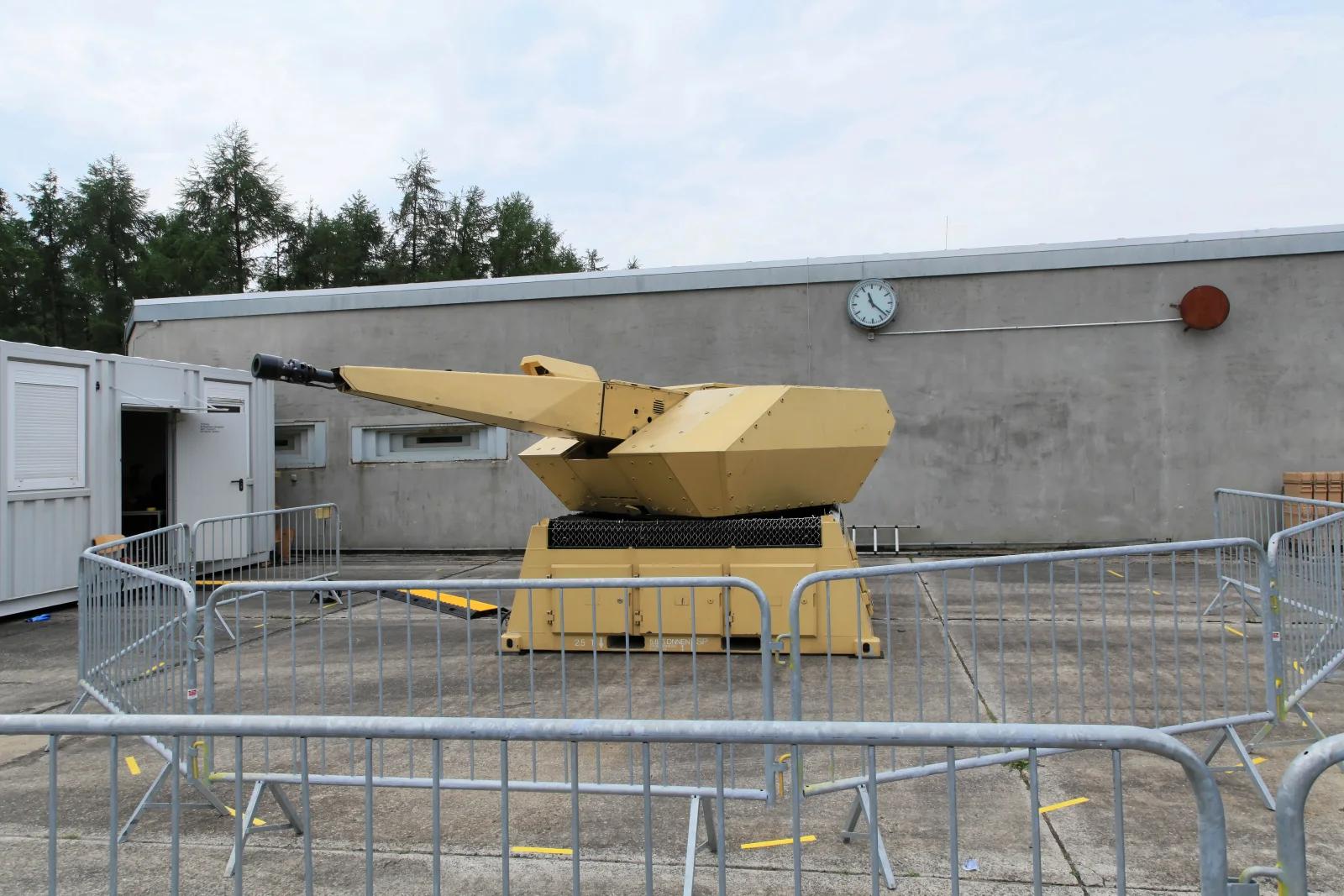
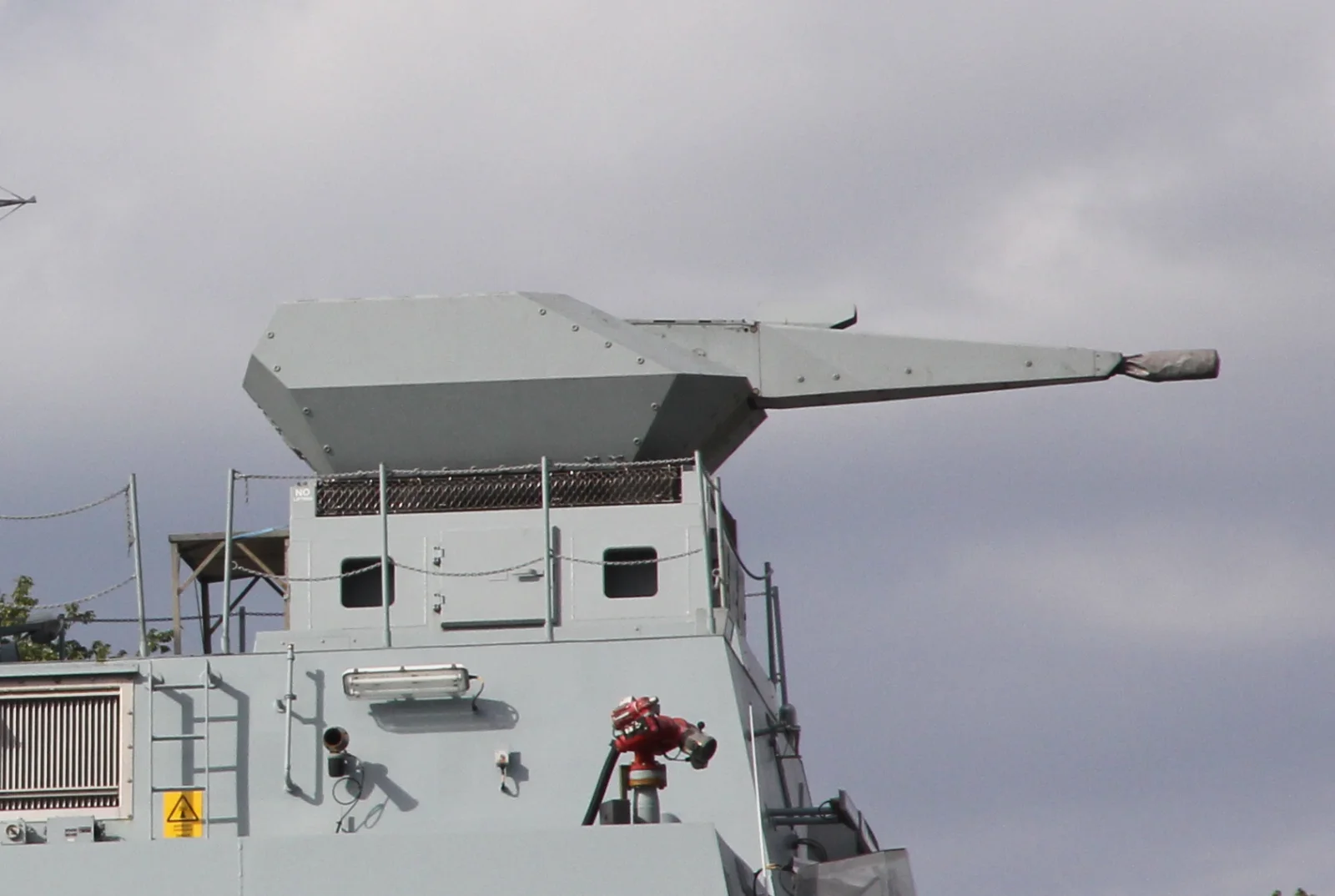
MANTIS (Modular, Automatic and Network capable Targeting and Interception System) protects camps and installations against rockets, artillery and mortar rounds, drones and cruise missiles. A system has sensor units with search and tracking radars, IFF, TV and infrared cameras and a laser rangefinder, a fire-control centre, and 35 mm guns firing Ahead airburst ammunition (government).
Rheinmetall Air Defence developed it from the Skyshield system; Germany placed a €48 million development contract in 2007 and ordered two systems for €110.8 million in 2009 (specialist press). In Mali the Bundeswehr used it in a sensor-only early-warning role from 2018 to 2022 (government).
In February 2023 Germany decided to hand both of its MANTIS systems, then held by Flugabwehrraketengruppe 61, to Slovakia (specialist press).
More images (1)
Technical profile
Seeker, guidance, warhead, data link and launcher as described in public sources. Each line cites its source.
| Ammunition | 35 × 228 mm Ahead airburst; 152 × 3.3 g tungsten projectiles per round | Official document[1][3] |
|---|---|---|
| Rate of fire | 1,000 rds/min per gun; 36-round bursts against RAM targets | Official document[1][4] |
| Mount / turret | Remotely operated 35 mm revolver-gun turrets, 5,800 kg with ammunition; −15° to +85°, 360° | Secondary reference[4] |
| Fire control / radar | Fire-control centre (ground control unit) linking two sensor units and the guns; manually activated, then fully automatic | Official document[1][4] |
| Sensors | Search and tracking radar, IFF, TV and IR cameras, laser rangefinder | Official document[1] |
| Reaction / readiness | Radar acquires a target within about two seconds before a 36-round burst (reference work) | Secondary reference[4] |
| Crew | Four | Secondary reference[2][4] |
| Mobility | Fixed-site installation; guns and sensors transportable; usable in sensor-only mode | Official document[1] |
Publicly documented characteristics
Each figure shows where it comes from. “Not publicly disclosed” means no source we hold gives a figure; it is never treated as zero.
| Characteristic | Value | Evidence and sources |
|---|---|---|
| Maximum range (km) | 3 kmBasis: Maximum engagement range as claimed by the developerGun range given by the Bundeswehr. | Official document[1] |
| Calibre (mm) | 35 mm | Official document[1] |
| Ready rounds / magazine | 1,000 rds/min per gun; 36-round salvos against RAM targets | Official document[1] |
| Guidance / cueing | Search and tracking radar, IFF, TV and IR cameras, laser rangefinder | Official document[1][2] |
| Effect | Ahead airburst: 152 × 3.3 g tungsten projectiles per round | Secondary reference[3] |
| Launch / operating platform | Fixed site: 2 sensor units, 1 fire-control centre, 6–8 gun turrets | Secondary reference[2][3] |
Platforms and integration
Launchers, vehicles, ships, aircraft, sensors and command systems the record is integrated with, by status.
| Platform or system | Domain | Status | Sources |
|---|---|---|---|
| Camp protection in Mali (sensor-only) · GermanyEarly-warning role without guns, 2018–2022 per the Bundeswehr; the reference work dates first deployment to end-2017. | Fixed site | In service | [1][4] |
| Eastern border protection · Slovakia | Fixed site | In service | [4] |
Operators
Development and tests
2023-10-24 · First delivery
Handed over to Slovakia
Slovak Armed Forces took over both systems from the Luftwaffe in Nitra to protect the eastern border (reference work). [4]
2023-02-07 · Development
Transfer to Slovakia announced
Germany decides to give both MANTIS systems to Slovakia. [2][4]
2018 · Reported combat use
Sensor-only use in Mali
The Bundeswehr used MANTIS without guns as an early-warning system in Mali from 2018 to 2022. [1]
2011-01-01 · First delivery
Luftwaffe takes over the first system
First system handed to the German Air Force (reference work). [4]
Capabilities and limitations
Stated capabilities
- 1,000 rounds per minute per gun; salvos of 36 rounds against RAM targets (government).
- Gun range of 3 km with 360° coverage, day and night, all weather (government).
- Can run as a sensor-only warning system without guns (government).
Limitations and open questions
- Short range: a point-defence layer for fixed sites.
- Sources differ on guns per system: six (specialist press) or eight (specialist press).
- Current operator status after the planned transfer to Slovakia is not confirmed here.
Relevance to threats
Listed by the strength of the evidence. Inclusion here is not a claim of proven effectiveness.
- Rockets, artillery and mortarsOfficial document
RAM defence of camps is the Bundeswehr's stated primary role.
- One-way attack UAVsOfficial document
The Bundeswehr lists drones among the targets.
- Cruise missilesOfficial document
Listed by the Bundeswehr; no public engagement data.
Sources
- 1.
Flugabwehrsystem MANTIS (opens in a new tab)
Bundeswehr · Government · Published · Retrieved
Supports: Defends field camps and installations against rockets, artillery and mortar rounds, drones and cruise missiles; sensor units, fire control centre and 35 mm guns firing Ahead at 1,000 rds/min; 3 km gun range; search and tracking radar, IFF, TV and IR cameras, laser rangefinder; sensor-only use in Mali 2018–2022
- 2.
Germany wants to hand over all MANTIS air defence systems to Slovakia (opens in a new tab)
ES&T (Europäische Sicherheit & Technik) · Specialist press · Published · Retrieved
Supports: Both Bundeswehr MANTIS systems, held by Flugabwehrraketengruppe 61, to go to Slovakia; per system two sensor units, one fire control centre, eight 35 mm revolver-gun turrets, crew of four
- 3.
NBS MANTIS Air Defence Protection System (opens in a new tab)
Army Technology · Specialist press · Retrieved
Supports: €48 million development contract 2007; two systems ordered May 2009 for €110.8 million; each Ahead round carries 152 × 3.3 g tungsten projectiles; Afghanistan deployment planned 2011; handed to the Luftwaffe
- 4.
Nächstbereichschutzsystem MANTIS (opens in a new tab)
Wikipedia · Reference work (secondary) · Retrieved
Supports: Six 35 mm guns, one ground control unit and two sensor units per system; crew of 4; 5,800 kg gun with ammunition; 36-round bursts; ammunition follow-on contract about €13.4 million; Luftwaffe took over the first system on 1 January 2011; Slovakia took over both systems on 24 October 2023
This record is compiled and kept up to date by World of Interceptors at www.worldofinterceptors.com/systems/mantis-nbs-c-ram. Cite it with a link to this page. Compiled from open sources and cross-checked, but accuracy cannot be guaranteed; manufacturers and independent organisations can ask us to correct or remove information (disclaimer).
Related systems
Revision history
· Created
Record compiled from public sources found through treg web search.
· Update
Added profile, operators, contracts and milestones from public sources, including the October 2023 handover to Slovakia; added a gun-turret photo.
Newsletter · every two weeks
The Interceptors Brief
What changed in air defence and counter-drone, in five minutes, with the sources attached.
Confirm by email · unsubscribe in one click · Privacy