| Role |
|---|
| Primary category | Interceptor Missiles | Interceptor Missiles | Interceptor Missiles | Interceptor Missiles |
|---|
| Subcategory | Short-range air-defense missiles | Short-range air-defense missiles | Medium-range air-defense missiles | Very-short-range air-defense missiles |
|---|
| Interception mechanism | Blast-fragmentation, Proximity fuze | Blast-fragmentation, Proximity fuze | Direct impact | Blast-fragmentation, Proximity fuze |
|---|
| Target types | Crewed aircraft, Cruise missiles, One-way attack UAVs | Crewed aircraft, Cruise missiles, One-way attack UAVs, Small UAS | Crewed aircraft, Cruise missiles, One-way attack UAVs, Small UAS | Crewed aircraft, Small UAS, One-way attack UAVs, Cruise missiles, Surface vessels |
|---|
| Platform | Vehicle-mounted, Shipborne | Vehicle-mounted, Shipborne | Vehicle-mounted, Containerised | Man-portable, Vehicle-mounted, Shipborne, Airborne |
|---|
| Status | In service | In service | In service | In service |
|---|
| Developer · Country | MBDA · France | MBDA UK · United Kingdom | Diehl Defence · Germany | MBDA · France |
|---|
| Propulsion | Solid rocket motor | Solid rocket motor | Solid rocket motor | Solid rocket motor |
|---|
| Reusability | Single-use | Single-use | Single-use | Single-use |
|---|
| Technical profile |
|---|
| Seeker | MICA RF (active radar) or MICA IR (imaging infrared); VL MICA NG adds an AESA RF seeker and a matrix IR seeker[2][6] | Active RF seeker with a GaN solid-state amplifier[3] | Imaging infrared, jamming-resistant seeker[1] | Imaging infrared (matrix) seeker with image processing; the reference work describes a cooled two-colour IR seeker (2–4 and 3–5 µm) for the family[1][2] |
|---|
| Guidance | Inertial mid-course with data-link updates, then terminal homing; can lock on after launch[2] | Inertial with mid-course updates; active radar terminal homing[3] | Target data and mission abort via in-flight uplink; IIR terminal homing for direct hit[1] | Fire-and-forget; proportional navigation with a gyro reference[1][2] |
|---|
| Warhead | | 10 kg high-explosive blast-fragmentation[3] | Not detailed for SLM; the air-to-air IRIS-T carries an 11.4 kg HE-fragmentation warhead (reference work)[1][2] | 2.95 kg high-explosive warhead with high-density tungsten balls[2] |
|---|
| Fuze | | Laser proximity and impact[3] | Not recorded | Laser proximity fuze and impact fuze[1][2] |
|---|
| Motor / propulsion | Solid rocket with thrust-vector control; VL MICA NG uses a dual-pulse motor[2][6] | Solid motor shared with ASRAAM (CAMM); new Avio motor on CAMM-ER[3] | Smokeless, insensitive solid motor; thrust-vector control for a small inner dead zone[1] | Two-stage solid rocket motor with an initial booster[2] |
|---|
| Data link | Mid-course data link; MBDA says the existing link supports MICA NG without change[2][6] | Two-way data link; on land it is provided through the iLauncher[3] | In-flight uplink for target data transmission and mission abort[1] | Not recorded |
|---|
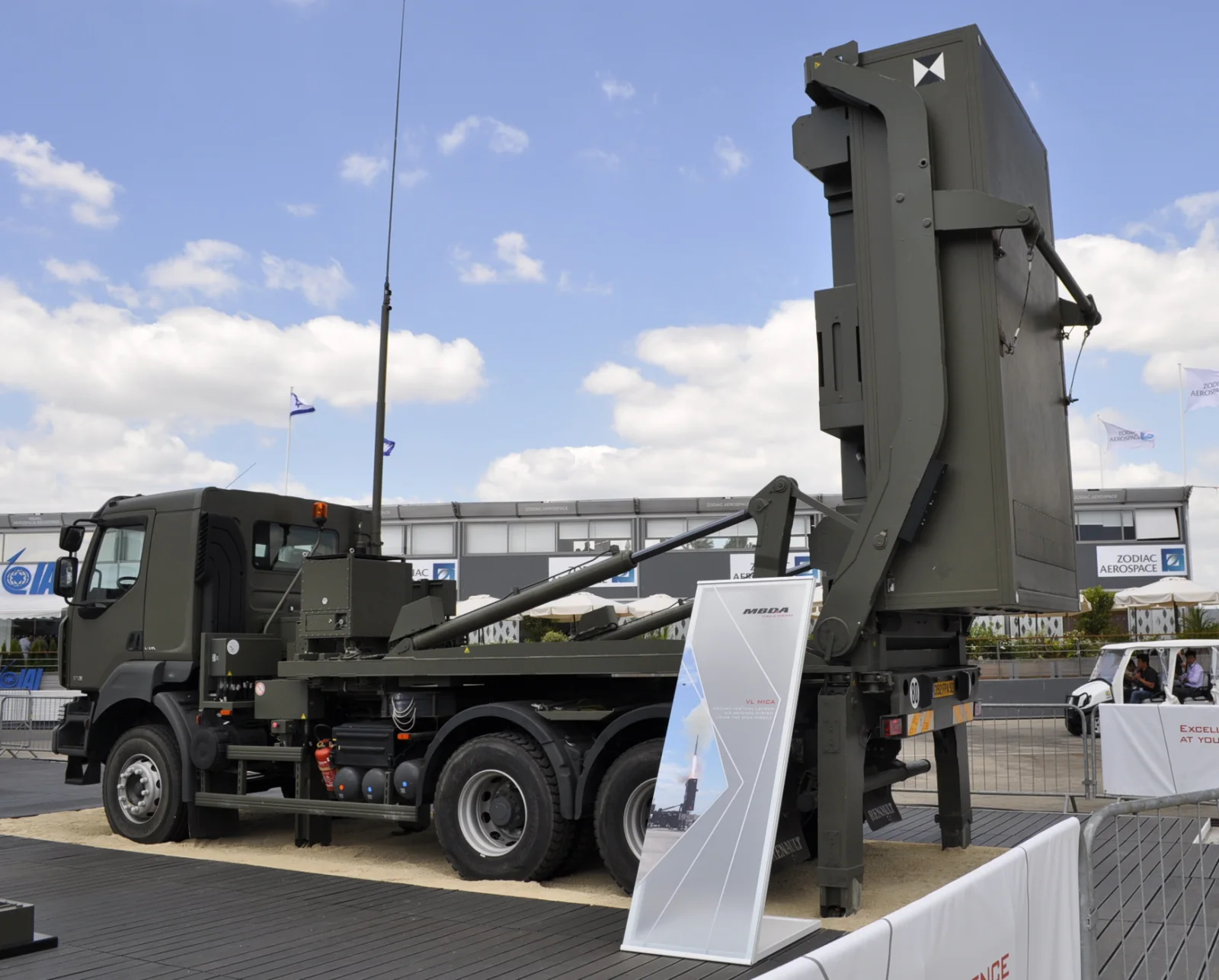
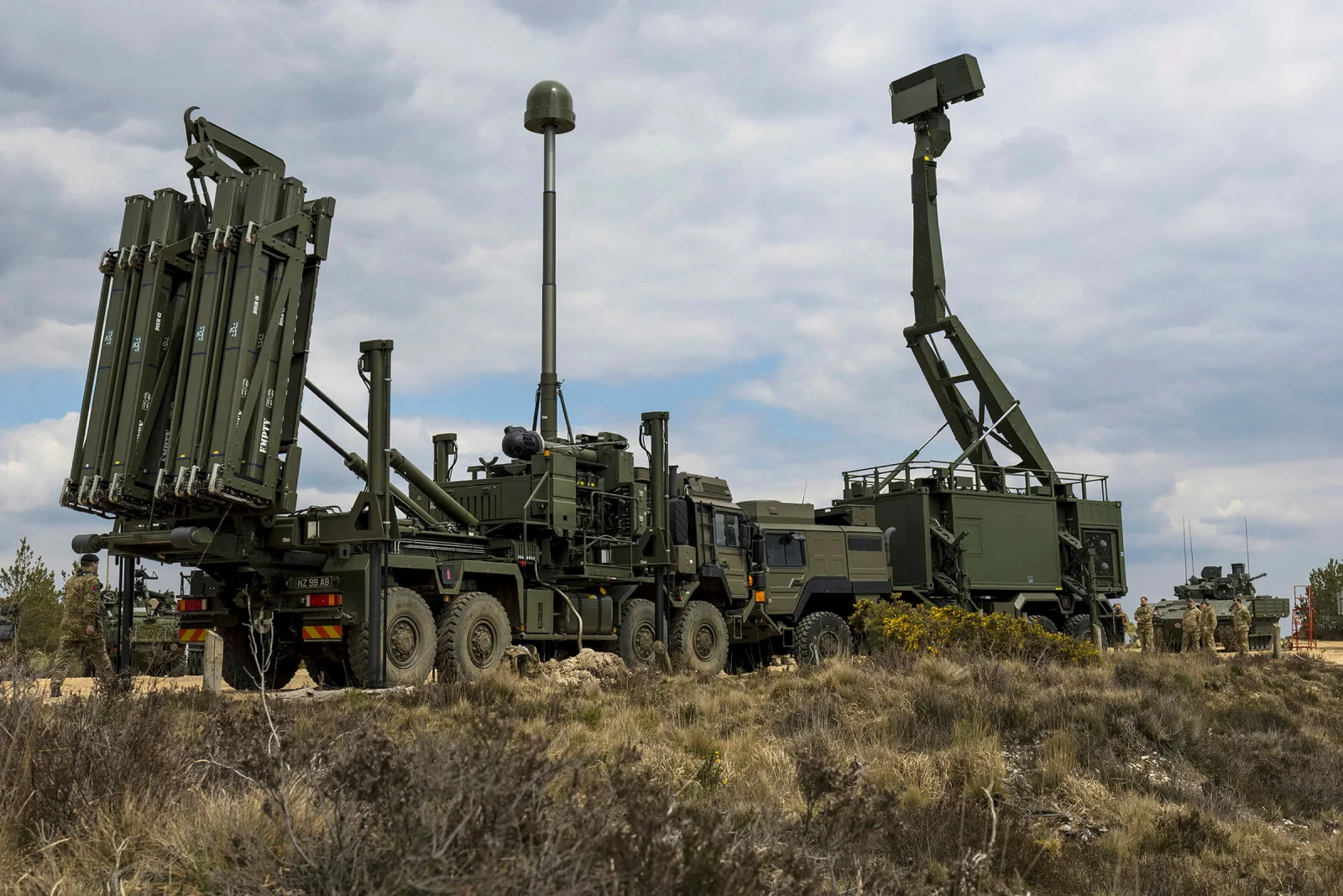
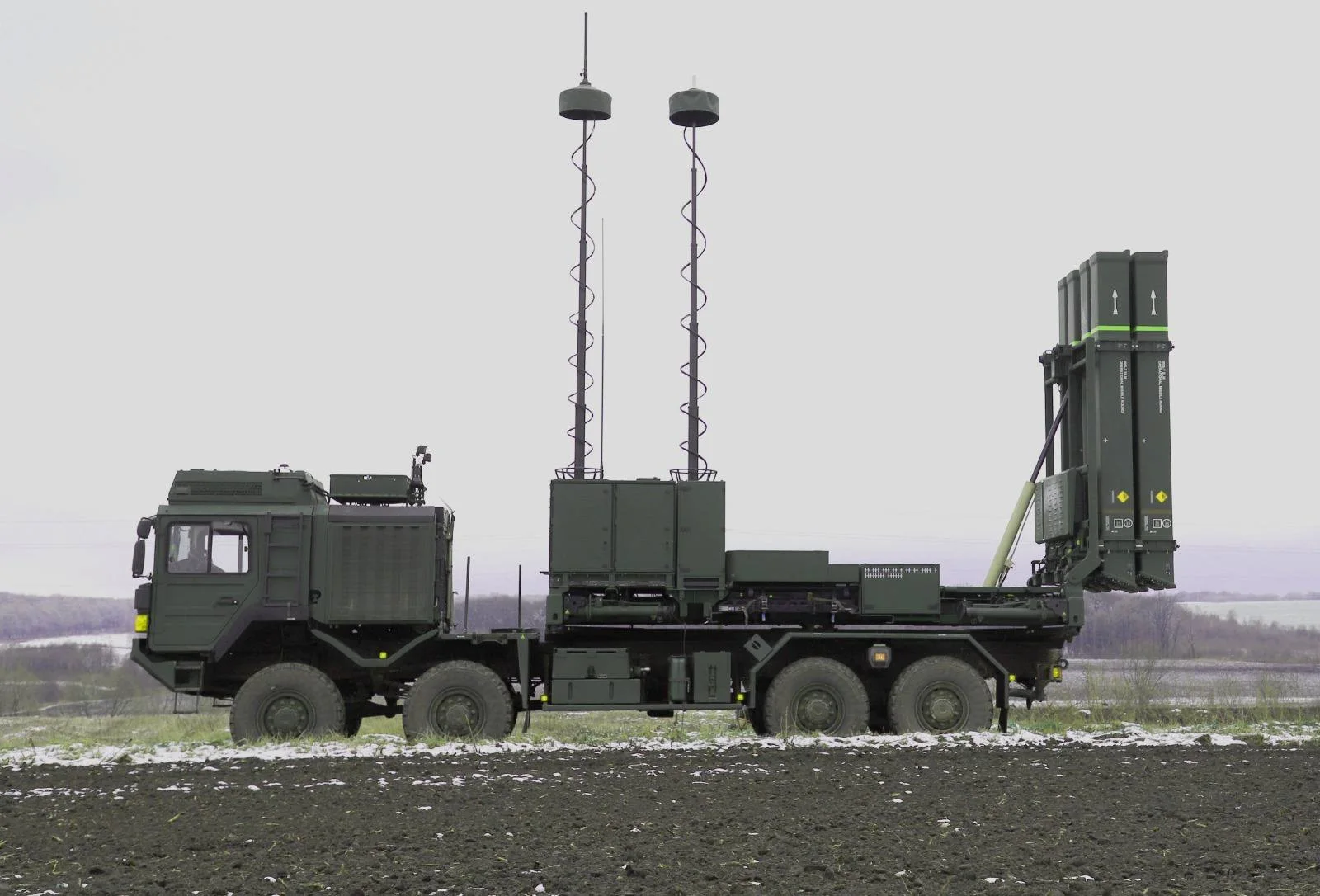
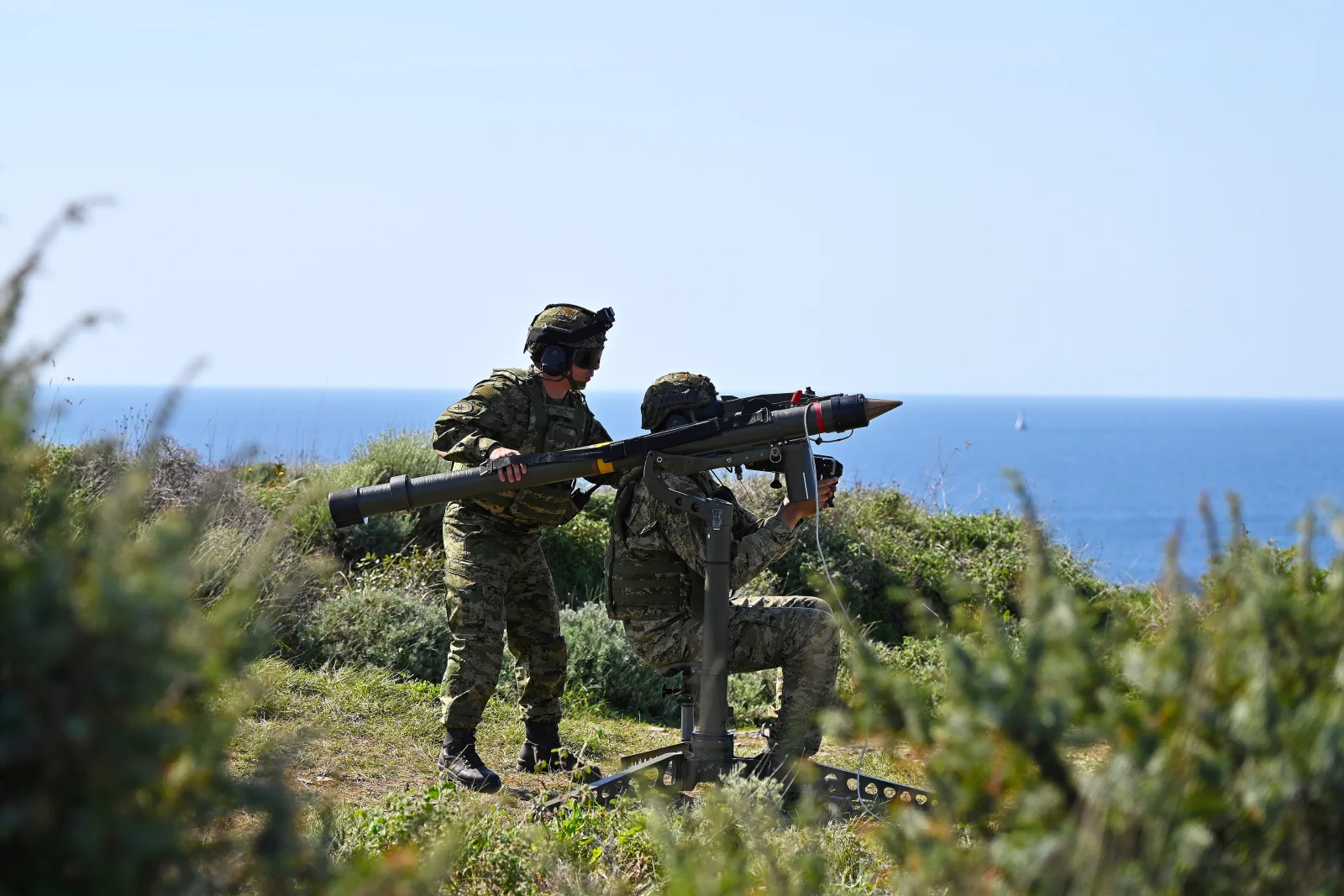
| Launcher | Vehicle-mounted vertical launcher; 3–6 per system; a launcher fires a salvo of four; MICA NG fits existing launchers[1][4][6] | Soft vertical launch by gas generator; iLauncher carries up to 8 CAMM or CAMM-ER on an 8×8 truck; naval cells and ExLS/Mk 41 options[1][3] | Eight-cell launcher on a 20-ft ISO frame (Bundeswehr: on Rheinmetall MAN HX 8×8), own power supply, ready within 10 minutes[1][3] | MANPADS tripod; ATLAS (2), ALBI (2), ASPIC (4), MPCV (4) land mounts; SIMBAD (2), TETRAL (4), SADRAL (6) naval; ATAM helicopter module (2)[2] |
|---|
| Rounds per launcher | Not recorded | | 8 per launcher; 3 launchers per German fire unit[3] | Not recorded |
|---|
| Fire control / radar | Vehicle-mounted tactical operations centre (platoon command post) and a 3D radar on a separate vehicle[1] | Sky Sabre: Saab Giraffe AMB C-band radar and Rafael command system; Narew: Polish radars and US IBCS[2][3][4] | Hensoldt TRML-4D AESA radar (250 km, IFF Mode 5) and tactical operations centre with Airbus IBMS-FC software[1][3] | MCP / IMCP coordination post can control up to eleven firing units[2] |
|---|
| Reaction / readiness | Not recorded | Land Ceptor ready in under 20 minutes; MoD says Sky Sabre can control 24 missiles simultaneously[2][5] | Not recorded | About 5 s total reaction time; seeker gyro spins up in 2 s[2] |
|---|
| Crew | Not recorded | Not recorded | TOC manned by two operators in the export version[3] | Two at the MANPADS firing post (commander and shooter)[2] |
|---|
| Characteristics |
|---|
| Maximum range (km) † | 20 km† Range reported in secondary sourcesSecondary reference[2] | At least 25 km† Range reported in secondary sourcesSecondary reference[3] | 40 km† Maximum engagement range as claimed by the developerManufacturer claim[1][2] | Up to 8 km† Range reported in secondary sourcesSecondary reference[2] |
|---|
| Maximum altitude (km) | 9 kmSecondary reference[2] | 10 kmSecondary reference[3] | | Up to 6 kmSecondary reference[2] |
|---|
| Speed (m/s) | Mach 4Secondary reference[2] | Mach 3Secondary reference[3] | Not recorded | ≈ 930 m/sSecondary reference[2] |
|---|
| Mass (kg) | 112 kgManufacturer claim[1] | 99 kgManufacturer claim[1] | Not publicly disclosedManufacturer claim[1] | Up to 20 kgManufacturer claim[1] |
|---|
| Length (m) | 3.1 mManufacturer claim[1] | 3.2 mManufacturer claim[1] | Not recorded | 1.88 mManufacturer claim[1] |
|---|
| Guidance / cueing | Inertial and datalink mid-course; active radar (RF) or imaging infrared (IR) terminalSecondary reference[2][1] | Inertial with mid-course update; active radar terminal homingSecondary reference[3] | Imaging infrared seeker; in-flight uplink for target data and mission abortManufacturer claim[1] | Imaging infrared (matrix) seeker, fire-and-forgetManufacturer claim[1] |
|---|
| Effect | 12 kg warhead; proximity or impact fuzeSecondary reference[2] | HE blast-fragmentation; laser proximity and impact fuzeSecondary reference[3] | High direct-hit capability (manufacturer); warhead not detailed in the flyerManufacturer claim[1] | HE warhead with tungsten balls; laser proximity and impact fuzeManufacturer claim[1][2] |
|---|
| Launch / operating platform | Truck-mounted vertical launchers (3–6 per platoon); shipsManufacturer claim[1] | Sky Sabre launcher truck; ship canisters (Sea Ceptor)Official document[2][1] | Truck-mounted launchers on 20-foot ISO frames, with radar and TOCManufacturer claim[1] | Tripod (MANPADS), ATLAS vehicle mounts, Simbad-RC naval mount, helicoptersSecondary reference[2][1] |
|---|
| Programme |
|---|
| Operators (in service / ordered) | 14: Botswana, France, Morocco, Oman, Saudi Arabia, Thailand, Egypt, Indonesia, Philippines, Qatar, Singapore, United Arab Emirates +2 more[2][4][5] | 8: United Kingdom, Poland, New Zealand, Chile, Brazil, Italy, Saudi Arabia, Sweden[3][4][5] | | 37: Austria, Botswana, Brazil, Brunei, Chile, Colombia, Croatia, Cyprus, Ecuador, Estonia, France, Georgia +25 more[2][4][5][6] |
|---|
| Platforms and integration | Ground-based VL MICA launchers (ordered), Maharaja Lela-class littoral combat ships (ordered), Naval VL MICA (in service)[2][3][5] | Sky Sabre (iLauncher, Giraffe AMB, Rafael C2) (in service), Sea Ceptor on Type 23 frigates (in service), Type 26 and Type 31 frigates (ordered), Narew (CAMM-ER, iLauncher on Jelcz, IBCS) (ordered), Pilica+ (CAMM with PSR-A Pilica) (in service), Anzac-class frigates (20-cell) (in service), Tamandaré-class frigates (12-cell) (ordered), Visby-class corvettes (ordered) +1 more[3][4][5] | Hensoldt TRML-4D radar (in service), Airbus IBMS-FC tactical operations centre (in service), Rheinmetall MAN HX 8×8 launcher trucks (in service), IRIS-T SLS / SLS Mk III (short-range sibling) (in service)[1][2][3] | ATLAS / ATLAS RC vehicle mount (in service), SIMBAD-RC naval mount (in service), SADRAL and TETRAL naval launchers (in service), Skjold-class corvettes (in service), ATAM helicopter launcher (Tiger, Gazelle, Rooivalk) (in service), HAL Prachand and Rudra helicopters (in service)[2][8] |
|---|
| Public contracts | 1 recorded. Latest: 2024-12 · France (DGA, Air and Space Force) · 8 launchers[3][7] | 5 recorded. Latest: 2025-08-22 · United Kingdom (MoD) · 6 launchers · £118 million[3][4][5][7][8][9] | | 4 recorded. Latest: 2025-11-25 · Romania (Ministry of National Defence) · 231 MANPAD systems; 934 missiles · €625,591,000 excluding VAT[4][5][6][8][9][10][11] |
|---|
| Production / deliveries | Not recorded | 2022–2026: monthly CAMM-family output to triple planned rate[3] | to December 2023: more than 5,000 IRIS-T missiles cumulative, target: 2,000 missiles a year planned rate, end of 2025: 800–1,000 missiles a year planned rate, 2028: 16 systems a year planned rate[2][5][8] | early 2023: 20 → 30 a month planned rate, 2024: 40 a month produced, 2022: about 10 a month produced[2][7] |
|---|
| Latest development | 2026: MICA NG series production[6] | 2024-03-09: First combat use[3] | 2026-02-13: First German fire unit[2] | 2025-06-17: Upgraded Mistral 3 fully qualified[3] |
|---|