| Role |
|---|
| Primary category | Interceptor Missiles | Interceptor Missiles | Interceptor Missiles | Interceptor Missiles |
|---|
| Subcategory | Short-range air-defense missiles | Short-range air-defense missiles | Short-range air-defense missiles | Short-range air-defense missiles |
|---|
| Interception mechanism | Blast-fragmentation, Proximity fuze | Blast-fragmentation, Proximity fuze | Blast-fragmentation, Proximity fuze | Blast-fragmentation, Proximity fuze |
|---|
| Target types | Crewed aircraft, Cruise missiles, One-way attack UAVs, Small UAS | Crewed aircraft, Cruise missiles, One-way attack UAVs, Small UAS | Crewed aircraft, Small UAS, One-way attack UAVs, Cruise missiles | Crewed aircraft, Cruise missiles, One-way attack UAVs, Small UAS |
|---|
| Platform | Vehicle-mounted | Vehicle-mounted | Vehicle-mounted, Shipborne | Vehicle-mounted, Shipborne |
|---|
| Status | In service | In service | In service | In service |
|---|
| Developer · Country | Almaz-Antey · Russia | KBP Instrument Design Bureau · Russia | ASELSAN, Roketsan · Türkiye | MBDA UK · United Kingdom |
|---|
| Propulsion | Solid rocket motor | Solid rocket motor | Solid rocket motor | Solid rocket motor |
|---|
| Reusability | Single-use | Single-use | Single-use | Single-use |
|---|
| Technical profile |
|---|
| Seeker | None: command-guided missiles[3][5] | None: command-guided missile[2][3] | Imaging-infrared terminal seeker (ASELSAN)[1][4] | Active RF seeker with a GaN solid-state amplifier[3] |
|---|
| Guidance | Radio command from the vehicle's electronically steered engagement radar; up to four missiles per target[3][5] | Radio command from the EHF tracking radar or the 3–5 µm IR optical channel; up to four missiles guided at once[3] | Inertial navigation with RF data-link updates in midcourse; IIR homing in the terminal phase[1][4] | Inertial with mid-course updates; active radar terminal homing[3] |
|---|
| Warhead | 9M331: 15 kg high-explosive fragmentation; 9M338 details not published[2][3] | 57E6: 20 kg fragmentation (about 5 kg explosive); 9M335 uses a continuous-rod warhead[2][3] | High-explosive fragmentation; TÜBİTAK SAGE is named as warhead subcontractor[1][4] | 10 kg high-explosive blast-fragmentation[3] |
|---|
| Fuze | Radar (RF) proximity fuze[3] | Contact and adaptive radar proximity fuzes[3] | Impact and RF proximity fuze; the A+ replaced the earlier laser proximity fuze with an RF fuze from TÜBİTAK SAGE[2][4] | Laser proximity and impact[3] |
|---|
| Motor / propulsion | Solid rocket; cold vertical launch, ejected about 20 m before ignition; thrust-vector control[3] | Two-stage: 90 mm booster (1.5 s burn) and 76 mm unpowered dart[2][3] | Dual-pulse solid-propellant motor; vertical launch with thrust-vector control[1][2] | Solid motor shared with ASRAAM (CAMM); new Avio motor on CAMM-ER[3] |
|---|
| Data link | Not recorded | Not recorded | RF uplink for midcourse updates; Meteksan Savunma named as data-link subcontractor[4] | Two-way data link; on land it is provided through the iLauncher[3] |
|---|
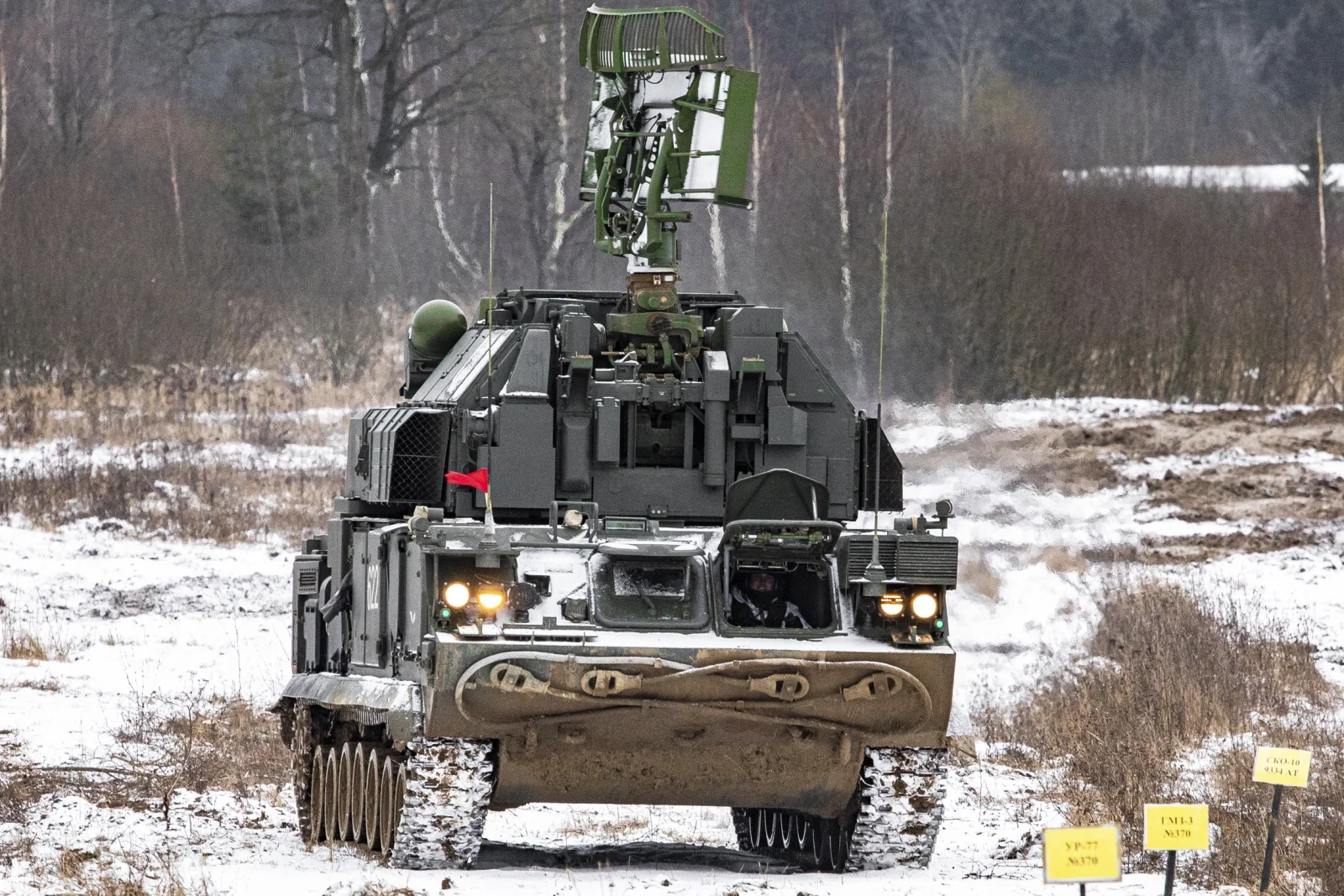
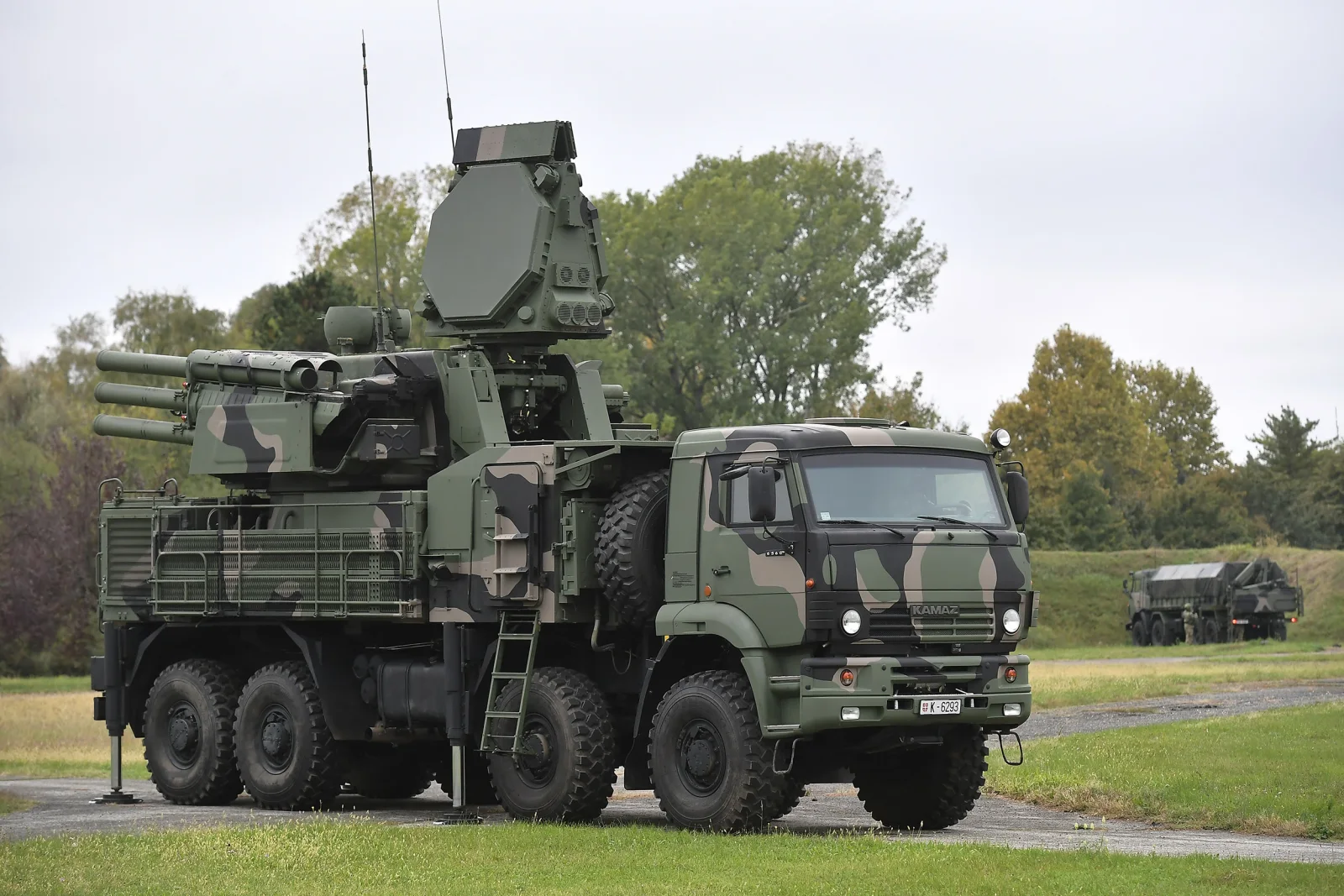
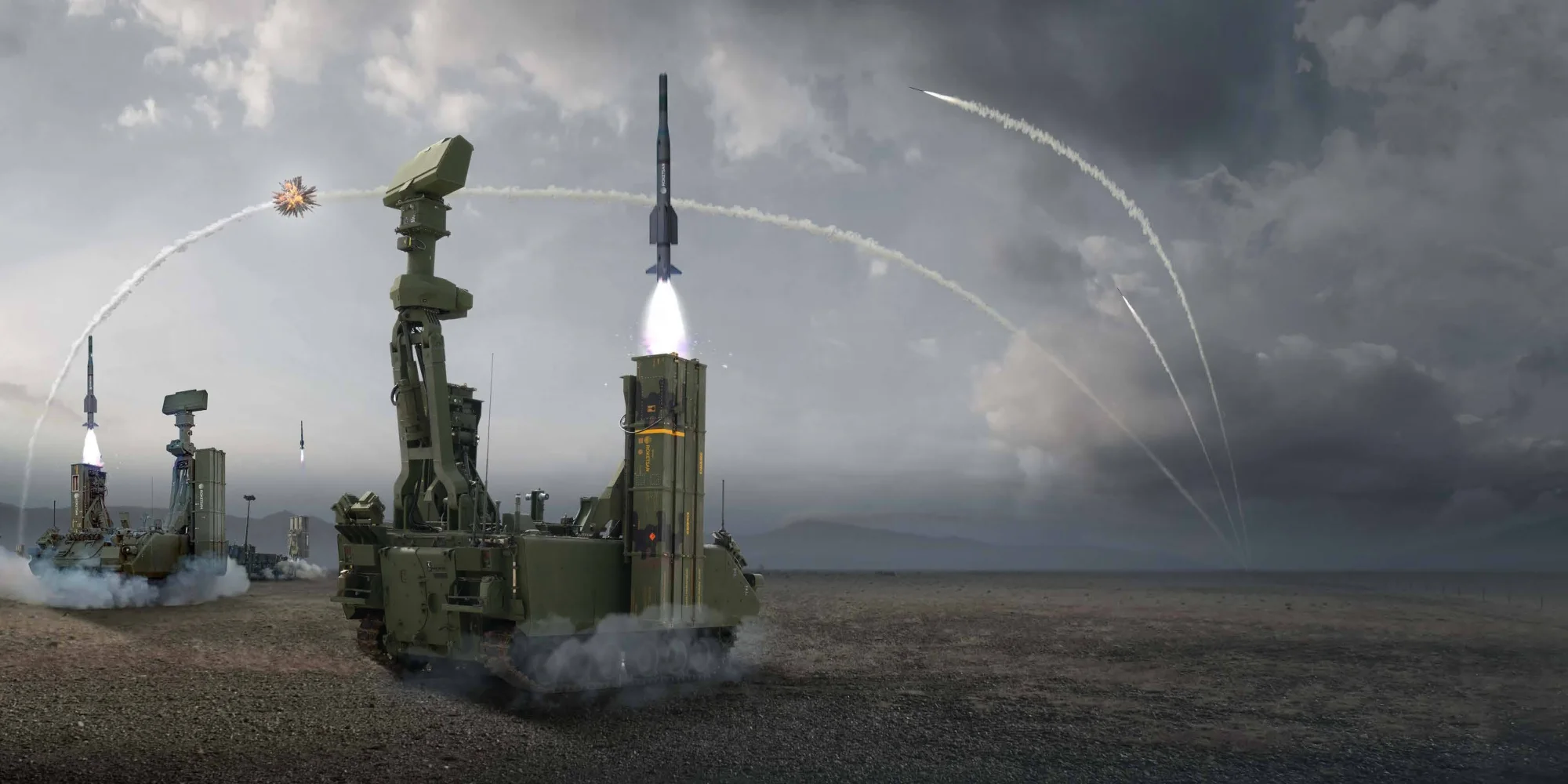
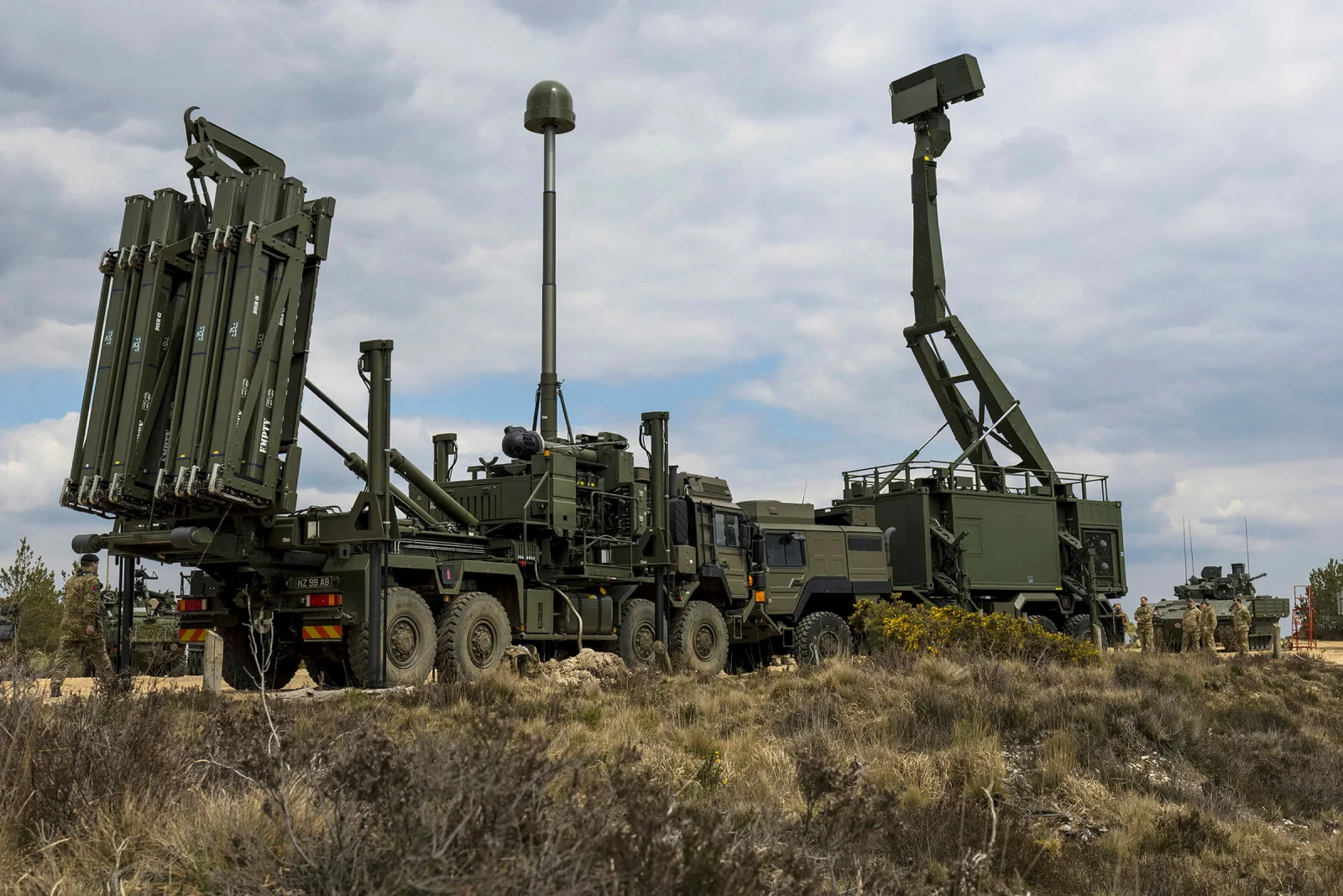
| Launcher | Vertical launch from the combat vehicle; Tor-M2E/M2K carry two four-round 9M334 modules[3] | Turret with two six-tube missile groups and two 2A38M twin 30 mm cannon[2][3] | FNSS ACV-30 tracked chassis; two vertical containers of two missiles each, stowed on the hull roof for road travel[4][6] | Soft vertical launch by gas generator; iLauncher carries up to 8 CAMM or CAMM-ER on an 8×8 truck; naval cells and ExLS/Mk 41 options[1][3] |
|---|
| Rounds per launcher | | 12 × 57E6; Pantsir-SMD up to 48 small TKB-1055 missiles in quad packs (claimed by Rostec)[3][4] | 4 ready missiles per vehicle[4][6] | |
|---|
| Fire control / radar | On-vehicle search radar (32 km detection), engagement radar and optical/thermal tracking; four targets engaged at once[2][3] | UHF PESA search radar (32–36 km), EHF PESA tracking radar (24–28 km, 20 tracks), IR tracker[2][3] | Mast-mounted ASELSAN 3D search radar with IFF, EO/IR sensor and laser rangefinder; can engage on its own[4][6] | Sky Sabre: Saab Giraffe AMB C-band radar and Rafael command system; Narew: Polish radars and US IBCS[2][3][4] |
|---|
| Reaction / readiness | 5–8 s from detection when stationary; about 10 s on the move with short halts (claimed)[3] | 4–6 s for missiles, 1–2 s for guns (export literature via reference work)[3] | Not recorded | Land Ceptor ready in under 20 minutes; MoD says Sky Sabre can control 24 missiles simultaneously[2][5] |
|---|
| Crew | 3 (CSIS); 2 for Tor-M2E (reference work)[2][3] | | Not recorded | Not recorded |
|---|
| Characteristics |
|---|
| Maximum range (km) † | 16 km† Range reported in secondary sourcesSecondary reference[2][3] | 20 km† Range reported in secondary sourcesSecondary reference[2] | At least 15 km† Official range band published by the manufacturerManufacturer claim[1][3] | At least 25 km† Range reported in secondary sourcesSecondary reference[3] |
|---|
| Detection range (km) | 32 kmSecondary reference[2] | Not recorded | Not recorded | Not recorded |
|---|
| Maximum altitude (km) | 10 kmSecondary reference[2][3] | 10 kmSecondary reference[2] | At least 10 kmManufacturer claim[1] | 10 kmSecondary reference[3] |
|---|
| Speed (m/s) | Up to 1,000 m/sSecondary reference[3] | Up to 1,300 m/sSecondary reference[3] | Not recorded | Mach 3Secondary reference[3] |
|---|
| Mass (kg) | 165 kgSecondary reference[2][3] | 75.7 kgSecondary reference[2] | Not recorded | 99 kgManufacturer claim[1] |
|---|
| Length (m) | 2.9 mSecondary reference[3] | 3.3 mSecondary reference[2] | 3.95 mManufacturer claim[1] | 3.2 mManufacturer claim[1] |
|---|
| Ready rounds / magazine | 8 × 9M331 or 16 × 9M338Secondary reference[2] | 12 ready missilesSecondary reference[2][3] | Not recorded | Not recorded |
|---|
| Guidance / cueing | Radio command guidance from the vehicle's tracking radarSecondary reference[3] | Radio command guidance from radar or optical trackingSecondary reference[2] | INS and data link midcourse; imaging-infrared terminal seekerManufacturer claim[1] | Inertial with mid-course update; active radar terminal homingSecondary reference[3] |
|---|
| Effect | Not recorded | 20 kg blast-fragmentation warhead; plus two 30 mm cannon (4 km)Secondary reference[2] | High-explosive fragmentation; impact and proximity fuzeManufacturer claim[1][2] | HE blast-fragmentation; laser proximity and impact fuzeSecondary reference[3] |
|---|
| Launch / operating platform | Tracked, wheeled (Tor-M2K) or articulated Arctic (Tor-M2DT) vehicleSecondary reference[2] | Wheeled truck or tracked chassis (72V6 combat vehicle)Official document[1][3] | Tracked and wheeled vehicles, naval vesselsManufacturer claim[1] | Sky Sabre launcher truck; ship canisters (Sea Ceptor)Official document[2][1] |
|---|
| Programme |
|---|
| Operators (in service / ordered) | | 8: Russia, United Arab Emirates, Algeria, Iraq, Serbia, Ethiopia, Libya, Saudi Arabia[1][3] | | 8: United Kingdom, Poland, New Zealand, Chile, Brazil, Italy, Saudi Arabia, Sweden[3][4][5] |
|---|
| Platforms and integration | Tor-M2K on MZKT-6922 wheeled chassis (in service), Tor-M2DT on DT-30 articulated tracked chassis (in service), Tor-M2KM module on frigate Admiral Grigorovich (tested)[2][3][5] | KAMAZ-6560 8×8 truck (in service), MAN SX45 truck (in service), Pantsir-SA on articulated tracked Vityaz (in service), Pantsir-M naval module (in service)[3] | FNSS ACV-30 tracked chassis (in service), ASELSAN mast-mounted 3D search radar (MAR) (in service), HİSAR-A missile launch system (Land Forces acceptance, 2026) (in service)[4][6][8] | Sky Sabre (iLauncher, Giraffe AMB, Rafael C2) (in service), Sea Ceptor on Type 23 frigates (in service), Type 26 and Type 31 frigates (ordered), Narew (CAMM-ER, iLauncher on Jelcz, IBCS) (ordered), Pilica+ (CAMM with PSR-A Pilica) (in service), Anzac-class frigates (20-cell) (in service), Tamandaré-class frigates (12-cell) (ordered), Visby-class corvettes (ordered) +1 more[3][4][5] |
|---|
| Public contracts | Not recorded | Not recorded | Not recorded | 5 recorded. Latest: 2025-08-22 · United Kingdom (MoD) · 6 launchers · £118 million[3][4][5][7][8][9] |
|---|
| Production / deliveries | 2022 onward: at least 15 Tor-M2 systems to Belarus delivered, 2019: sixth Tor-M2 battalion set for Russia delivered, 2018-11: 12 Tor-M2DT delivered[2][3][5] | to date: more than 200 built cumulative[3] | July 2021: Dozens of systems in Army service cumulative[4] | 2022–2026: monthly CAMM-family output to triple planned rate[3] |
|---|
| Latest development | 2025-11-25: More Tor-M2 for Belarus[4] | 2025-08: Pantsir-SMD reaches the troops[4] | 2026-06: Reported use in Sudan[4] | 2024-03-09: First combat use[3] |
|---|