| Role |
|---|
| Primary category | Detection, Tracking & Command | Detection, Tracking & Command | Detection, Tracking & Command | Laser Weapon Systems |
|---|
| Subcategory | Integrated counter-UAS systems | Integrated counter-UAS systems | Radar | Fixed-site and containerised lasers |
|---|
| Interception mechanism | Command-link disruption, Navigation disruption, Laser energy | Command-link disruption | Sensing only (no effect) | Laser energy |
|---|
| Target types | Small UAS | Small UAS | Small UAS, One-way attack UAVs, Crewed aircraft, Rockets, artillery, mortars | Small UAS, One-way attack UAVs, Rockets, artillery, mortars, Cruise missiles |
|---|
| Platform | Fixed site, Vehicle-mounted | Vehicle-mounted, Shipborne | Vehicle-mounted, Fixed site, Man-portable | Containerised, Fixed site |
|---|
| Status | In service | In service | In service | In service |
|---|
| Developer · Country | Rafael Advanced Defense Systems · Israel | U.S. Marine Corps, Leonardo DRS · United States | Leonardo DRS · United States | Rafael Advanced Defense Systems, Elbit Systems · Israel |
|---|
| Propulsion | Not applicable | Not applicable | Not applicable | Not applicable |
|---|
| Reusability | Not applicable | Not applicable | Not applicable | Not applicable |
|---|
| Technical profile |
|---|
| Radar band | S band (RADA RPS-42 MHR)[2] | Not recorded | S band (MHR, ieMHR); C band for the cxMHR launched in 2026[1][3][6] | Not recorded |
|---|
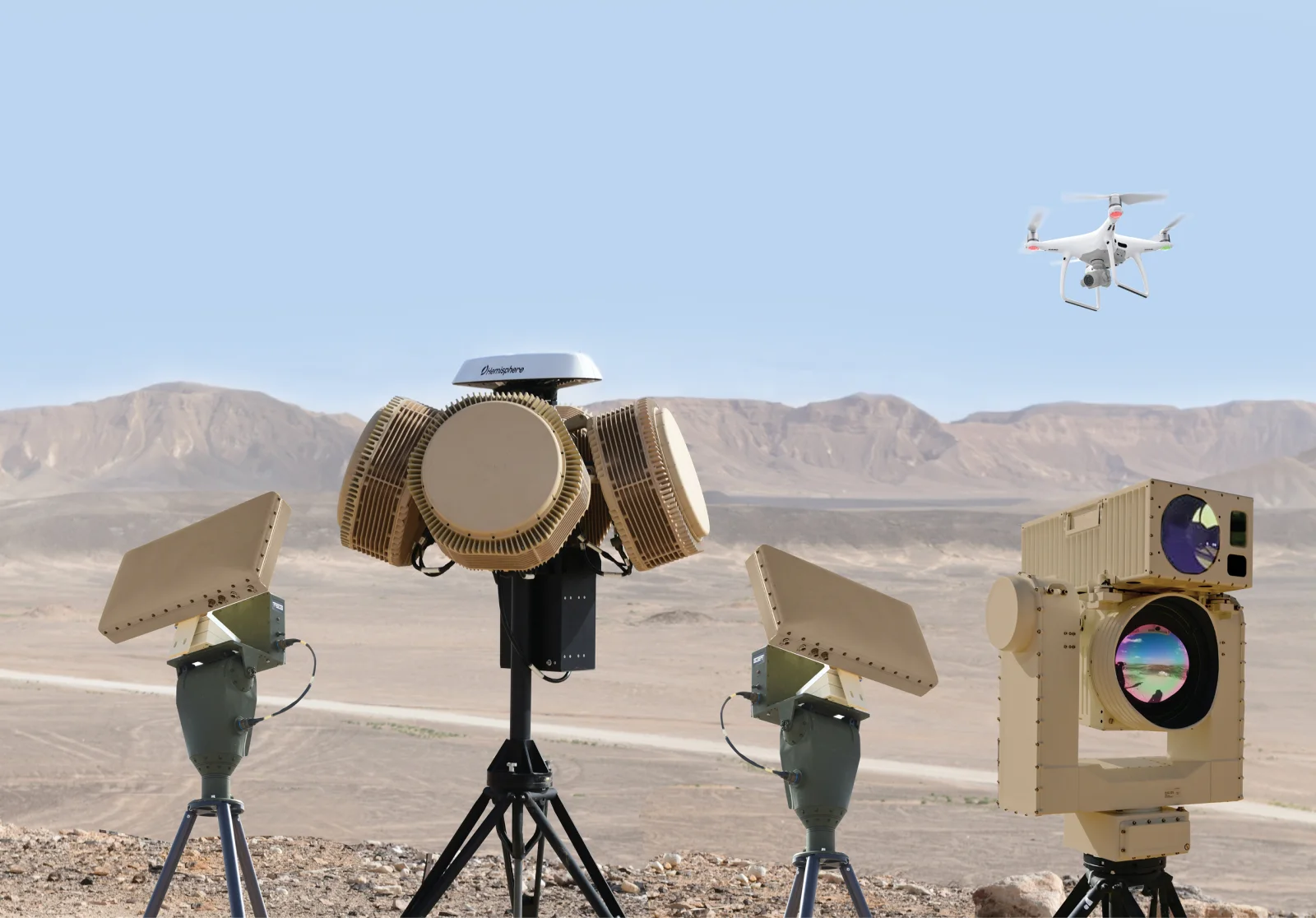
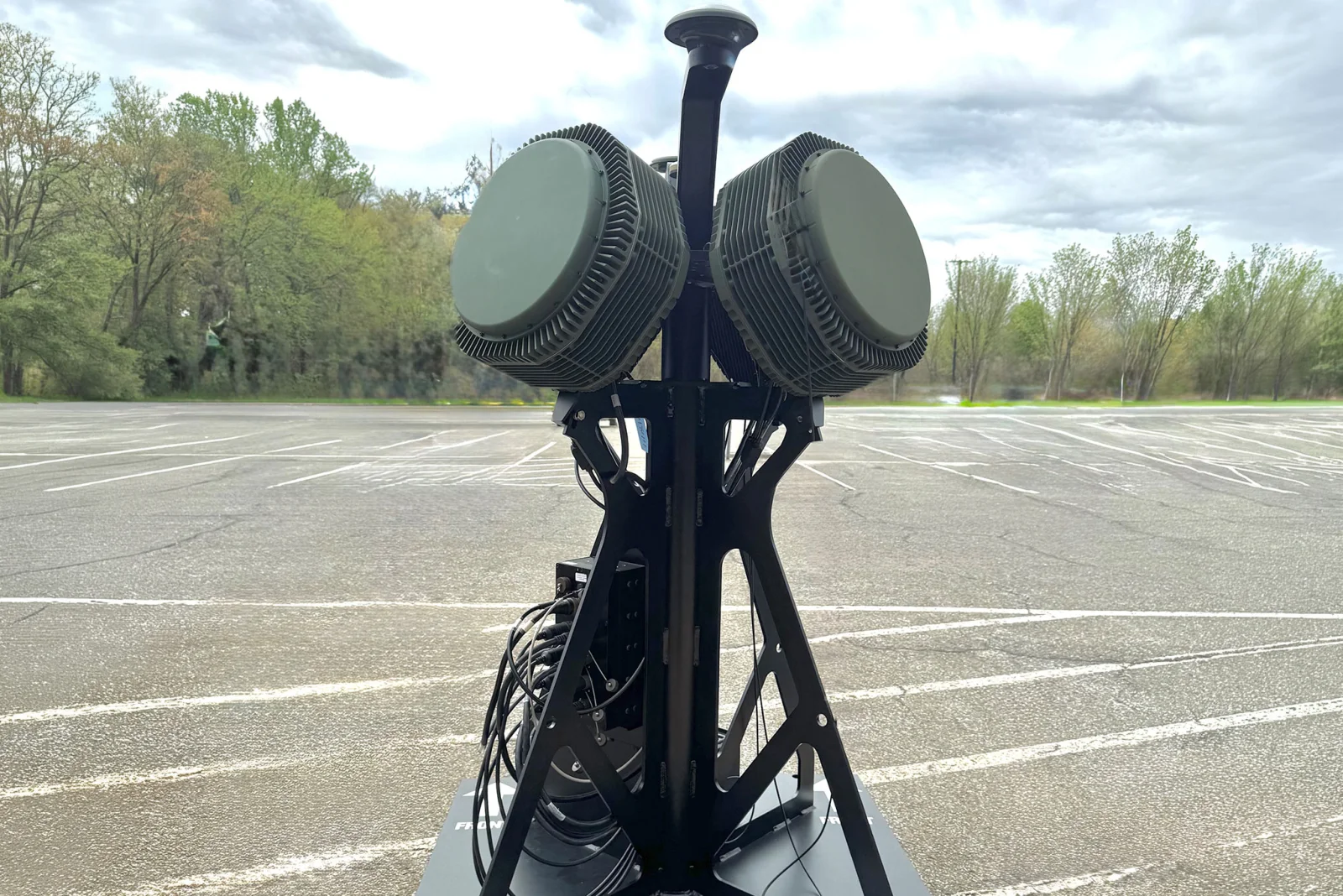
| Antenna | Up to four RPS-42 hemispheric AESA panels[2] | DRS RADA hemispheric AESA radar: RPS-42 in 2019, later eCHR[3][4] | Fixed, non-rotating pulse-Doppler AESA panels, 504 mm diameter; digital beam forming[1] | Not recorded |
|---|
| Coverage | 360° azimuth, 90° elevation; radar range up to 5 km; 0.002 m² targets detected at 3.5 km[1][2] | RPS-42 panels cover 90° each in azimuth, -10° to +70° elevation, to 30 km (radar datasheet; no system figure)[7] | 90° azimuth per panel, 360° with four; RPS-42: -10° to +70° elevation, 150 m to 30 km, targets to 30,000 ft[1] | Not recorded |
|---|
| Track capacity | Not recorded | Not recorded | Hundreds of simultaneous tracks[1] | Not recorded |
|---|
| Target classes | Small drones and UAVs, including several at once and manoeuvring targets[2] | Small UAS; jammed drones made to drop, circle or return home[1][2] | RPS-42: fighters, helicopters, UAVs, transport aircraft; RPS-40: rockets, artillery, mortars, RPGs, ATGMs; RPS-44: ground and sea intruders[1] | Not recorded |
|---|
| Interfaces | C4I centre fuses radar, Controp EO/IR, NetSense and COMINT/DF (70 MHz–6 GHz) into one air picture[2] | Not recorded | Gigabit Ethernet, discretes and serial channels; integrates with C4I systems and other sensors[1] | Not recorded |
|---|
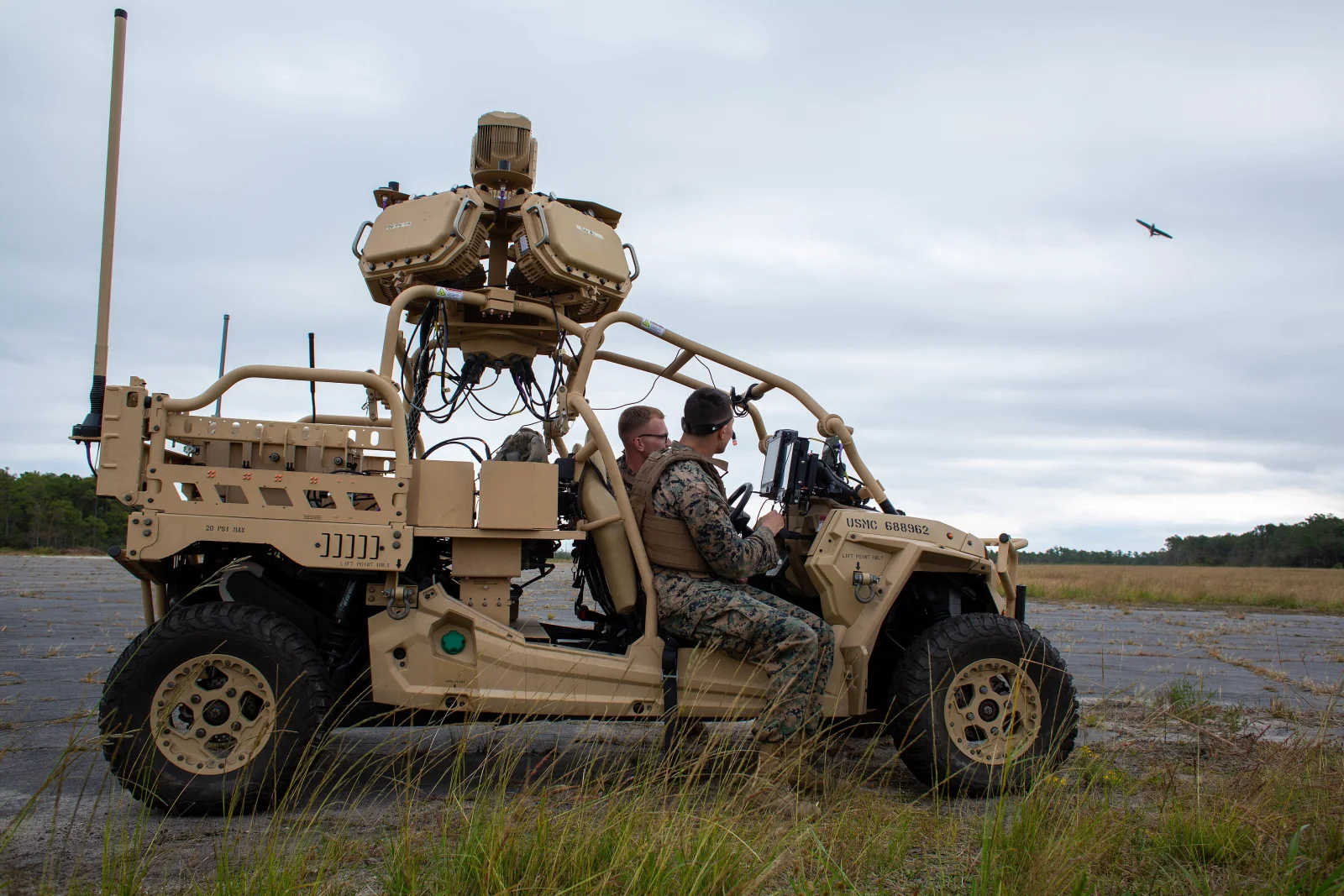
| Mobility | Stationary or mobile installation; single operator[2] | Two Polaris MRZR light vehicles; air-transportable; used from amphibious ship decks; now on Ultra Light Tactical Vehicles[2][3][5][6] | Stryker M-SHORAD, light vehicles, tripods and skids; works on the move[2][3] | Not recorded |
|---|
| Weight | Not recorded | Not recorded | 23 kg per panel, 105 kg for four; 320 W average per panel; no forced cooling[1] | Not recorded |
|---|
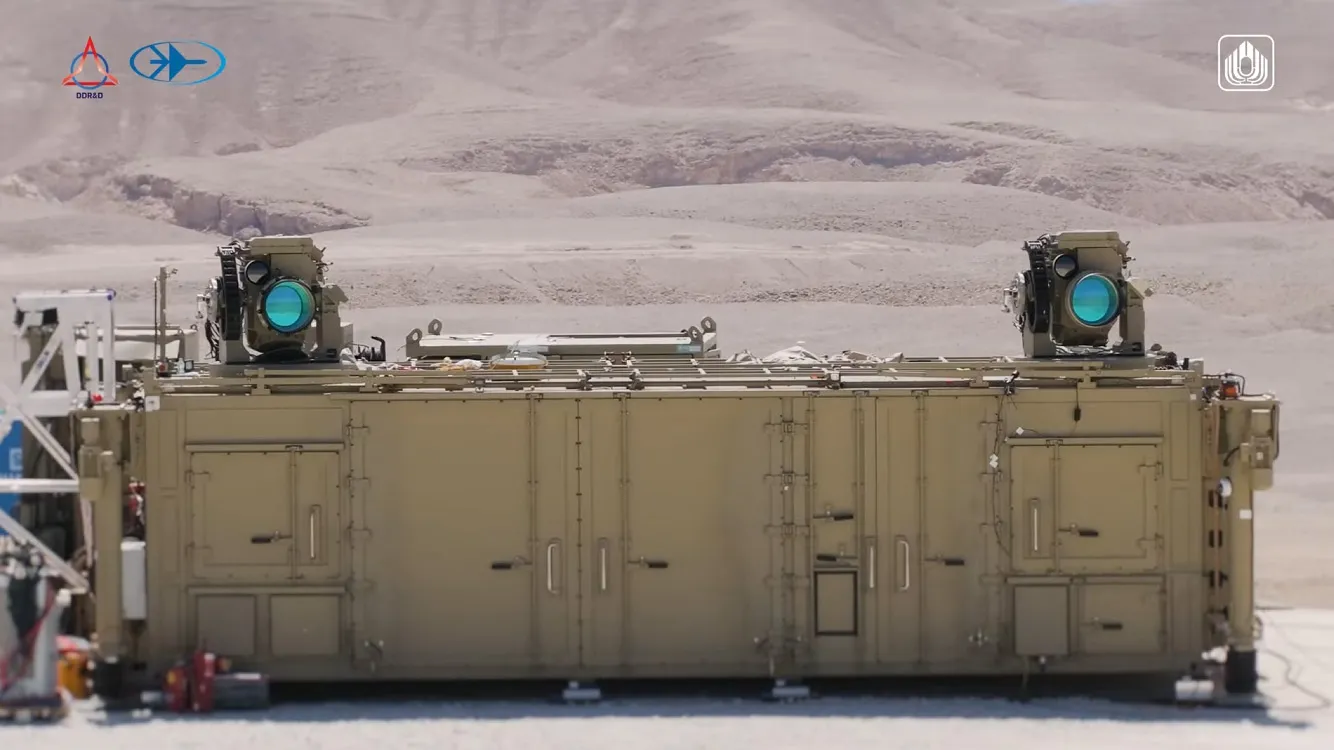
| Laser type | Not recorded | Not recorded | Not recorded | 100 kW-class high-energy laser; coherent beam combining of several laser sources; laser source made by Elbit Systems[1][2][4] |
|---|
| Beam director | Not recorded | Not recorded | Not recorded | Rafael beam director with adaptive optics; Rafael claims coin-sized precision at 10 km[2] |
|---|
| Sensors | Not recorded | Not recorded | Not recorded | Beam director doubles as a long-range EO sensor for detection, classification and damage assessment; 360° azimuth coverage[2] |
|---|
| Power supply | Not recorded | Not recorded | Not recorded | Electrical power; no interceptor stocks to make, move or store[2][4] |
|---|
| Magazine depth | Not recorded | Not recorded | Not recorded | Continuous engagement without reload cycles while power lasts (manufacturer)[2] |
|---|
| Fire control / radar | Not recorded | Not recorded | Not recorded | Part of Israel's layered air defence with Iron Dome, David's Sling and Arrow; can also run standalone[2][4] |
|---|
| Characteristics |
|---|
| Maximum range (km) | Not recorded | Not recorded | Not recorded | Up to 10 kmManufacturer claim[1][3] |
|---|
| Detection range (km) | Up to 5 kmManufacturer claim[1] | Not publicly disclosed | Up to 30 kmManufacturer claim[1] | Not recorded |
|---|
| Output power class (kW) | Not recorded | Not recorded | Not recorded | ≈ 100 kWManufacturer claim[1] |
|---|
| Mass (kg) | Not recorded | Not recorded | 23 kgManufacturer claim[1] | Not recorded |
|---|
| Guidance / cueing | RPS-42 radars, EO/IR, RF/COMINT sensorsSecondary reference[2][3] | DRS RADA hemispheric radar and EO/IR turretSecondary reference[3][4] | S-band pulse-Doppler AESA, 90° per panel, GaNManufacturer claim[1][3] | External radar cueing; adaptive-optics beam directorSecondary reference[3] |
|---|
| Effect | RF jamming (C-Guard RD); optional laserSecondary reference[2][3] | Electronic attack: drones made to drop, circle or return homeOfficial document[2][1] | Not recorded | Thermal damage until structural failure or warhead detonationSecondary reference[3] |
|---|
| Launch / operating platform | Not recorded | Polaris MRZR light vehiclesSecondary reference[3][4] | Stryker M-SHORAD, light vehicles, tripods, skidsSecondary reference[3][2] | Not recorded |
|---|
| Programme |
|---|
| Operators (in service / ordered) | 3: United Kingdom, Argentina, Cyprus[2][4][5] | | | |
|---|
| Platforms and integration | RADA RPS-42 hemispheric radar (in service), Controp Speed ER EO/IR sensor (in service), C-Guard RD jammer (effector) (in service), Lite Beam high-power laser (effector) (tested), Protection of Barak MX batteries (ordered)[1][2][3][5] | Polaris MRZR (in service), Ultra Light Tactical Vehicle (ULTV) (in service), Amphibious assault ships (USS Boxer, USS America) (in service), DRS RADA hemispheric radar (in service)[2][3][4][5][6] | Stryker M-SHORAD (IM-SHORAD mission equipment package) (in service), Rafael Drone Dome (in service), MADIS and L-MADIS (eCHR) (in service)[3][4][5] | Israeli Air Force multi-layer air defence array (Iron Dome, David's Sling, Arrow) (in service), Naval Iron Beam (shipborne application) (proposed)[4][5] |
|---|
| Public contracts | Not recorded | Not recorded | 1 recorded. Latest: 2026-09-29 · U.S. Army Contracting Command, Detroit Arsenal · US$500,000,000 (ceiling)[7] | 1 recorded. Latest: 2024-10-28 · Israel Ministry of Defense · approximately US$200 million (Elbit share)[6][9] |
|---|
| Latest development | 2022-11: Advanced by the Pentagon's JCO[2][3] | 2026-04-08: L-MADIS on ULTV fielded[6] | 2026-10-12: cxMHR launched[6] | 2025-12-28: First operational system delivered[4] |
|---|