| Role |
|---|
| Primary category | Interceptor Drones | Interceptor Drones | Interceptor Drones | Interceptor Missiles |
|---|
| Subcategory | Explosive or fragmentation-effect interceptors | Explosive or fragmentation-effect interceptors | Explosive or fragmentation-effect interceptors | Counter-UAS missiles |
|---|
| Interception mechanism | Blast-fragmentation | Blast-fragmentation | Blast-fragmentation | Proximity fuze, Blast-fragmentation |
|---|
| Target types | Small UAS, One-way attack UAVs, Loitering munitions | Small UAS, One-way attack UAVs, Loitering munitions | One-way attack UAVs | Small UAS, One-way attack UAVs, Cruise missiles |
|---|
| Platform | Fixed site, Vehicle-mounted | Fixed site, Vehicle-mounted | Fixed site, Vehicle-mounted | Airborne, Vehicle-mounted, Shipborne |
|---|
| Status | In service | In production | In production | In service |
|---|
| Developer · Country | RTX (Raytheon) · United States | Anduril Industries · United States | Cambridge Aerospace · United Kingdom | BAE Systems, L3Harris · United States |
|---|
| Propulsion | Turbojet | Turbojet | Turbojet | Solid rocket motor |
|---|
| Reusability | Single-use | Recoverable | Single-use | Single-use |
|---|
| Technical profile |
|---|
| Seeker | RF seeker since Block 1B; Block 2C+RM adds a new seeker (type not published)[1][3] | Not recorded | X-band radar seeker for all-weather terminal guidance[3] | Distributed-aperture semi-active laser seeker (DASALS) in the canard leading edges; optics deploy about 0.5 s after launch[1][3] |
|---|
| Guidance | Semi-active guided airframe, cued and guided from the ground by the KuRFS radar[2][7] | Operator-supervised autonomy: launches on warning, can track and inspect the target before the engagement decision[1][4] | Not recorded | Semi-active laser homing through the WGU-59/B mid-body guidance section; CEP under 0.5 m (reference work)[3] |
|---|
| Warhead | Proximity blast-fragmentation warhead with ESAD fuze and terminal air arming; Block 3NK carries a non-kinetic payload[1][7] | High-explosive fragmentation warhead (Roadrunner-M)[1][6] | | Existing Hydra 70 warheads, such as M151 for the counter-drone role[1][3] |
|---|
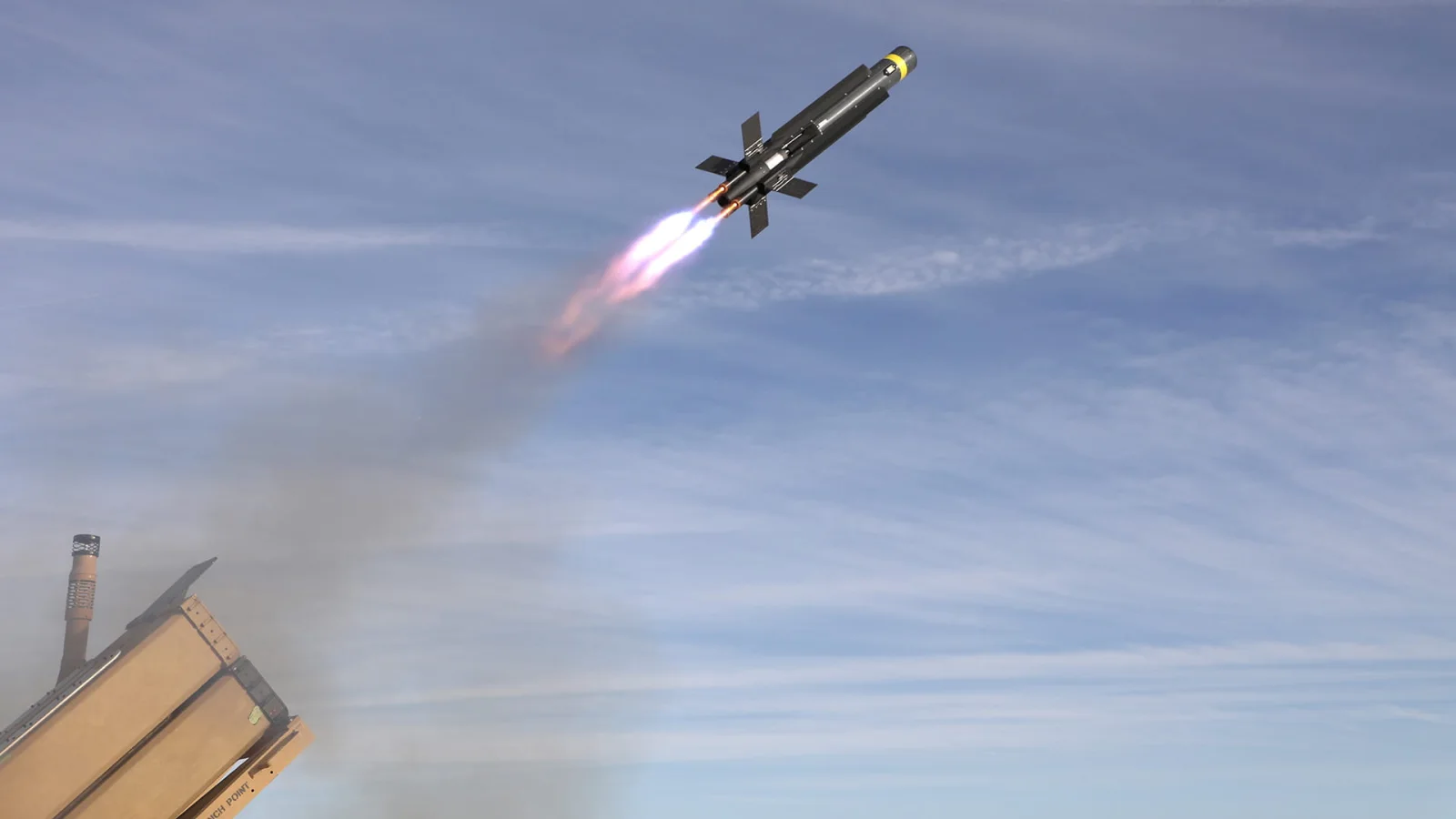
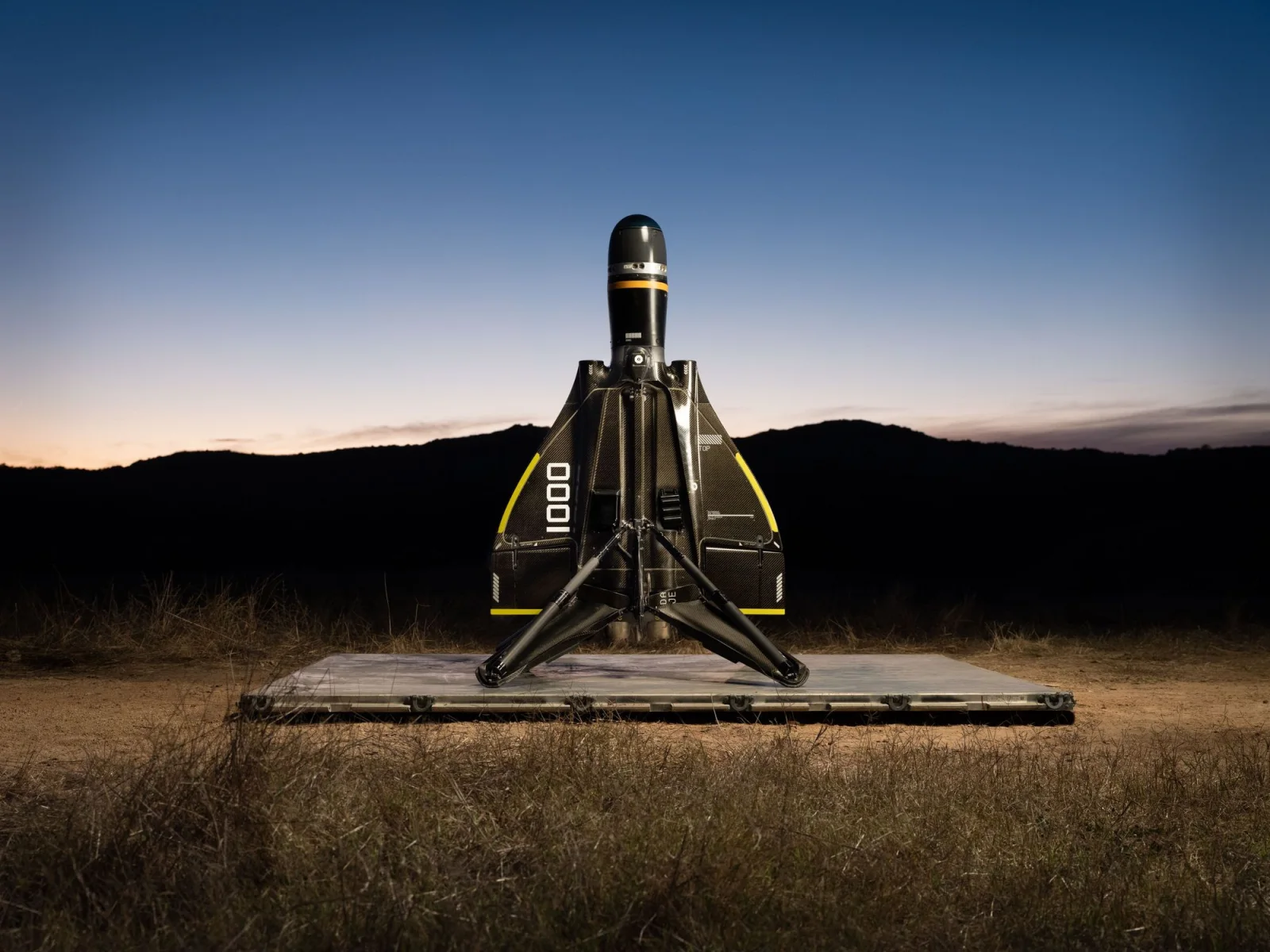
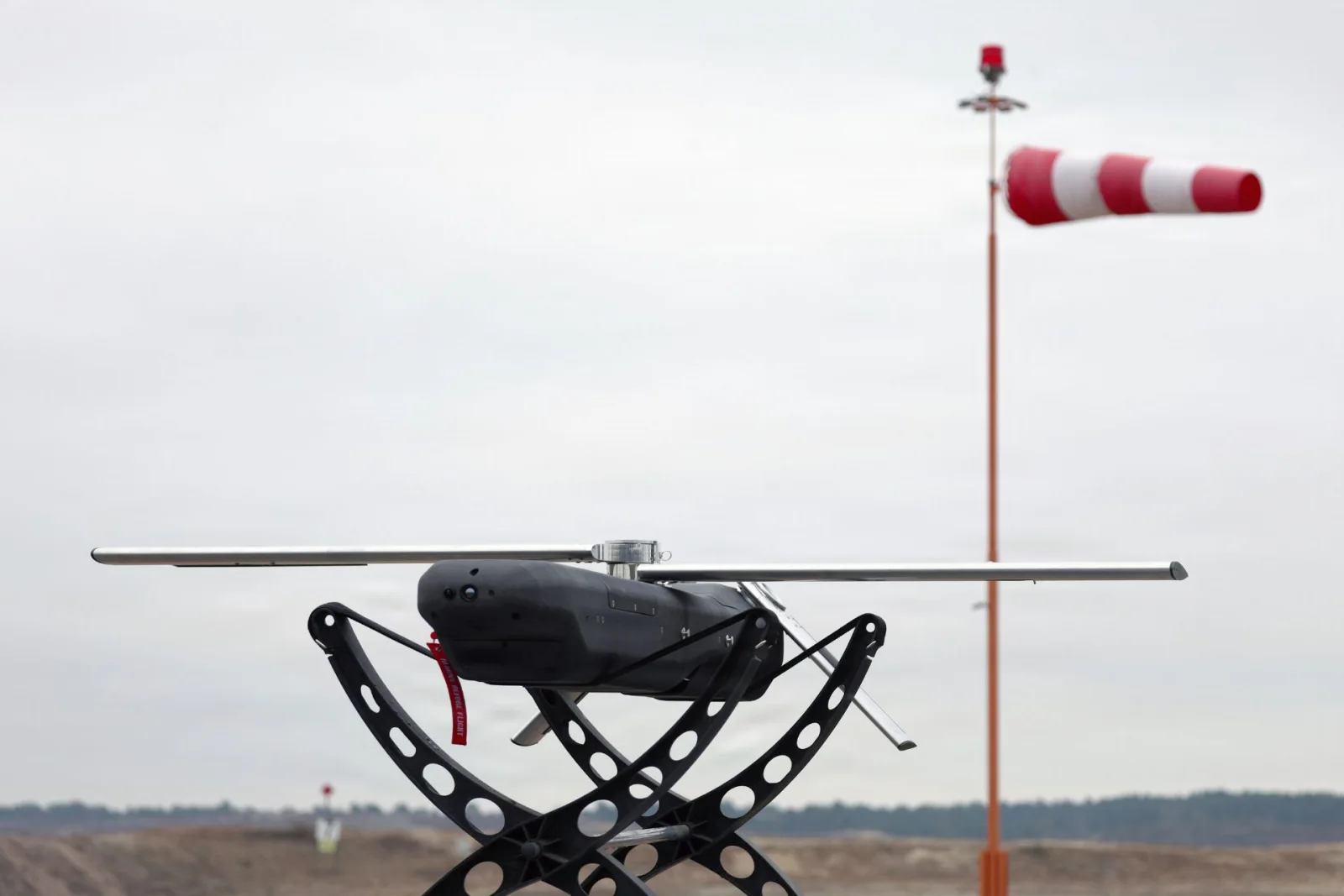
| Motor / propulsion | Boost rocket motor, then a small turbine engine; Block 2C+RM replaces the turbine with a rocket motor[1] | Twin turbojets with vectored thrust; vertical launch without a booster, high subsonic speed[4][6] | Small turbojet; wings and tail unfold after leaving the tube[3] | Unmodified Hydra 70 Mk 66 motor; Nammo developing a motor for 12–15 km[3] |
|---|
| Launcher | Rail launch; FS-LIDS uses a four-round (4-pack) launcher, M-LIDS a two-round launcher on an M-ATV[3][7] | 'Nest' launcher boxes that can be spread across a site[4] | Tube launcher; MOD contract covers missiles, launchers, integration, support and training[1][3] | Existing 70 mm launchers on helicopters, jets, UAVs, ground vehicles and ships; four-round VAMPIRE launcher[4][5] |
|---|
| Launch and recovery | Block 2 is expendable; Block 3NK can loiter, be recalled, serviced and relaunched[1][8] | Returns and lands vertically if not expended; refuelled and reused[4][5] | Not recorded | Not recorded |
|---|
| Fire control / radar | KuRFS 360° Ku-band AESA radar with Northrop Grumman FAAD C2 in the Army's LIDS family[1][8] | Anduril Lattice command-and-control software[4][8] | Not recorded | Not recorded |
|---|
| Crew | Not recorded | Roadrunner-M squadrons can be launched by a single operator (manufacturer)[5] | Not recorded | Not recorded |
|---|
| Fuze | Not recorded | Not recorded | Not recorded | Proximity fuze from L3Harris and Technology Service Corporation, a drop-in for the M423[1][2] |
|---|
| Characteristics |
|---|
| Maximum range (km) † | 10–15 km† Range reported in secondary sourcesSecondary reference[3] | Not recorded | 30 km† Maximum engagement range as claimed by the developerOfficial document[1][2] | Up to 5 km† Range reported in secondary sourcesSecondary reference[3] |
|---|
| Speed (m/s) | 154–165 m/sSecondary reference[3] | Not publicly disclosedManufacturer claim[1] | Up to 194 m/sOfficial document[1] | Up to 1,000 m/sSecondary reference[3] |
|---|
| Endurance (min) | Up to 4 minSecondary reference[3] | Not recorded | Not recorded | Not recorded |
|---|
| Calibre (mm) | Not recorded | Not recorded | Not recorded | 70 mmManufacturer claim[1] |
|---|
| Mass (kg) | Not recorded | Not recorded | Not recorded | 4.1 kgSecondary reference[3] |
|---|
| Length (m) | Not recorded | Not recorded | Not recorded | 1.87 mSecondary reference[3] |
|---|
| Guidance / cueing | Ground-launched, radar-guided; cued by KuRFS in LIDSOfficial document[2][1] | Not recorded | X-band radar seekerSecondary reference[3] | Semi-active laser (DASALS optics in WGU-59/B)Secondary reference[3] |
|---|
| Effect | Kinetic warhead producing a fragment fieldManufacturer claim[1][3] | High-explosive warhead; recover and reuse if not expendedManufacturer claim[1] | Blast-fragmentation warheadSecondary reference[3] | M151 warhead with proximity fuze (drop-in for M423)Manufacturer claim[1][2] |
|---|
| Launch / operating platform | Rail launcher on fixed sites and vehiclesManufacturer claim[1] | Vertical take-off and landing from a ground stationManufacturer claim[1] | Tube launcherSecondary reference[3] | Not recorded |
|---|
| Programme |
|---|
| Operators (in service / ordered) | | | | 8: United States, Australia, Jordan, United Kingdom, Czech Republic, Ukraine, Saudi Arabia, Lebanon[3][5] |
|---|
| Platforms and integration | FS-LIDS (fixed-site LIDS), four-round launcher (in service), M-LIDS on M-ATV, two-round launcher (in service), KuRFS Ku-band radar (in service), FAAD C2 (in service), Marine Corps GBAD on M-ATV or MRZR (in service), U.S. Navy destroyers (4-cell and 8-cell Coyote launchers) (in service), FS-LIDS for Qatar (ordered), FS-LIDS for the UAE (ordered)[1][3][6][7][8] | Lattice C2 (in service), Nest launcher box (tested), U.S. Marine Corps installation counter-sUAS (Anduril) (ordered), Kuwait counter-UAS package with Sentry towers and Lattice (ordered)[4][7][8] | Not recorded | VAMPIRE (pickup and boat kit) (in service), AH-64 Apache (in service), AH-1Z and UH-1Y (in service), MH-60S/R Seahawk (in service), F-16 (in service), F-15E and A-10 (in service), Eurofighter Typhoon (in service), EAGLS and ground vehicle kits (tested)[3][4] |
|---|
| Public contracts | 5 recorded. Latest: 2026-03-19 · United Arab Emirates (FMS) · 240 Coyote Block 2 all-up rounds · US$2.10 billion[2][4][5][6][7][11][12] | | 1 recorded. Latest: 2026-04-10 · UK Ministry of Defence · multi-million pounds (not disclosed)[1] | |
|---|
| Production / deliveries | FY2025–FY2029: at least 6,000 kinetic and 700 non-kinetic interceptors planned rate, by end of 2027: about 300 a month planned rate, 2024: 600 ordered[2][4][9] | 2024–2025: 500+ ordered, 2023: low-rate production; hundreds of units for an initial U.S. customer produced[3][4] | 2025: low hundreds a year (capacity) produced[3] | to February 2026: 100,000 kits cumulative, from October 2016: 5,000 a year planned rate, Framework of up to seven years from October 2026: up to 25,000 kits a year for U.S. forces, plus up to 10,000 for export planned rate[3][6] |
|---|
| Latest development | 2026-07: 600 combat intercepts disclosed[9] | 2026-06: First export approval[8] | 2026-05: First tranche due[2] | 2026-10-22: 25,000-a-year framework[6] |
|---|