| Role |
|---|
| Primary category | Interceptor Drones | Interceptor Drones | Interceptor Drones | Interceptor Drones |
|---|
| Subcategory | Collision-based interceptors | Net-capture interceptors | Collision-based interceptors | Explosive or fragmentation-effect interceptors |
|---|
| Interception mechanism | Collision, Blast-fragmentation | Net capture | Collision | Blast-fragmentation |
|---|
| Target types | Small UAS | Small UAS | Small UAS, One-way attack UAVs | Small UAS, One-way attack UAVs, Loitering munitions |
|---|
| Platform | Fixed site | Fixed site, Vehicle-mounted | Fixed site, Trailer | Fixed site, Vehicle-mounted |
|---|
| Status | In production | In production | Testing | In production |
|---|
| Developer · Country | Anduril Industries · United States | Fortem Technologies · United States | MARSS · Monaco | Anduril Industries · United States |
|---|
| Propulsion | Not publicly disclosed | Electric | Electric | Turbojet |
|---|
| Reusability | Not publicly disclosed | Reusable | Reusable | Recoverable |
|---|
| Technical profile |
|---|
| Seeker | Not recorded | Onboard Fortem TrueView R20 radar detects, tracks and locks onto the target[1] | Uncooled infrared (imaging IR) seeker in the nose[2][4] | Not recorded |
|---|
| Guidance | Cued by Lattice; onboard computing and sensors hold target lock and perform terminal guidance[1][3] | Autonomous AI-driven pursuit that adapts to target position, speed and direction; a human on the loop can take manual control[1] | NiDAR cueing; autonomous terminal phase after operator authorisation, with NiDAR EDGE software and onboard AI[1][3] | Operator-supervised autonomy: launches on warning, can track and inspect the target before the engagement decision[1][4] |
|---|
| Sensors | Onboard sensors send video to the operator for positive identification before the attack; types not published[1][3] | Radar plus onboard optical cameras that stream to SkyDome Manager in pursue mode[1] | Not recorded | Not recorded |
|---|
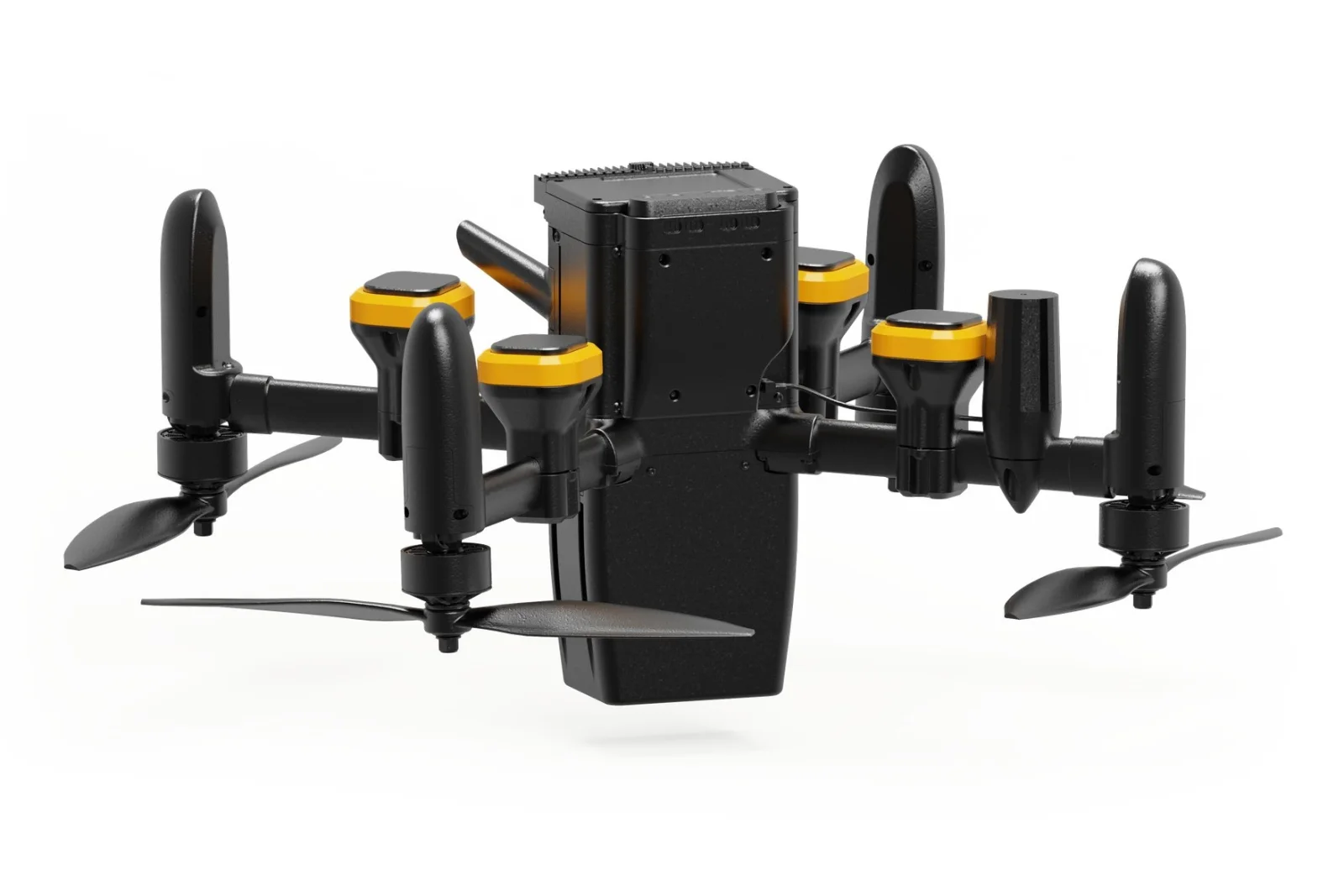
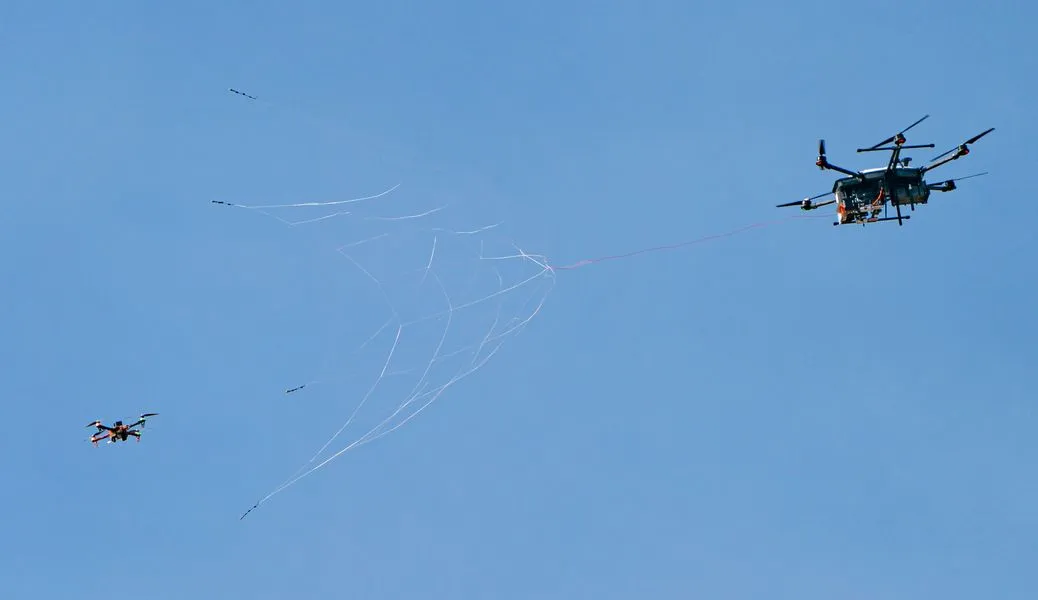
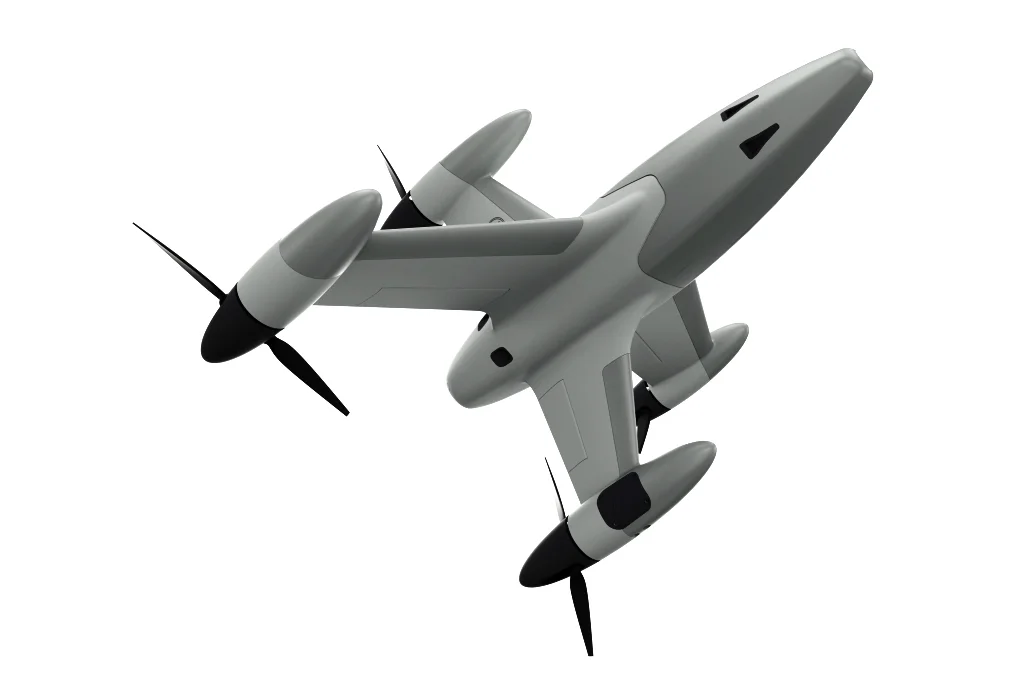
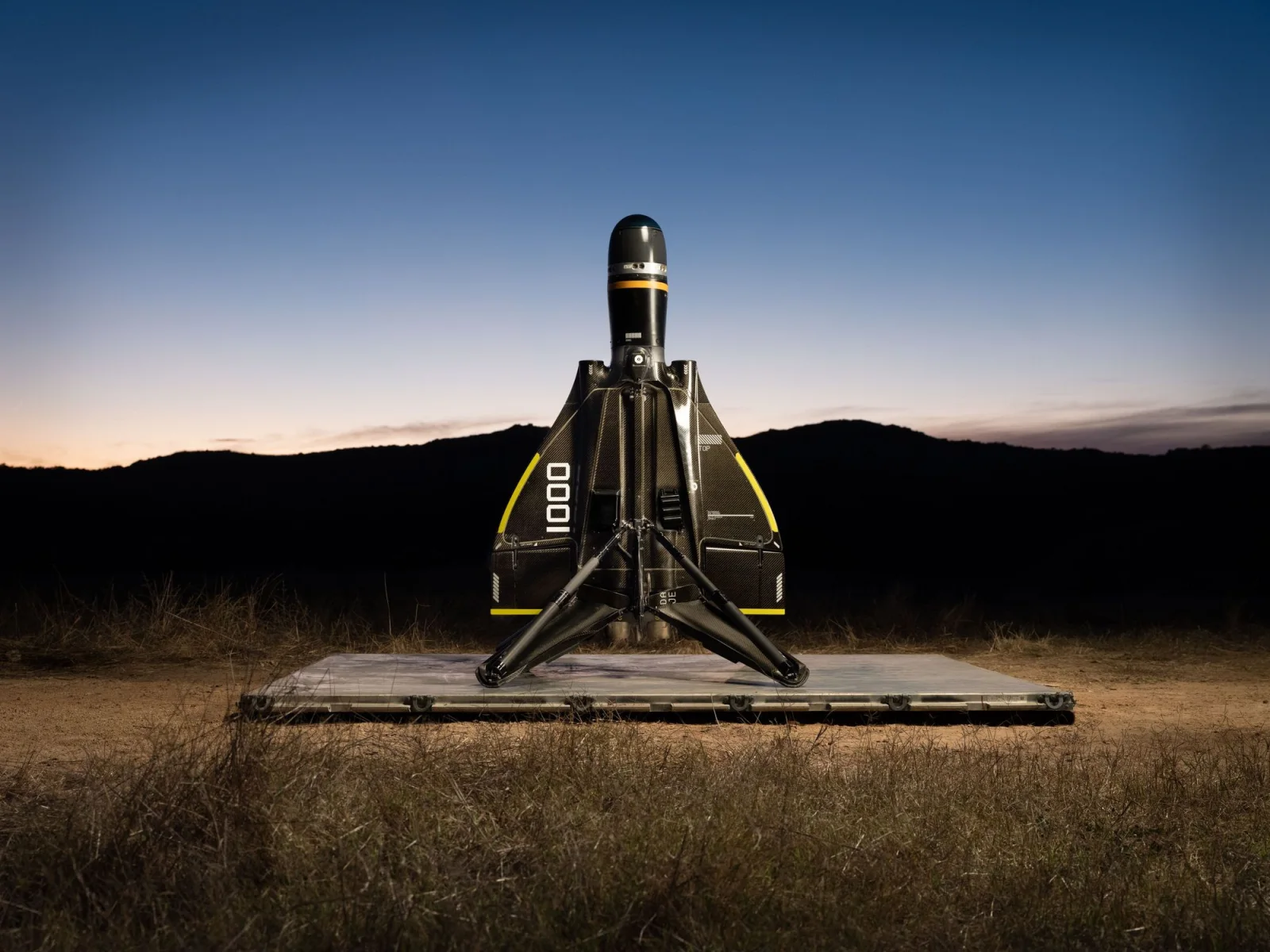
| Warhead | None on Anvil (rams the target); Anvil-M adds a fire-control module that arms and detonates a munitions payload[1][2] | Non-explosive NetGun: tethered net, DrogueChute net with drogue parachute, or entanglers for wings and fuselages[1] | No explosive or fuel; head-on ramming with a reinforced composite airframe[1][3][4] | High-explosive fragmentation warhead (Roadrunner-M)[1][6] |
|---|
| Motor / propulsion | Not recorded | Electric multirotor; about 25 m/s top speed and 18 kg (third-party listing)[2] | Electric; 2024 redesign replaced four ducted fans with open propellers that stop and fold before impact[2][4] | Twin turbojets with vectored thrust; vertical launch without a booster, high subsonic speed[4][6] |
|---|
| Launcher | Launch Box placed anywhere on a base, for 24/7 remote launch[1][2] | Not recorded | Vertical box canister (about 140 × 110 cm, electromagnetic cold launch); trailer option with six canisters[2][4] | 'Nest' launcher boxes that can be spread across a site[4] |
|---|
| Launch and recovery | Not recorded | Tows the netted drone away on a tether; reloaded for the next sortie in under 3 minutes[1] | Can abort and return, or come down by parachute; reusable after some engagements against smaller drones[3][4] | Returns and lands vertically if not expended; refuelled and reused[4][5] |
|---|
| Fire control / radar | Anduril Lattice C2; Counter-UAS Engagement System for the Marine Corps MADIS[3] | SkyDome Manager C2 coordinates several interceptors; open API, integration with FAAD C2 demonstrated[1][3] | MARSS NiDAR C4I command-and-control and sensor system[1][3] | Anduril Lattice command-and-control software[4][8] |
|---|
| Crew | Not recorded | Not recorded | Not recorded | Roadrunner-M squadrons can be launched by a single operator (manufacturer)[5] |
|---|
| Characteristics |
|---|
| Maximum range (km) † | Not recorded | Up to 4 km† Range reported in secondary sourcesSecondary reference[2] | At least 5 km† Maximum engagement range as claimed by the developerManufacturer claim[1] | Not recorded |
|---|
| Maximum altitude (km) | Not recorded | Not recorded | Up to 2 kmManufacturer claim[1] | Not recorded |
|---|
| Speed (m/s) | Not recorded | 25 m/sSecondary reference[2] | At least 80 m/sManufacturer claim[1][2] | Not publicly disclosedManufacturer claim[1] |
|---|
| Mass (kg) | Not recorded | ≈ 18 kgSecondary reference[2] | Up to 8 kgSecondary reference[2] | Not recorded |
|---|
| Length (m) | Not recorded | Not recorded | 0.8 mSecondary reference[2] | Not recorded |
|---|
| Guidance / cueing | Cued by Lattice C2; autonomous terminal intercept with video to the operatorManufacturer claim[1] | Onboard TrueView R20 radar; autonomous pursuitManufacturer claim[1] | NiDAR cueing; onboard AI with uncooled IR seeker for the terminal phaseManufacturer claim[1][2] | Not recorded |
|---|
| Effect | Ramming (Anvil) or detonating munitions payload (Anvil-M)Manufacturer claim[1][2] | Net capture (NetGun); DrogueChute for large dronesManufacturer claim[1] | Not recorded | High-explosive warhead; recover and reuse if not expendedManufacturer claim[1] |
|---|
| Launch / operating platform | Launch Box ground stationManufacturer claim[1] | Not recorded | Vertical smart launcher canisters, e.g. six-cell trailerSecondary reference[2] | Vertical take-off and landing from a ground stationManufacturer claim[1] |
|---|
| Programme |
|---|
| Operators (in service / ordered) | | | Not recorded | |
|---|
| Platforms and integration | Lattice C2 (in service), MADIS (Marine Air Defense Integrated System) on two JLTVs (in development), U.S. Marine Corps installation counter-sUAS (Anduril) (ordered), Kuwait counter-UAS package with launch boxes and Sentry towers (ordered)[1][3][4][5][6] | Fortem SkyDome system with TrueView ground radars (in service), FAAD C2 (tested)[3][4][5] | MARSS NiDAR C4I (tested), Launcher trailer with four AESA radar antennas, optronic gimbal and six canisters (proposed)[1][2][3][4] | Lattice C2 (in service), Nest launcher box (tested), U.S. Marine Corps installation counter-sUAS (Anduril) (ordered), Kuwait counter-UAS package with Sentry towers and Lattice (ordered)[4][7][8] |
|---|
| Public contracts | | 4 recorded. Latest: 2026-08-04 · U.S. Department of Homeland Security · Track 1 ceiling US$1.011 billion (shared vehicle)[5][7][8][9] | Not recorded | |
|---|
| Production / deliveries | Not recorded | Q3 2025: 12 SkyDome systems ordered[9] | Not recorded | 2024–2025: 500+ ordered, 2023: low-rate production; hundreds of units for an initial U.S. customer produced[3][4] |
|---|
| Latest development | 2026-06: Export approval for Kuwait[6] | 2026-01-20: DroneHunter 5.0 deliveries begin[10] | 2026-06-15: MARSS joins EOS[5] | 2026-06: First export approval[8] |
|---|