| Role |
|---|
| Primary category | Interceptor Missiles | Interceptor Missiles | Interceptor Missiles | Guns & Interceptor Ammunition |
|---|
| Subcategory | Short-range air-defense missiles | Short-range air-defense missiles | Short-range air-defense missiles | Gun-based interception systems |
|---|
| Interception mechanism | Blast-fragmentation, Proximity fuze | Blast-fragmentation, Proximity fuze | Blast-fragmentation, Proximity fuze | Direct impact |
|---|
| Target types | Crewed aircraft, Cruise missiles | Crewed aircraft, Cruise missiles, One-way attack UAVs, Small UAS | Crewed aircraft, Cruise missiles, One-way attack UAVs, Small UAS | One-way attack UAVs, Cruise missiles, Crewed aircraft, Small UAS |
|---|
| Platform | Vehicle-mounted | Vehicle-mounted | Vehicle-mounted | Vehicle-mounted |
|---|
| Status | In service | In service | In service | In service |
|---|
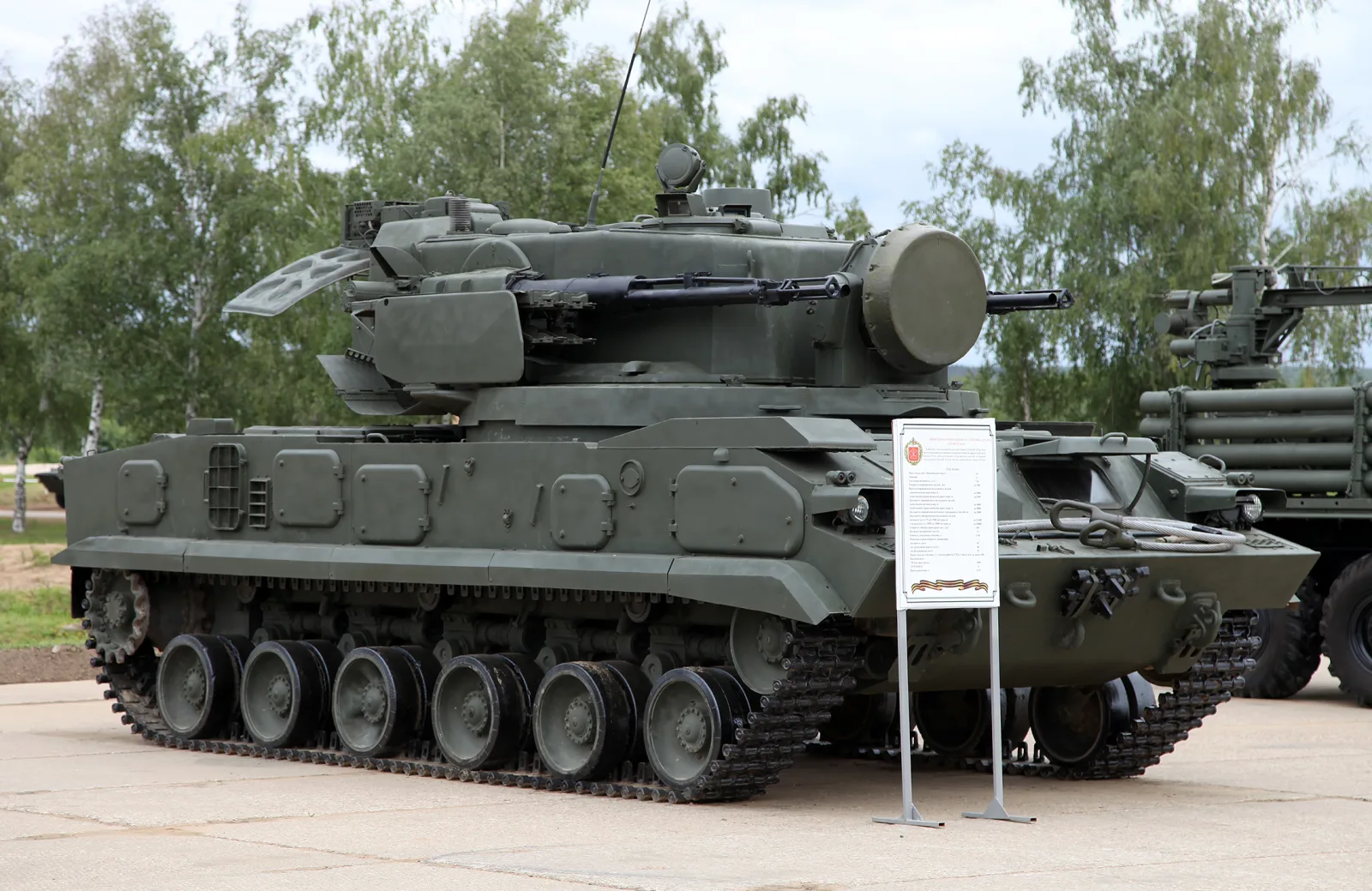
| Developer · Country | KBP Instrument Design Bureau · Russia | KBP Instrument Design Bureau · Russia | Almaz-Antey · Russia | Krauss-Maffei Wegmann · Germany |
|---|
| Propulsion | Solid rocket motor | Solid rocket motor | Solid rocket motor | Not applicable |
|---|
| Reusability | Single-use | Single-use | Single-use | Not applicable |
|---|
| Technical profile |
|---|
| Seeker | Not recorded | None: command-guided missile[2][3] | None: command-guided missiles[3][5] | Not recorded |
|---|
| Guidance | Radio command (command to line of sight) with radar or optical tracking[2][3] | Radio command from the EHF tracking radar or the 3–5 µm IR optical channel; up to four missiles guided at once[3] | Radio command from the vehicle's electronically steered engagement radar; up to four missiles per target[3][5] | Not recorded |
|---|
| Warhead | Not recorded | 57E6: 20 kg fragmentation (about 5 kg explosive); 9M335 uses a continuous-rod warhead[2][3] | 9M331: 15 kg high-explosive fragmentation; 9M338 details not published[2][3] | Not recorded |
|---|
| Fuze | Laser proximity fuze on the 9M311; radio proximity fuze on the 9M311-M1[1] | Contact and adaptive radar proximity fuzes[3] | Radar (RF) proximity fuze[3] | Not recorded |
|---|
| Motor / propulsion | Two-stage 9M311 with a separable solid-propellant booster[2][3] | Two-stage: 90 mm booster (1.5 s burn) and 76 mm unpowered dart[2][3] | Solid rocket; cold vertical launch, ejected about 20 m before ignition; thrust-vector control[3] | Not recorded |
|---|
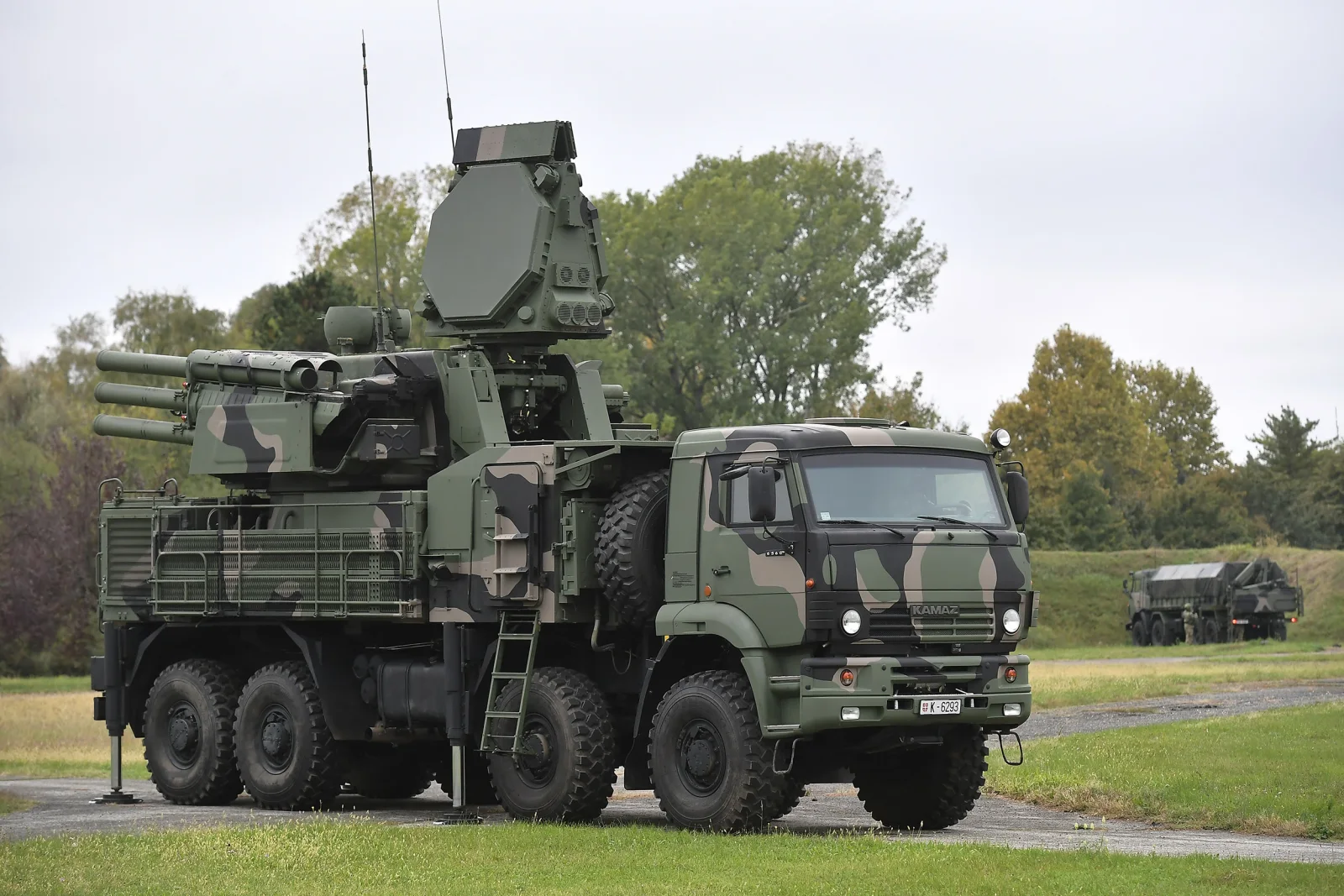
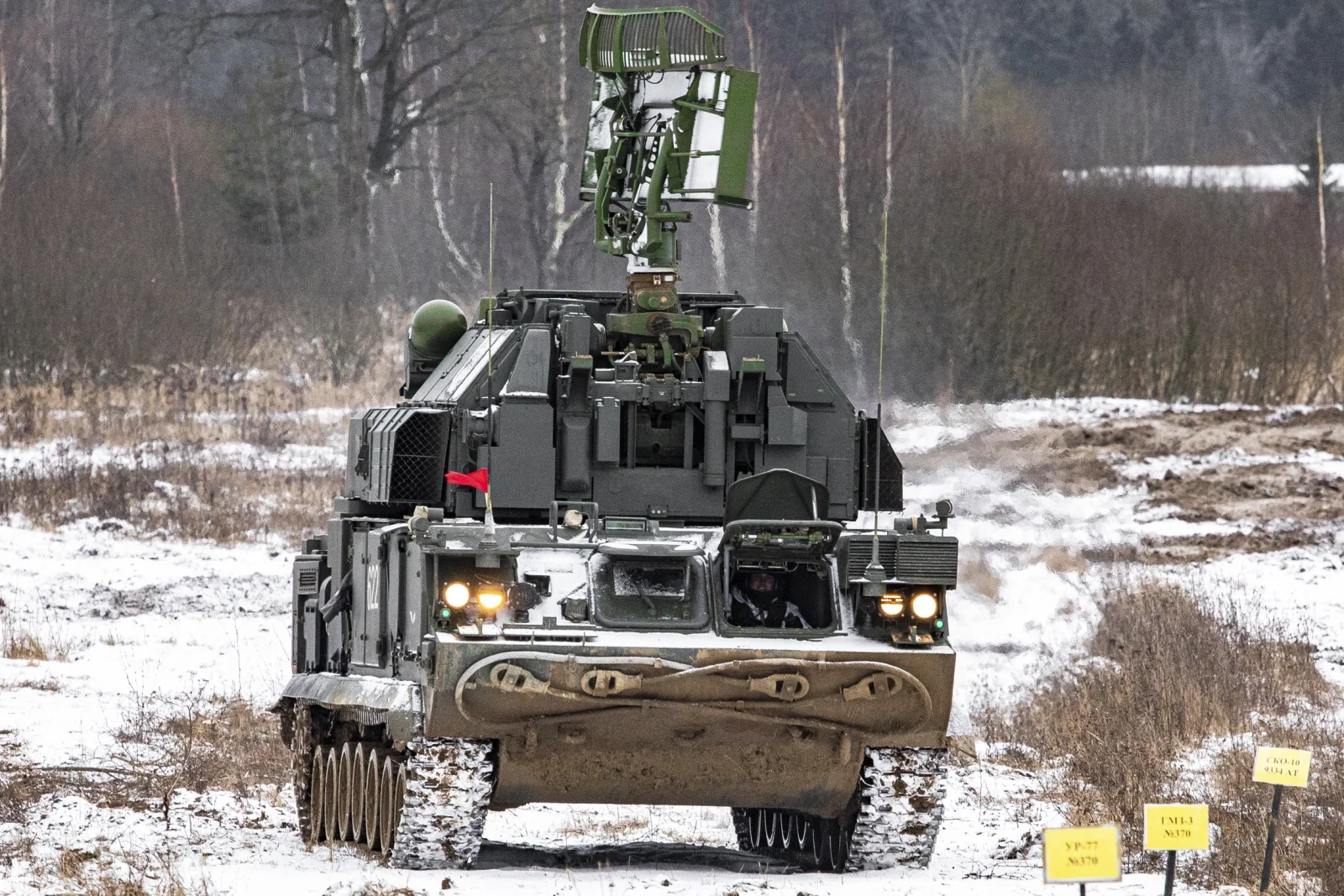
| Launcher | Not recorded | Turret with two six-tube missile groups and two 2A38M twin 30 mm cannon[2][3] | Vertical launch from the combat vehicle; Tor-M2E/M2K carry two four-round 9M334 modules[3] | Not recorded |
|---|
| Rounds per launcher | 8 missiles and two twin 30 mm cannon (HE-T and HE-I ammunition)[2] | 12 × 57E6; Pantsir-SMD up to 48 small TKB-1055 missiles in quad packs (claimed by Rostec)[3][4] | | Not recorded |
|---|
| Fire control / radar | 1RL144M radar set: E-band surveillance radar (18 km) and J-band tracking radar (16 km); Ranzhir C2 link on the Tunguska-M1[1][2] | UHF PESA search radar (32–36 km), EHF PESA tracking radar (24–28 km, 20 tracks), IR tracker[2][3] | On-vehicle search radar (32 km detection), engagement radar and optical/thermal tracking; four targets engaged at once[2][3] | S-band MPDR 12 search radar and Ku-band tracking radar, about 15 km each (German vehicles)[3] |
|---|
| Reaction / readiness | Not recorded | 4–6 s for missiles, 1–2 s for guns (export literature via reference work)[3] | 5–8 s from detection when stationary; about 10 s on the move with short halts (claimed)[3] | Not recorded |
|---|
| Crew | Four: driver, commander, gunner and radar operator[2] | | 3 (CSIS); 2 for Tor-M2E (reference work)[2][3] | 3 (driver, gunner, commander)[3] |
|---|
| Ammunition | Not recorded | Not recorded | Not recorded | 35 x 228 mm HEI-T and FAPDS; 320 anti-aircraft and 20 anti-armour rounds per gun[2][3] |
|---|
| Rate of fire | Not recorded | Not recorded | Not recorded | 550 rounds/min per gun, 1,100 combined[3] |
|---|
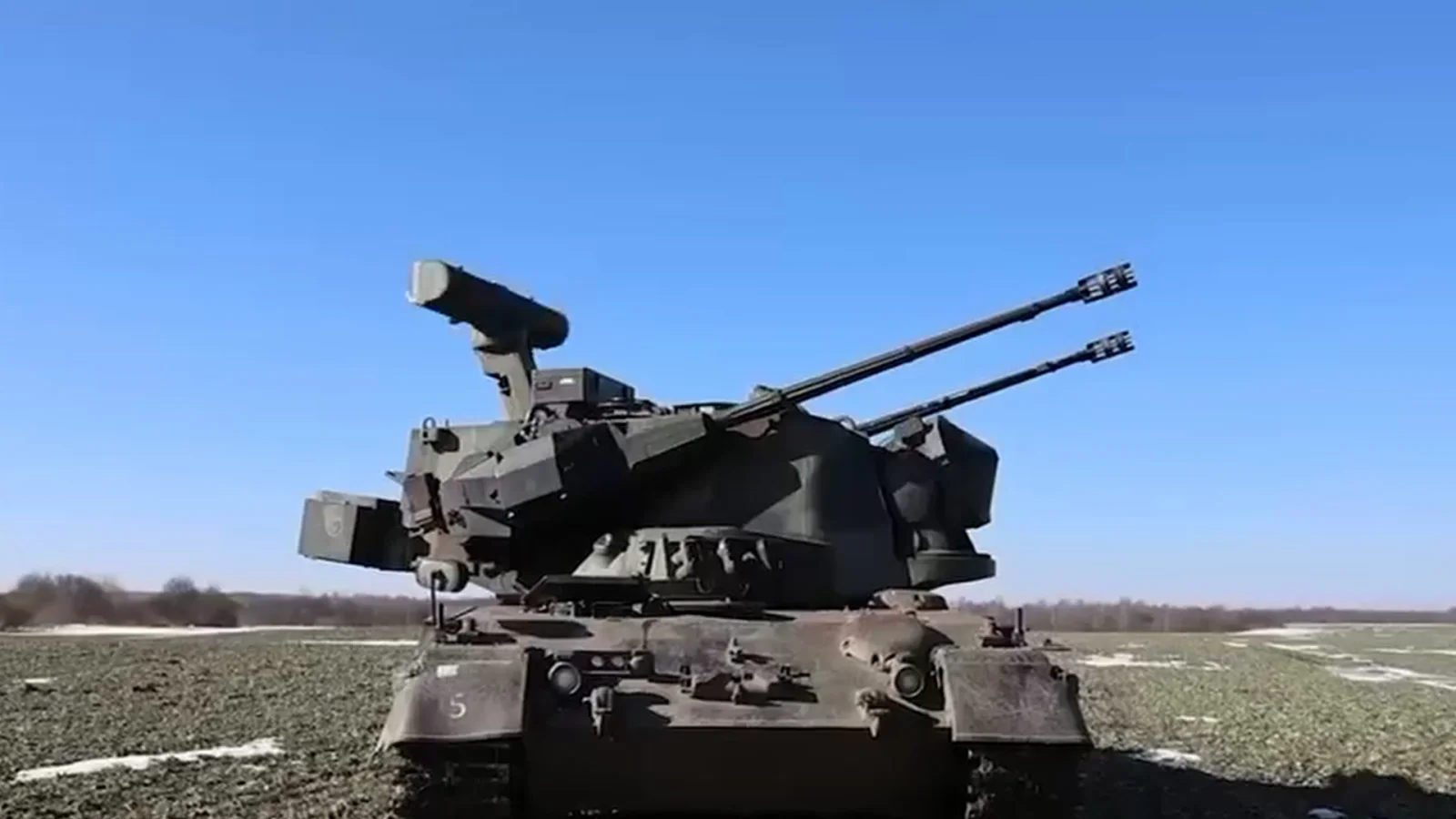
| Mount / turret | Not recorded | Not recorded | Not recorded | Two Oerlikon 35 mm autocannons (90 calibres) on either side of a turret, elevation almost 90°[3] |
|---|
| Sensors | Not recorded | Not recorded | Not recorded | Laser rangefinder on B2L and later variants[3] |
|---|
| Mobility | Not recorded | Not recorded | Not recorded | Tracked, 47.5 t; 830 PS MTU multi-fuel engine; 65 km/h; 550 km road range[3] |
|---|
| Characteristics |
|---|
| Maximum range (km) | 8 kmSecondary reference[2] | 20 kmSecondary reference[2] | 16 kmSecondary reference[2][3] | ≈ 5.5 kmSecondary reference[3] |
|---|
| Detection range (km) | 18 kmSecondary reference[2] | Not recorded | 32 kmSecondary reference[2] | ≈ 15 kmSecondary reference[3] |
|---|
| Maximum altitude (km) | 3.5 kmSecondary reference[2] | 10 kmSecondary reference[2] | 10 kmSecondary reference[2][3] | Not recorded |
|---|
| Speed (m/s) | ≈ 900 m/sSecondary reference[3] | Up to 1,300 m/sSecondary reference[3] | Up to 1,000 m/sSecondary reference[3] | Not recorded |
|---|
| Calibre (mm) | 30 mmSecondary reference[2] | Not recorded | Not recorded | 35 mmSecondary reference[3][2] |
|---|
| Mass (kg) | 34,000 kgSecondary reference[2] | 75.7 kgSecondary reference[2] | 165 kgSecondary reference[2][3] | 47,500 kgSecondary reference[3] |
|---|
| Length (m) | Not recorded | 3.3 mSecondary reference[2] | 2.9 mSecondary reference[3] | Not recorded |
|---|
| Ready rounds / magazine | 8 ready 9M311 missiles (4 on the original 2S6)Official document[1][2] | 12 ready missilesSecondary reference[2][3] | 8 × 9M331 or 16 × 9M338Secondary reference[2] | 640 anti-aircraft + 40 anti-armour rounds; 550 rounds/min per gunSecondary reference[3] |
|---|
| Guidance / cueing | Radio command guidance from radar or optical trackingSecondary reference[2][3] | Radio command guidance from radar or optical trackingSecondary reference[2] | Radio command guidance from the vehicle's tracking radarSecondary reference[3] | S-band search radar and Ku-band tracking radarSecondary reference[3] |
|---|
| Effect | Not recorded | 20 kg blast-fragmentation warhead; plus two 30 mm cannon (4 km)Secondary reference[2] | Not recorded | 35 x 228 mm HEI-T and FAPDS roundsManufacturer claim[2][3] |
|---|
| Launch / operating platform | GM-352M tracked chassis (GM-5975 on the Tunguska-M1)Secondary reference[2][1] | Wheeled truck or tracked chassis (72V6 combat vehicle)Official document[1][3] | Tracked, wheeled (Tor-M2K) or articulated Arctic (Tor-M2DT) vehicleSecondary reference[2] | Tracked armoured vehicle, crew of 3Secondary reference[3] |
|---|
| Programme |
|---|
| Operators (in service / ordered) | 5: Russia, Belarus, India, Morocco, Ukraine[1][2] | 8: Russia, United Arab Emirates, Algeria, Iraq, Serbia, Ethiopia, Libya, Saudi Arabia[1][3] | | |
|---|
| Platforms and integration | Not recorded | KAMAZ-6560 8×8 truck (in service), MAN SX45 truck (in service), Pantsir-SA on articulated tracked Vityaz (in service), Pantsir-M naval module (in service)[3] | Tor-M2K on MZKT-6922 wheeled chassis (in service), Tor-M2DT on DT-30 articulated tracked chassis (in service), Tor-M2KM module on frigate Admiral Grigorovich (tested)[2][3][5] | Not recorded |
|---|
| Public contracts | Not recorded | Not recorded | Not recorded | 3 recorded. Latest: 2024-12 · Ukraine (Ministry of Defence, funded by Germany) · 180,000 rounds · high double-digit million euro range[2][4][5][6] |
|---|
| Production / deliveries | 2012–2017: 21 Tunguska-M1 delivered[1] | to date: more than 200 built cumulative[3] | 2022 onward: at least 15 Tor-M2 systems to Belarus delivered, 2019: sixth Tor-M2 battalion set for Russia delivered, 2018-11: 12 Tor-M2DT delivered[2][3][5] | 2022–April 2025: 60 vehicles and 330,000 rounds to Ukraine (Germany) delivered, 1976 onward: 420 for Germany (195 B2, 225 B2L) cumulative[1][3] |
|---|
| Latest development | 2003: Tunguska-M1 enters service[1][3] | 2025-08: Pantsir-SMD reaches the troops[4] | 2025-11-25: More Tor-M2 for Belarus[4] | 2024-01-17: Further vehicles pledged[3] |
|---|