| Role |
|---|
| Primary category | Interceptor Missiles | Interceptor Missiles | Interceptor Missiles | Interceptor Missiles |
|---|
| Subcategory | Long-range air-defense missiles | Long-range air-defense missiles | Long-range air-defense missiles | Long-range air-defense missiles |
|---|
| Interception mechanism | | Blast-fragmentation, Proximity fuze, Hit-to-kill | | |
|---|
| Target types | Crewed aircraft, Cruise missiles, Ballistic missiles, One-way attack UAVs | Ballistic missiles, Cruise missiles, Crewed aircraft | Crewed aircraft, Cruise missiles, Ballistic missiles | Crewed aircraft, Cruise missiles, One-way attack UAVs |
|---|
| Platform | Vehicle-mounted | Trailer | Vehicle-mounted | Vehicle-mounted |
|---|
| Status | In service | In service | In service | In service |
|---|
| Developer · Country | Eurosam (MBDA and Thales), MBDA, Thales · France and Italy | RTX (Raytheon), Lockheed Martin · United States | Almaz-Antey · Russia | Roketsan, ASELSAN, TÜBİTAK SAGE · Türkiye |
|---|
| Propulsion | Solid rocket motor | Solid rocket motor | Solid rocket motor | Solid rocket motor |
|---|
| Reusability | Single-use | Single-use | Single-use | Single-use |
|---|
| Technical profile |
|---|
| Seeker | Active electromagnetic (radar) seeker for the final phase[4] | GEM-T: semi-active radar seeker (track-via-missile); PAC-3 family: Ka-band active radar[3] | Semi-active radar homing on all missiles; active radar homing on 40N6E, 9M96E and 9M96E2[2] | Active radar seeker (Product-1); Product-2 seeker not disclosed[3] |
|---|
| Guidance | Inertial guidance with refreshed target data; PIF-PAF aerodynamic plus direct-thrust control for high-g manoeuvres[4] | GEM-T: track-via-missile command guidance from the ground radar; GaN transmitter upgrade from 2018[3] | Not recorded | Inertial with data-link and satellite-positioning support (Product-1)[3] |
|---|
| Warhead | Not recorded | GEM-T: blast-fragmentation, about 84 kg (estimate); PAC-3 family: hit-to-kill[3] | Not recorded | Not recorded |
|---|
| Fuze | Not recorded | GEM-T: RF proximity fuze optimised against ballistic missiles[3] | Not recorded | Not recorded |
|---|
| Motor / propulsion | Two-stage solid propellant[4] | GEM-T: single-stage solid-propellant rocket motor[3] | Not recorded | Not recorded |
|---|
| Data link | Not recorded | Not recorded | Not recorded | Missile data link for midcourse updates; Product-2 demonstrated in-flight retargeting[3] |
|---|
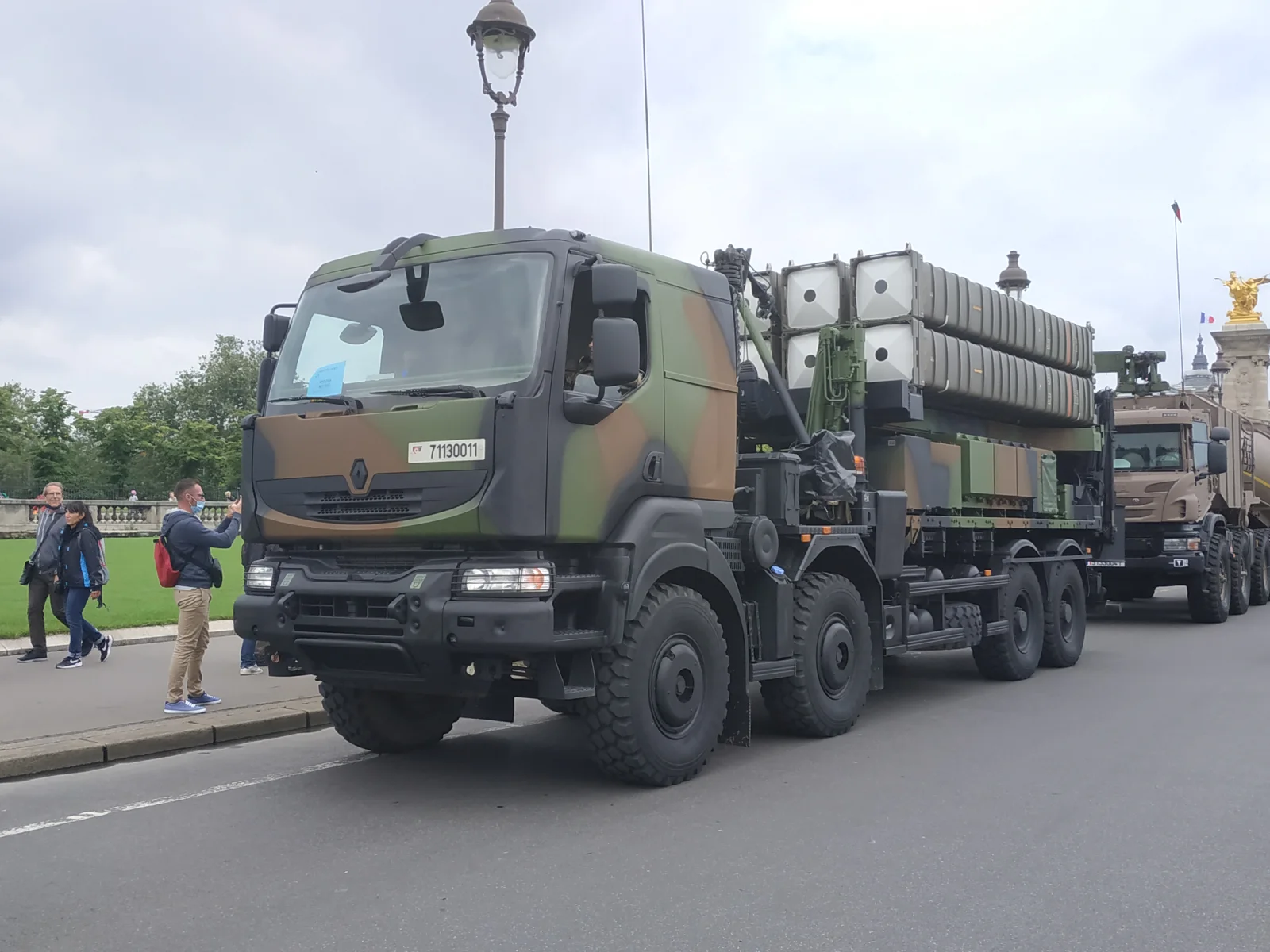
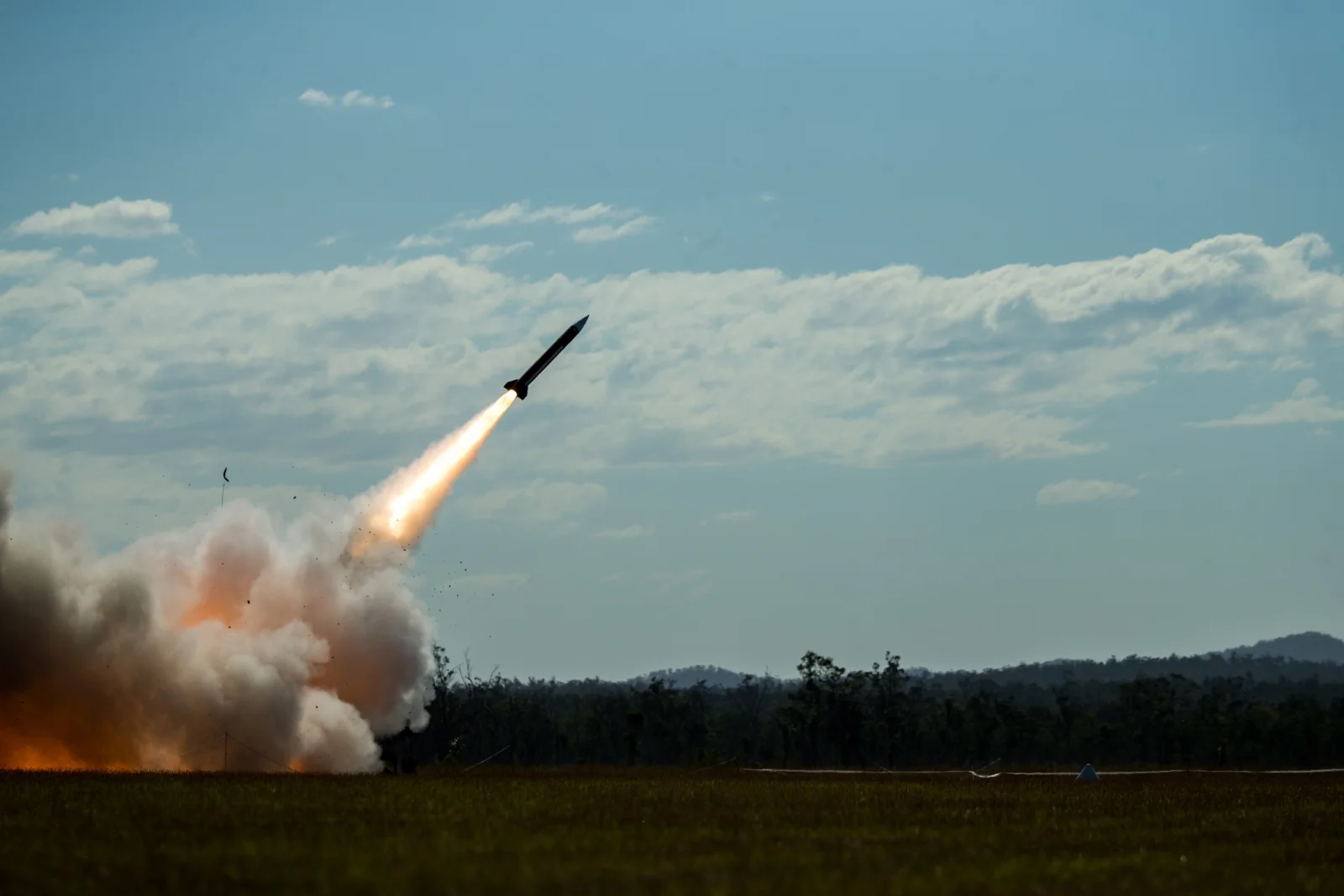
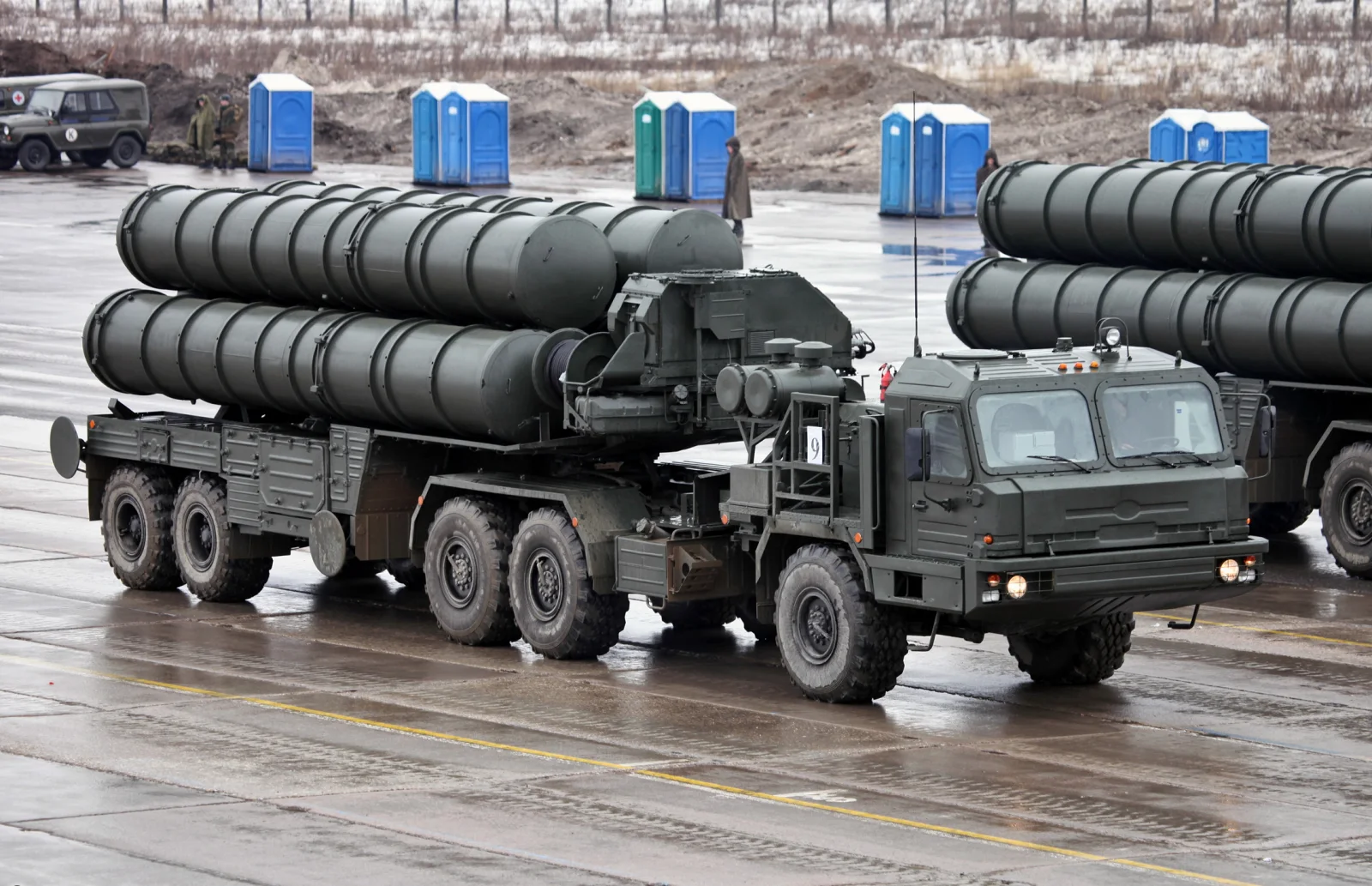
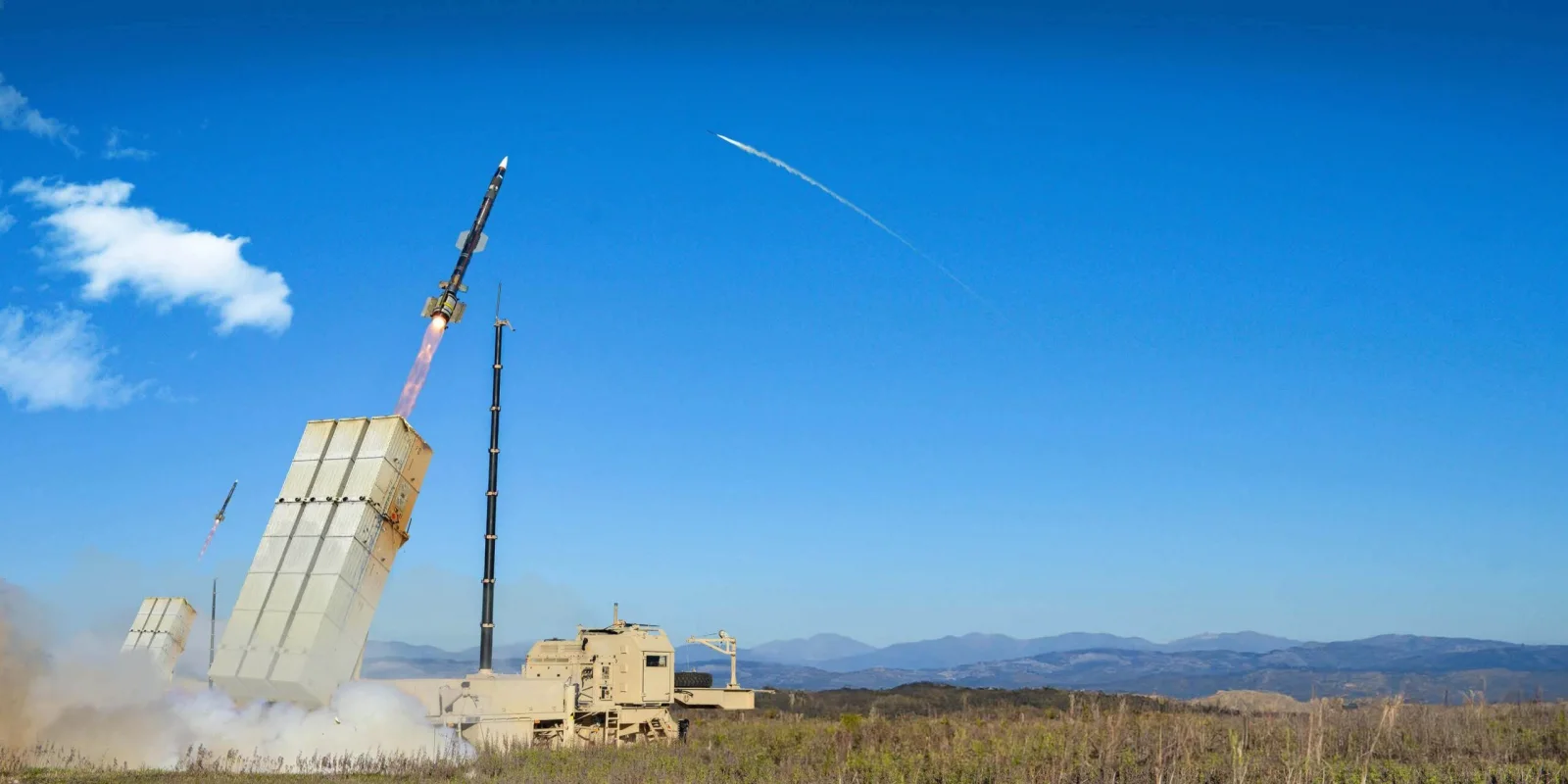
| Launcher | Truck-mounted vertical launcher with 8 ready-to-fire Aster missiles[3][5] | Trailer launchers: M901 (4 PAC-2), M902 (16 PAC-3), M903 (12 PAC-3 MSE or mixed loads)[3] | 5P85TE2 self-propelled and 5P85SE2 trailer transporter-erector-launchers[2] | Shared 6,450 × 850 × 800 mm canister; vertical and inclined firing with 360° coverage[2][3] |
|---|
| Rounds per launcher | 8 per launcher; up to 6 launchers per SAMP/T NG fire unit[5] | Not recorded | Usually 4 missiles per launcher; one system of 8 battalions controls up to 72 launchers and 384 missiles[2] | Not recorded |
|---|
| Fire control / radar | SAMP/T NG: Thales GF 300 AESA radar (360°, beyond 350 km vs aerodynamic targets) or Leonardo Kronos GMHP[1][5] | AN/MPQ-65A AESA radar and engagement control station; LTAMDS 360° radar replacing it[3][4] | 55K6E command post; 91N6E acquisition radar; 92N6E multi-function radar (20 targets); 96L6E high-altitude radar[2] | ASELSAN fire-control, radar and communications, with multiple simultaneous engagements; distributed architecture[2][3] |
|---|
| Reaction / readiness | Not recorded | Not recorded | 5 minutes from the march (reference-work table)[2] | Not recorded |
|---|
| Crew | 14 per four-launcher SAMP/T battery; about 20 for SAMP/T NG[3] | Three in the engagement control station (TCO, TCA, communications specialist)[3] | Not recorded | Not recorded |
|---|
| Characteristics |
|---|
| Maximum range (km) | Up to 120 kmSecondary reference[3] | ≈ 160 kmSecondary reference[3] | 380–400 kmSecondary reference[2] | At least 100 kmSecondary reference[2][3] |
|---|
| Detection range (km) | Not publicly disclosed | Not recorded | Up to 340 kmSecondary reference[2] | Not recorded |
|---|
| Maximum altitude (km) | Up to 25 kmSecondary reference[3] | ≈ 20 kmSecondary reference[3] | ≈ 30 kmSecondary reference[2] | At least 20 kmSecondary reference[2] |
|---|
| Speed (m/s) | ≈ 1,540 m/sSecondary reference[3] | 1,190 m/sSecondary reference[3] | Not recorded | Not recorded |
|---|
| Mass (kg) | 450 kgManufacturer claim[4] | ≈ 900 kgSecondary reference[3] | Not recorded | Not recorded |
|---|
| Length (m) | 4.9 mManufacturer claim[4] | ≈ 5.3 mSecondary reference[3] | Not recorded | 5.4 mSecondary reference[3] |
|---|
| Ready rounds / magazine | 8 Aster 30 per launcher; 4–6 launchers per batterySecondary reference[3] | 4 GEM-T (M901), 16 PAC-3 (M902) or 12 PAC-3 MSE (M903) per launcherSecondary reference[3] | Usually 4 missiles per launcher; 2 with 40N6Secondary reference[2] | Not recorded |
|---|
| Guidance / cueing | SAMP/T NG radar: Thales GF300 or Italian Kronos GMHPOfficial document[1][3] | GEM-T: semi-active radar homing; PAC-3 family: Ka-band active radar seekerSecondary reference[3] | Semi-active or active radar homing, depending on missileSecondary reference[2] | Not recorded |
|---|
| Effect | Not recorded | GEM-T: blast-fragmentation with proximity fuze; PAC-3: hit-to-killSecondary reference[3][2] | Not recorded | Not recorded |
|---|
| Launch / operating platform | Truck-mounted vertical launcherSecondary reference[3] | Trailer-mounted launchers in a battery with radar and engagement control stationSecondary reference[3] | 5P85TE2 / 5P85SE2 transporter-erector-launchersSecondary reference[2] | Vertical launcher; 6,450 × 850 × 800 mm canisterSecondary reference[3] |
|---|
| Programme |
|---|
| Operators (in service / ordered) | 5: France, Italy, Singapore, Ukraine, Denmark[1][2][3] | 20: United States, Germany, Greece, Japan, Jordan, Kuwait, Netherlands, Poland, Qatar, Romania, Saudi Arabia, South Korea +8 more[3] | 6: Russia, China, India, Türkiye, Belarus, Algeria[1][2] | |
|---|
| Platforms and integration | SAMP/T NG with GF 300 radar (ordered), Kronos Grand Mobile High Power radar (ordered), VL MICA dual-layer configuration (in development), NATO deployment at Konya (in service)[1][2][3][5] | LTAMDS radar (tested), AN/MPQ-65A radar (in service), PAC-3 MSE (M903 launcher) (in service), COMLOG GEM-T production, Schrobenhausen (in development)[1][3][4] | 92N6E multi-function radar (in service), 91N6E acquisition radar (in service), 96L6E high-altitude detector (in service), 55K6E command post (Ural-5323) (in service)[2] | Steel Dome (Çelik Kubbe) layered air defence (in service), SİPER-1D naval vertical launch system (tested)[3] |
|---|
| Public contracts | 3 recorded. Latest: 2026-10-21 · France (DGA, through OCCAR) · 4 sections[2][3][6][7] | | 1 recorded. Latest: 2018-10-05 · India[2][3] | Not recorded |
|---|
| Production / deliveries | By 2030: 8 SAMP/T NG sections for France planned rate[2] | Current (reported 2026): about 20 GEM-T a month, planned to reach 35 a month by end 2027 planned rate[3] | By 2020: 56 battalions planned rate, 2007–2015: 18 battalions planned rate[2] | Not recorded |
|---|
| Backlog | Not recorded | about 1,500 GEM-T missiles contracted, with near-term demand for 1,000 more (as of 2026)[3] | Not recorded | Not recorded |
|---|
| Latest development | 2027: First SAMP/T NG due[1] | 2026-04-14: GEM-T for Ukraine and Schrobenhausen plant[1] | 2025-05: Indian claims against Pakistan[2] | 2026-10-29: In-flight retargeting (Product-2)[3] |
|---|