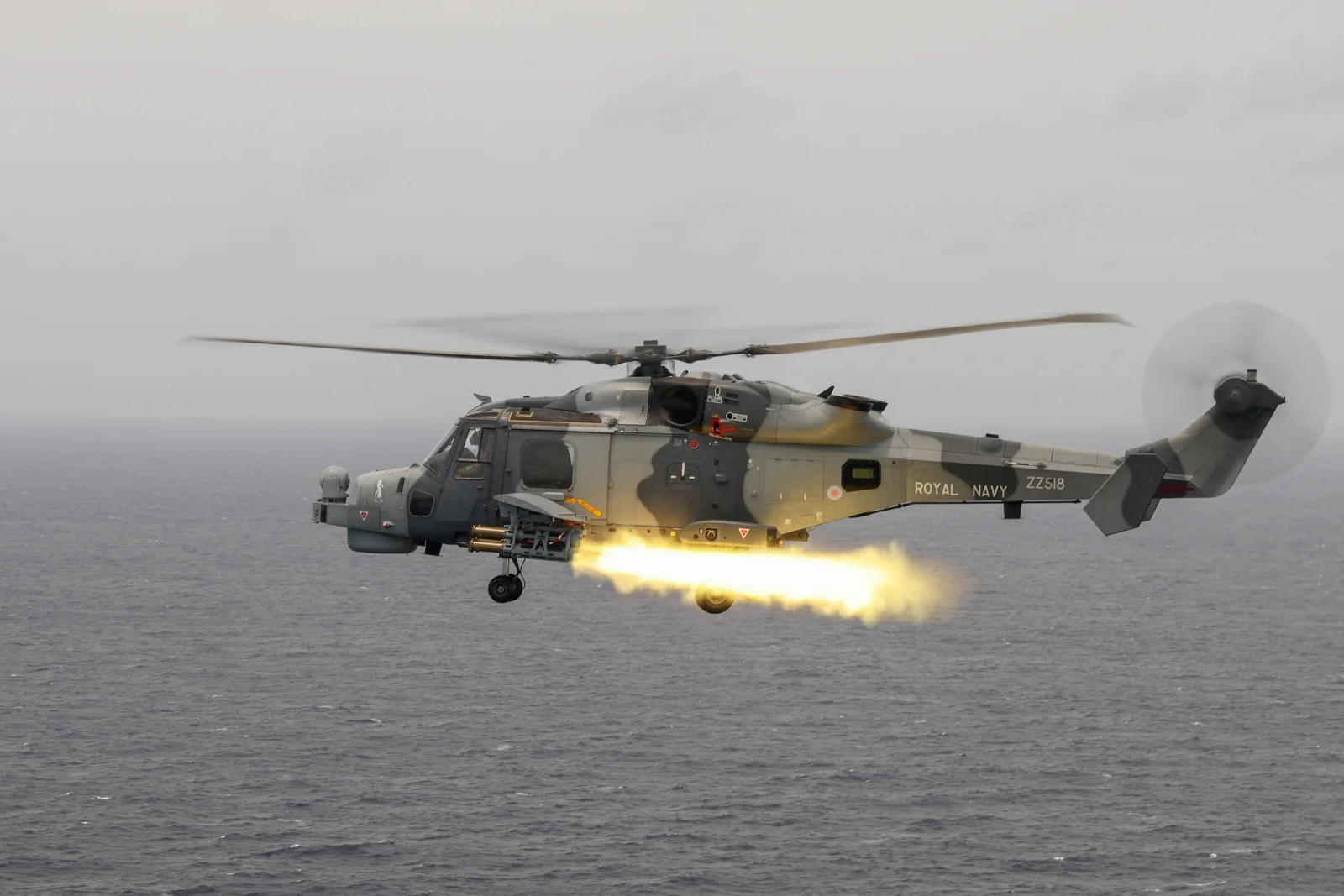
| Role |
|---|
| Primary category | Interceptor Missiles | Interceptor Missiles | Interceptor Missiles | Interceptor Missiles |
|---|
| Subcategory | Very-short-range air-defense missiles | Very-short-range air-defense missiles | Very-short-range air-defense missiles | Counter-UAS missiles |
|---|
| Interception mechanism | Blast-fragmentation, Proximity fuze | Blast-fragmentation, Proximity fuze | Direct impact | Blast-fragmentation, Proximity fuze |
|---|
| Target types | Crewed aircraft, Small UAS, Cruise missiles | Crewed aircraft, Small UAS, One-way attack UAVs, Cruise missiles, Surface vessels | Crewed aircraft, Small UAS | Small UAS, One-way attack UAVs, Crewed aircraft, Surface vessels |
|---|
| Platform | Man-portable, Vehicle-mounted, Shipborne | Man-portable, Vehicle-mounted, Shipborne, Airborne | Man-portable, Vehicle-mounted | Man-portable, Vehicle-mounted, Airborne, Shipborne |
|---|
| Status | In service | In service | In service | In service |
|---|
| Developer · Country | Saab · Sweden | MBDA · France | Thales · United Kingdom | Thales · United Kingdom |
|---|
| Propulsion | Solid rocket motor | Solid rocket motor | Solid rocket motor | Solid rocket motor |
|---|
| Reusability | Single-use | Single-use | Single-use | Single-use |
|---|
| Technical profile |
|---|
| Seeker | No homing seeker: the missile rides the laser beam projected by the operator's sight[1][3] | Imaging infrared (matrix) seeker with image processing; the reference work describes a cooled two-colour IR seeker (2–4 and 3–5 µm) for the family[1][2] | No homing seeker: each dart reads the laser information field projected by the aiming unit[3] | Royal Navy Martlet has no seeker and rides the sighting laser; SAL, IR and IIR terminal-homing modes are listed for other variants[3] |
|---|
| Guidance | Laser beam riding; RBS 70 NG sight adds an automatic target tracker and built-in thermal night sight[1][3][4] | Fire-and-forget; proportional navigation with a gyro reference[1][2] | Laser beam riding (SACLOS); the aiming unit projects two modulated laser beams forming a 2-D matrix on the target[3] | Laser beam riding from the operator's sight (mode A); an INS+GPS mode is also listed[3] |
|---|
| Warhead | BOLIDE: 1.1 kg, about 3,000 tungsten spheres plus a shaped charge; Bolide 2 has a larger warhead[2][3] | 2.95 kg high-explosive warhead with high-density tungsten balls[2] | Three tungsten-alloy darts, about 0.9 kg each, each with about 450 g of PBX-98 explosive[3] | 3 kg blast-fragmentation and shaped-charge warhead[3] |
|---|
| Fuze | Adaptive proximity fuze with three selectable modes: off, normal and small target[3] | Laser proximity fuze and impact fuze[1][2] | Delayed-action impact fuze: each dart penetrates the target before detonating[3] | Laser proximity (active) or impact[3] |
|---|
| Motor / propulsion | Booster and sustainer with smokeless solid propellant[3] | Two-stage solid rocket motor with an initial booster[2] | Two stages: 'Brambling' launch motor and 'Titus' boost motor (cast double-base propellant)[3] | Two-stage solid propellant motor; above Mach 1.5[3] |
|---|
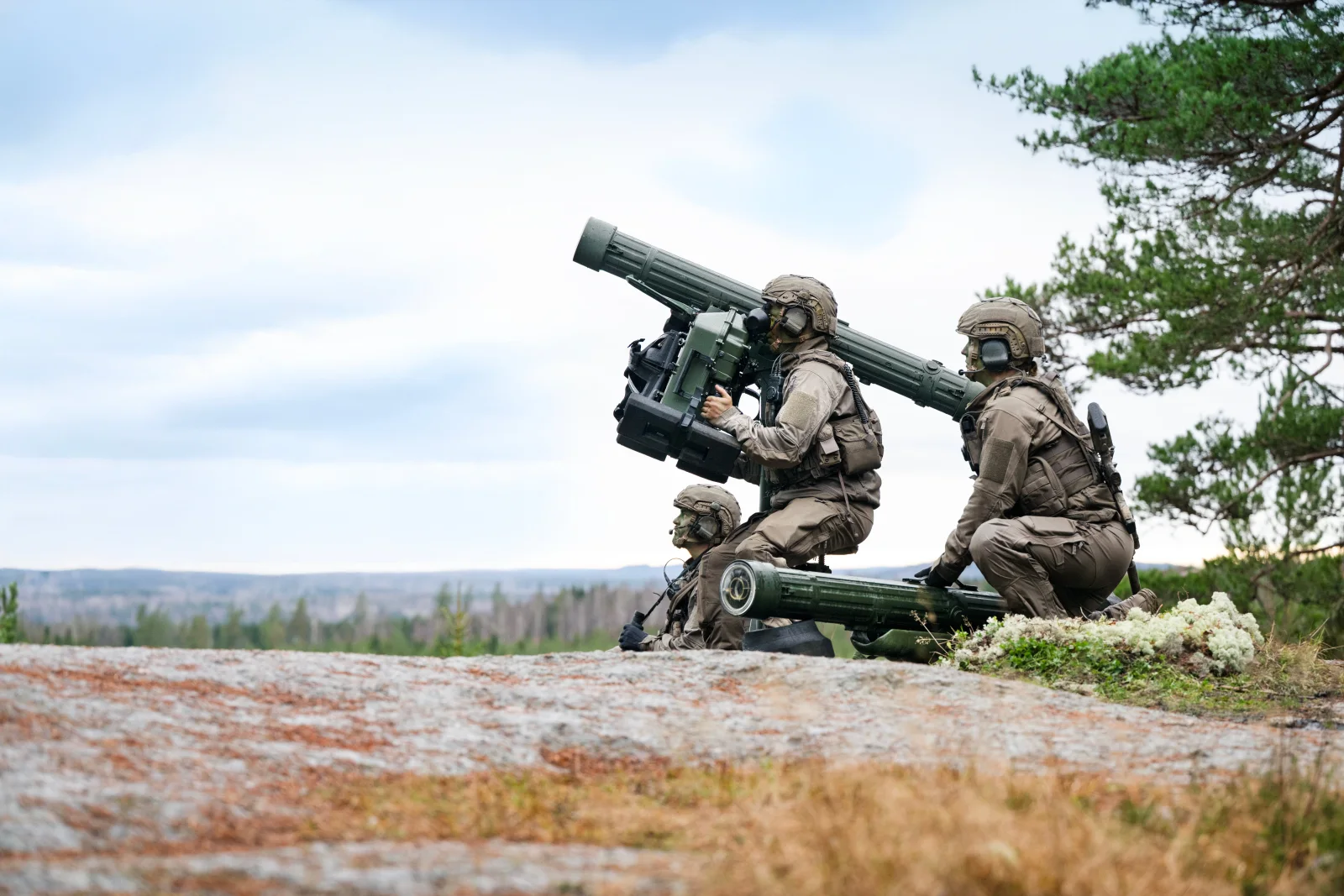
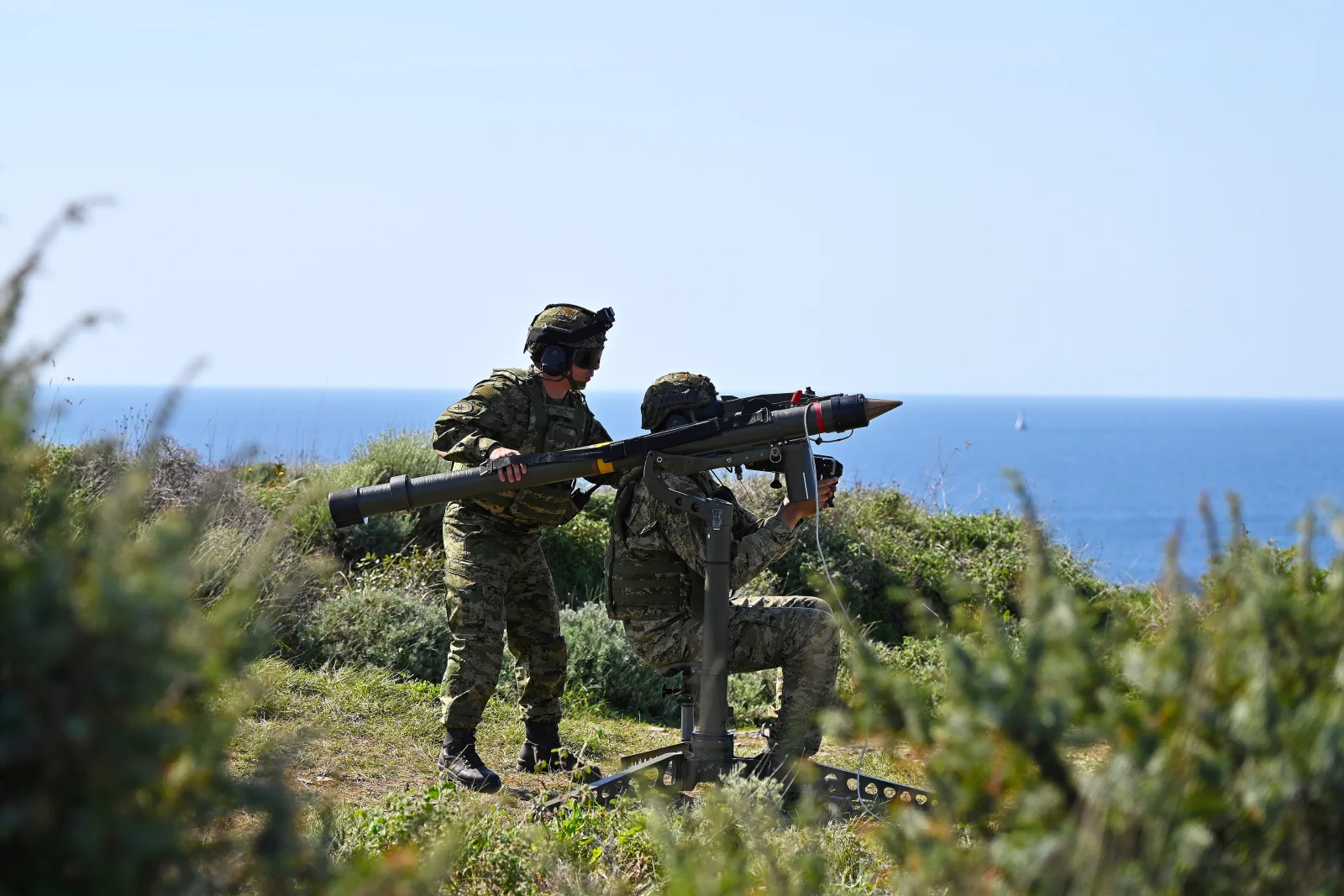
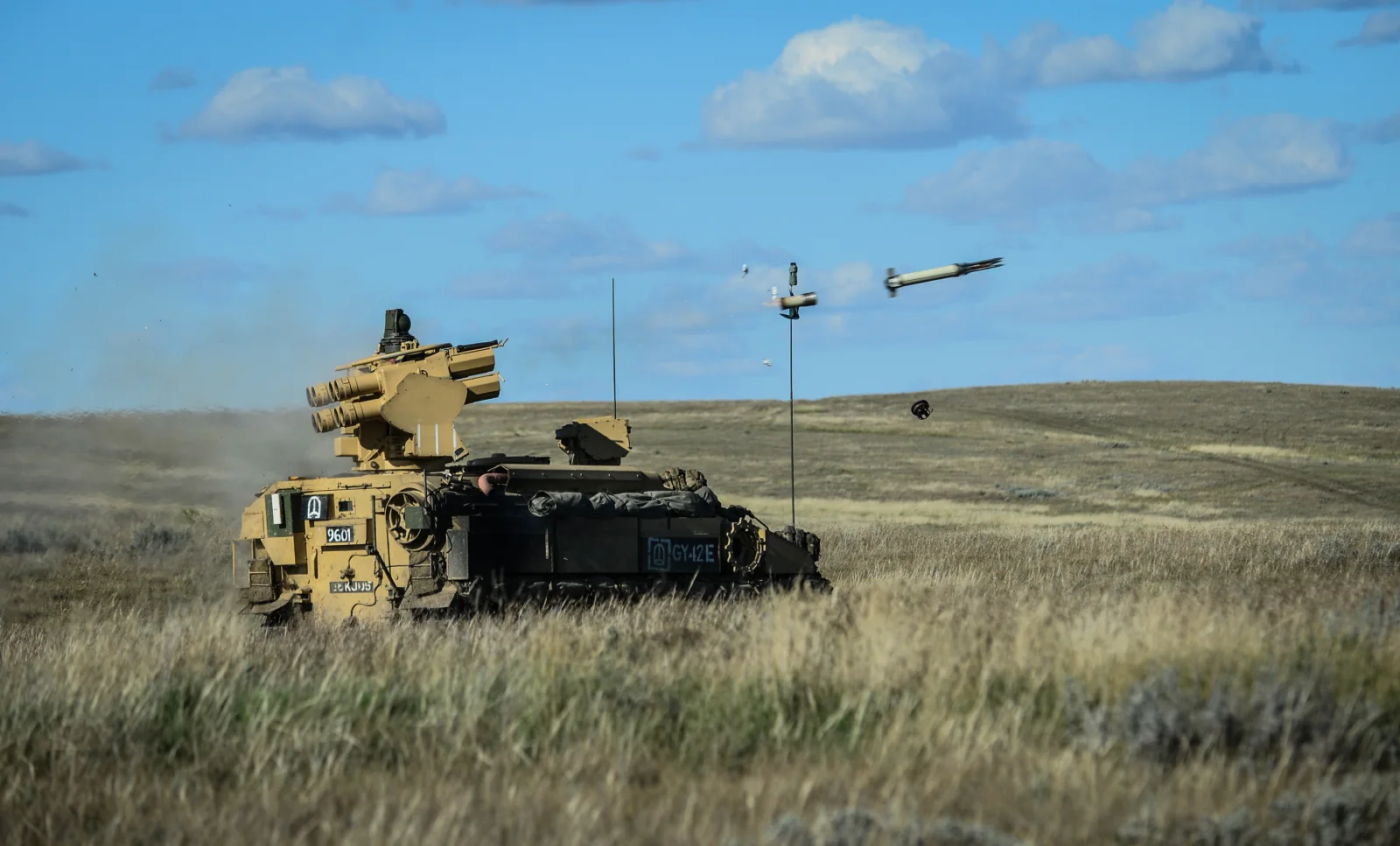
| Launcher | Tripod stand with sight; RBS 70 NG remote weapon station on vehicles in the MSHORAD configuration[1][3] | MANPADS tripod; ATLAS (2), ALBI (2), ASPIC (4), MPCV (4) land mounts; SIMBAD (2), TETRAL (4), SADRAL (6) naval; ATAM helicopter module (2)[2] | Shoulder launcher; Lightweight Multiple Launcher (3 ready); Stormer HVM roof launcher; RapidRanger quad launcher on URO VAMTAC[2][3] | Wildcat weapon wings (up to 20 Martlet); shoulder and standalone launchers; Stormer; RAF Rapid Sentry; Ukrainian-built launchers[3][4] |
|---|
| Rounds per launcher | Not recorded | Not recorded | Stormer HVM: 8 ready plus 8 stowed inside; LML: 3; RapidRanger: 4[3] | Wildcat: up to 20 Martlet, or 10 Martlet with 2 Sea Venom[3] |
|---|
| Fire control / radar | MSHORAD pairs the launcher with a Giraffe 1X radar and C2; Ukraine's units were supplied with Giraffe 75 radars[3] | MCP / IMCP coordination post can control up to eleven firing units[2] | Not recorded | Not recorded |
|---|
| Reaction / readiness | Deployment in 45 s; reload in under 5 s as MANPADS[1] | About 5 s total reaction time; seeker gyro spins up in 2 s[2] | Not recorded | Not recorded |
|---|
| Crew | Not recorded | Two at the MANPADS firing post (commander and shooter)[2] | Not recorded | Not recorded |
|---|
| Characteristics |
|---|
| Maximum range (km) † | At least 9 km† Maximum engagement range as claimed by the developerManufacturer claim[1] | Up to 8 km† Range reported in secondary sourcesSecondary reference[2] | Up to 7 km† Range reported in secondary sourcesSecondary reference[3] | At least 6 km† Maximum engagement range as claimed by the developerManufacturer claim[2][3] |
|---|
| Maximum altitude (km) | 5 kmManufacturer claim[1] | Up to 6 kmSecondary reference[2] | 7 kmSecondary reference[3] | Not recorded |
|---|
| Speed (m/s) | Mach 2 (BOLIDE)Manufacturer claim[1] | ≈ 930 m/sSecondary reference[2] | Above Mach 3; over 1 km in under a secondOfficial document[1][3] | Above Mach 1.5Secondary reference[3] |
|---|
| Mass (kg) | Not recorded | Up to 20 kgManufacturer claim[1] | 14 kgSecondary reference[3] | |
|---|
| Length (m) | 1.32 mSecondary reference[3] | 1.88 mManufacturer claim[1] | 1.4 mSecondary reference[3] | 1.3 mSecondary reference[3] |
|---|
| Guidance / cueing | Laser beam riding from the operator's sightManufacturer claim[1] | Imaging infrared (matrix) seeker, fire-and-forgetManufacturer claim[1] | Laser beam riding (SACLOS)Secondary reference[3] | Laser beam ridingSecondary reference[3] |
|---|
| Effect | Tungsten-sphere fragmentation and shaped charge; adaptive proximity fuzeSecondary reference[3] | HE warhead with tungsten balls; laser proximity and impact fuzeManufacturer claim[1][2] | Three tungsten-alloy darts, each with an explosive charge; impact-delay fuzeSecondary reference[3] | Blast-fragmentation; laser proximity fuzeSecondary reference[3] |
|---|
| Launch / operating platform | Tripod stand; vehicle and remote weapon station mountsManufacturer claim[1] | Tripod (MANPADS), ATLAS vehicle mounts, Simbad-RC naval mount, helicoptersSecondary reference[2][1] | Shoulder launcher, lightweight multiple launcher, Stormer vehicleOfficial document[2][3] | Stormer and other SHORAD vehicles, shoulder launchers, Wildcat helicopter (Martlet)Official document[1] |
|---|
| Programme |
|---|
| Operators (in service / ordered) | 6: Sweden, Latvia, Lithuania, Czech Republic, Ukraine, Australia[3][4][5] | 37: Austria, Botswana, Brazil, Brunei, Chile, Colombia, Croatia, Cyprus, Ecuador, Estonia, France, Georgia +25 more[2][4][5][6] | 8: United Kingdom, South Africa, Indonesia, Thailand, Malaysia, Ukraine, India, Portugal[2][3][4] | 5: United Kingdom, Ukraine, Saudi Arabia, Indonesia, India[1][3][4][6] |
|---|
| Platforms and integration | RBS 70 NG MSHORAD (ordered), MSHORAD on JLTV (ordered), RBS 70 MSHORAD vehicles (24) (ordered), Giraffe 1X radar (ordered), Giraffe 75 radar (in service)[3][5] | ATLAS / ATLAS RC vehicle mount (in service), SIMBAD-RC naval mount (in service), SADRAL and TETRAL naval launchers (in service), Skjold-class corvettes (in service), ATAM helicopter launcher (Tiger, Gazelle, Rooivalk) (in service), HAL Prachand and Rudra helicopters (in service)[2][8] | Stormer HVM tracked vehicle (in service), Lightweight Multiple Launcher (LML) (in service), RapidRanger on URO VAMTAC ST5 (ordered), ForceShield batteries (in service)[2][3] | AW159 Wildcat HMA2 (Martlet) (in service), Stormer SHORAD vehicle (in service), Rapid Sentry (RAF Regiment) (in service), Shikra air defence system (in service), RapidRanger on URO VAMTAC (ordered), Ukrainian launchers and C2 vehicles (in development), Ship gun mount with five-missile launcher (HMS Sutherland trial) (tested), Flyby Jackal drone (tested)[1][3][4] |
|---|
| Public contracts | 6 recorded. Latest: 2026-08-28 · Finland (Finnish Defence Forces Logistics Command) · SEK 1.2 billion[3][4][5][8][9][10][11] | 4 recorded. Latest: 2025-11-25 · Romania (Ministry of National Defence) · 231 MANPAD systems; 934 missiles · €625,591,000 excluding VAT[4][5][6][8][9][10][11] | 2 recorded. Latest: 2025-02-10 · India (Ministry of Defence, for the Indian Army)[1][4][5] | |
|---|
| Production / deliveries | Not recorded | early 2023: 20 → 30 a month planned rate, 2024: 40 a month produced, 2022: about 10 a month produced[2][7] | 1986–to date: 7,000 built cumulative[3] | 2025 onward: three times the pre-contract rate planned rate[4][5] |
|---|
| Latest development | 2026-11-13: First Geran-5 downed near Kyiv[6][7] | 2025-06-17: Upgraded Mistral 3 fully qualified[3] | 2025-02: Indian production partnership[4] | 2025-10: Martlet full operating capability[3] |
|---|