| Role |
|---|
| Primary category | Detection, Tracking & Command | Guns & Interceptor Ammunition | Detection, Tracking & Command | Electro-Optical Systems |
|---|
| Subcategory | Radar | Gun-based interception systems | Radar | Long-range EO/IR surveillance |
|---|
| Interception mechanism | Sensing only (no effect) | Direct impact | Sensing only (no effect) | Sensing only (no effect) |
|---|
| Target types | Small UAS, One-way attack UAVs, Rockets, artillery, mortars | Cruise missiles, Rockets, artillery, mortars, Small UAS, One-way attack UAVs, Crewed aircraft, Surface vessels | Small UAS, One-way attack UAVs, Crewed aircraft | Small UAS, Crewed aircraft |
|---|
| Platform | Fixed site, Vehicle-mounted | Shipborne, Trailer, Fixed site | Vehicle-mounted, Fixed site, Shipborne | Fixed site, Man-portable |
|---|
| Status | In service | In service | In production | In service |
|---|
| Developer · Country | RTX (Raytheon) · United States | RTX (Raytheon) · United States | Echodyne · United States | Anduril Industries · United States |
|---|
| Propulsion | Not applicable | Not applicable | Not applicable | Not applicable |
|---|
| Reusability | Not applicable | Not applicable | Not applicable | Not applicable |
|---|
| Technical profile |
|---|
| Radar band | | Not recorded | Ku band, 15.4–16.6 GHz; pulse-Doppler[1][2] | Not recorded |
|---|
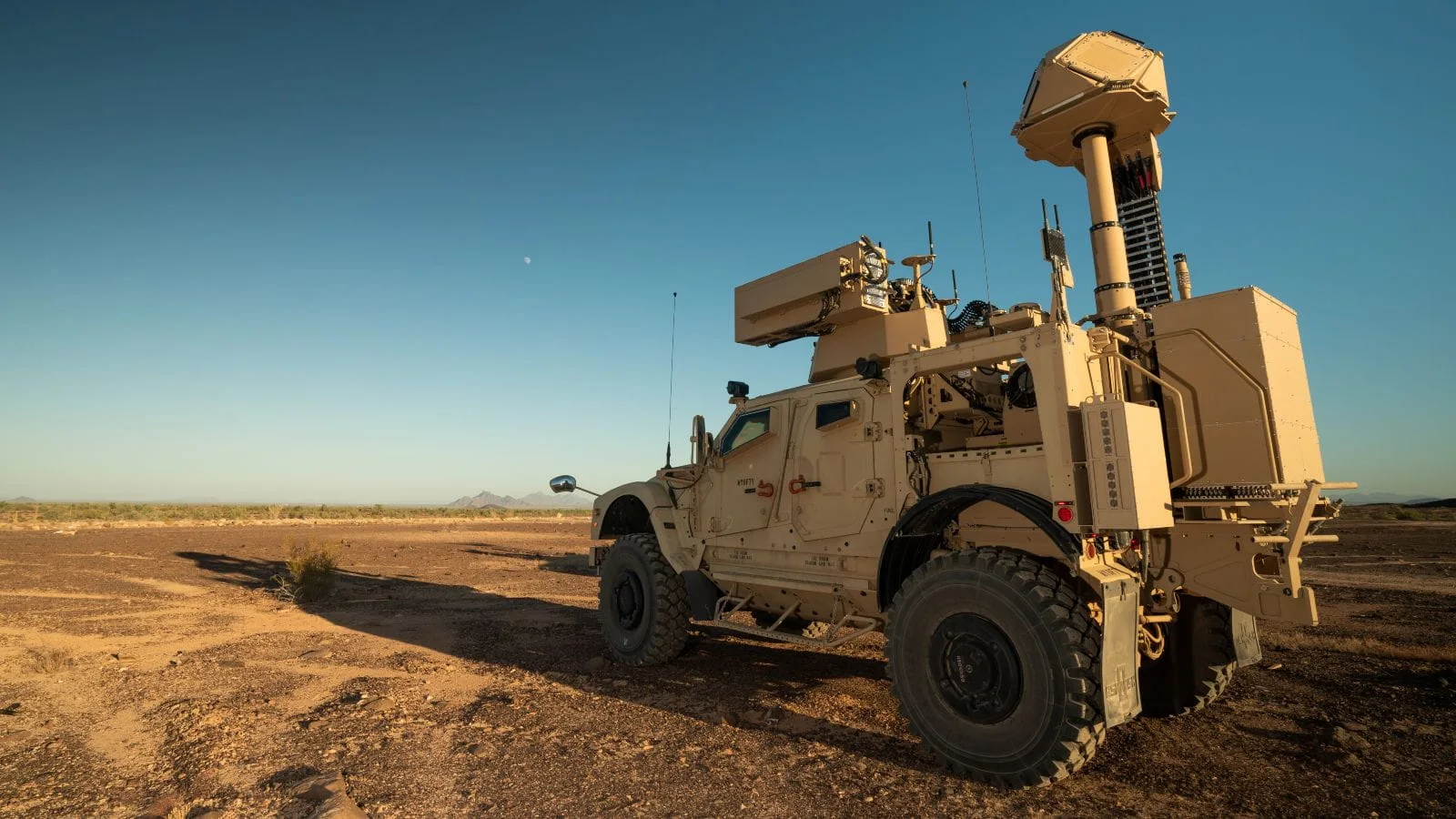
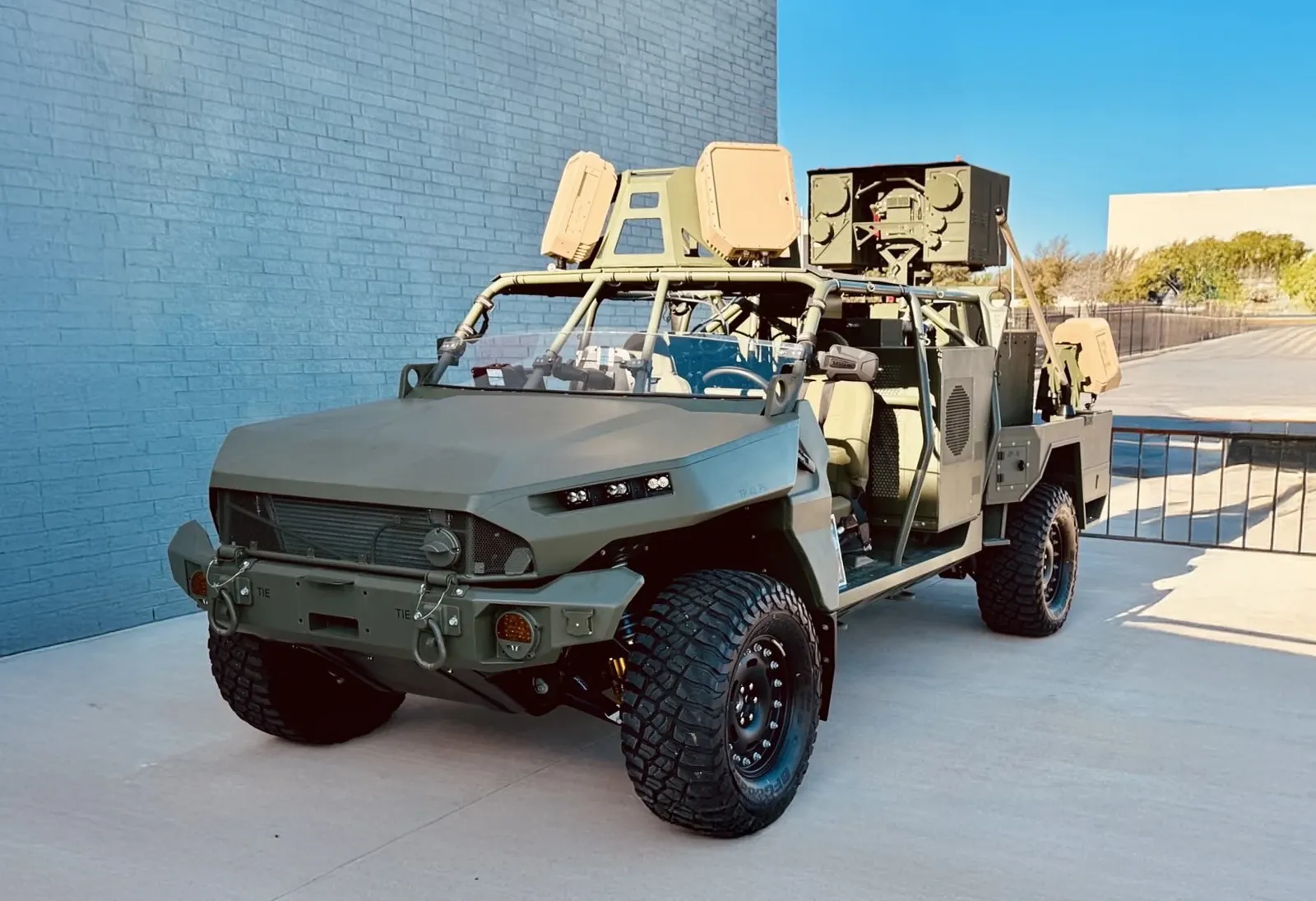
| Antenna | Active electronically scanned array (AESA)[1][5] | Not recorded | Electronically scanned MESA (metamaterial) array with cognitive, software-defined beam scheduling[3][4] | Not recorded |
|---|
| Coverage | 360° persistent detection, identification and tracking; precision fire control for effectors[1][5] | Not recorded | 130° azimuth × 90° elevation per radar; 20 km instrumented range; under 0.5° angular accuracy; 10 Hz updates[2][3] | Not recorded |
|---|
| Track capacity | Not recorded | Not recorded | More than 40 high-priority and more than 1,000 low-priority tracks[2] | Not recorded |
|---|
| Target classes | Rockets, artillery and mortars; all classes of drones; separates birds from non-biological objects; Raytheon says it detects incoming 9 mm bullets[1] | Not recorded | Classifies humans, vehicles, fixed-wing and multi-rotor aircraft, using micro-Doppler screening[2][3] | Automated detection of people (5 km), vehicles (15 km), UAS (20 km) and commercial aircraft (150 km)[1] |
|---|
| Interfaces | Sensor of LIDS with Northrop Grumman FAAD C2 and SRC's EW system; cues Coyote, land-based Phalanx, .50-cal guns, 30 mm cannons and HEL[1][4] | Not recorded | Gigabit and 10 Gbps Ethernet (TCP/IP) with an SDK; integrated in SOSA-aligned SUADS[2][4][5] | Open architecture for integration with government or commercial C2 and sensor systems; separate processor unit (19 × 8 × 26 in)[2][3] |
|---|
| Mobility | Fixed, transportable or mobile; scaled Ku720 / Ku720-2 XBAEU mobile radar; M-LIDS puts sensors and effectors on tactical vehicles[4][6][7] | Deck mount on warships; trailer-mounted Land-based Phalanx Weapon System (Centurion) for counter-RAM[1][2] | Fixed, portable and on-the-move with an INS port; rapid deployment kit lets 4 people set up 4 radars in 15 minutes[3][4] | Not recorded |
|---|
| Weight | Not recorded | Not recorded | 17.8 kg; 42.5 × 33 × 18 cm; under 250 W; IP66[2] | Not recorded |
|---|
| Ammunition | Not recorded | 20 mm: tungsten penetrator rounds at sea (Mk 244 ELC with a heavier penetrator); HEIT-SD high-explosive incendiary tracer rounds on land[2] | Not recorded | Not recorded |
|---|
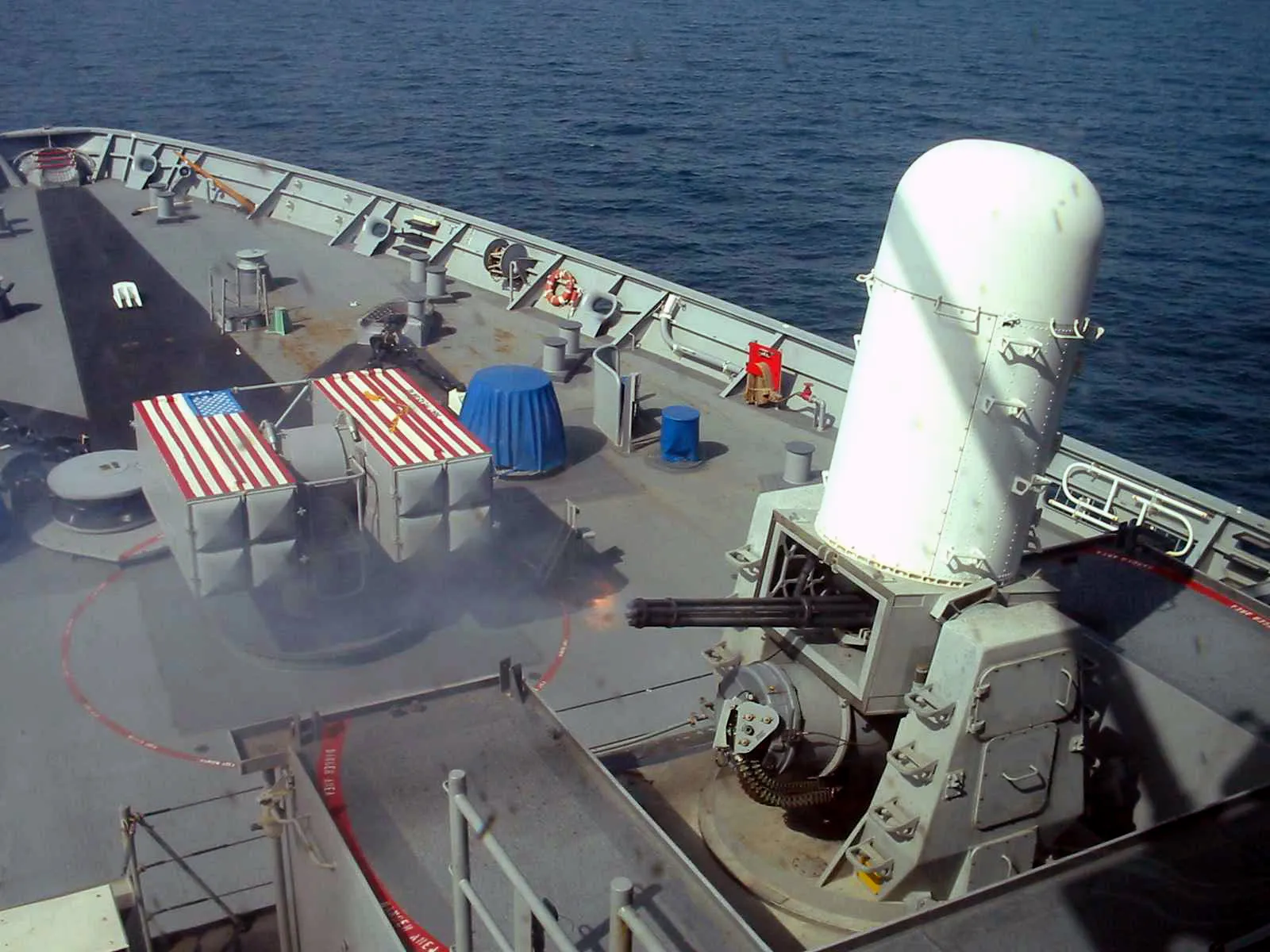
| Rate of fire | Not recorded | 4,500 rounds/min for Block 1A and later (3,000 for Block 0 and 1); 1,550-round magazine[1][2] | Not recorded | Not recorded |
|---|
| Fuze | Not recorded | Land HEIT-SD rounds self-destruct, so misses do not fall back as solid shot; naval penetrators are unfuzed[2] | Not recorded | Not recorded |
|---|
| Mount / turret | Not recorded | Self-contained mount with M61 six-barrel gun, about 5,700–6,200 kg; Block 1B elevation −25° to +85°[2] | Not recorded | Not recorded |
|---|
| Fire control / radar | Not recorded | Integral Ku-band search and track radar; the mount searches, tracks, evaluates, engages and assesses kills on its own[1][2] | Not recorded | Not recorded |
|---|
| Sensors | Not recorded | Block 1B adds a forward-looking infrared sensor and operator control station to identify targets and engage surface craft[1][2] | Not recorded | Not recorded |
|---|
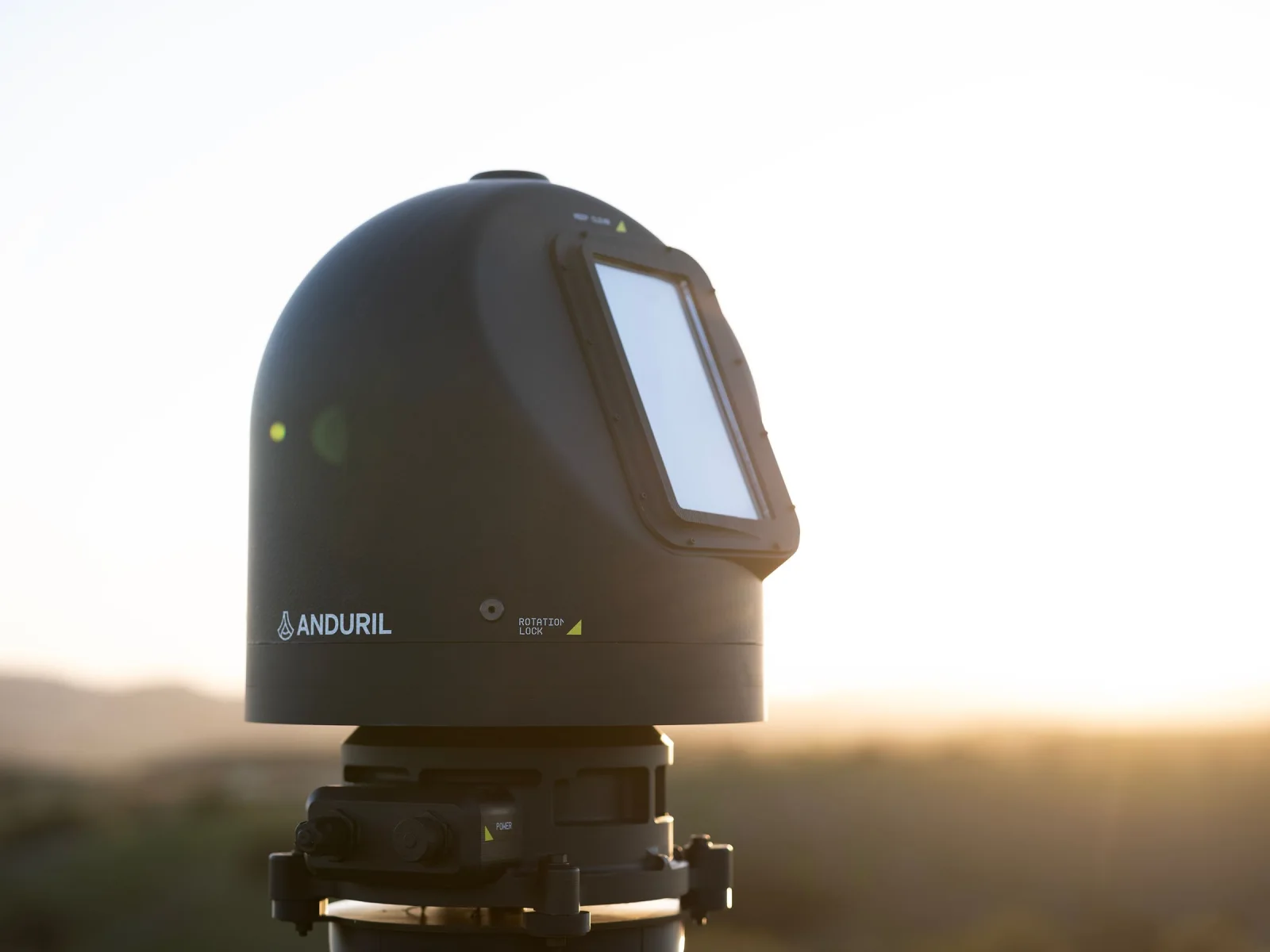
| Thermal imager | Not recorded | Not recorded | Not recorded | Passive infrared imager; 360° horizontal and 125° vertical coverage; detector band not published[1] |
|---|
| Characteristics |
|---|
| Maximum range (km) | Not recorded | ≈ 1.5 kmSecondary reference[2] | Not recorded | Not recorded |
|---|
| Detection range (km) | Not publicly disclosed | Not recorded | Up to 4.8 kmManufacturer claim[1] | Up to 20 kmManufacturer claim[1] |
|---|
| Calibre (mm) | Not recorded | 20 mmSecondary reference[2] | Not recorded | Not recorded |
|---|
| Mass (kg) | Not recorded | ≈ 5,700 kgSecondary reference[2] | 17.8 kgManufacturer claim[2] | Not recorded |
|---|
| Ready rounds / magazine | Not recorded | About 1,550 rounds; 4,500 rounds/minSecondary reference[2] | Not recorded | Not recorded |
|---|
| Guidance / cueing | Ku-band AESA, 360° coverageManufacturer claim[1] | Onboard Ku-band search and track radar; EO sensor on Block 1BSecondary reference[2] | Ku-band 4D ESA radar, about 0.5° accuracyManufacturer claim[1] | Passive infrared; 360° horizontal, 125° vertical field of viewManufacturer claim[1][2] |
|---|
| Effect | Not recorded | Tungsten APDS (naval) or self-destructing HEIT (land)Secondary reference[2] | Detection and tracking onlyManufacturer claim[1] | Sensing onlyManufacturer claim[1] |
|---|
| Launch / operating platform | Fixed site or vehicle mast (mobile LIDS)Secondary reference[2] | Warships; trailer-mounted land versionSecondary reference[2] | Not recorded | Tripod or fixed mast; sensor head 15 × 15 × 22 inSecondary reference[2] |
|---|
| Programme |
|---|
| Operators (in service / ordered) | | 21: United States, Australia, Bahrain, Canada, Chile, Ecuador, Egypt, Greece, Israel, Japan, Mexico, New Zealand +9 more[1][2] | | |
|---|
| Platforms and integration | LIDS / FS-LIDS counter-UAS system (in service), Coyote Block 2 kinetic and Block 3 non-kinetic interceptors (in service), FAAD C2 (Northrop Grumman) (in service), M-LIDS tactical vehicles (in service), Land-based Phalanx, .50-cal guns, 30 mm cannons, high-energy lasers (proposed)[1][4][5][6][7] | U.S. Navy surface combatants (all classes) (in service), Surface combatants of 24 allied navies (in service), Land-based Phalanx Weapon System / Centurion C-RAM (in service), SeaRAM (RIM-116 launcher with Phalanx-based sensors) (in service), Royal Navy warships (Block 1B Baseline 2) (in service), Royal Saudi Naval Forces PCG-class patrol ships (in service)[1][2][3][4][5] | Trust Automation SUADS (rapidly deployable, fixed-site and expeditionary) (ordered), Allen Control Systems Bullfrog gun system (in development), Uncrewed surface vessels (in service)[5][6] | SkyFence perimeter security, Edwards AFB (ordered)[2] |
|---|
| Public contracts | | 3 recorded. Latest: 2026-09-29 · Naval Air Systems Command (Navy and Army requirements) · US$247,089,895[3][5][6][7] | 2 recorded. Latest: 2026-09-29 · U.S. Army Contracting Command, Detroit Arsenal · US$250,000,000 (ceiling)[5][7] | Not recorded |
|---|
| Latest development | 2025-09: Multi-year LIDS contract[3] | 2025-09-08: Continued production contract[3] | 2026-10-12: Pairing with Bullfrog[6] | 2023-12: SkyFence order[2] |
|---|