| Role |
|---|
| Primary category | Laser Weapon Systems | Laser Weapon Systems | Laser Weapon Systems | Laser Weapon Systems |
|---|
| Subcategory | Shipborne lasers | Shipborne lasers | Shipborne lasers | Shipborne lasers |
|---|
| Interception mechanism | Laser energy | Laser energy | Laser energy | Laser energy |
|---|
| Target types | Small UAS, Surface vessels | Small UAS, One-way attack UAVs, Surface vessels | Small UAS, Surface vessels | Small UAS, One-way attack UAVs |
|---|
| Platform | Shipborne | Shipborne | Shipborne | Shipborne |
|---|
| Status | Testing | Testing | Retired | In development |
|---|
| Developer · Country | Northrop Grumman, U.S. Navy (Office of Naval Research / NSWC Dahlgren) · United States | Lockheed Martin · United States | U.S. Navy (Office of Naval Research / NSWC Dahlgren) · United States | MBDA UK · United Kingdom |
|---|
| Propulsion | Not applicable | Not applicable | Not applicable | Not applicable |
|---|
| Reusability | Reusable | Reusable | Reusable | Not applicable |
|---|
| Technical profile |
|---|
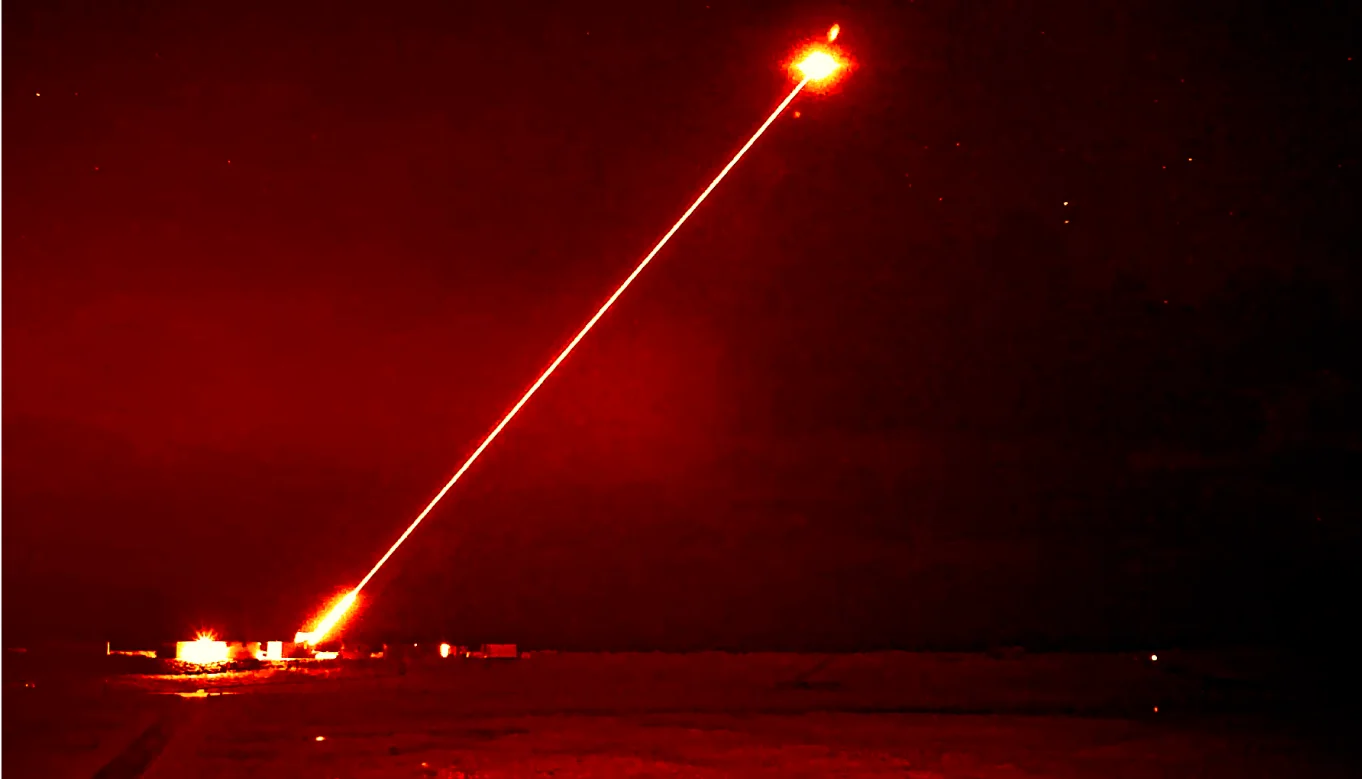
| Laser type | 150 kW-class solid-state laser; Northrop Grumman Tactical Laser Core Module[3] | 60+ kW-class; spectrally combines multiple kilowatt fibre lasers; architecture scalable to higher power[1][5] | Six commercial fibre lasers converging on the target rather than one combined beam; about 30 kW (33 kW reported in testing)[2][3] | QinetiQ laser source using coherent beam combining; the demonstrator generated about 50 kW in October 2022[3][4] |
|---|
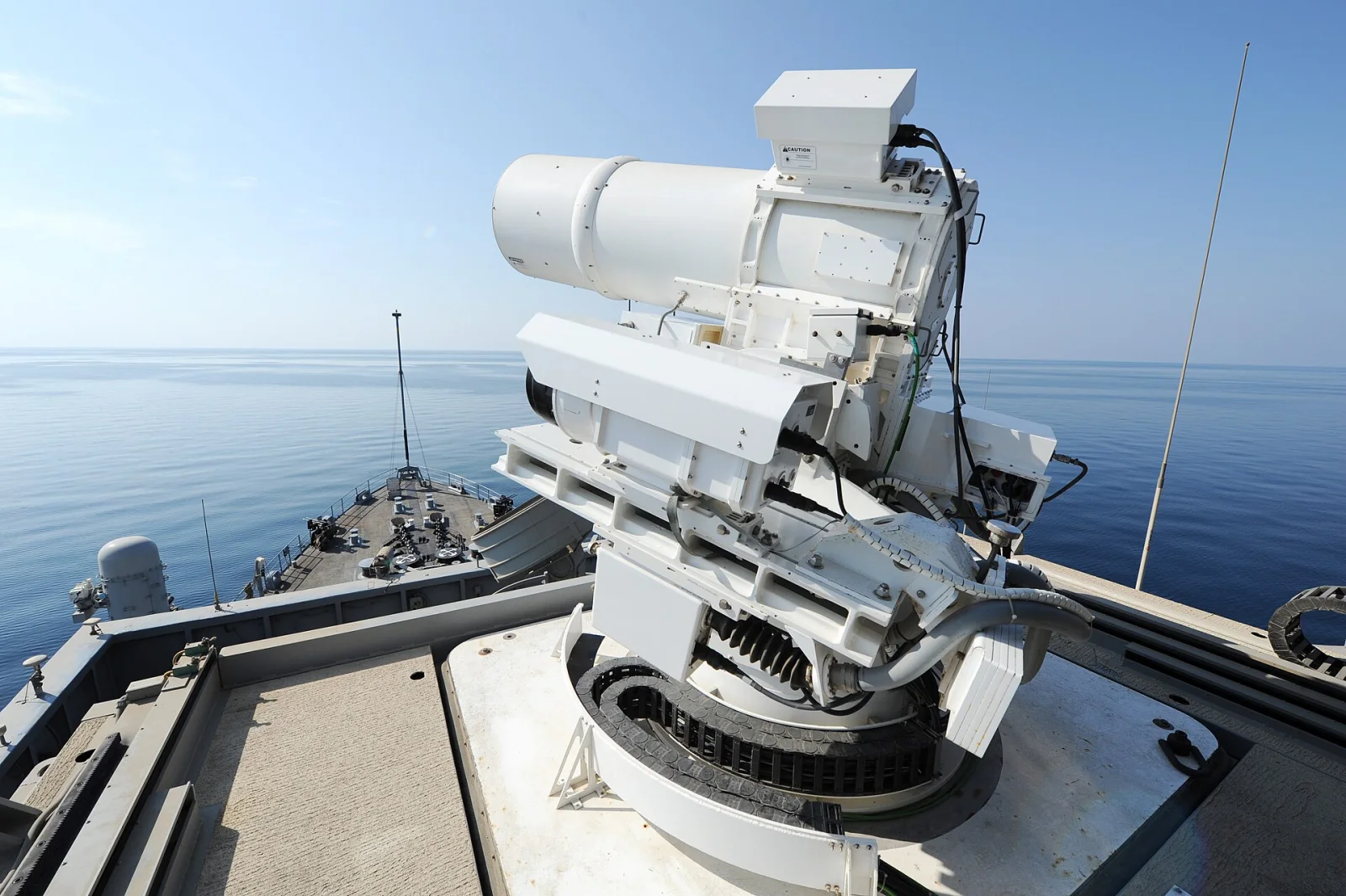
| Beam director | Not recorded | Not recorded | Beam director on the superstructure above the bridge; its optics also served for surveillance[2] | Leonardo UK beam director and optics, from its Edinburgh site[1][4] |
|---|
| Sensors | Not recorded | Integrated surveillance sensors for long-range ISR plus a dazzler meant to blind drone-borne ISR sensors[4][5] | Not recorded | Electro-optics, tracking algorithms and image processing; a lower-power tracking laser on the turret (reference work)[2][5] |
|---|
| Power supply | Government-built energy storage module[3] | Not recorded | Separate diesel-generator skid rather than ship power; about 35% efficient[2] | Electrical power instead of ammunition; under £10 per shot, according to the MOD[5][6] |
|---|
| Magazine depth | Not recorded | Described as a deep magazine, limited by ship power and cooling; no shot count published[1][2] | Fires as long as power is available; under $1 per shot (ONR)[1] | Not recorded |
|---|
| Time on target | Not recorded | Not published; one target at a time, and time per kill in the 2025 test was not disclosed[2] | Not recorded | Not recorded |
|---|
| Thermal management | Government-built thermal storage module[3] | Shipboard cooling system designed to adapt to different ships; no figures published[4] | Cooled by the same skid, independent of the ship's systems[2] | Not recorded |
|---|
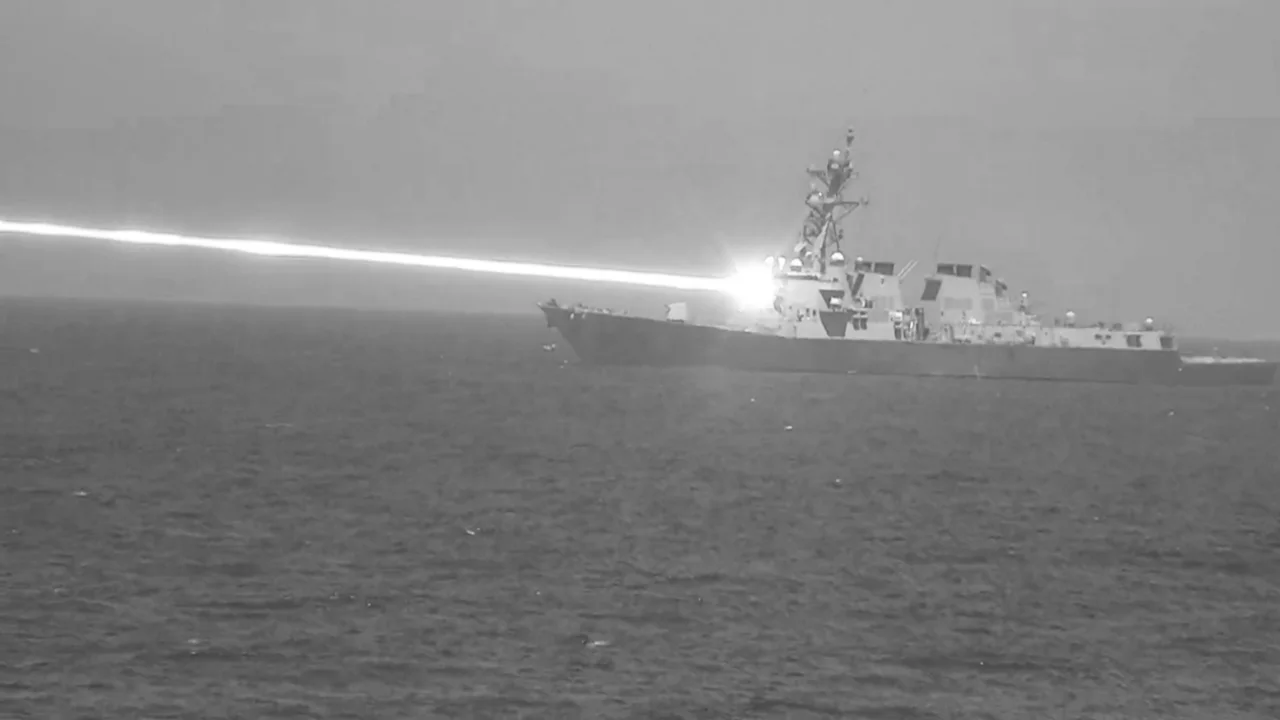
| Fire control / radar | Control console installed in the ship's combat information center[3] | Integrated with the Aegis Combat System on a Flight IIA destroyer; HELIOS data shown in Aegis[4][5] | Cued from the Mk 15 Phalanx CIWS radar track; operator console with a video-game-style controller[1][2][3] | MBDA command and control and target tracking; line-of-sight, range classified[4][6] |
|---|
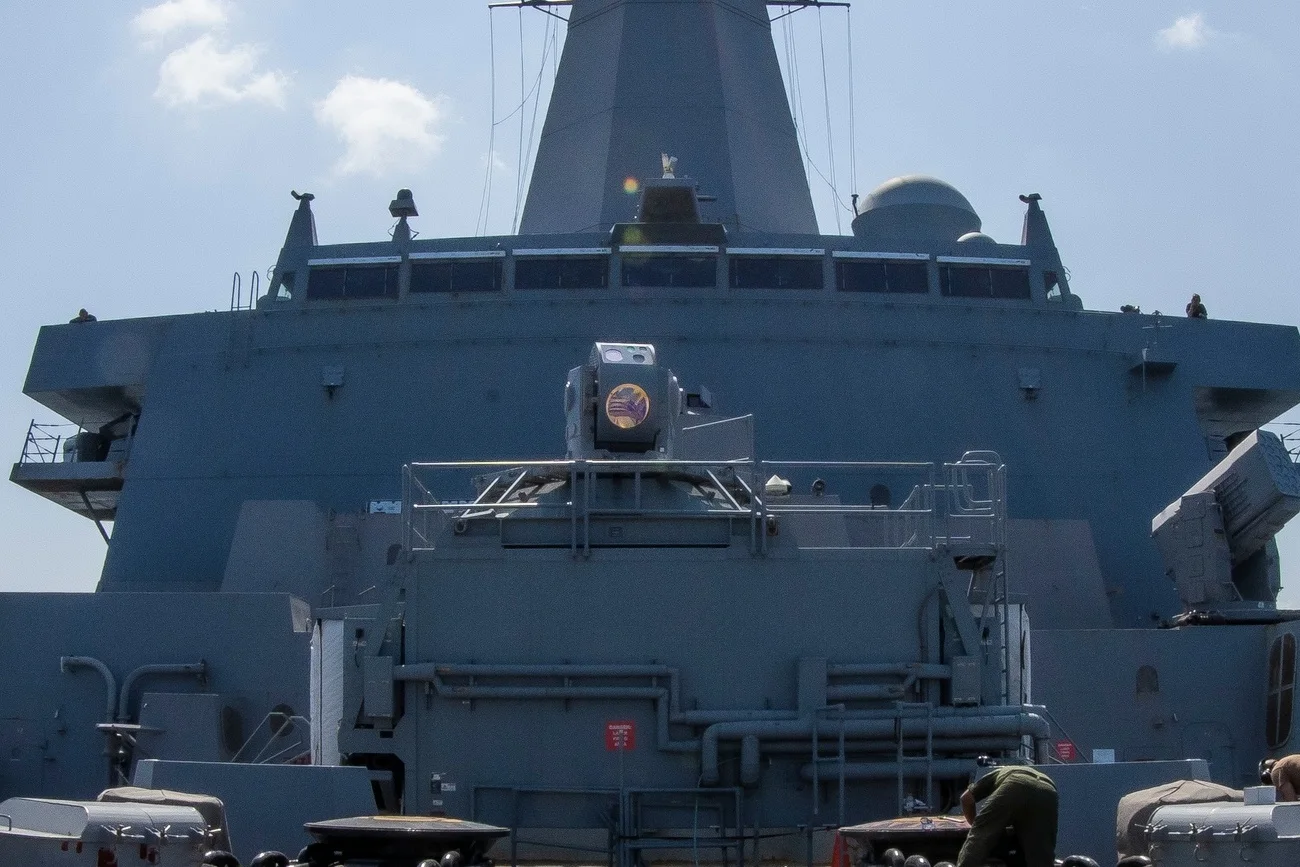
| Mobility | Mounted on USS Portland's superstructure; operated and maintained by the ship's sailors[3] | Fixed shipboard mount on USS Preble; maker says it can be adapted to SSDS-equipped carriers and amphibious ships[2][5] | Deck-mounted prototype; one built[2] | Ship mount on Royal Navy Type 45 destroyers from 2027; MBDA also offers it for land use[1][5] |
|---|
| Characteristics |
|---|
| Maximum range (km) | Not recorded | Not publicly disclosed | Not recorded | Not publicly disclosed |
|---|
| Output power class (kW) | ≈ 150 kWSecondary reference[3] | At least 60 kWManufacturer claim[1][2] | Up to 30 kWSecondary reference[2] | ≈ 50 kWSecondary reference[2] |
|---|
| Effect | Thermal damage; engaged a static surface target (2021)Official document[1] | Thermal hard kill; optical dazzler; surveillanceManufacturer claim[1] | Dazzle, disable or destroy; under $1 per shotOfficial document[1] | Thermal damage; about £10 per shot (MOD)Official document[1] |
|---|
| Launch / operating platform | USS Portland (LPD 27)Official document[2] | USS Preble (DDG 88), Arleigh Burke Flight IIA destroyerManufacturer claim[1][2] | USS Ponce (AFSB(I) 15), 2014–2017Official document[1] | Type 45 destroyer (first fit by 2027)Official document[1] |
|---|
| Programme |
|---|
| Operators (in service / ordered) | Not recorded | Not recorded | Not recorded | |
|---|
| Platforms and integration | USS Portland (LPD 27), San Antonio-class amphibious ship (tested)[2][3] | USS Preble (DDG 88), Arleigh Burke Flight IIA destroyer (tested), Aegis Combat System (tested), Land test unit, White Sands Missile Range (in development), Ship Self-Defense System (carriers, big-deck amphibious ships) (proposed), Trump-class battleship design (proposed)[1][2][4][5] | USS Ponce (AFSB(I) 15) (tested), Mk 15 Phalanx CIWS (radar cueing) (tested)[1][2][3] | Royal Navy Type 45 destroyer (ordered), Wolfhound armoured vehicle (British Army) (proposed)[1][2] |
|---|
| Public contracts | 1 recorded. Latest: 2015-10-22 · Office of Naval Research (U.S. Navy) · US$53 million (up to US$91 million with options)[5][6] | 1 recorded. Latest: 2018-01 · U.S. Navy · 2 systems · US$150 million (options up to US$942.8 million)[4][5] | Not recorded | 2 recorded. Latest: 2025-11-20 · UK Ministry of Defence · £316 million[1][6] |
|---|
| Production / deliveries | Not recorded | | Not recorded | Not recorded |
|---|
| Latest development | 2022-03: Deployment completed[3] | 2025: Four drones neutralised at sea[2] | 2018: Succeeded by HELIOS[2] | 2026-07-20: £490m for directed-energy weapons[7] |
|---|