| Role |
|---|
| Primary category | Guns & Interceptor Ammunition | Guns & Interceptor Ammunition | Interceptor Missiles | Interceptor Missiles |
|---|
| Subcategory | Gun-based interception systems | Gun-based interception systems | Very-short-range air-defense missiles | Short-range air-defense missiles |
|---|
| Interception mechanism | Direct impact, Proximity fuze | Programmable airburst | Proximity fuze, Direct impact | Blast-fragmentation, Proximity fuze |
|---|
| Target types | Crewed aircraft, Small UAS | Small UAS, One-way attack UAVs, Cruise missiles, Crewed aircraft | Crewed aircraft | Crewed aircraft |
|---|
| Platform | Vehicle-mounted | Vehicle-mounted | Man-portable, Vehicle-mounted | Vehicle-mounted |
|---|
| Status | In service | In service | In service | In service |
|---|
| Developer · Country | Hanwha Aerospace, LIG Defense & Aerospace (formerly LIG Nex1), Agency for Defense Development · South Korea | ASELSAN · Türkiye | LIG Defense & Aerospace (formerly LIG Nex1), Agency for Defense Development · South Korea | Hanwha Aerospace, LIG Defense & Aerospace (formerly LIG Nex1), Agency for Defense Development · South Korea |
|---|
| Propulsion | Not applicable | Not applicable | Solid rocket motor | Solid rocket motor |
|---|
| Reusability | Not applicable | Not applicable | Single-use | Single-use |
|---|
| Technical profile |
|---|
| Ammunition | 30×170 mm KCB rounds, about 300 per gun (reference work); four Shingung missiles on Hybrid Biho[3][5] | 35 mm ATOM 35 ABM/IABM programmable airburst and conventional 35 mm; linkless feed switches between two ammunition types[1][2] | Not recorded | Not recorded |
|---|
| Rate of fire | 2 × 600 rounds/min; Shingung one round per 45 s[2][3] | About 1,100 rounds/min from the twin 35 mm guns; 200 ready-to-fire rounds per gun vehicle[1] | Not recorded | Not recorded |
|---|
| Fuze | Not recorded | ATOM rounds are time-programmed at firing from measured muzzle velocity and burst ahead of the target, releasing tungsten fragments[3][4] | Proximity and impact fuze[2] | Active laser (optical) proximity fuze[1][3] |
|---|
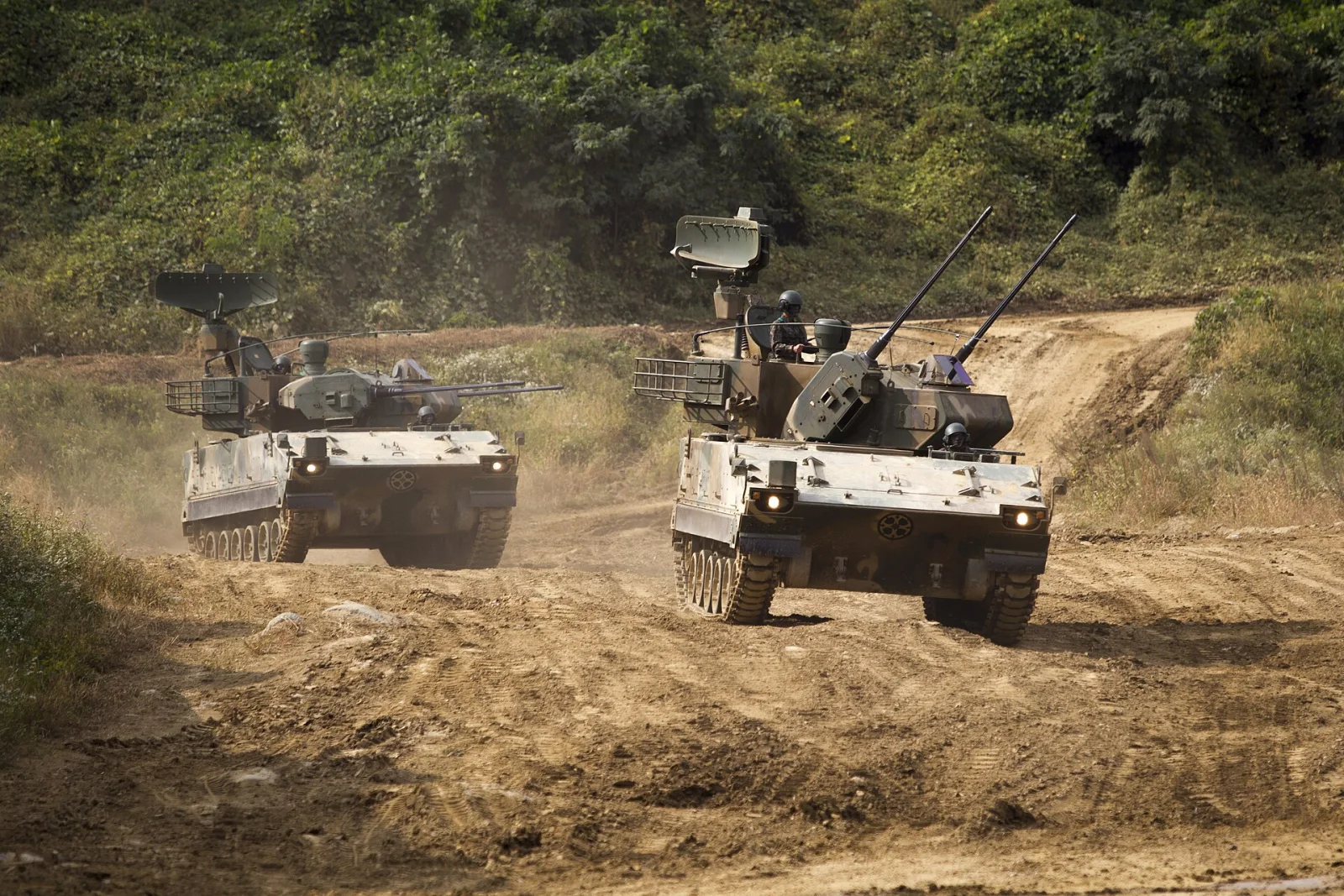
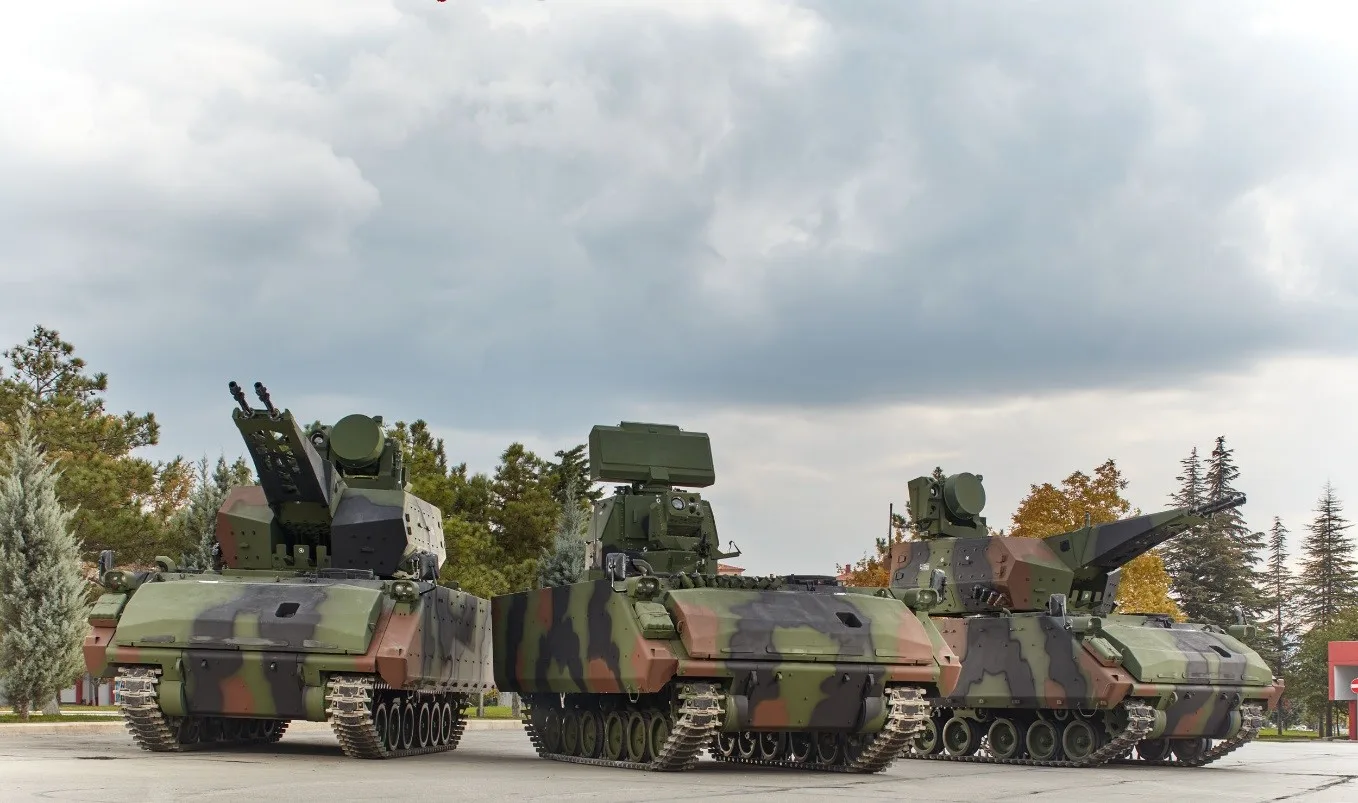
| Mount / turret | Turret with two 30 mm guns; Hybrid Biho adds two missile pods of two Shingung each[3] | Stabilised unmanned twin-gun turret that fires on the move; licence-built Rheinmetall KDC 35 mm cannons made by MKEK[1][5][6] | Not recorded | Not recorded |
|---|
| Fire control / radar | Digital fire control linked to the air-defence C2A automation system; GPS and land navigation; IFF; tracks while searching[3] | Command-and-control vehicle with 3D search radar, IFF, threat evaluation and weapon assignment; links to higher-echelon C2[1] | Not recorded | S-band search radar (20 km, track-while-scan of 8 targets), Ku-band tracking radar (16 km), FLIR (15 km) and TV (10 km)[1][3] |
|---|
| Sensors | Search radar: 21 km detection of a 2 m² target below 3 km altitude; EO tracker with TV, thermal imager and laser rangefinder[2][3] | Fire-control radar and electro-optical sensors on each gun vehicle for automatic target tracking[1] | Not recorded | Not recorded |
|---|
| Crew | | Not recorded | 2 on the tripod, 1 if hand-held (reference work)[4] | Not recorded |
|---|
| Mobility | Tracked K200-derived chassis, 26.5 t; 60 km/h (manufacturer), 65 km/h and 500 km range (reference work)[2][5] | Tracked FNSS ACV AD chassis; over 65 km/h on road, 60% gradient, 30% side slope; platoon of 3 gun vehicles and 1 C2 vehicle[1][7] | Not recorded | Not recorded |
|---|
| Seeker | Not recorded | Not recorded | Two-colour infrared seeker with infrared counter-countermeasures[1][2] | No seeker on the missile: command to line of sight[3][5] |
|---|
| Guidance | Not recorded | Not recorded | Fire-and-forget infrared homing; IFF and night sight on the launcher[2] | IR goniometer gathers the missile after launch; Ku-band tracking radar or FLIR then steer it by narrow-beam RF command[1][3] |
|---|
| Warhead | Not recorded | Not recorded | 2.5 kg with 720 tungsten balls (reference work)[4] | Focused-fragmentation, 12 kg[1][3] |
|---|
| Motor / propulsion | Not recorded | Not recorded | Dual-thrust solid rocket motor to raise terminal speed[2][4] | Not recorded |
|---|
| Data link | Not recorded | Not recorded | Not recorded | RF command uplink from the vehicle to the missile; no missile seeker[3] |
|---|
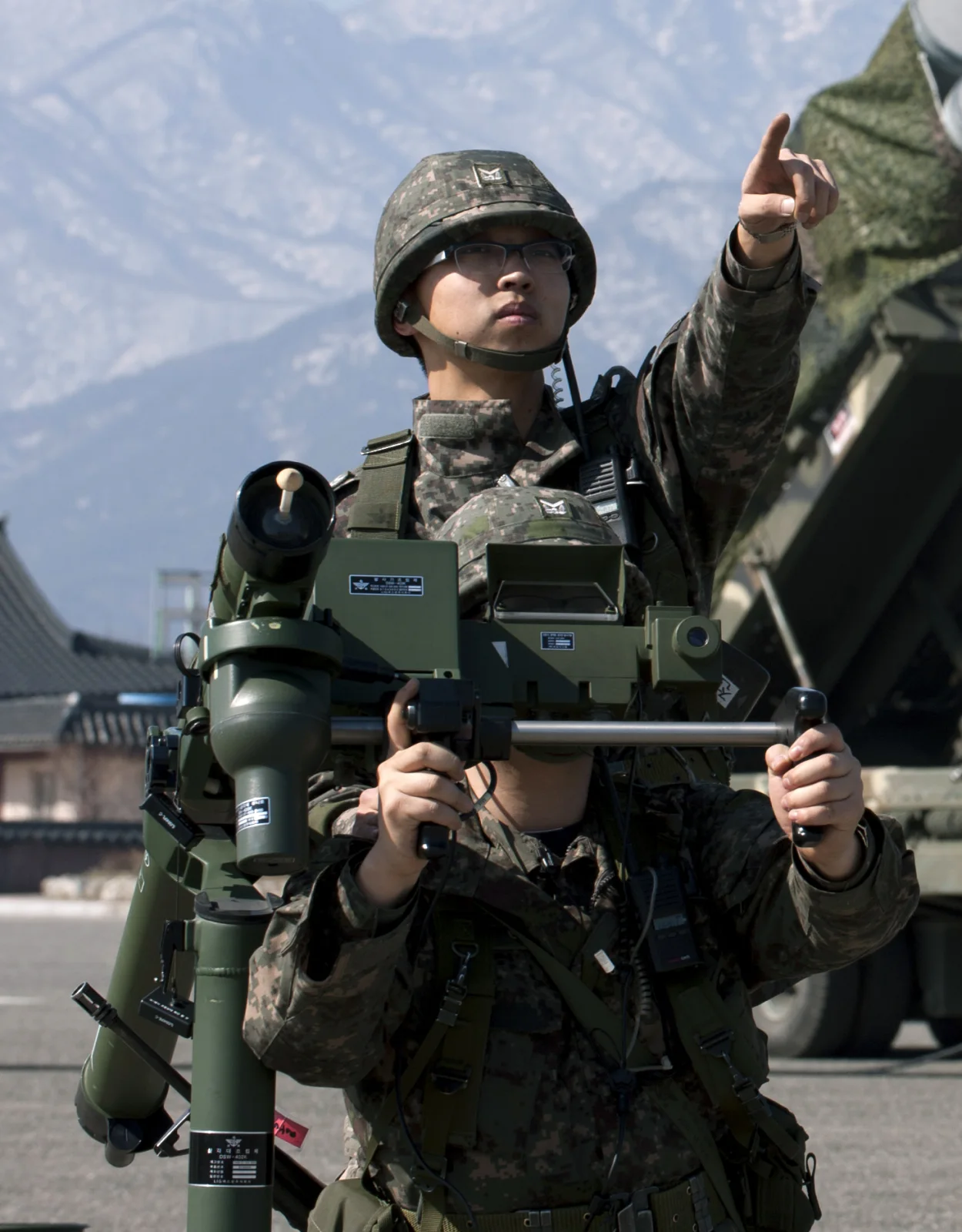
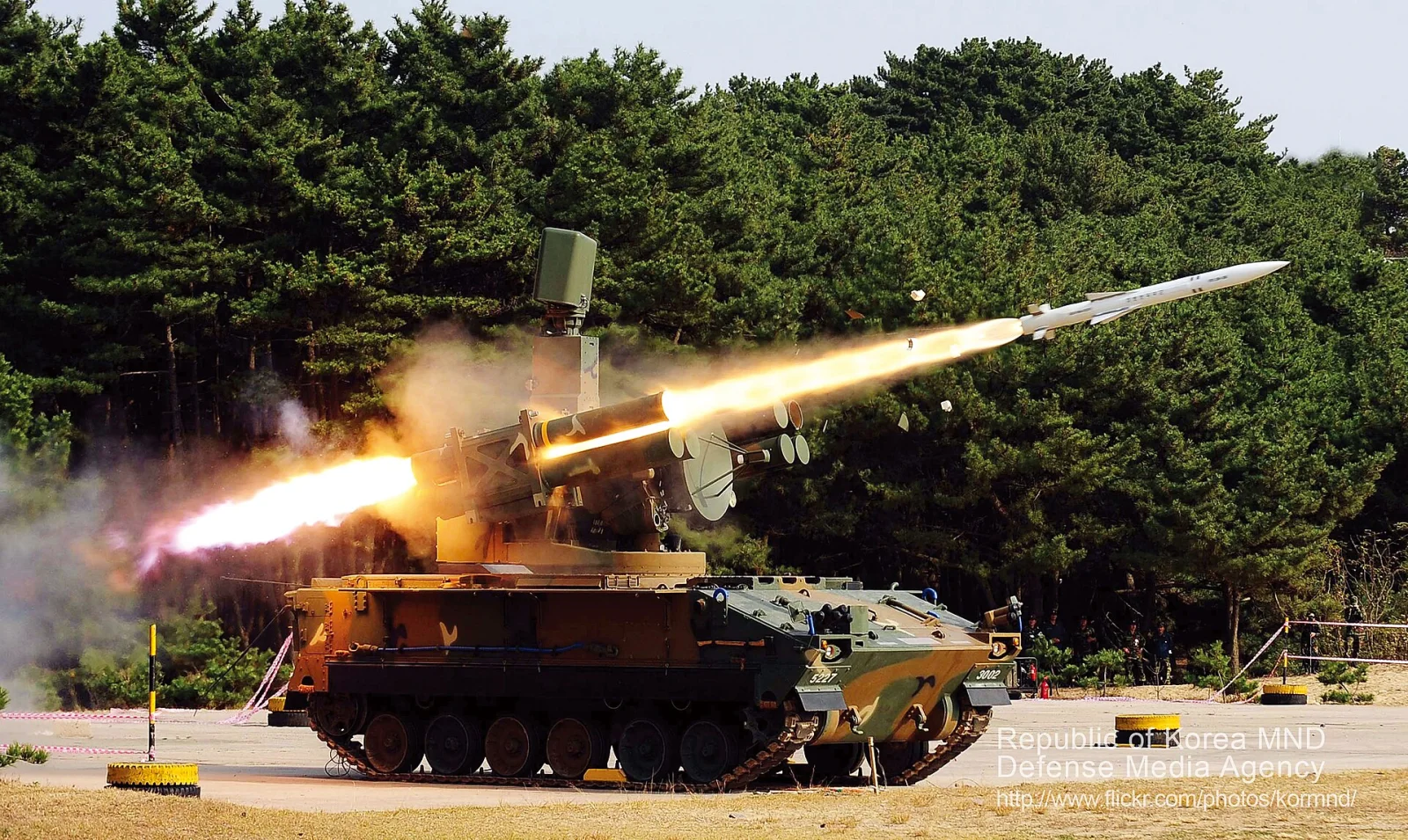
| Launcher | Not recorded | Not recorded | Tripod launcher; also two-round pods on each side of the K30 Hybrid Biho turret[2][5] | Turret launcher on a tracked armoured vehicle carrying radars, fire control and missiles[1][5] |
|---|
| Rounds per launcher | Not recorded | Not recorded | 1 per tripod launcher; 4 on Hybrid Biho[5] | 8 ready-to-fire missiles[3][5] |
|---|
| Characteristics |
|---|
| Maximum range (km) † | 3 km† Maximum engagement range as claimed by the developerManufacturer claim[2][3] | Up to 4 km† Maximum engagement range as claimed by the developerManufacturer claim[1] | Up to 7 km† Range demonstrated on an instrumented test rangeOfficial document[1] | ≈ 10 km† Range reported in secondary sourcesSecondary reference[4][3] |
|---|
| Detection range (km) | | At least 35 kmManufacturer claim[1] | Not recorded | ≈ 20 kmSecondary reference[4][3] |
|---|
| Maximum altitude (km) | Not recorded | Not recorded | Up to 3.5 kmOfficial document[1] | Up to 5 kmSecondary reference[4] |
|---|
| Speed (m/s) | Not recorded | Not recorded | Up to 851 m/sSecondary reference[4] | Up to 884 m/sSecondary reference[3] |
|---|
| Calibre (mm) | | 35 mmManufacturer claim[1] | Not recorded | Not recorded |
|---|
| Mass (kg) | Not recorded | Not recorded | 15 kgSecondary reference[4] | Not recorded |
|---|
| Length (m) | Not recorded | Not recorded | 1.68 mSecondary reference[4] | Not recorded |
|---|
| Ready rounds / magazine | 2 × 600 rounds/min; four Shingung missiles on Hybrid BihoManufacturer claim[2][3] | 200 ready-to-fire rounds; about 1,100 rounds/minManufacturer claim[1] | Not recorded | 8 ready-to-fire missilesSecondary reference[3] |
|---|
| Guidance / cueing | Search radar and electro-optical tracking systemOfficial document[3] | 3D search radar on C2 vehicle; tracking radar and EO on each gunManufacturer claim[1] | Two-colour infrared seeker, fire-and-forgetOfficial document[2][1] | Command to line of sight: IR goniometer, then Ku-band tracking radarOfficial document[1] |
|---|
| Effect | Not recorded | ATOM 35 programmable airburst (tungsten fragments)Manufacturer claim[1][3] | Proximity and impact fuzeOfficial document[2] | Focused-fragmentation warhead; optical proximity fuzeOfficial document[1] |
|---|
| Launch / operating platform | Tracked chassis derived from the K200 armoured vehicleSecondary reference[5] | Tracked armoured vehicle; platoon of 3 guns + 1 C2Manufacturer claim[1] | Not recorded | Not recorded |
|---|
| Programme |
|---|
| Operators (in service / ordered) | | | 4: South Korea, Indonesia, Romania, Morocco[2][3][4] | |
|---|
| Platforms and integration | Shingung (KP-SAM) missile pods (Hybrid Biho) (in service), Army air-defence C2A automation network (in service), TPS-830K X-band surveillance and fire-control radar (in service), K200-derived tracked chassis (in service)[3][4][5] | FNSS ACV AD tracked vehicle (KORKUT 150/35) (in service), 3D search radar on the KORKUT command-and-control vehicle (in service), OTOKAR ARMA II 8x8 (KORKUT 140/35) (in development), Wahash 8x8 amphibious vehicle (KORKUT 141/35) (in development), Tatra Force 6x6 truck (in development), KALKAN 50-G S-band AESA radars (proposed)[1][7][8] | Tripod launcher (in service), K30 Hybrid Biho (in service), Oerlikon Skyshield 35 mm air-defence system (in service)[2][4][5][6] | Tracked armoured vehicle (single-vehicle fire unit) (in service), Locally produced core components (nine items) (tested)[1][2][4][5] |
|---|
| Production / deliveries | 1996–present: 176 built cumulative[5] | 2019: 13 systems cumulative, 2016 contract: 42 gun vehicles and 14 command vehicles (14 batteries) ordered[8][9] | Not recorded | Not recorded |
|---|
| Latest development | 2020-10-20: First Shingung live firing from Hybrid Biho by an Army unit[4] | 2025-01: Bulk of deliveries completed[9] | 2026-05: Romanian deliveries near completion[3] | 2026-02: Core-component localisation completed[2][4] |
|---|