| Role |
|---|
| Primary category | Interceptor Missiles | Interceptor Missiles | Interceptor Missiles | Interceptor Missiles |
|---|
| Subcategory | Short-range air-defense missiles | Short-range air-defense missiles | Very-short-range air-defense missiles | Short-range air-defense missiles |
|---|
| Interception mechanism | Hit-to-kill | Blast-fragmentation, Proximity fuze | Direct impact | Blast-fragmentation, Proximity fuze |
|---|
| Target types | Crewed aircraft, Cruise missiles, Small UAS, One-way attack UAVs | Crewed aircraft, Cruise missiles | Crewed aircraft, Small UAS | Crewed aircraft, Small UAS, One-way attack UAVs, Cruise missiles |
|---|
| Platform | Vehicle-mounted | Vehicle-mounted, Shipborne | Man-portable, Vehicle-mounted, Shipborne, Airborne | Vehicle-mounted, Shipborne |
|---|
| Status | In service | In service | In service | In service |
|---|
| Developer · Country | Diehl Defence · Germany | Thales · France | Roketsan · Türkiye | ASELSAN, Roketsan · Türkiye |
|---|
| Propulsion | Solid rocket motor | Solid rocket motor | Solid rocket motor | Solid rocket motor |
|---|
| Reusability | Single-use | Single-use | Single-use | Single-use |
|---|
| Technical profile |
|---|
| Seeker | Imaging, jamming-resistant infrared seeker; lock-on after launch possible[1][3] | No homing seeker named: missile and target are tracked from the fire unit (radar, thermal camera, IR localiser)[2][3] | Imaging infrared, gimbal-mounted and argon-cooled before launch; ±40° acquisition angle[1][5] | Imaging-infrared terminal seeker (ASELSAN)[1][4] |
|---|
| Guidance | Inertial guidance on 3D target coordinates in the initial phase, then IIR terminal homing[3] | Command to line of sight (CLOS) using radar and electro-optical tracking[2][3] | Lock-on before launch with automatic target tracking, then fire-and-forget[1][4] | Inertial navigation with RF data-link updates in midcourse; IIR homing in the terminal phase[1][4] |
|---|
| Warhead | HE-fragmentation, 11.4 kg[3] | Focused blast-fragmentation, 13 kg; 8 m lethal radius[2][3] | High-explosive semi-armour-piercing warhead in a titanium casing[1][5] | High-explosive fragmentation; TÜBİTAK SAGE is named as warhead subcontractor[1][4] |
|---|
| Fuze | Impact and active radar proximity fuze[3] | | Programmable impact fuze[1][4] | Impact and RF proximity fuze; the A+ replaced the earlier laser proximity fuze with an RF fuze from TÜBİTAK SAGE[2][4] |
|---|
| Motor / propulsion | Solid-propellant rocket motor with thrust-vector control (exhaust vanes)[1][3] | Solid-propellant rocket motor; Mach 3.5+, up to 35 g[3] | Launch motor that burns out in the tube (about 9 m clear of the gunner), then a dual-thrust solid sustainer; fins plus thrust-vector control[4][5] | Dual-pulse solid-propellant motor; vertical launch with thrust-vector control[1][2] |
|---|
| Data link | Not recorded | Not recorded | Not recorded | RF uplink for midcourse updates; Meteksan Savunma named as data-link subcontractor[4] |
|---|
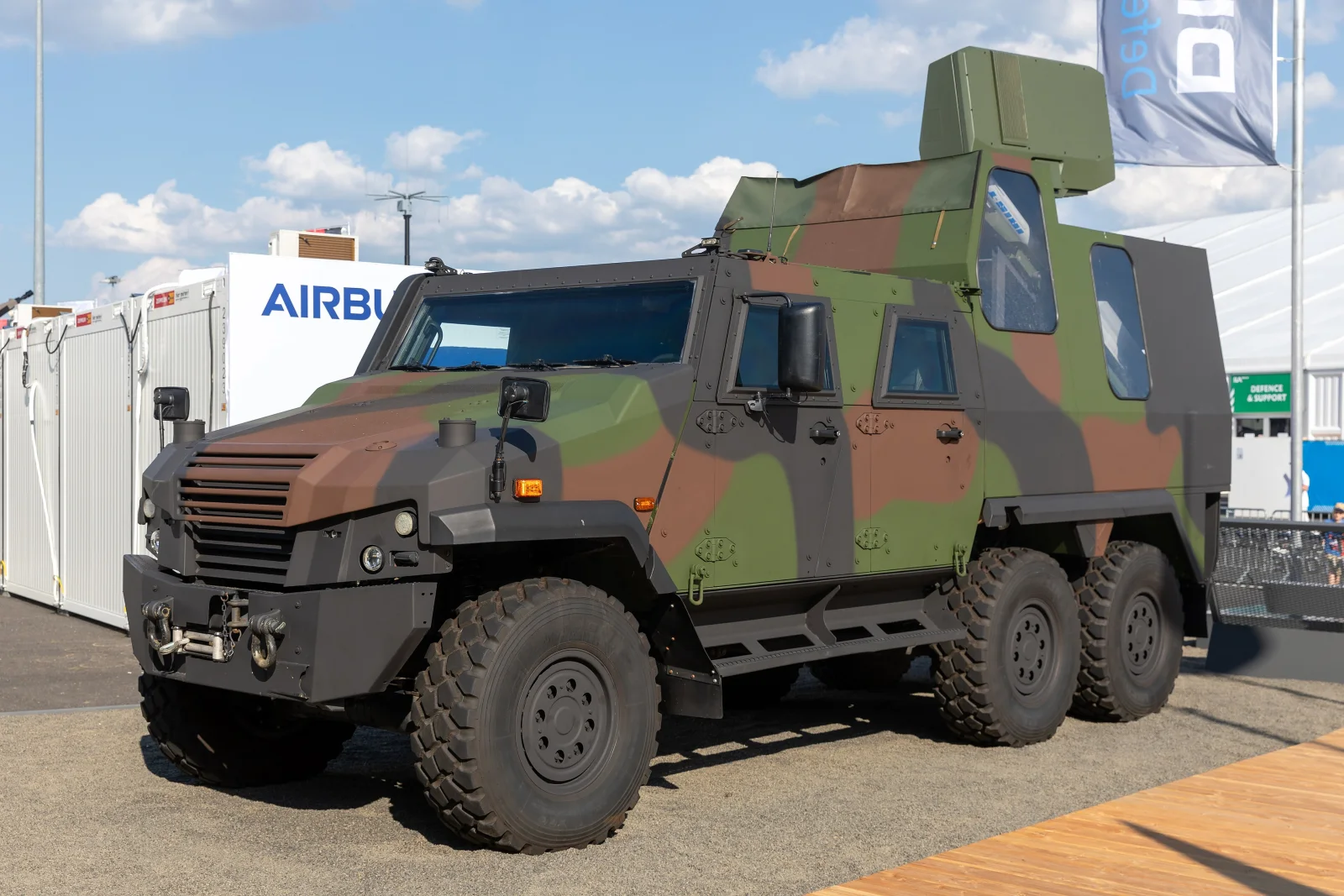
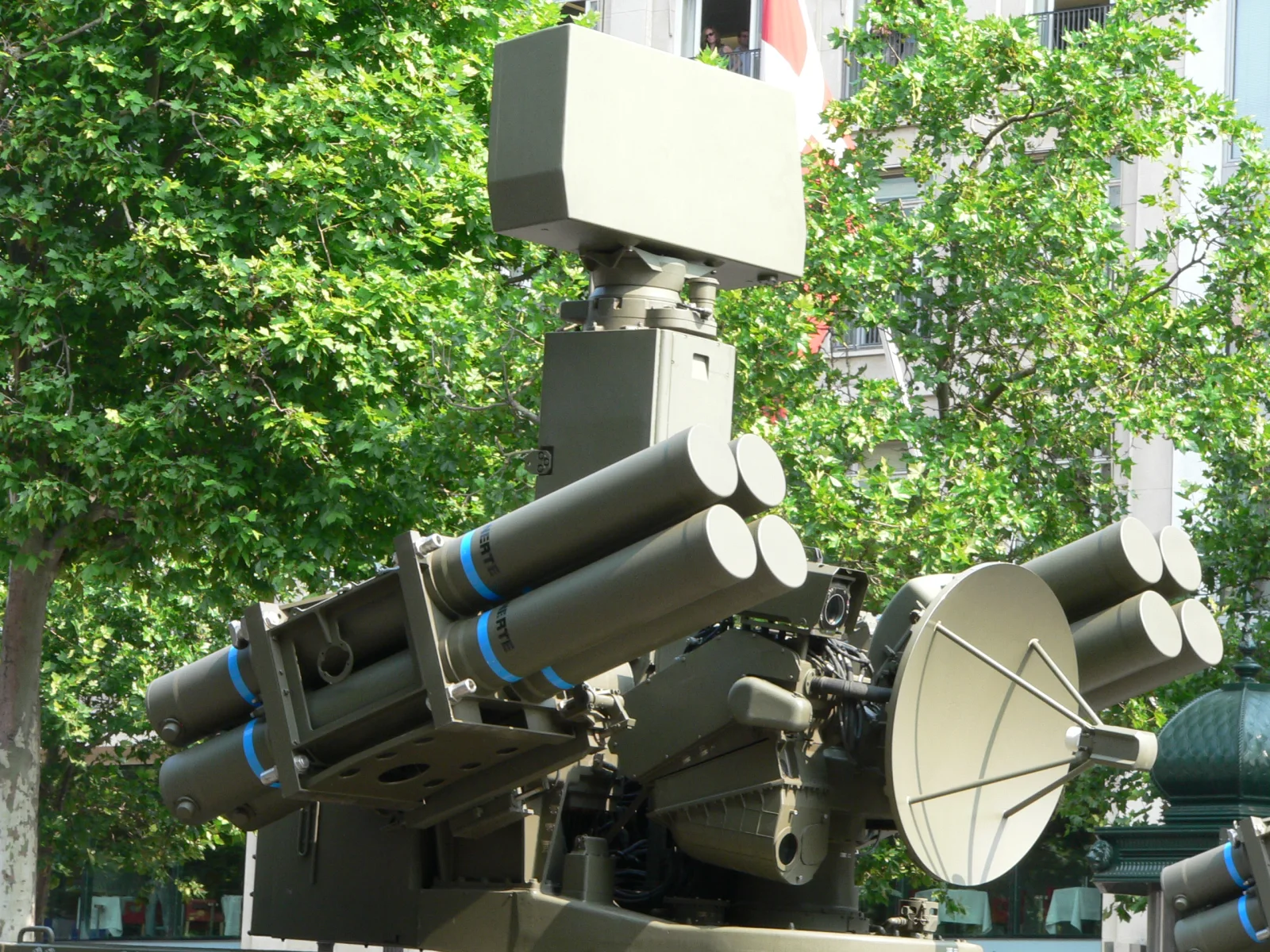
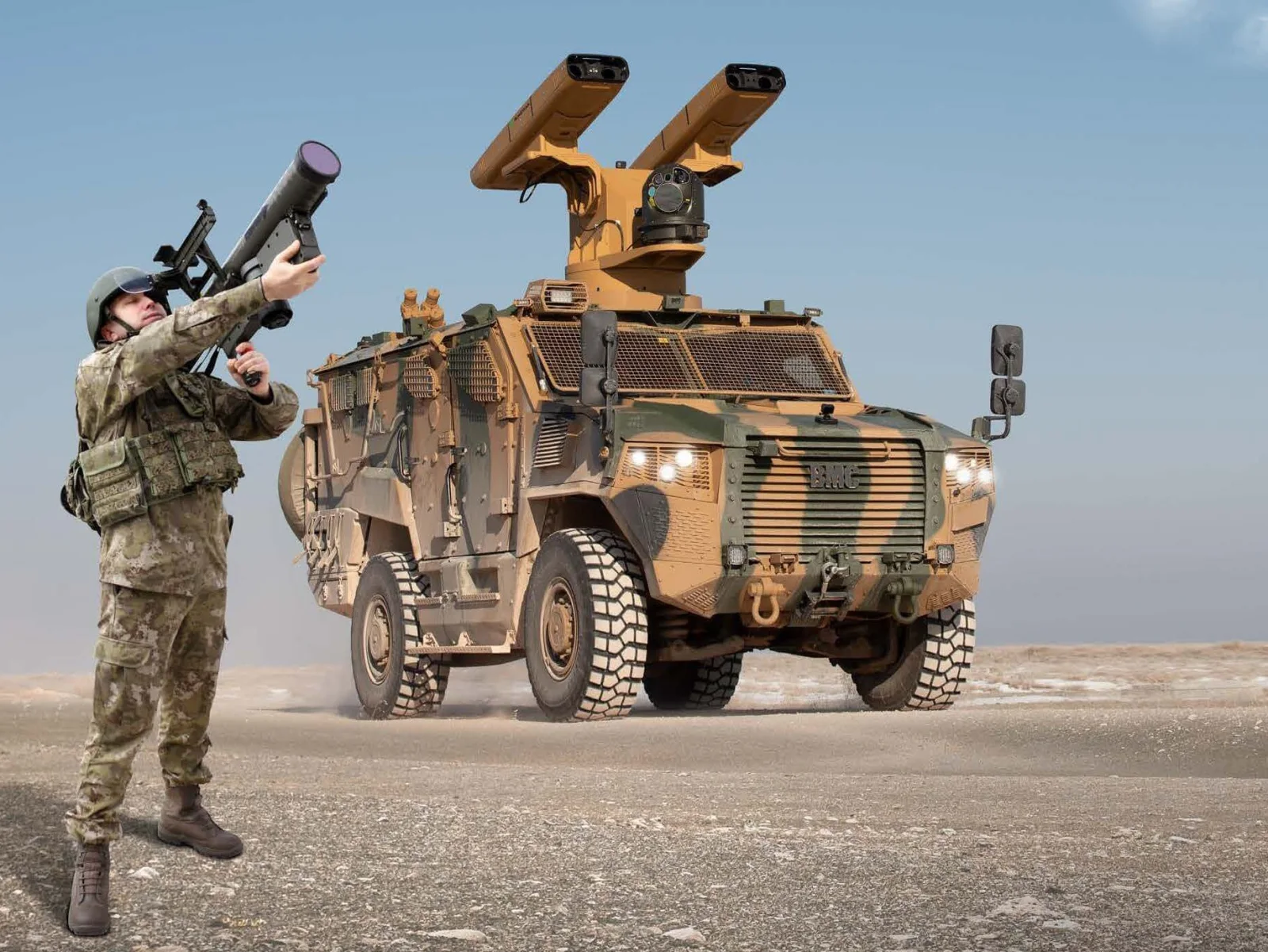
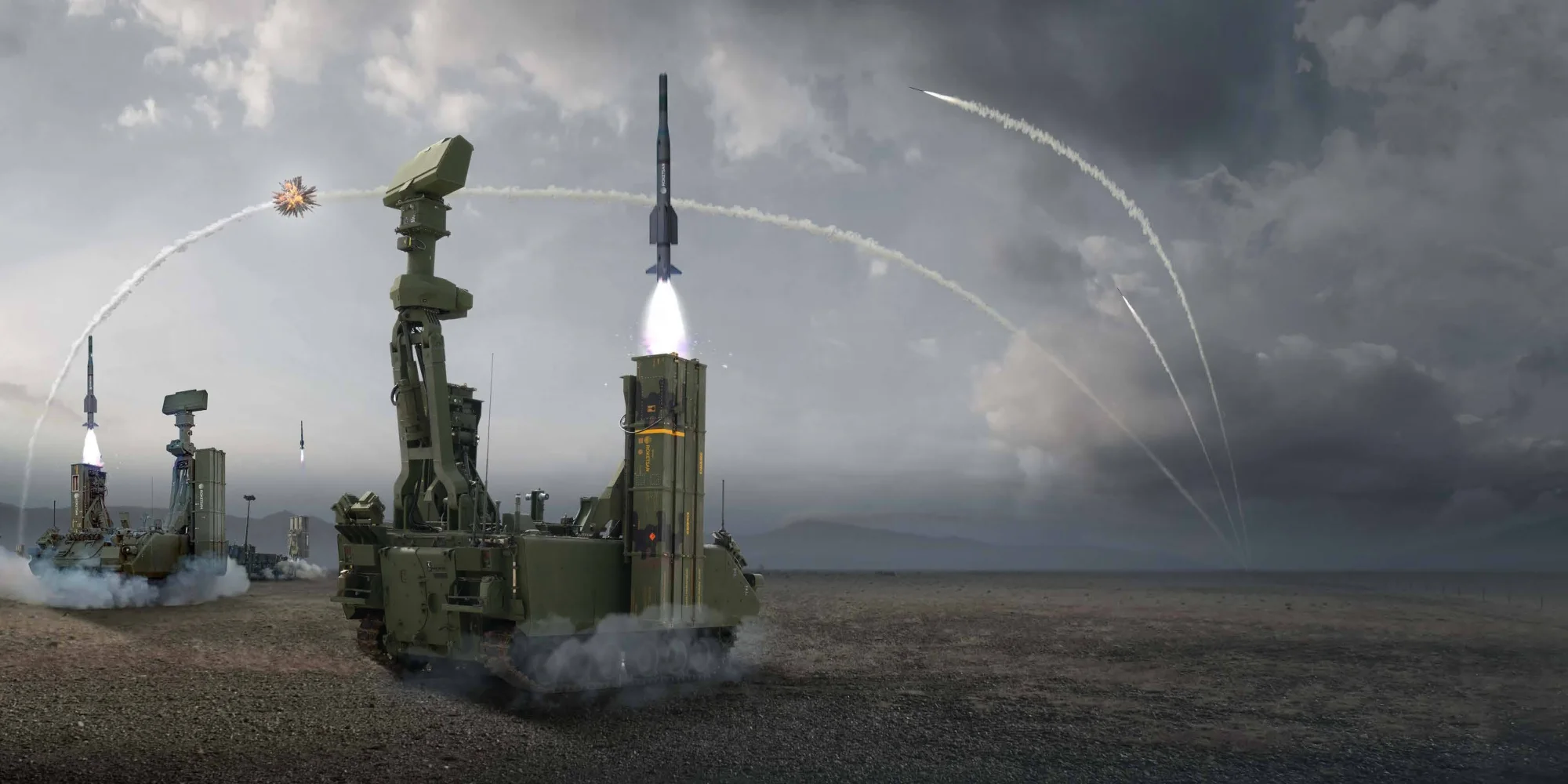
| Launcher | Vehicle-independent launcher on a 10-foot ISO frame; Mk III and MK4 put radar, C2 and launcher on one vehicle[1][2] | Weapon-station turret with two blocks of four missile containers[2] | Shoulder-fired with detachable gripstock and coolant unit; vehicle pedestal with two pods of two missiles on a BMC Vuran 4×4[5][6] | FNSS ACV-30 tracked chassis; two vertical containers of two missiles each, stowed on the hull roof for road travel[4][6] |
|---|
| Rounds per launcher | 4 IRIS-T per launcher (SLS, Mk III); MK4 carries an eightfold load[1][2] | 8 VT1 ready to fire per fire unit[2] | 4 ready missiles on the vehicle-mounted version[6] | 4 ready missiles per vehicle[4][6] |
|---|
| Fire control / radar | Open radar/C2 choice: Giraffe 1X (Sweden), TRML-4D (Ukraine), NASAMS C2 and Weibel radar (Norway)[3][8][9] | S-band surveillance radar (20 km), Ku-band tracking radar (30 km), thermal camera (19 km), daylight CCD (15 km)[3] | Integrates with ASELSAN's HERİKKS-VI early-warning and C2 system; IFF; thermal and seeker video on the operator display[1][5] | Mast-mounted ASELSAN 3D search radar with IFF, EO/IR sensor and laser rangefinder; can engage on its own[4][6] |
|---|
| Reaction / readiness | High degree of automation for fast response; MK4 aims at fire on the move[1][2] | About 6 s from first detection to launch[3] | Not recorded | Not recorded |
|---|
| Crew | Not recorded | Not recorded | MANPADS version can be fired by one person without a tripod[4] | Not recorded |
|---|
| Characteristics |
|---|
| Maximum range (km) † | Up to 12 km† Maximum engagement range as claimed by the developerManufacturer claim[1][2] | 11 km† Range reported in secondary sourcesSecondary reference[2] | 8 km† Official range band published by the manufacturerManufacturer claim[1][2] | At least 15 km† Official range band published by the manufacturerManufacturer claim[1][3] |
|---|
| Maximum altitude (km) | Up to 6 kmManufacturer claim[1][2] | 6 kmSecondary reference[2] | 4–6 kmManufacturer claim[1][2] | At least 10 kmManufacturer claim[1] |
|---|
| Speed (m/s) | 680 m/sSecondary reference[3] | At least 1,190 m/sSecondary reference[3] | Not recorded | Not recorded |
|---|
| Mass (kg) | 87.4 kgSecondary reference[3] | 76 kgSecondary reference[2] | 14.5 kgManufacturer claim[2] | Not recorded |
|---|
| Length (m) | 2.94 mSecondary reference[3] | 2.35 mSecondary reference[2] | 1.68 mManufacturer claim[2] | 3.95 mManufacturer claim[1] |
|---|
| Ready rounds / magazine | 4 missiles per launcher (Mk III); 8 on the MK4 (reference work)Manufacturer claim[1][3] | 8 VT1 missiles ready to fireSecondary reference[2] | Not recorded | Not recorded |
|---|
| Guidance / cueing | Imaging infrared seeker, lock-on after launchManufacturer claim[1][3] | Command to line of sight; S-band surveillance radar, Ku-band tracking radar, thermal and daylight camerasSecondary reference[2] | Imaging infrared, lock-on before launch (fire-and-forget)Manufacturer claim[1] | INS and data link midcourse; imaging-infrared terminal seekerManufacturer claim[1] |
|---|
| Effect | Not recorded | Not recorded | High-explosive semi-armour-piercing warhead, programmable impact fuzeManufacturer claim[1] | High-explosive fragmentation; impact and proximity fuzeManufacturer claim[1][2] |
|---|
| Launch / operating platform | Mowag Eagle 6×6 (Mk III), Bv 410 (Sweden), trucksSecondary reference[3] | Not recorded | Not recorded | Tracked and wheeled vehicles, naval vesselsManufacturer claim[1] |
|---|
| Programme |
|---|
| Operators (in service / ordered) | | 7: France, Finland, Greece, South Korea, Saudi Arabia, Oman, Ukraine[1][2][3][4] | | |
|---|
| Platforms and integration | Bv 410 tracked carrier (eldenhet 98 / lvrbs 98) (in service), Giraffe 1X radar (in service), Iveco Eurocargo 4×4 launcher truck (in service), Hensoldt TRML-4D radar (in service), NOMADS mobile GBAD (NASAMS C2, Weibel radar) (ordered), Mowag Eagle V 6×6 (Mk III) (tested), Boxer 8×8 (LVS NNbS) (in development), CICADA C-UAV eMissile as second effector (MK4) (proposed)[2][3][5][7][8][9] | Shelter-mounted fire units (in service), Naval Crotale NG (in service), K-SAM (Chun-Ma / Pegasus) self-propelled system (in service), Catherine XP thermal camera upgrade (tested), Shikra 3D radar (Crotale Mk3) (tested)[3] | BMC Vuran 4×4 (vehicle-mounted SUNGUR) (in service), HERİKKS-VI air defence early warning and C2 (in service), Bayraktar AKINCI (air-launched) (tested), LEVENT shipborne close-in system (in development)[4][5][6][7] | FNSS ACV-30 tracked chassis (in service), ASELSAN mast-mounted 3D search radar (MAR) (in service), HİSAR-A missile launch system (Land Forces acceptance, 2026) (in service)[4][6][8] |
|---|
| Public contracts | | Not recorded | Not recorded | Not recorded |
|---|
| Production / deliveries | 2023-08 to 2025-02: 10 systems to Ukraine delivered[9] | Not recorded | Not recorded | July 2021: Dozens of systems in Army service cumulative[4] |
|---|
| Latest development | 2026-06-09: IRIS-T SLS MK4 unveiled[2] | 2022-12-21: Crotale batteries sent to Ukraine[4] | 2026-09-16: Air-launched from AKINCI[7] | 2026-06: Reported use in Sudan[4] |
|---|