| Role |
|---|
| Primary category | Electronic Countermeasures | Guns & Interceptor Ammunition | Electronic Countermeasures | Electronic Countermeasures |
|---|
| Subcategory | Command-link disruption | Gun-based interception systems | Protocol-based intervention | Command-link disruption |
|---|
| Interception mechanism | Command-link disruption, Navigation disruption, Navigation deception | Programmable airburst | Protocol-based intervention | Command-link disruption, Navigation disruption |
|---|
| Target types | Small UAS | Small UAS, One-way attack UAVs, Cruise missiles, Crewed aircraft | Small UAS | Small UAS |
|---|
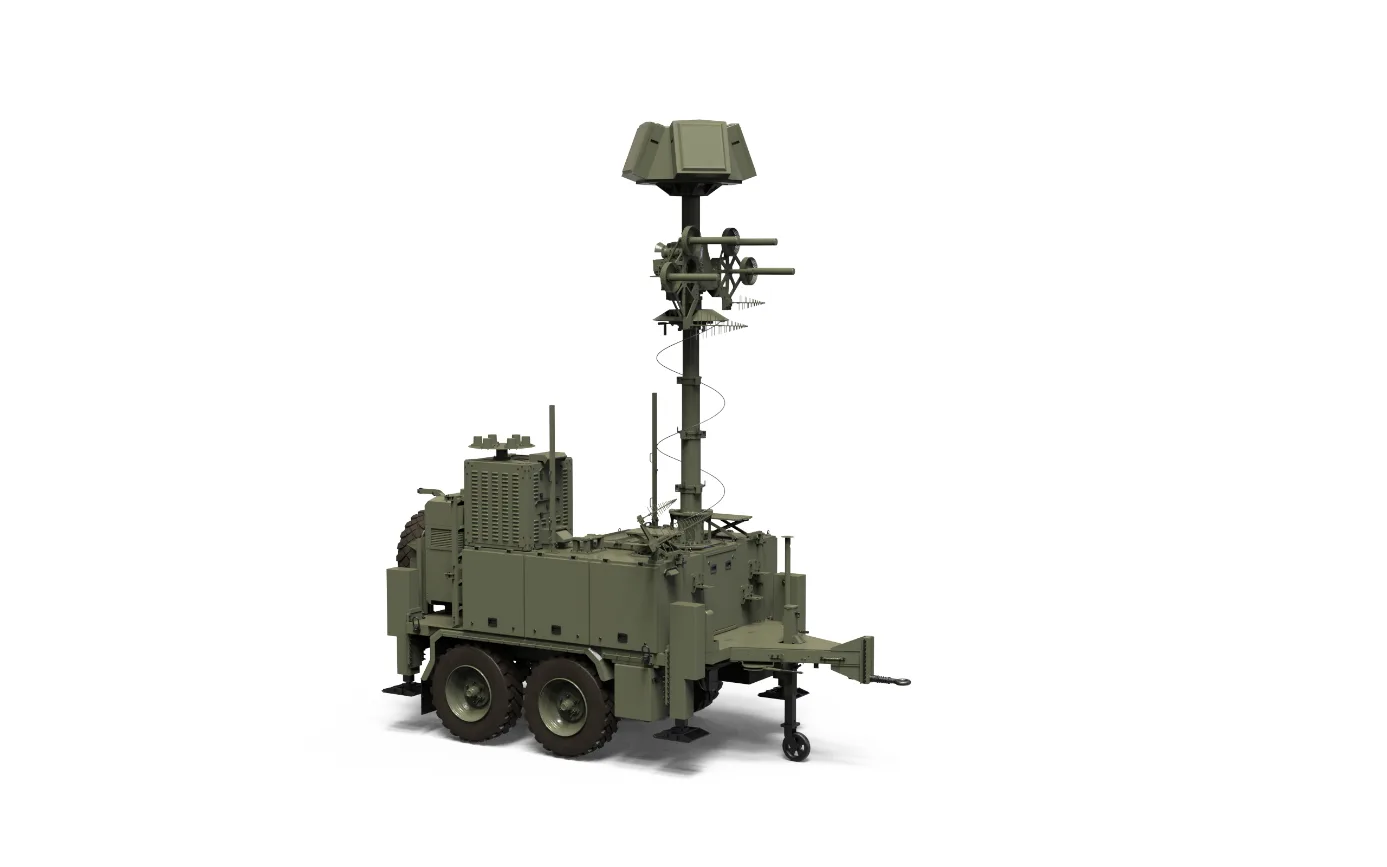
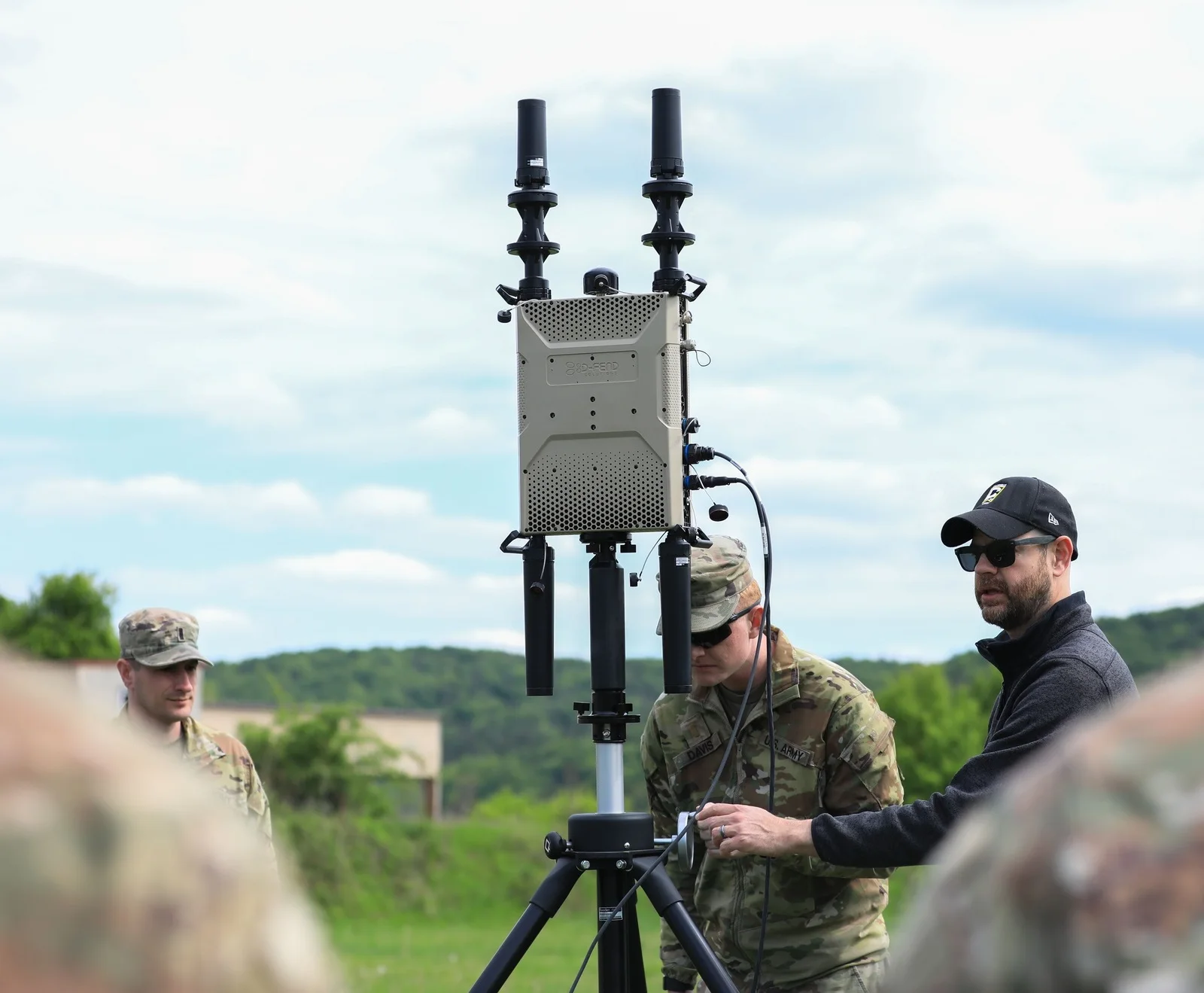
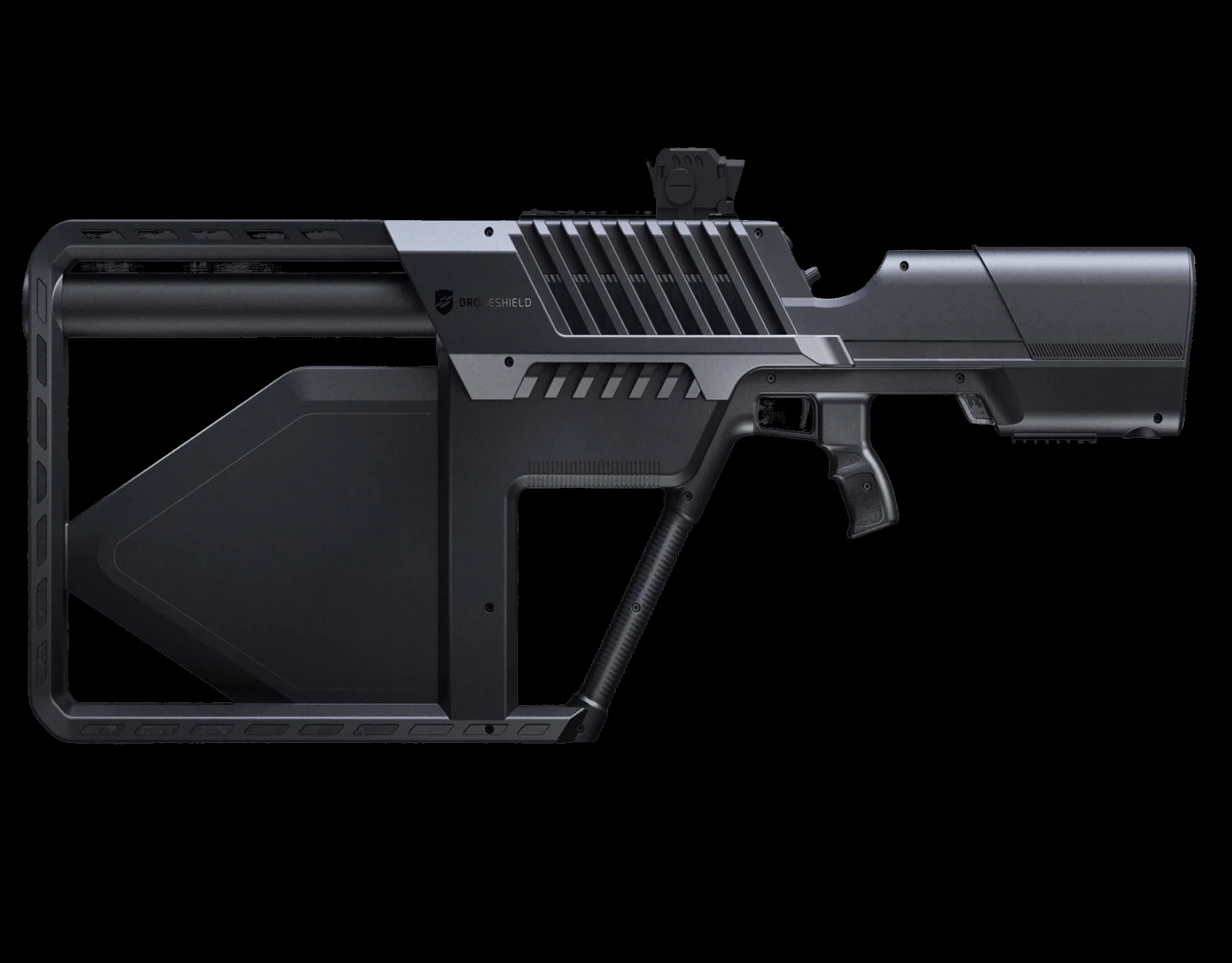
| Platform | Vehicle-mounted, Trailer, Fixed site | Vehicle-mounted | Man-portable, Vehicle-mounted, Fixed site, Shipborne | Man-portable |
|---|
| Status | In service | In service | In service | In production |
|---|
| Developer · Country | ASELSAN · Türkiye | ASELSAN · Türkiye | D-Fend Solutions · Israel | DroneShield · Australia |
|---|
| Propulsion | Not applicable | Not applicable | Not applicable | Not applicable |
|---|
| Reusability | Reusable | Not applicable | Reusable | Reusable |
|---|
| Technical profile |
|---|
| Frequency bands | Drone command, FPV video and satellite-navigation links; preloaded, software-adjustable jamming frequency groups[1][4] | Not recorded | Not recorded | ISM control bands (433 MHz, 915 MHz, 2.4 GHz, 5.8 GHz) and GNSS; a rotary dial selects active bands[1][2] |
|---|
| Techniques | Directional jamming of one target, omnidirectional jamming against swarms; spoofing listed[1][4] | Not recorded | RF-cyber takeover: takes control over the drone's own protocol to land it or send it back; no jamming[1][2] | Directional RF disruption of control, video and navigation links; the drone usually lands on the spot or returns to its start point[1] |
|---|
| Detection | AESA radar (X-band 15 km or S-band 25 km instrumented; earlier Ku-band ACAR), day/thermal cameras, RF detection[1][4] | Not recorded | Passive RF detection, tracking and identification up to 4.5 km, 360°[1][5] | Not recorded |
|---|
| Form factor | Mobile (vehicle, trailer) and fixed (mast, tower) versions[1][3] | Not recorded | Tactical tripod, vehicle, stationary, maritime and covert backpack kits; carried in Pelican cases[1] | Rifle-style handheld with directional antennas and MIL-STD-1913 rails for optics; IP54; −20 °C to +55 °C[1] |
|---|
| Weight | Not recorded | Not recorded | Not recorded | 7.3 kg with two batteries; more than 2 hours of operation per charge[1] |
|---|
| Interfaces | Hands targets to KORKUT 25, ŞAHİN 40 mm, EJDERHA and GÖKBERK; optional acoustic and DF sensors; TAFICS compatible[1][4] | Not recorded | Runs standalone, in a multilayer system or integrated with other C-UAS systems[4] | Not recorded |
|---|
| Ammunition | Not recorded | 35 mm ATOM 35 ABM/IABM programmable airburst and conventional 35 mm; linkless feed switches between two ammunition types[1][2] | Not recorded | Not recorded |
|---|
| Rate of fire | Not recorded | About 1,100 rounds/min from the twin 35 mm guns; 200 ready-to-fire rounds per gun vehicle[1] | Not recorded | Not recorded |
|---|
| Fuze | Not recorded | ATOM rounds are time-programmed at firing from measured muzzle velocity and burst ahead of the target, releasing tungsten fragments[3][4] | Not recorded | Not recorded |
|---|
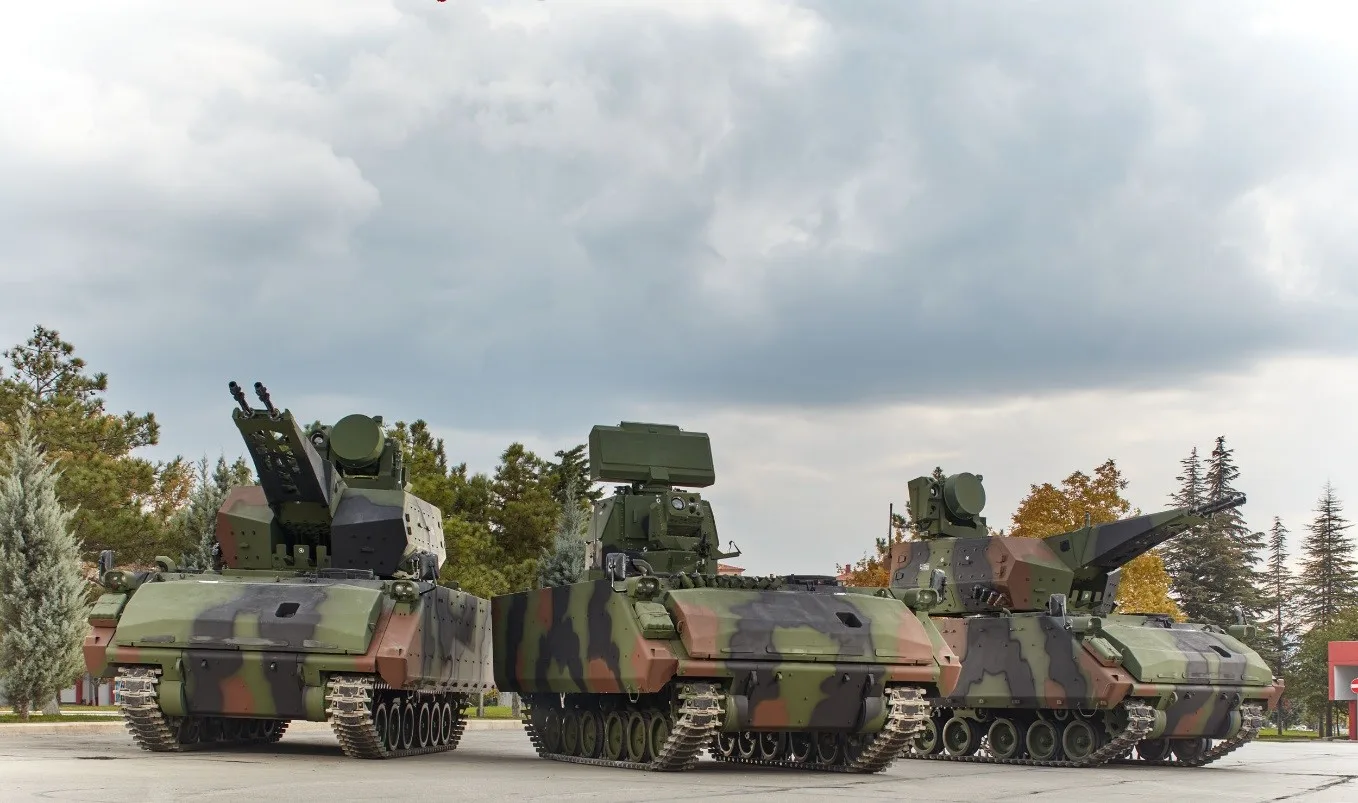
| Mount / turret | Not recorded | Stabilised unmanned twin-gun turret that fires on the move; licence-built Rheinmetall KDC 35 mm cannons made by MKEK[1][5][6] | Not recorded | Not recorded |
|---|
| Fire control / radar | Not recorded | Command-and-control vehicle with 3D search radar, IFF, threat evaluation and weapon assignment; links to higher-echelon C2[1] | Not recorded | Not recorded |
|---|
| Sensors | Not recorded | Fire-control radar and electro-optical sensors on each gun vehicle for automatic target tracking[1] | Not recorded | Not recorded |
|---|
| Mobility | Not recorded | Tracked FNSS ACV AD chassis; over 65 km/h on road, 60% gradient, 30% side slope; platoon of 3 gun vehicles and 1 C2 vehicle[1][7] | Not recorded | Not recorded |
|---|
| Characteristics |
|---|
| Maximum range (km) | Not recorded | Up to 4 kmManufacturer claim[1] | 1.2–4 kmManufacturer claim[1] | Up to 1 kmManufacturer claim[2] |
|---|
| Detection range (km) | Up to 25 kmManufacturer claim[1] | At least 35 kmManufacturer claim[1] | Up to 4.5 kmManufacturer claim[1] | Not recorded |
|---|
| Endurance (min) | Not recorded | Not recorded | Not recorded | More than 2 hoursManufacturer claim[1] |
|---|
| Calibre (mm) | Not recorded | 35 mmManufacturer claim[1] | Not recorded | Not recorded |
|---|
| Mass (kg) | Not recorded | Not recorded | Not recorded | 7.3 kgManufacturer claim[1] |
|---|
| Ready rounds / magazine | Not recorded | 200 ready-to-fire rounds; about 1,100 rounds/minManufacturer claim[1] | Not recorded | Not recorded |
|---|
| Guidance / cueing | AESA radar, day/thermal cameras, RF detection, AI-assisted C2Manufacturer claim[1] | 3D search radar on C2 vehicle; tracking radar and EO on each gunManufacturer claim[1] | Not recorded | Not recorded |
|---|
| Effect | Jams drone command, FPV video and satellite-navigation linksManufacturer claim[1] | ATOM 35 programmable airburst (tungsten fragments)Manufacturer claim[1][3] | Takes control of the drone over its own link and lands it or returns itManufacturer claim[1][2] | Jams 433/915 MHz, 2.4/5.8 GHz and GNSSManufacturer claim[2][1] |
|---|
| Launch / operating platform | Vehicle, trailer, fixed mast or towerManufacturer claim[1] | Tracked armoured vehicle; platoon of 3 guns + 1 C2Manufacturer claim[1] | Tripod, vehicle, stationary, maritime or backpackManufacturer claim[1] | Not recorded |
|---|
| Programme |
|---|
| Operators (in service / ordered) | 5: Türkiye, Northern Cyprus, Kyrgyzstan, Niger, Angola[2][3] | | | |
|---|
| Platforms and integration | KORKUT 25 and ŞAHİN 40 mm guns (proposed), EJDERHA high-power electromagnetic system (proposed), GÖKBERK laser (proposed), Vehicles at the Presidential Complex (in service), MİR unmanned surface vessel (proposed)[1][2][4] | FNSS ACV AD tracked vehicle (KORKUT 150/35) (in service), 3D search radar on the KORKUT command-and-control vehicle (in service), OTOKAR ARMA II 8x8 (KORKUT 140/35) (in development), Wahash 8x8 amphibious vehicle (KORKUT 141/35) (in development), Tatra Force 6x6 truck (in development), KALKAN 50-G S-band AESA radars (proposed)[1][7][8] | Not recorded | Not recorded |
|---|
| Public contracts | Not recorded | Not recorded | Not recorded | 1 recorded. Latest: 2026-09-29 · U.S. Army Contracting Command, Detroit Arsenal (JIATF-401 Domestic Shield) · US$500,000,000 (ceiling)[4][5] |
|---|
| Production / deliveries | Not recorded | 2019: 13 systems cumulative, 2016 contract: 42 gun vehicles and 14 command vehicles (14 batteries) ordered[8][9] | Not recorded | Not recorded |
|---|
| Latest development | 2024-03: Border demonstration[4] | 2025-01: Bulk of deliveries completed[9] | 2026-06-02: Motorola Solutions acquisition agreed[4] | 2023-07: US$33 million U.S. order[3] |
|---|