| Role |
|---|
| Primary category | Interceptor Missiles | Interceptor Missiles | Interceptor Missiles | Interceptor Missiles |
|---|
| Subcategory | Short-range air-defense missiles | Short-range air-defense missiles | Medium-range air-defense missiles | Short-range air-defense missiles |
|---|
| Interception mechanism | Blast-fragmentation | Blast-fragmentation | Blast-fragmentation | Blast-fragmentation, Proximity fuze |
|---|
| Target types | Small UAS, One-way attack UAVs, Cruise missiles, Crewed aircraft | Crewed aircraft, Cruise missiles, One-way attack UAVs | Crewed aircraft, Cruise missiles, One-way attack UAVs | Crewed aircraft, Small UAS, One-way attack UAVs, Cruise missiles |
|---|
| Platform | Vehicle-mounted | Vehicle-mounted, Shipborne | Vehicle-mounted | Vehicle-mounted, Shipborne |
|---|
| Status | In service | In service | In service | In service |
|---|
| Developer · Country | China Aerospace Science and Industry Corporation (CASIC) · China | Changfeng Electromechanical Technology Design Institute · China | China Aerospace Science and Industry Corporation (CASIC) · China | ASELSAN, Roketsan · Türkiye |
|---|
| Propulsion | Solid rocket motor | Solid rocket motor | Solid rocket motor | Solid rocket motor |
|---|
| Reusability | Single-use | Single-use | Single-use | Single-use |
|---|
| Technical profile |
|---|
| Seeker | Semi-active radar homing receiver, illuminated by the vehicle's tracking radar[5][8] | Infrared homing reported[3] | Semi-active radar homing[4][5] | Imaging-infrared terminal seeker (ASELSAN)[1][4] |
|---|
| Guidance | Guided from the launch vehicle by its tracking radar, TV sight or thermal sight[5][8] | Radio command guidance from the fire-control radar; naval FM-90(N) uses radar illumination with an electro-optical backup[3][5] | Semi-active radar homing, with a radio-command mode reported for strong jamming[4][5] | Inertial navigation with RF data-link updates in midcourse; IIR homing in the terminal phase[1][4] |
|---|
| Warhead | HE-fragmentation, about 15 kg[8] | Not recorded | Not recorded | High-explosive fragmentation; TÜBİTAK SAGE is named as warhead subcontractor[1][4] |
|---|
| Fuze | Not recorded | Not recorded | | Impact and RF proximity fuze; the A+ replaced the earlier laser proximity fuze with an RF fuze from TÜBİTAK SAGE[2][4] |
|---|
| Motor / propulsion | Solid-propellant rocket motor[8] | Solid-propellant rocket motor[3] | Solid-propellant rocket motor[5] | Dual-pulse solid-propellant motor; vertical launch with thrust-vector control[1][2] |
|---|
| Data link | Not recorded | Not recorded | Not recorded | RF uplink for midcourse updates; Meteksan Savunma named as data-link subcontractor[4] |
|---|
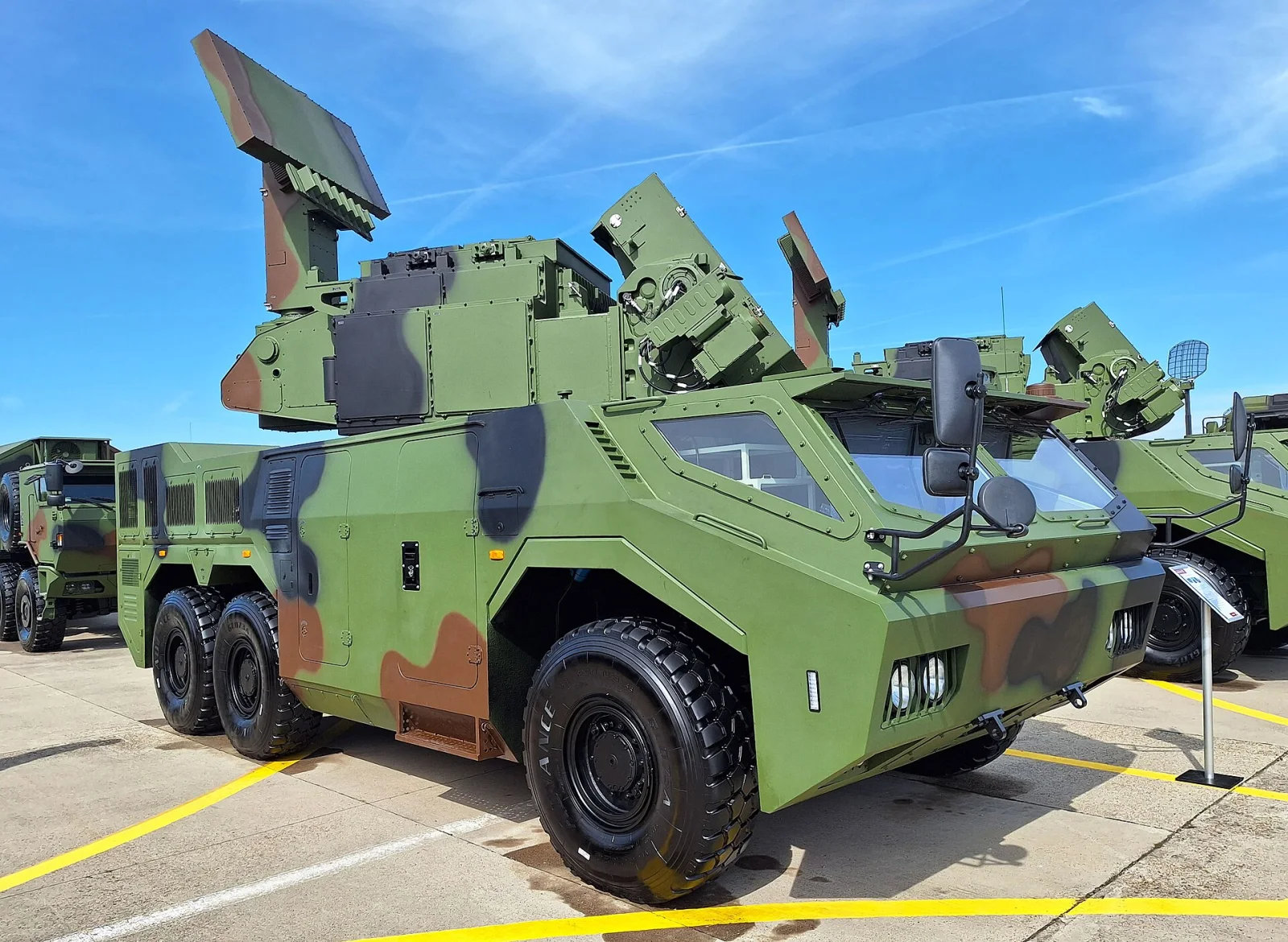
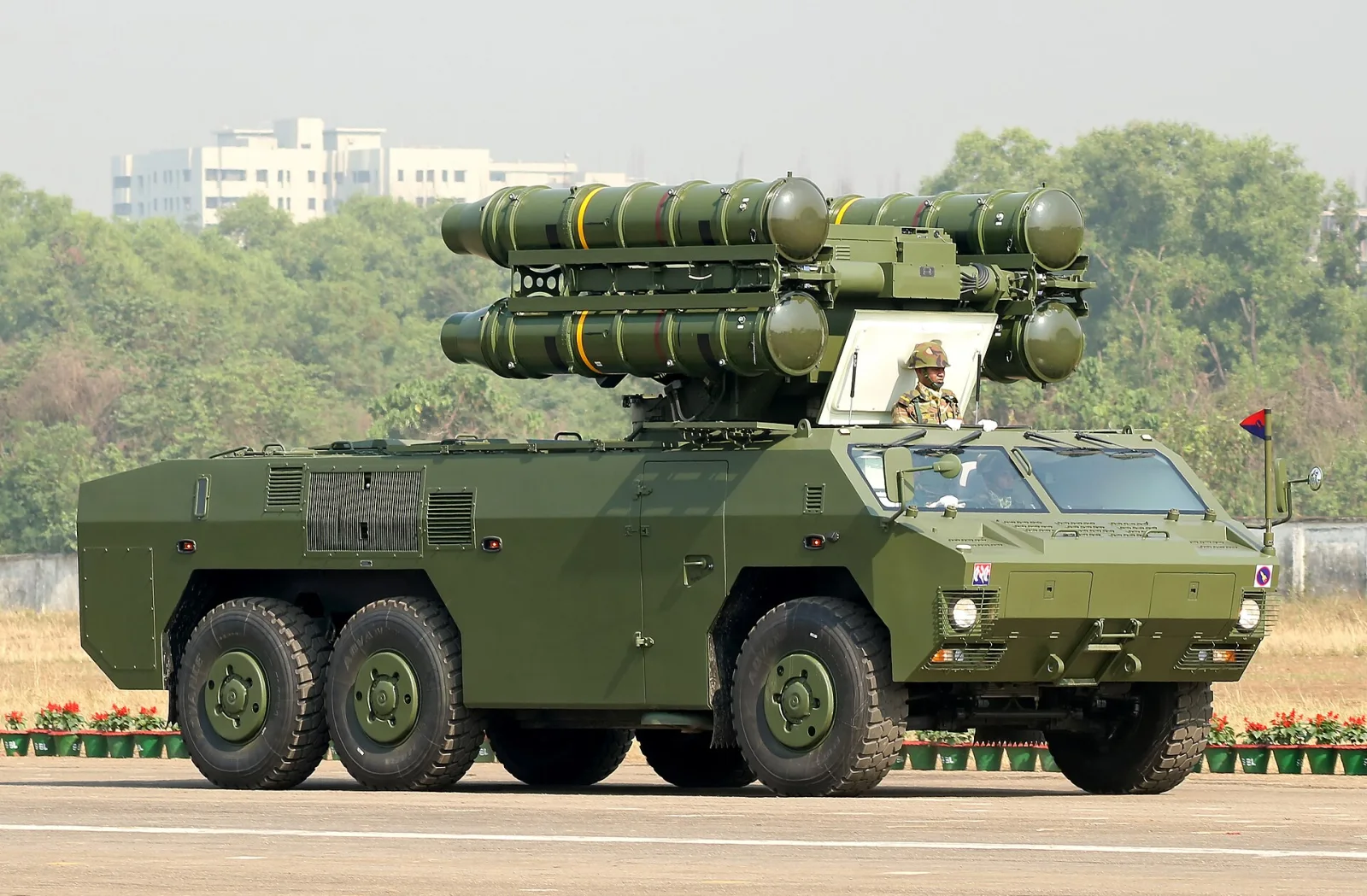
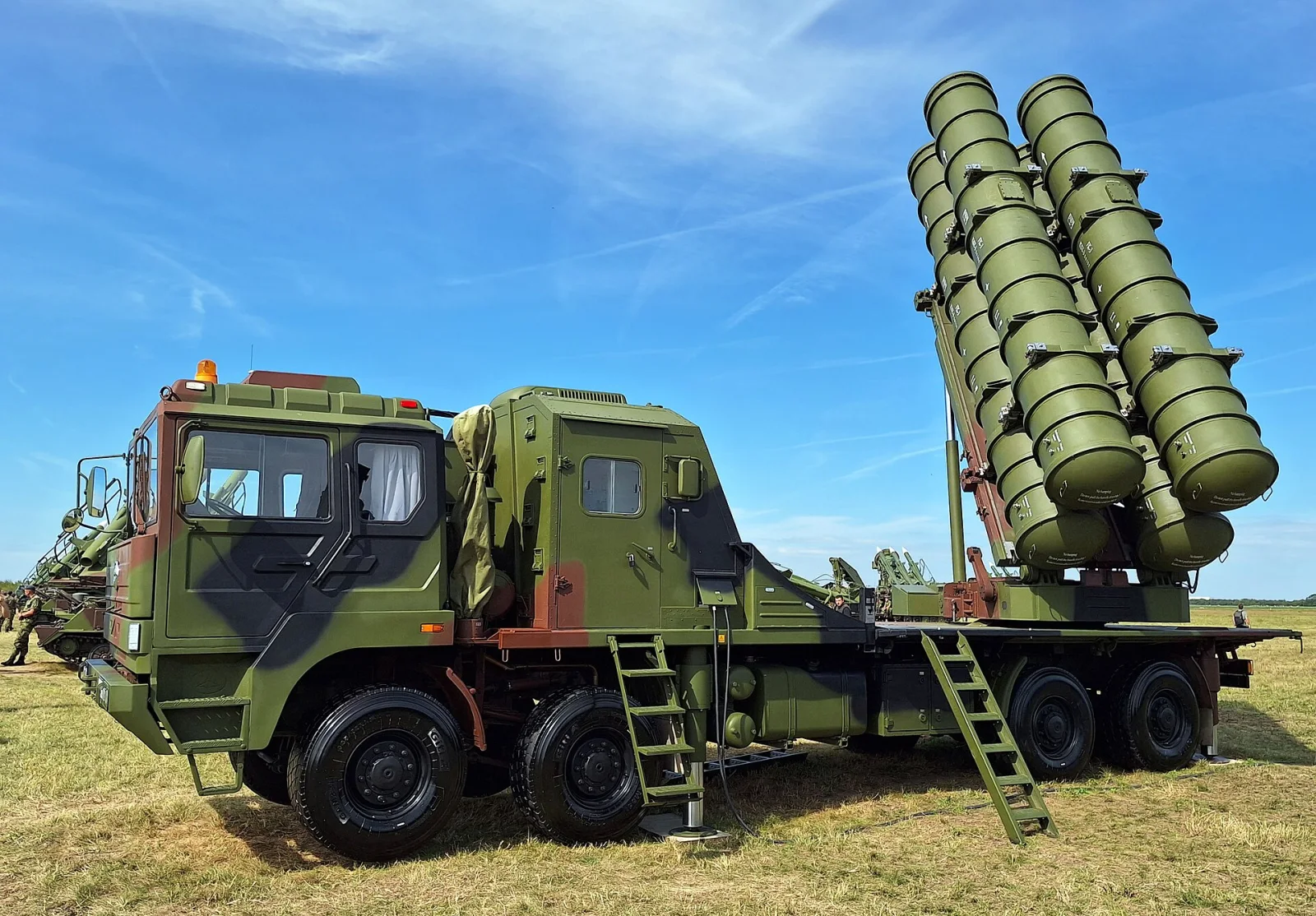
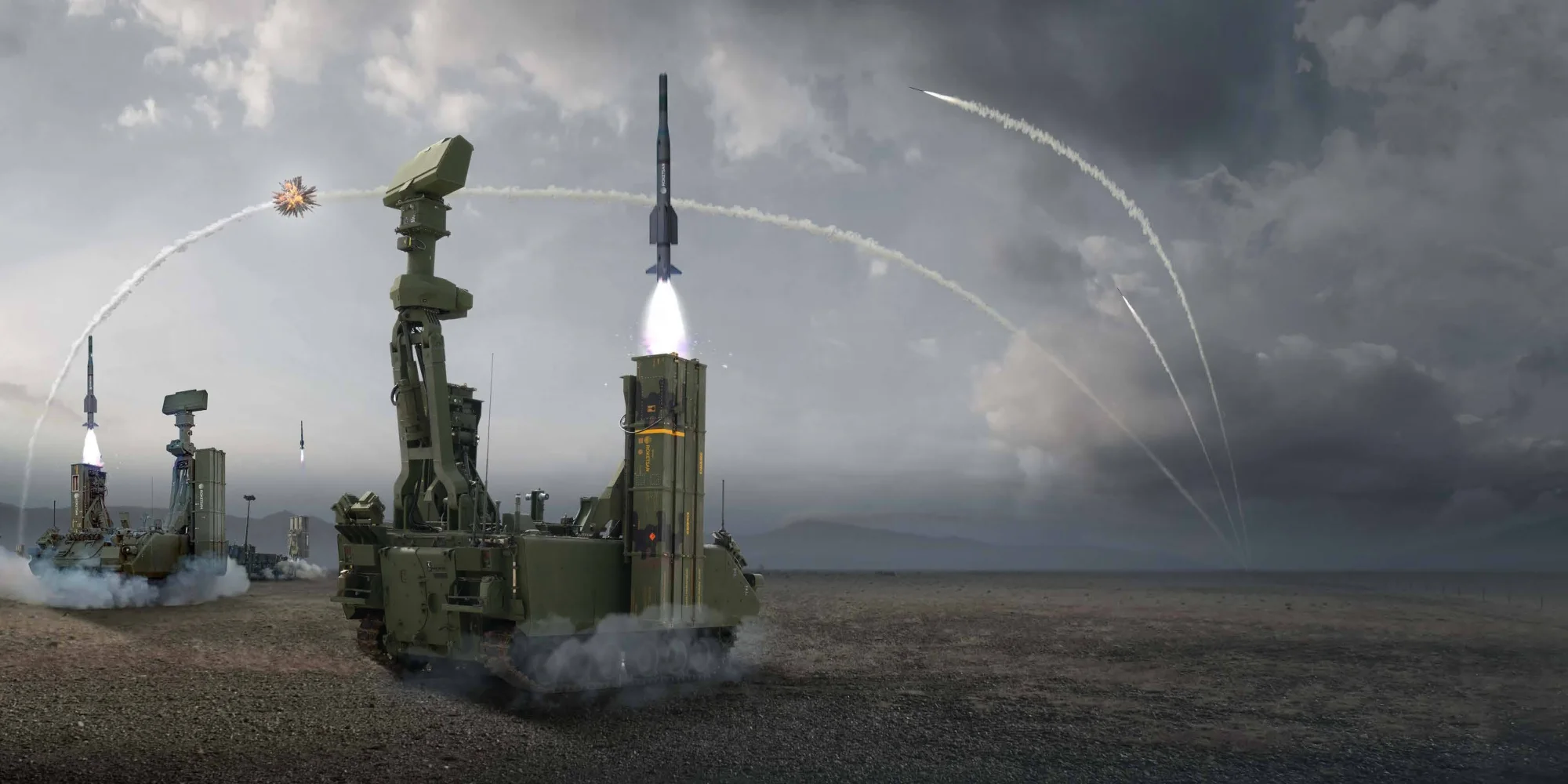
| Launcher | Vertical canisters (2 × 4) on a self-contained 6×6 combat vehicle with its own radars; fires from the halt or on the move[1][5][8] | Wheeled launcher vehicle with four or eight tubes; eight-cell trainable FM-90(N) launcher on Pakistan's F-22P frigates[3][5] | Truck-mounted TEL; an HQ-22 unit has four to eight launchers[1][5] | FNSS ACV-30 tracked chassis; two vertical containers of two missiles each, stowed on the hull roof for road travel[4][6] |
|---|
| Rounds per launcher | 8 missiles per vehicle; reloaded four at a time by a crane truck[5][8] | 4 or 8 missiles per launcher; battery of one radar and three launchers[3] | 4 missiles per launcher[5] | 4 ready missiles per vehicle[4][6] |
|---|
| Fire control / radar | On-vehicle PESA search radar (45 km) and AESA guidance radar; 48 targets monitored, 24 tracked, 2 engaged at once (HQ-17)[8] | Separate short-range radar vehicle in each battery; on ships, cueing from the ship's sensors[3][5] | Command vehicle and engagement radars; 6 targets engaged with 12 missiles at once; anti-jamming and anti-radiation-missile protection[1] | Mast-mounted ASELSAN 3D search radar with IFF, EO/IR sensor and laser rangefinder; can engage on its own[4][6] |
|---|
| Reaction / readiness | Not recorded | Often quoted in single-digit seconds (naval version)[5] | Not recorded | Not recorded |
|---|
| Characteristics |
|---|
| Maximum range (km) † | Up to 15 km† Maximum engagement range as claimed by the developerOfficial document[1] | Up to 15 km† Range reported in secondary sourcesSecondary reference[3] | Up to 100 km† Maximum engagement range as claimed by the developerOfficial document[1][2] | At least 15 km† Official range band published by the manufacturerManufacturer claim[1][3] |
|---|
| Maximum altitude (km) | Up to 8 kmOfficial document[1] | ≈ 6 kmSecondary reference[5] | Up to 27 kmOfficial document[1] | At least 10 kmManufacturer claim[1] |
|---|
| Speed (m/s) | ≈ 1,020 m/sSecondary reference[8] | Not recorded | ≈ 2,040 m/sSecondary reference[4][5] | Not recorded |
|---|
| Mass (kg) | ≈ 165 kgSecondary reference[5] | 84.5 kgSecondary reference[3] | Not recorded | Not recorded |
|---|
| Length (m) | ≈ 2.9 mSecondary reference[5] | 3 mSecondary reference[3] | Not recorded | 3.95 mManufacturer claim[1] |
|---|
| Ready rounds / magazine | 8 missiles in two sets of four canistersSecondary reference[5] | 4 or 8 missiles per launcherSecondary reference[3] | 4 missiles per launcher; 6 targets with 12 missiles simultaneously per systemOfficial document[1][5] | Not recorded |
|---|
| Guidance / cueing | Semi-active radar homing; on-vehicle search and tracking radar, TV and thermal sightsSecondary reference[5] | Radio command with infrared homingSecondary reference[3] | Semi-active radar homing / radio commandSecondary reference[5] | INS and data link midcourse; imaging-infrared terminal seekerManufacturer claim[1] |
|---|
| Effect | Not recorded | Not recorded | Not recorded | High-explosive fragmentation; impact and proximity fuzeManufacturer claim[1][2] |
|---|
| Launch / operating platform | 6×6 wheeled vehicle (HQ-17AE / HQ-17A); tracked HQ-17Official document[4][5] | Wheeled launcher vehicle; naval HHQ-7Secondary reference[3] | 8×8 truck launcher, command vehicle and radarsOfficial document[1] | Tracked and wheeled vehicles, naval vesselsManufacturer claim[1] |
|---|
| Programme |
|---|
| Operators (in service / ordered) | | 6: China, Pakistan, Bangladesh, Algeria, Turkmenistan, Iran[1][3][4] | | |
|---|
| Platforms and integration | 6×6 wheeled combat vehicle (HQ-17A / HQ-17AE) (in service), Tracked HQ-17 launcher (in service), Shaanxi SX2306 crane reload truck (in service), Data link to external surveillance radars (in service), CASIC anti-UAV system (with QW-12 missiles, DK-1 radar, ZR-1500) (proposed)[1][4][5][8] | Wheeled launcher and radar vehicles (in service), F-22P (Zulfiquar-class) frigate, FM-90(N) (in service), HHQ-7 on PLA Navy ships (in service)[3][5] | FK-3 battery (command vehicle, launchers, radars, logistics vehicles) (in service), Serbian layered air defence network (Pantsir S1, Thales Ground Master 200/400 radars) (in development), HQ-22 TEL (in service)[1][3][4][5] | FNSS ACV-30 tracked chassis (in service), ASELSAN mast-mounted 3D search radar (MAR) (in service), HİSAR-A missile launch system (Land Forces acceptance, 2026) (in service)[4][6][8] |
|---|
| Production / deliveries | 2024: 4 systems delivered[7] | Not recorded | 2022–2023: 300 missiles delivered[6] | July 2021: Dozens of systems in Army service cumulative[4] |
|---|
| Latest development | 2026-11: HQ-17A plateau live fire[2] | 2026-10: HQ-7B live fire with the 76th Group Army[1] | | 2026-06: Reported use in Sudan[4] |
|---|