| Role |
|---|
| Primary category | Interceptor Missiles | Interceptor Missiles | Interceptor Missiles | Interceptor Missiles |
|---|
| Subcategory | Counter-UAS missiles | Counter-UAS missiles | Counter-UAS missiles | Counter-UAS missiles |
|---|
| Interception mechanism | Blast-fragmentation, Proximity fuze | Blast-fragmentation, Proximity fuze | Proximity fuze, Blast-fragmentation | Direct impact |
|---|
| Target types | Small UAS, One-way attack UAVs, Loitering munitions | Small UAS, One-way attack UAVs, Crewed aircraft, Surface vessels | Small UAS, One-way attack UAVs, Cruise missiles | Surface vessels, Small UAS |
|---|
| Platform | Man-portable, Vehicle-mounted, Shipborne, Airborne | Man-portable, Vehicle-mounted, Airborne, Shipborne | Airborne, Vehicle-mounted, Shipborne | Vehicle-mounted, Shipborne, Airborne |
|---|
| Status | Testing | In service | In service | In service |
|---|
| Developer · Country | Frankenburg Technologies · Estonia | Thales · United Kingdom | BAE Systems, L3Harris · United States | Agency for Defense Development, LIG Defense & Aerospace (formerly LIG Nex1) · South Korea |
|---|
| Propulsion | Solid rocket motor | Solid rocket motor | Solid rocket motor | Solid rocket motor |
|---|
| Reusability | Single-use | Single-use | Single-use | Single-use |
|---|
| Technical profile |
|---|
| Seeker | Onboard terminal-homing seeker; type not disclosed[2] | Royal Navy Martlet has no seeker and rides the sighting laser; SAL, IR and IIR terminal-homing modes are listed for other variants[3] | Distributed-aperture semi-active laser seeker (DASALS) in the canard leading edges; optics deploy about 0.5 s after launch[1][3] | Imaging infrared; detection at about 12 km and tracking at about 9 km (reference work)[1] |
|---|
| Guidance | Inertial mid-course using target data, then onboard terminal homing; fire-and-forget[1][2] | Laser beam riding from the operator's sight (mode A); an INS+GPS mode is also listed[3] | Semi-active laser homing through the WGU-59/B mid-body guidance section; CEP under 0.5 m (reference work)[3] | Inertial midcourse to a launcher-supplied position, IIR terminal homing; fire-and-forget; 0.54 m CEP[1] |
|---|
| Warhead | Proximity-fuzed warhead; mass not disclosed[1] | 3 kg blast-fragmentation and shaped-charge warhead[3] | Existing Hydra 70 warheads, such as M151 for the counter-drone role[1][3] | |
|---|
| Fuze | | Laser proximity (active) or impact[3] | Proximity fuze from L3Harris and Technology Service Corporation, a drop-in for the M423[1][2] | Not recorded |
|---|
| Motor / propulsion | Solid rocket motor built largely from commercial components; high subsonic[1][3] | Two-stage solid propellant motor; above Mach 1.5[3] | Unmodified Hydra 70 Mk 66 motor; Nammo developing a motor for 12–15 km[3] | Standard Hydra 70 single-stage solid motor[1] |
|---|
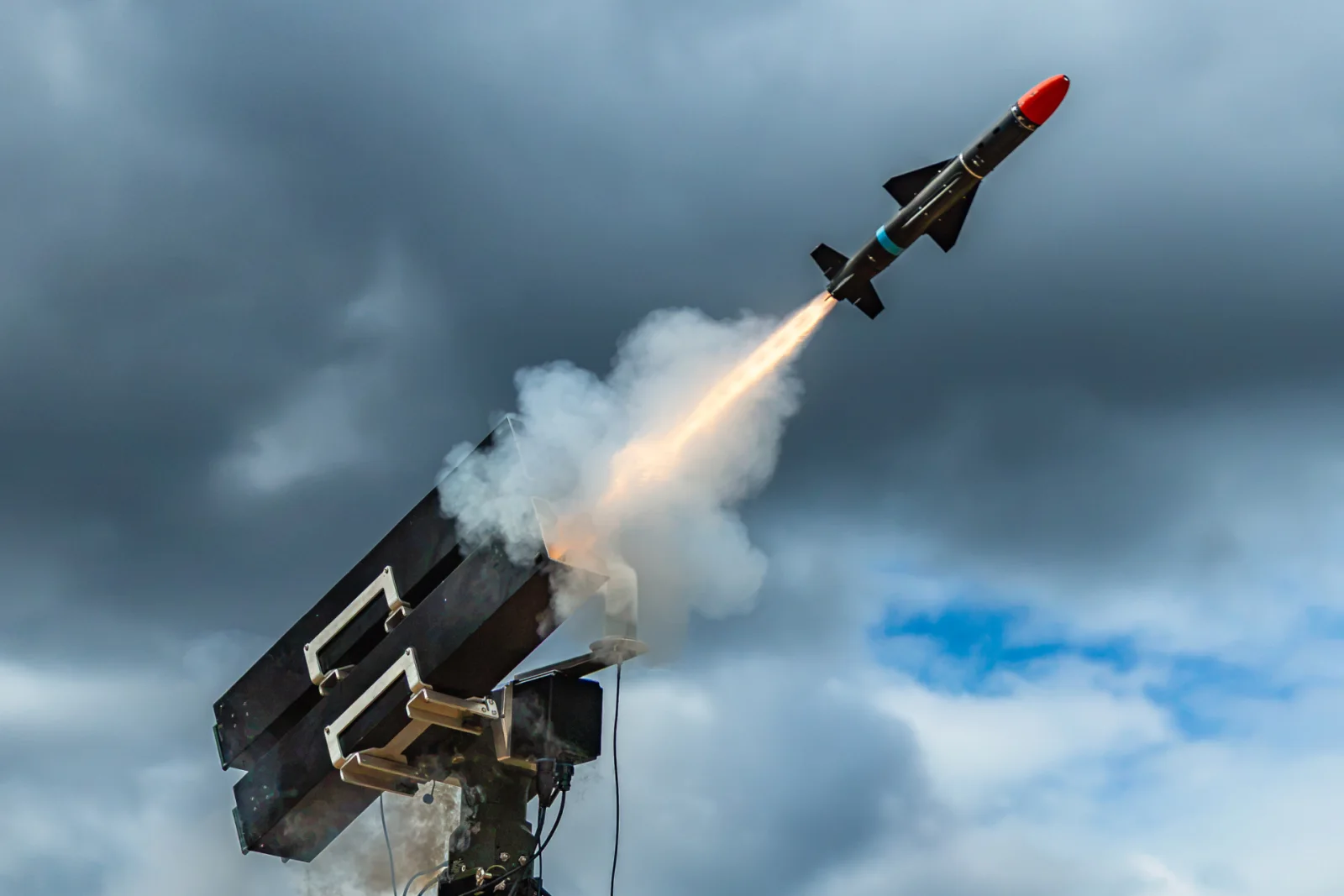
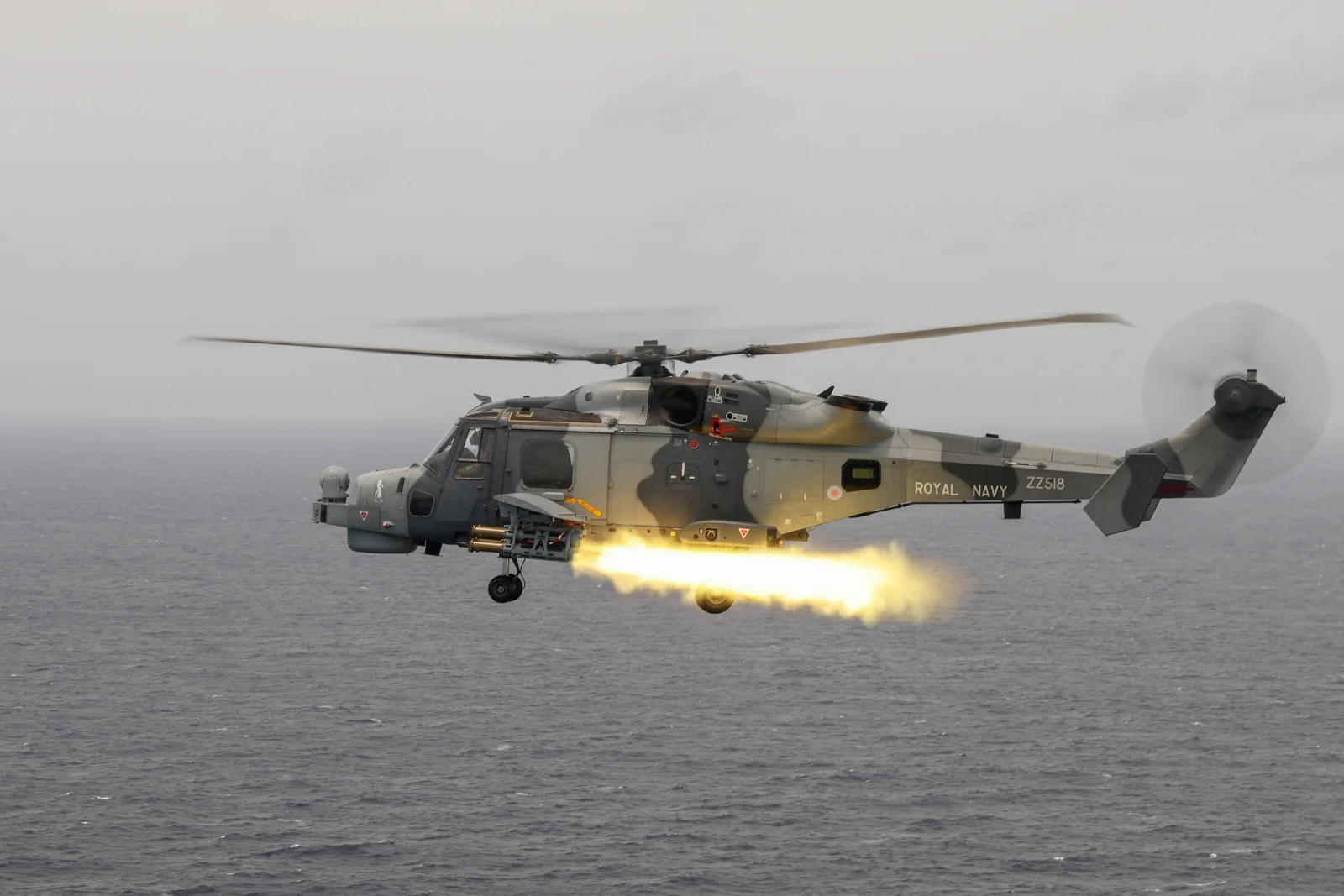
| Launcher | Four-canister tripod ground launcher; airborne launchers for up to ten; Babcock containerised maritime launcher planned[1][3] | Wildcat weapon wings (up to 20 Martlet); shoulder and standalone launchers; Stormer; RAF Rapid Sentry; Ukrainian-built launchers[3][4] | Existing 70 mm launchers on helicopters, jets, UAVs, ground vehicles and ships; four-round VAMPIRE launcher[4][5] | ROK Marine Corps 6×6 coastal-defence truck with two 18-round containers; existing 2.75-inch launchers[1][2] |
|---|
| Rounds per launcher | 4 per ground launcher; up to 10 on airborne launchers[1] | Wildcat: up to 20 Martlet, or 10 Martlet with 2 Sea Venom[3] | Not recorded | 36 per coastal-defence truck[1] |
|---|
| Characteristics |
|---|
| Maximum range (km) † | Up to 2 km† Maximum engagement range as claimed by the developerManufacturer claim[1][2] | At least 6 km† Maximum engagement range as claimed by the developerManufacturer claim[2][3] | Up to 5 km† Range reported in secondary sourcesSecondary reference[3] | At least 8 km† Range reported in secondary sourcesSecondary reference[1] |
|---|
| Speed (m/s) | At least 278 m/sManufacturer claim[2] | Above Mach 1.5Secondary reference[3] | Up to 1,000 m/sSecondary reference[3] | Not recorded |
|---|
| Calibre (mm) | Not recorded | Not recorded | 70 mmManufacturer claim[1] | 70 mmSecondary reference[1] |
|---|
| Mass (kg) | Up to 2 kgManufacturer claim[1] | | 4.1 kgSecondary reference[3] | Up to 15 kgSecondary reference[1] |
|---|
| Length (m) | 0.65 mManufacturer claim[1][3] | 1.3 mSecondary reference[3] | 1.87 mSecondary reference[3] | 1.9 mSecondary reference[1] |
|---|
| Guidance / cueing | INS mid-course with target data; onboard terminal homing; fire-and-forgetManufacturer claim[2][1] | Laser beam ridingSecondary reference[3] | Semi-active laser (DASALS optics in WGU-59/B)Secondary reference[3] | INS midcourse, imaging-infrared terminal (fire-and-forget)Secondary reference[1] |
|---|
| Effect | Proximity-fuzed warheadManufacturer claim[1] | Blast-fragmentation; laser proximity fuzeSecondary reference[3] | M151 warhead with proximity fuze (drop-in for M423)Manufacturer claim[1][2] | Not recorded |
|---|
| Launch / operating platform | Tripod four-canister launcher; airborne (up to 10); planned Babcock maritime containerManufacturer claim[1][3] | Stormer and other SHORAD vehicles, shoulder launchers, Wildcat helicopter (Martlet)Official document[1] | Not recorded | Not recorded |
|---|
| Programme |
|---|
| Operators (in service / ordered) | Not recorded | 5: United Kingdom, Ukraine, Saudi Arabia, Indonesia, India[1][3][4][6] | 8: United States, Australia, Jordan, United Kingdom, Czech Republic, Ukraine, Saudi Arabia, Lebanon[3][5] | 3: South Korea, Saudi Arabia, United Arab Emirates[1] |
|---|
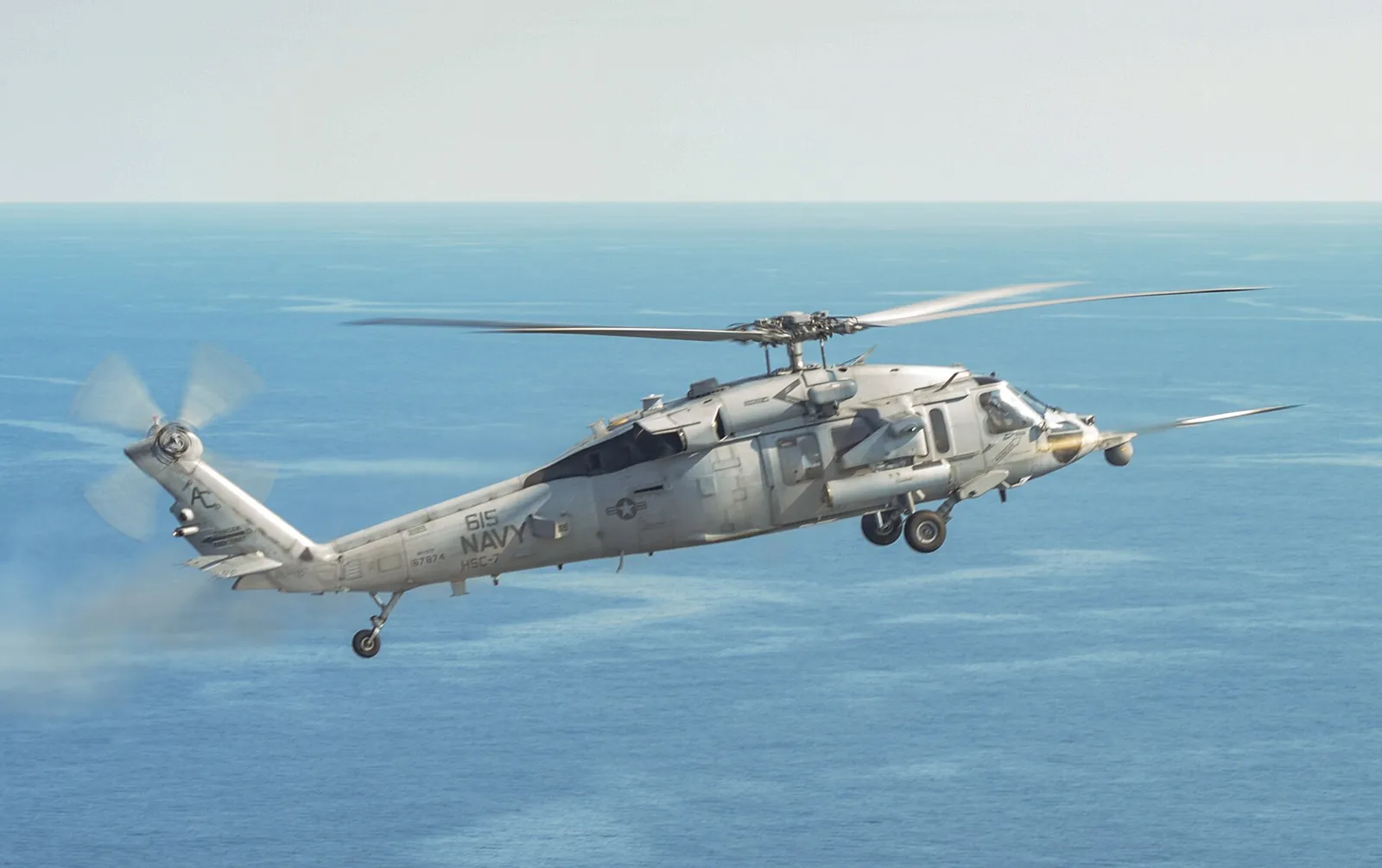
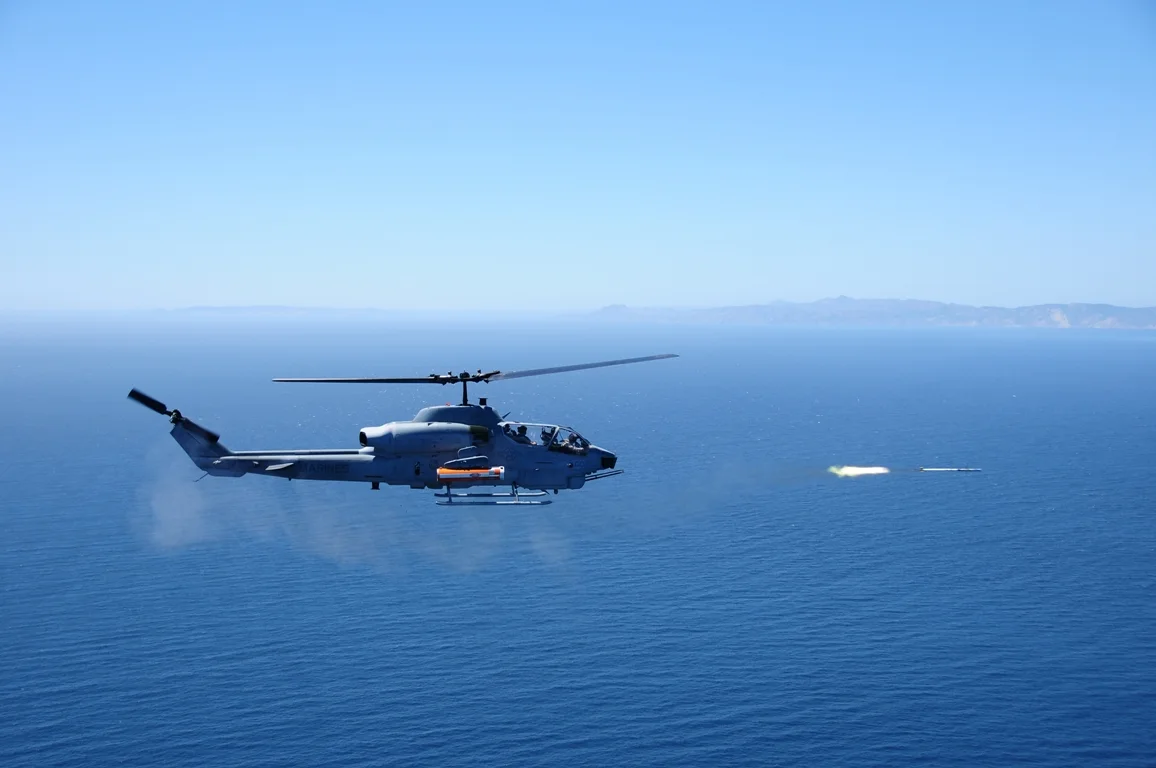
| Platforms and integration | Four-canister tripod launcher (tested), Babcock containerised maritime launcher (in development), Airborne launcher (up to 10 missiles) (proposed)[1][2][3] | AW159 Wildcat HMA2 (Martlet) (in service), Stormer SHORAD vehicle (in service), Rapid Sentry (RAF Regiment) (in service), Shikra air defence system (in service), RapidRanger on URO VAMTAC (ordered), Ukrainian launchers and C2 vehicles (in development), Ship gun mount with five-missile launcher (HMS Sutherland trial) (tested), Flyby Jackal drone (tested)[1][3][4] | VAMPIRE (pickup and boat kit) (in service), AH-64 Apache (in service), AH-1Z and UH-1Y (in service), MH-60S/R Seahawk (in service), F-16 (in service), F-15E and A-10 (in service), Eurofighter Typhoon (in service), EAGLS and ground vehicle kits (tested)[3][4] | ROK Marine Corps mobile coastal-defence truck (in service), Royal Saudi Navy vessels (in service), U.S. Navy counter-UAS use (proposed)[1][2] |
|---|
| Public contracts | Not recorded | | | Not recorded |
|---|
| Production / deliveries | Poland (planned): up to 10,000 a year planned rate, end of 2026: up to 100 missiles a day planned rate, 2026: 1,500 missiles planned rate[3][4][5] | 2025 onward: three times the pre-contract rate planned rate[4][5] | to February 2026: 100,000 kits cumulative, from October 2016: 5,000 a year planned rate, Framework of up to seven years from October 2026: up to 25,000 kits a year for U.S. forces, plus up to 10,000 for export planned rate[3][6] | Not recorded |
|---|
| Latest development | 2026-06: Riga factory opens[4] | 2025-10: Martlet full operating capability[3] | 2026-10-22: 25,000-a-year framework[6] | 2026-04: Counter-UAS offer to the U.S. Navy[2] |
|---|