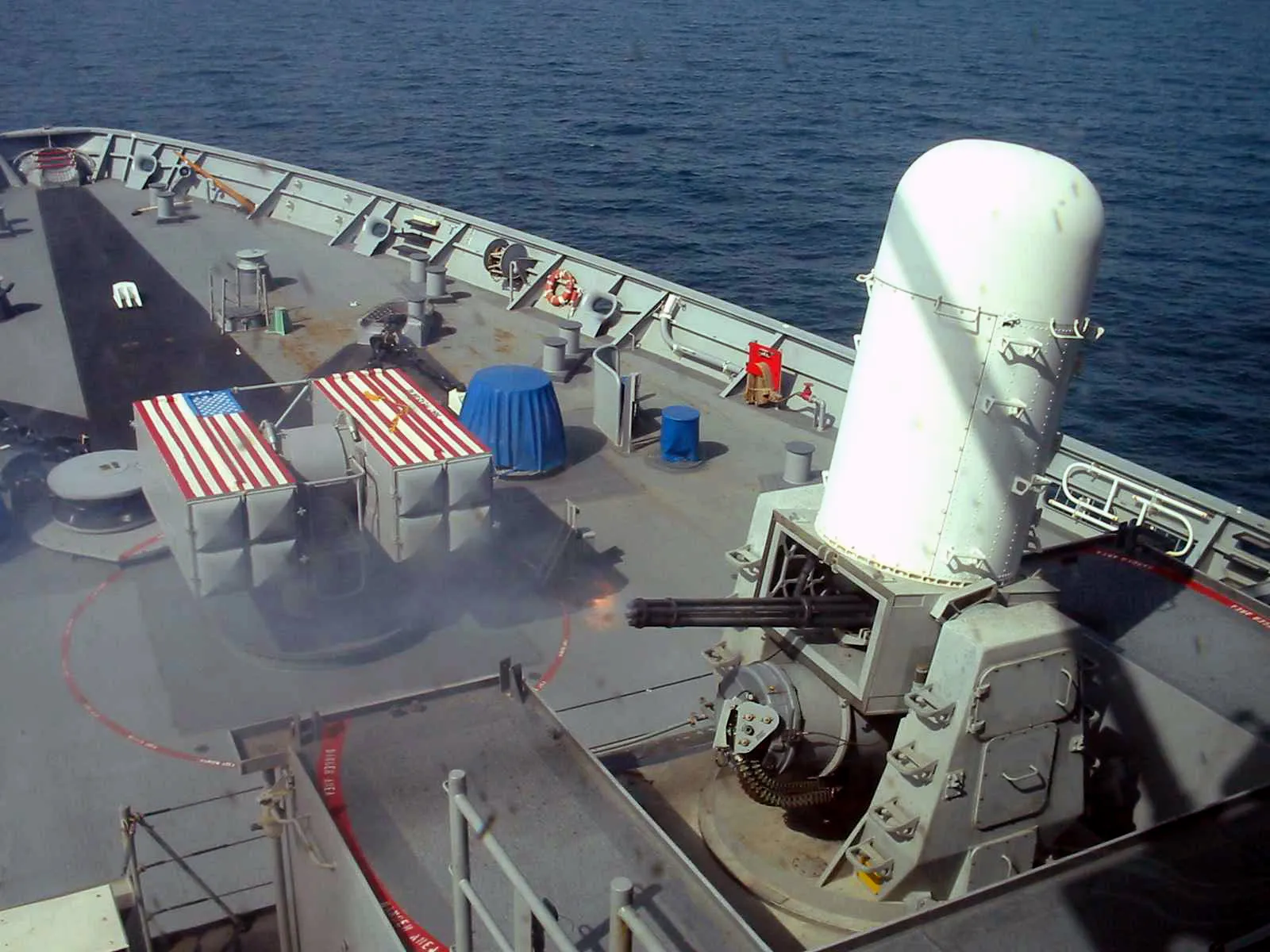
| Role |
|---|
| Primary category | Guns & Interceptor Ammunition | Guns & Interceptor Ammunition | Guns & Interceptor Ammunition | Guns & Interceptor Ammunition |
|---|
| Subcategory | Gun-based interception systems | Gun-based interception systems | Programmable airburst ammunition | Gun-based interception systems |
|---|
| Interception mechanism | Programmable airburst, Blast-fragmentation | Programmable airburst | Programmable airburst | Direct impact |
|---|
| Target types | Small UAS, Loitering munitions, One-way attack UAVs, Cruise missiles, Crewed aircraft | Small UAS, One-way attack UAVs, Cruise missiles, Crewed aircraft | Small UAS, One-way attack UAVs, Cruise missiles, Crewed aircraft | Cruise missiles, Rockets, artillery, mortars, Small UAS, One-way attack UAVs, Crewed aircraft, Surface vessels |
|---|
| Platform | Vehicle-mounted | Vehicle-mounted | Vehicle-mounted | Shipborne, Trailer, Fixed site |
|---|
| Status | Testing | In service | In service | In service |
|---|
| Developer · Country | Uralvagonzavod · Russia | ASELSAN · Türkiye | ASELSAN · Türkiye | RTX (Raytheon) · United States |
|---|
| Propulsion | Gun-launched | Not applicable | Gun-launched | Not applicable |
|---|
| Reusability | Not applicable | Not applicable | Single-use | Not applicable |
|---|
| Technical profile |
|---|
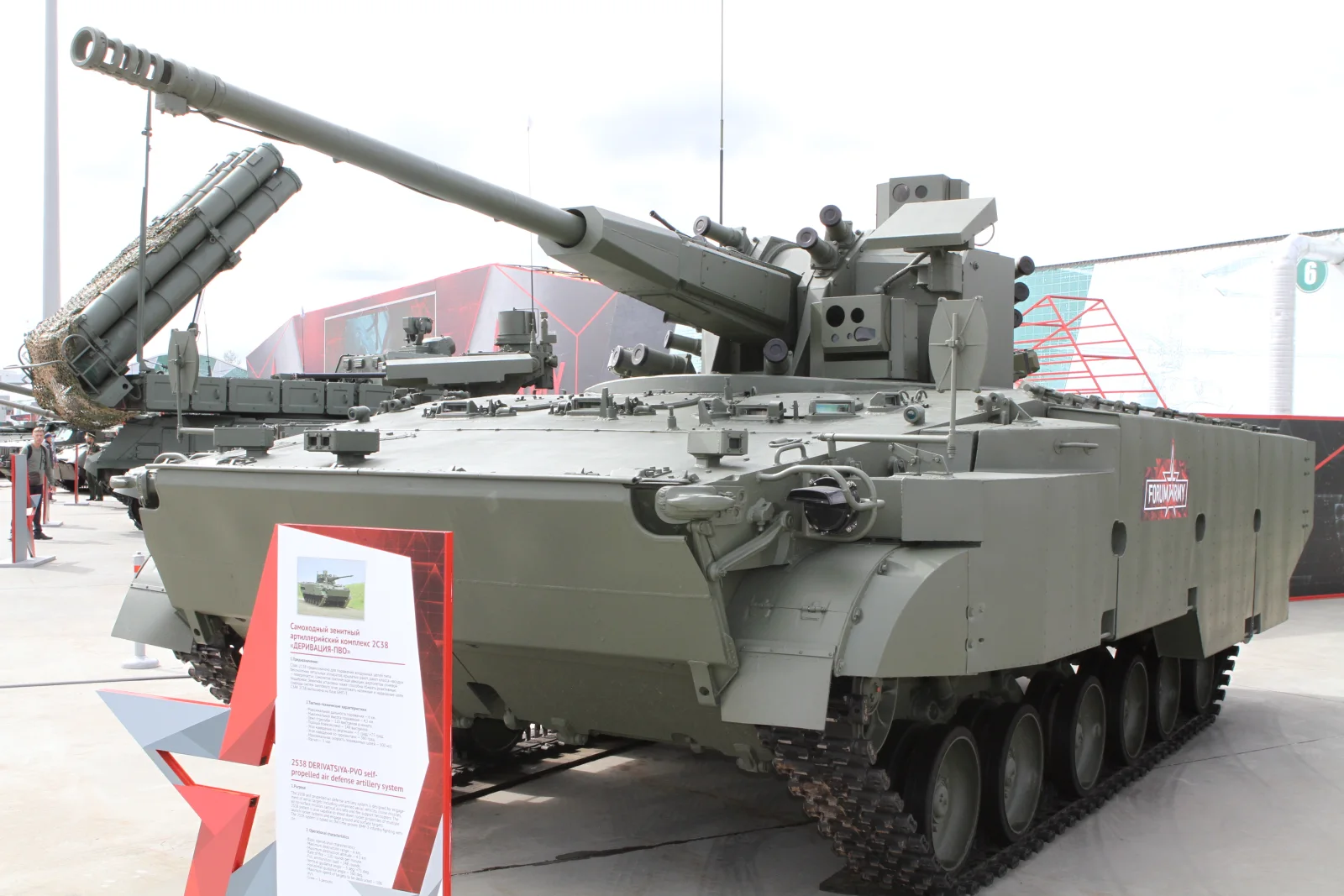
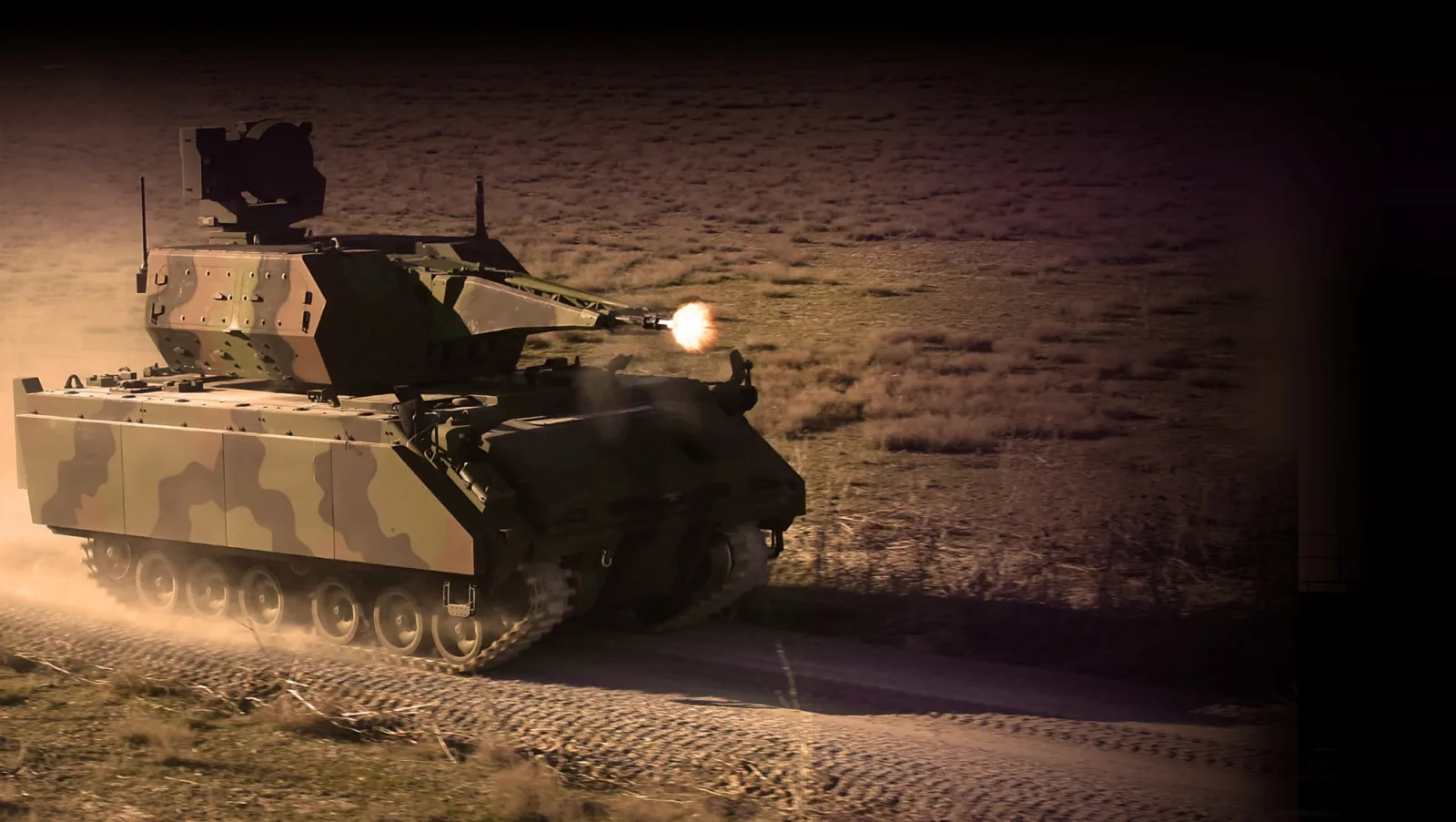
| Ammunition | 57 mm: 53-OR-281U fragmentation-tracer, 53-BR-281U armour-piercing, multipurpose round with remote fuze, guided shell; 148 rounds carried[1][5] | 35 mm ATOM 35 ABM/IABM programmable airburst and conventional 35 mm; linkless feed switches between two ammunition types[1][2] | 35 mm programmable airburst round; ATOM 35 IABM is an upgraded version with more particles; family also includes ATOM 40 and ATOM 25[1][3] | 20 mm: tungsten penetrator rounds at sea (Mk 244 ELC with a heavier penetrator); HEIT-SD high-explosive incendiary tracer rounds on land[2] |
|---|
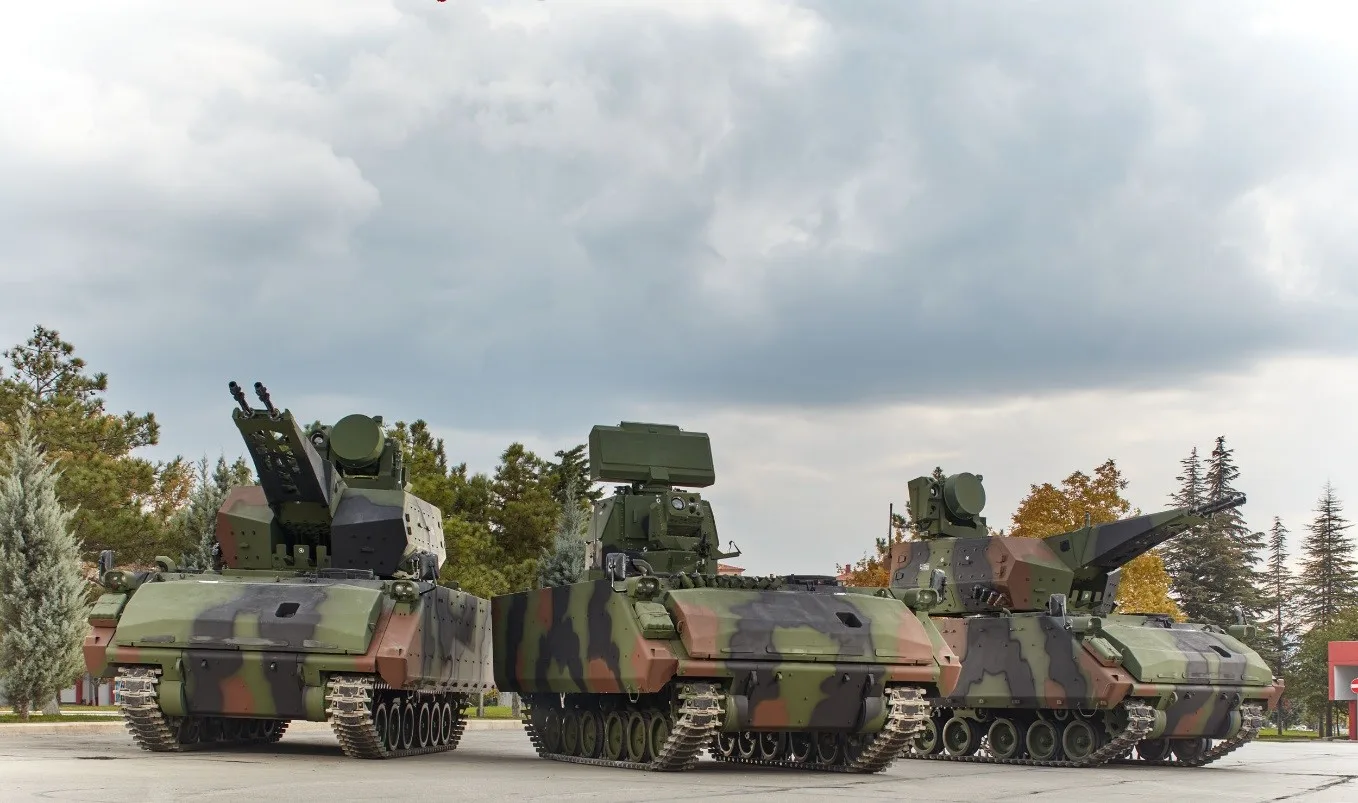
| Rate of fire | | About 1,100 rounds/min from the twin 35 mm guns; 200 ready-to-fire rounds per gun vehicle[1] | About 1,100 rounds/min from the twin 35 mm guns of KORKUT and GÖKDENİZ[1][4] | 4,500 rounds/min for Block 1A and later (3,000 for Block 0 and 1); 1,550-round magazine[1][2] |
|---|
| Fuze | Programmable (remote) detonation for the multipurpose round[1][4] | ATOM rounds are time-programmed at firing from measured muzzle velocity and burst ahead of the target, releasing tungsten fragments[3][4] | Base fuze; burst time programmed during firing from the measured muzzle velocity[3] | Land HEIT-SD rounds self-destruct, so misses do not fall back as solid shot; naval penetrators are unfuzed[2] |
|---|
| Mount / turret | Remotely operated module with 57 mm 2A90 gun and 7.62 mm PKTM; elevation −5° to +75°, 360° traverse[4][5] | Stabilised unmanned twin-gun turret that fires on the move; licence-built Rheinmetall KDC 35 mm cannons made by MKEK[1][5][6] | Fired by KORKUT self-propelled guns, modernised towed 35 mm guns and the GÖKDENİZ naval close-in weapon system[1][4][5] | Self-contained mount with M61 six-barrel gun, about 5,700–6,200 kg; Block 1B elevation −25° to +85°[2] |
|---|
| Fire control / radar | Passive optoelectronic detection and aiming system by Peleng with TV and thermal channels; no radar[4][5] | Command-and-control vehicle with 3D search radar, IFF, threat evaluation and weapon assignment; links to higher-echelon C2[1] | Not recorded | Integral Ku-band search and track radar; the mount searches, tracks, evaluates, engages and assesses kills on its own[1][2] |
|---|
| Sensors | Thermal channel detects a 2.3 × 2.3 m target at 10 km and recognises it at 4 km[5] | Fire-control radar and electro-optical sensors on each gun vehicle for automatic target tracking[1] | Not recorded | Block 1B adds a forward-looking infrared sensor and operator control station to identify targets and engage surface craft[1][2] |
|---|
| Crew | | Not recorded | Not recorded | Not recorded |
|---|
| Mobility | Amphibious BMP-3 tracked chassis, 21.5 t, up to 70 km/h; 9T260 transporter-loader on a Ural-4320 truck[4][5] | Tracked FNSS ACV AD chassis; over 65 km/h on road, 60% gradient, 30% side slope; platoon of 3 gun vehicles and 1 C2 vehicle[1][7] | Not recorded | Deck mount on warships; trailer-mounted Land-based Phalanx Weapon System (Centurion) for counter-RAM[1][2] |
|---|
| Characteristics |
|---|
| Maximum range (km) † | Up to 6 km† Maximum engagement range as claimed by the developerSecondary reference[3] | Up to 4 km† Maximum engagement range as claimed by the developerManufacturer claim[1] | Up to 4 km† Maximum engagement range as claimed by the developerManufacturer claim[1] | ≈ 1.5 km† Range reported in secondary sourcesSecondary reference[2] |
|---|
| Detection range (km) | Not recorded | At least 35 kmManufacturer claim[1] | Not recorded | Not recorded |
|---|
| Maximum altitude (km) | Up to 4.5 kmSecondary reference[3] | Not recorded | Not recorded | Not recorded |
|---|
| Calibre (mm) | | 35 mmManufacturer claim[1] | 35 mmManufacturer claim[1] | 20 mmSecondary reference[2] |
|---|
| Mass (kg) | Not recorded | Not recorded | Not recorded | ≈ 5,700 kgSecondary reference[2] |
|---|
| Ready rounds / magazine | Up to 120 rounds/minSecondary reference[3] | 200 ready-to-fire rounds; about 1,100 rounds/minManufacturer claim[1] | Not recorded | About 1,550 rounds; 4,500 rounds/minSecondary reference[2] |
|---|
| Guidance / cueing | Passive electro-optical fire controlSecondary reference[3] | 3D search radar on C2 vehicle; tracking radar and EO on each gunManufacturer claim[1] | Not recorded | Onboard Ku-band search and track radar; EO sensor on Block 1BSecondary reference[2] |
|---|
| Effect | Not recorded | ATOM 35 programmable airburst (tungsten fragments)Manufacturer claim[1][3] | Programmable airburst; tungsten particlesManufacturer claim[1][2] | Tungsten APDS (naval) or self-destructing HEIT (land)Secondary reference[2] |
|---|
| Launch / operating platform | BMP-3 tracked chassis, about 21.5 tSecondary reference[3] | Tracked armoured vehicle; platoon of 3 guns + 1 C2Manufacturer claim[1] | Not recorded | Warships; trailer-mounted land versionSecondary reference[2] |
|---|
| Programme |
|---|
| Operators (in service / ordered) | Not recorded | | | 21: United States, Australia, Bahrain, Canada, Chile, Ecuador, Egypt, Greece, Israel, Japan, Mexico, New Zealand +9 more[1][2] |
|---|
| Platforms and integration | BMP-3 tracked chassis (tested), 9T260 transporter-loader (Ural-4320-30) (tested), Peleng optoelectronic detection and aiming system (tested)[4][5] | FNSS ACV AD tracked vehicle (KORKUT 150/35) (in service), 3D search radar on the KORKUT command-and-control vehicle (in service), OTOKAR ARMA II 8x8 (KORKUT 140/35) (in development), Wahash 8x8 amphibious vehicle (KORKUT 141/35) (in development), Tatra Force 6x6 truck (in development), KALKAN 50-G S-band AESA radars (proposed)[1][7][8] | KORKUT 150/35 self-propelled air-defence gun (in service), GÖKDENİZ 100/35 naval close-in weapon system (in service), Modernised towed 35 mm air-defence guns (ordered)[1][4][5][6][7] | U.S. Navy surface combatants (all classes) (in service), Surface combatants of 24 allied navies (in service), Land-based Phalanx Weapon System / Centurion C-RAM (in service), SeaRAM (RIM-116 launcher with Phalanx-based sensors) (in service), Royal Navy warships (Block 1B Baseline 2) (in service), Royal Saudi Naval Forces PCG-class patrol ships (in service)[1][2][3][4][5] |
|---|
| Public contracts | Not recorded | Not recorded | Not recorded | 3 recorded. Latest: 2026-09-29 · Naval Air Systems Command (Navy and Army requirements) · US$247,089,895[3][5][6][7] |
|---|
| Production / deliveries | Not recorded | 2019: 13 systems cumulative, 2016 contract: 42 gun vehicles and 14 command vehicles (14 batteries) ordered[8][9] | 2018 – Feb 2021: 100,000 ATOM 35 mm ammunition electronics cumulative[3][8] | Not recorded |
|---|
| Latest development | 2026: Seen at the Center-2026 exercise[3] | 2025-01: Bulk of deliveries completed[9] | 2021-02: 100,000 fuze electronics produced[3] | 2025-09-08: Continued production contract[3] |
|---|