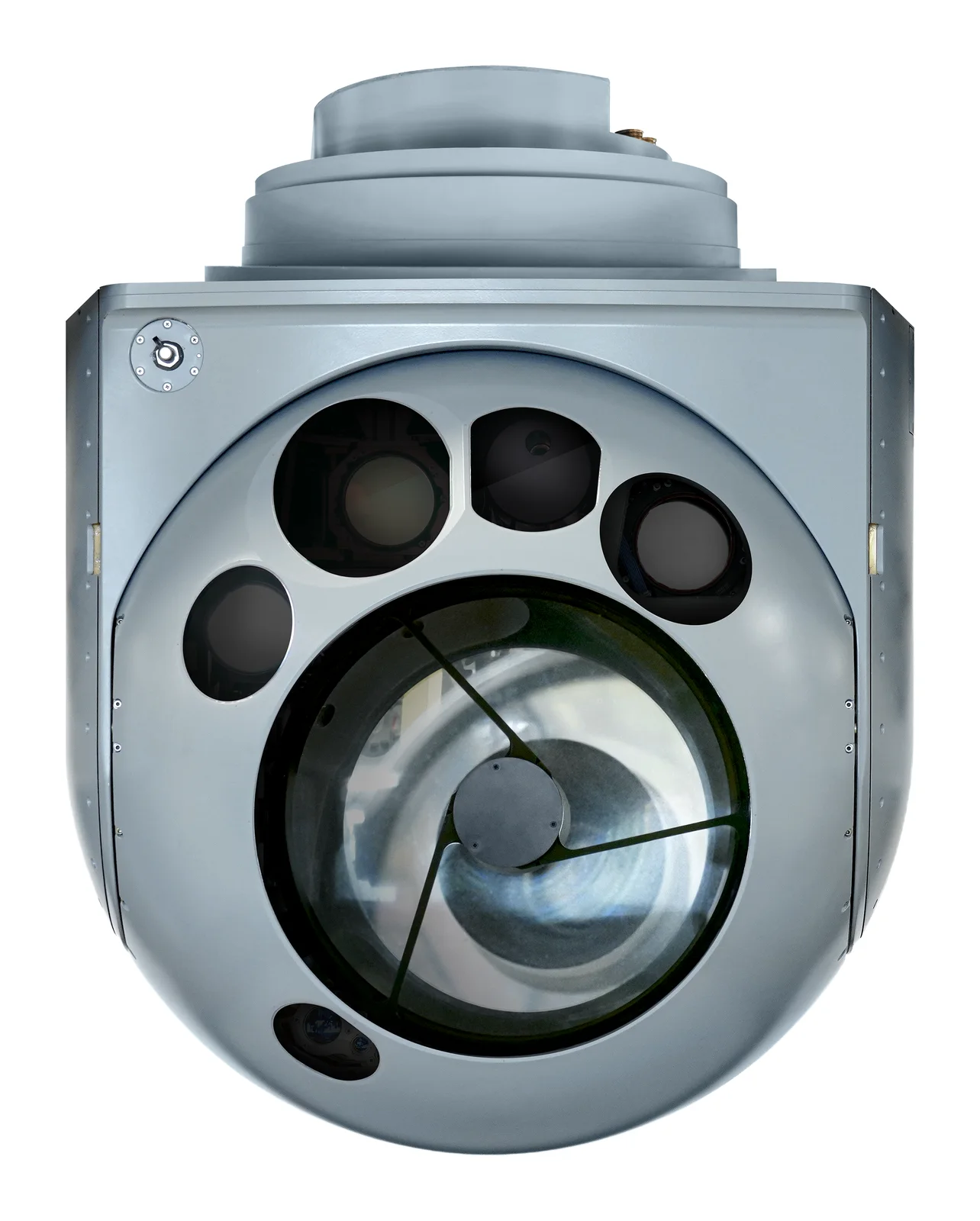
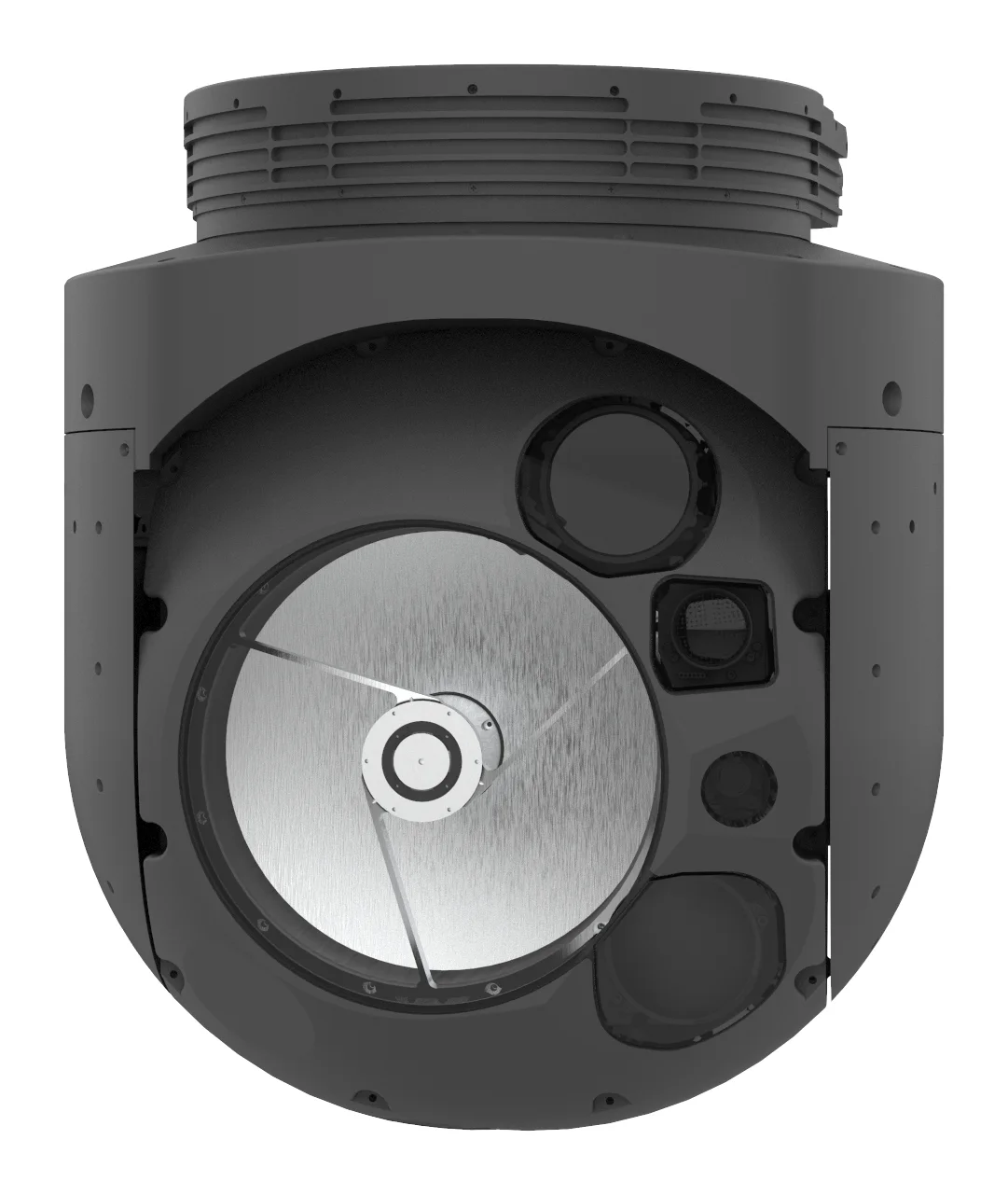
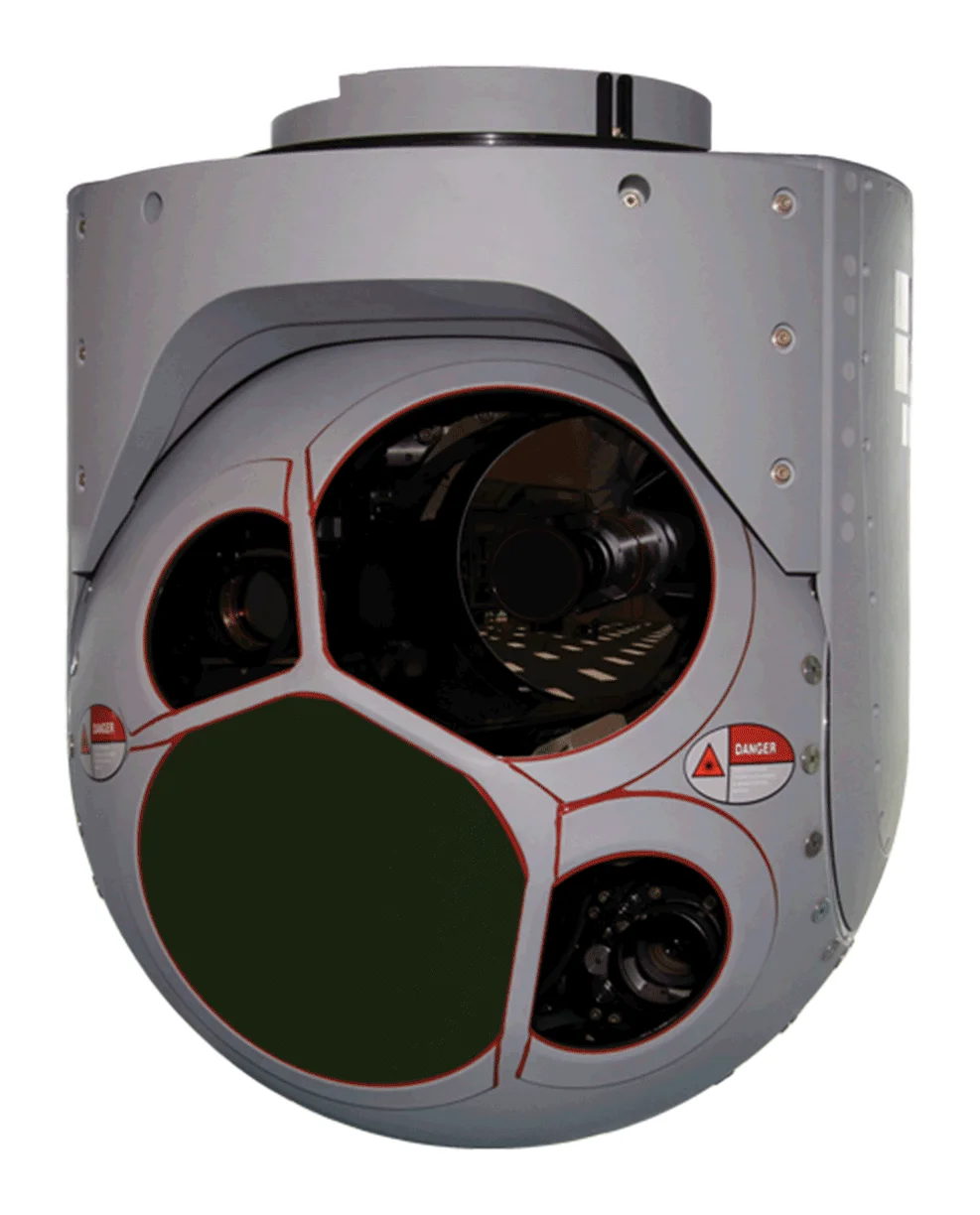
| Technical profile |
|---|
| Thermal imager | HD MWIR, 1280 × 1024; fields of view 0.55°, 0.85°, 2.82°, 4.33°, 8.68° and 21.74°[1] | HD MWIR (3–5 µm), 1280 × 1024; fields of view 1.3°, 4.3°, 7.7°, 13.9° and 25°[1] | HD IR camera; detector type not published; ELAP real-time enhancement for EO day, EO night and IR[1] |
|---|
| Daylight camera | 1920 × 1080 day TV (0.20°–26.38°) and 1280 × 1024 SWIR (0.23°–0.61°) on a 325 mm common aperture[1] | 1920 × 1080 day TV (0.5°, 0.9°, zoom 2.6°–24°) and 1280 × 1024 SWIR (0.67°–1.1°) on a 220 mm common aperture[1] | HD EO cameras; up to seven sensors at once[1] |
|---|
| Laser rangefinder | Diode-pumped Nd:YAG laser rangefinder and designator, 1064 nm[1] | Combined laser rangefinder and designator, 1064 nm, up to 35 km[1][6] | Not recorded |
|---|
| Laser designator / illuminator | STANAG 3733 Band I & II coding; laser spot tracker; NIR pointer/illuminator. Range 'up to 35' in brochure (no unit), up to 50 km per ASELSAN in 2026[1][2] | 1064 nm designator with STANAG 3733 (Ed. 3) coding; 808 nm pointer visible to night-vision goggles[1] | Laser illuminator with three divergence options; MX-20D designating version[1][5][6] |
|---|
| Stabilisation | 4-axis mechanical plus 2-axis optical stabilisation; 360° continuous azimuth, +95° to −120° elevation; IMU[1] | 4-axis mechanical plus 2-axis optical stabilisation; 360° continuous azimuth, +90° to −90° elevation; IMU[1] | 5-axis gimbal with internal high-performance IMU; all payloads stabilised[1] |
|---|
| Target classes | Automatic target recognition; real-time tracking in IR, TV and SWIR; course and speed of moving targets[1] | Multi-target tracking in IR, TV and SWIR; course and speed of moving targets; AI-based image processing[1] | Flown in 2024 with Palantir's AI software for automatic object detection, tracking and classification[2] |
|---|
| Interfaces | RS-422 and MIL-STD-1553B; 4× SMPTE-292M HD-SDI 1080p video; 28 VDC[1] | RS-422 and MIL-STD-1553B; 4× SMPTE-292M HD-SDI 1080p video; 28 VDC[1] | Common MX-Series operator interfaces and LRUs; MX-GEO auto-alignment and target geolocation[1] |
|---|
| Weight | 120 kg +10%; 655 mm wide, 720 mm high (25-inch gimbal)[1] | 54 kg ±5%; 480 mm wide, 520 mm high[1] | Not recorded |
|---|
| Characteristics |
|---|
| Mass (kg) | 120 kgManufacturer claim[1] | 54 kgManufacturer claim[1] | Not publicly disclosed |
|---|
| Guidance / cueing | HD MWIR, HD day TV, HD SWIR on a 325 mm aperture; LRF, designator and laser spot tracker; ATRManufacturer claim[1] | HD MWIR, HD day TV, HD SWIR on a 220 mm common aperture; LRF/designator up to 35 kmManufacturer claim[1][2] | HD EO and IR; up to 7 sensors; 5-axis gimbal with IMU; 3 illuminator divergence optionsManufacturer claim[1] |
|---|
| Launch / operating platform | HALE fixed-wing platforms; tested on AkıncıManufacturer claim[1][2] | Fixed-wing aircraft and UAVs (TB2, TB3, Akıncı, Anka-III)Manufacturer claim[1][2] | Maritime patrol and ISR aircraft; 16 ordered for RCAF P-8A (2025)Manufacturer claim[1][3] |
|---|
| Programme |
|---|
| Operators (in service / ordered) | Not recorded | | |
|---|
| Platforms and integration | Bayraktar Akıncı (tested)[2][3] | Bayraktar TB2 (in service), Bayraktar Akıncı (in service), Bayraktar TB3 (in service), TAI Aksungur (tested), TAI Anka-III (tested)[2][3][4][6] | Boeing P-8A Poseidon (in service), Boeing P-8A Poseidon (in service), Boeing P-8A Poseidon (ordered), MQ-9B SkyGuardian (MX-20D) (ordered), Atlantique 2 (MX-20D) (in service), CP-140 Aurora (in service), P-72B (Guardia di Finanza) (in service)[1][3][4][5][6] |
|---|
| Public contracts | Not recorded | Not recorded | 3 recorded. Latest: 2025-05-26 · Canadian Commercial Corporation (for the RCAF) · 16 systems[3][4][6][7][8] |
|---|
| Production / deliveries | Not recorded | Not recorded | to 2017: more than 250 cumulative, 2025: 8,000th MX-Series system cumulative[3][5] |
|---|
| Latest development | 2026: Serial production planned[2] | 2026-02-18: TB3 at sea during Steadfast Dart 2026[3] | 2025-05: RCAF P-8A order[3] |
|---|